Kramer vs. Kramer
"The war where nobody truly wins."
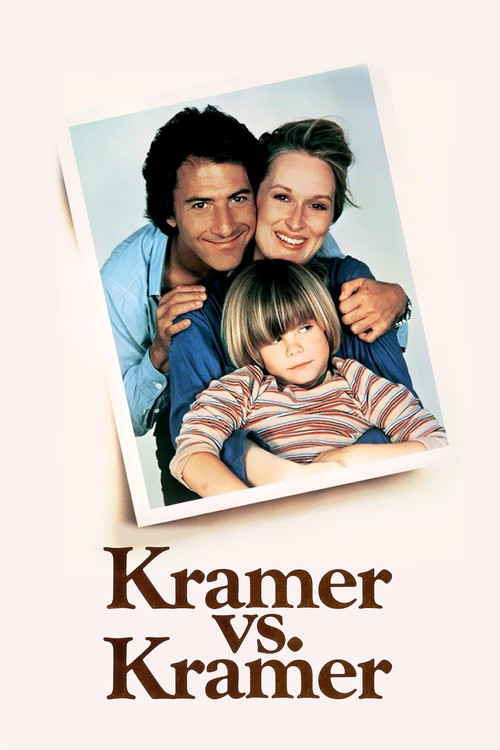
The most jarring thing about watching Kramer vs. Kramer today isn’t the high-waisted trousers or the lack of smartphones; it’s the silence. In a modern era where family dramas often feel the need to fill every emotional beat with a swelling cello or a witty quip, director Robert Benton (who also wrote Bonnie and Clyde) lets the New York City apartment hum with the terrifying sound of a refrigerator and a child’s confusion. I watched this again on a Tuesday evening while nursing a slightly cold cup of peppermint tea that tasted faintly of the cardboard box it came in, and that domestic mundanity felt like the perfect accompaniment to a film that treats a kitchen counter like a battlefield.
The Evolution of the Parent
When Meryl Streep’s Joanna Kramer walks out in the opening minutes, she isn’t portrayed as a villain, though a 1979 audience might have disagreed. She’s a woman suffering a quiet, existential erasure. But the film’s heart—and its sweat—belongs to Dustin Hoffman as Ted Kramer. At the start, Ted is a Madison Avenue climber who views his son, Billy, as a sort of residential peripheral device—something that should just work in the background while he handles accounts.
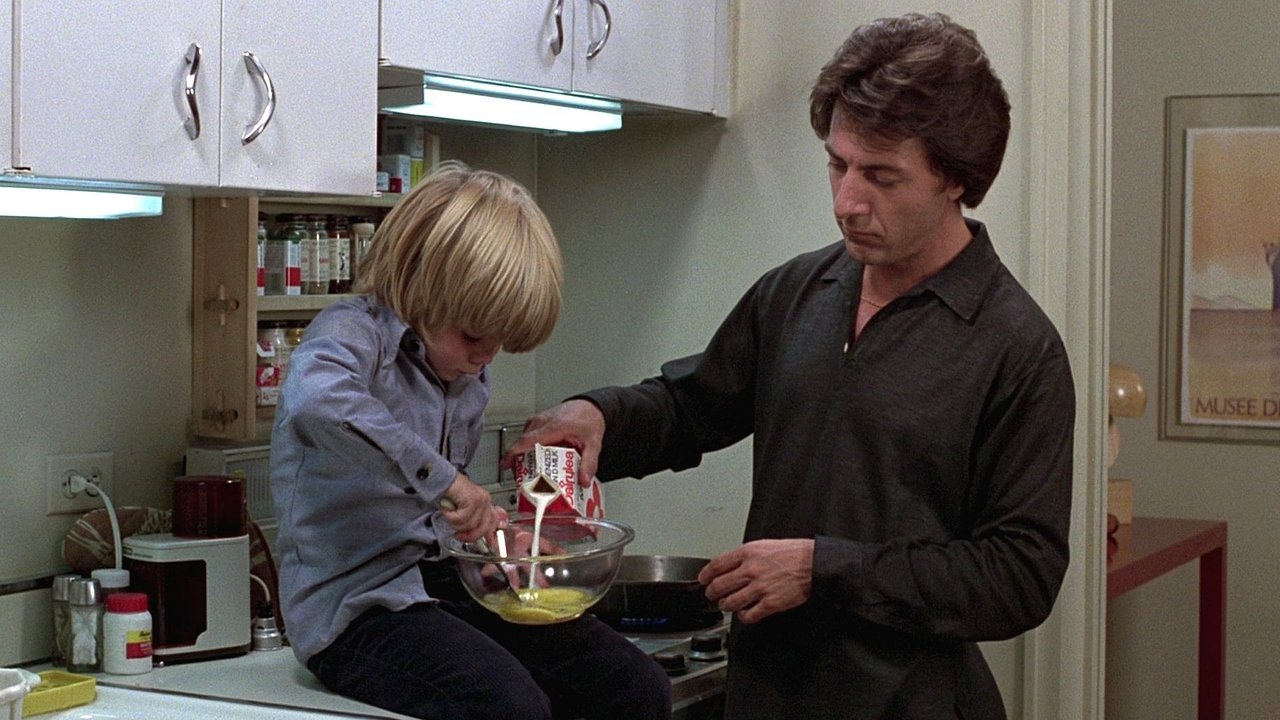
The "French toast scene" remains the gold standard for visual storytelling. Dustin Hoffman tries to navigate the kitchen with the frantic, incompetent energy of a man trying to defuse a bomb with a spatula. It’s hilarious until it’s heartbreaking. Watching him struggle to find a bowl or understand how much milk to use isn't just a "clueless dad" trope; it’s a philosophical shift. He has to learn that fatherhood isn't a title you inherit; it’s a craft you practice until your hands bleed. By the time we see him effortlessly prepping school lunches later in the film, the transformation is complete. Ted Kramer is effectively a man who had to lose his wife to finally meet his son.
The Courtroom as a Butcher Shop
The film’s second half shifts from the domestic to the legal, and this is where the "Cerebral Drama" tags really earn their keep. The custody battle is a brutal examination of how the law is a blunt instrument used to dissect delicate human relationships. Jane Alexander, playing the neighbor Margaret, provides a moral compass that shifts throughout the film, representing the audience’s own wavering loyalties.
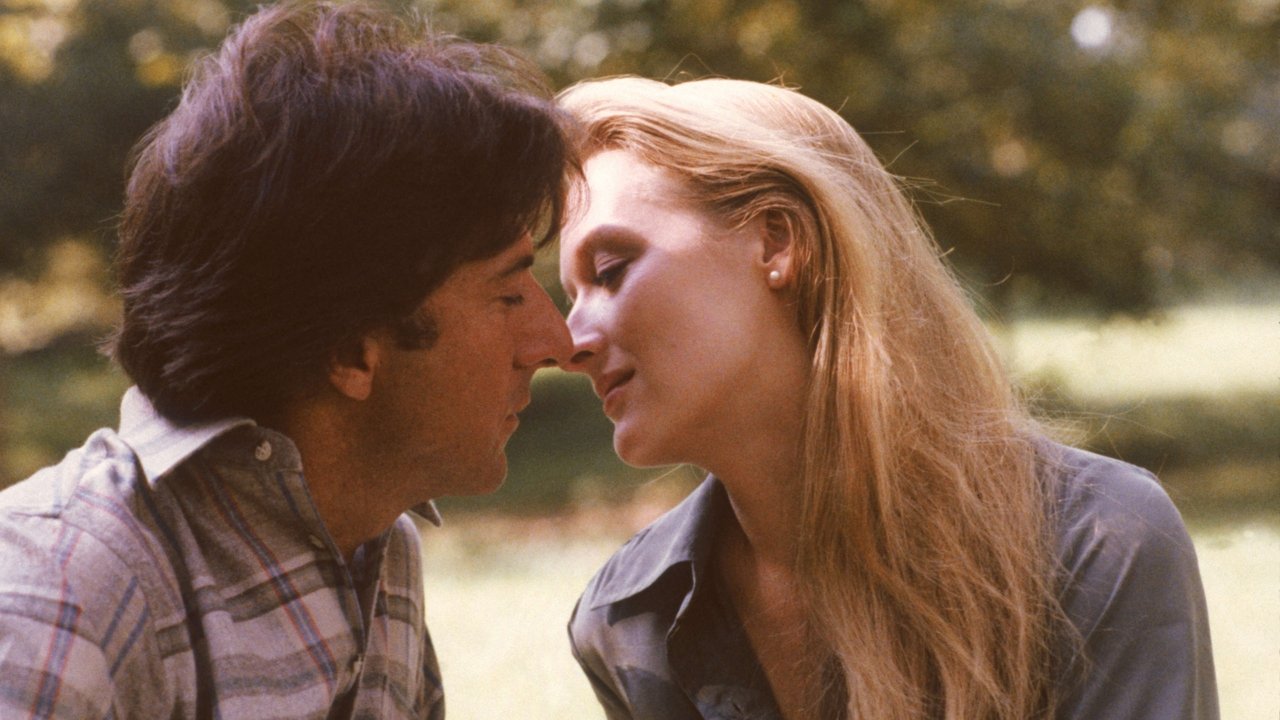
The courtroom scenes are masterclasses in nuanced performance. Meryl Streep—who famously rewrote her own courtroom speech to ensure Joanna didn't come across as a mere plot device—delivers a defense of her own humanity that is impossible to dismiss. It forces us to grapple with a difficult question: Does a mother’s brief absence negate her biological and emotional claim to her child? Conversely, does a father’s sudden "awakening" outweigh years of prior neglect?
There’s a cold, intellectual rigor to the way Robert Benton frames these scenes. He doesn't give us a "bad" parent. Instead, he gives us two people who have grown in opposite directions and a legal system that demands one of them be declared the loser. It’s a zero-sum game played with a seven-year-old’s heart as the stakes. Justin Henry, who was only eight at the time, gives what I consider one of the most authentic child performances in history. He doesn't act like a "movie kid"; he acts like a boy who is genuinely afraid his world has no floor.
A Box Office Anomaly
It is fascinating to remember that Kramer vs. Kramer was the highest-grossing film of 1979. In an era where Star Wars had already changed the landscape toward spectacle, a quiet, $8 million drama about divorce pulled in over $100 million. It beat out Apocalypse Now and Rocky II at the Oscars, proving that audiences were starving for "adult" stories that reflected the crumbling stability of the American nuclear family.
The production was famously intense. Dustin Hoffman, ever the devotee of the Method, reportedly antagonized Meryl Streep on set to elicit a more fragile, reactive performance—including a famous unscripted moment where he shattered a wine glass against the wall near her head. While that "cowboy" era of directing is rightfully criticized now, the resulting tension on screen is undeniable.
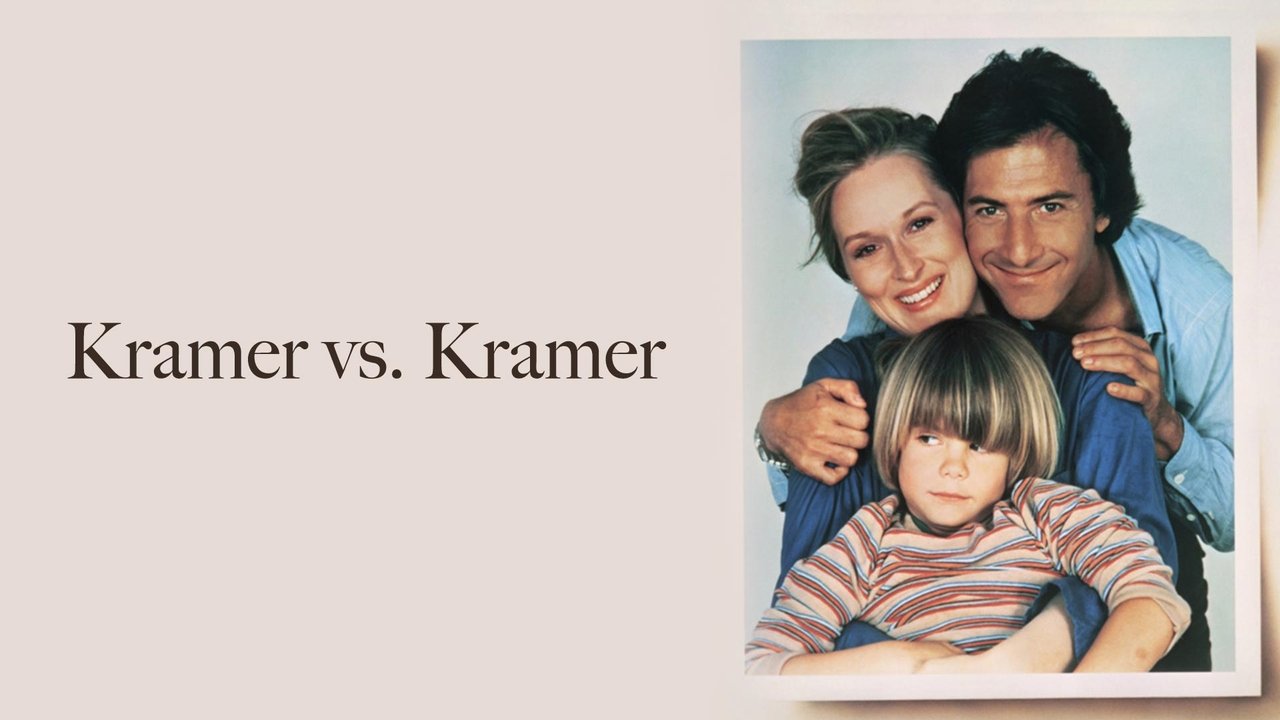
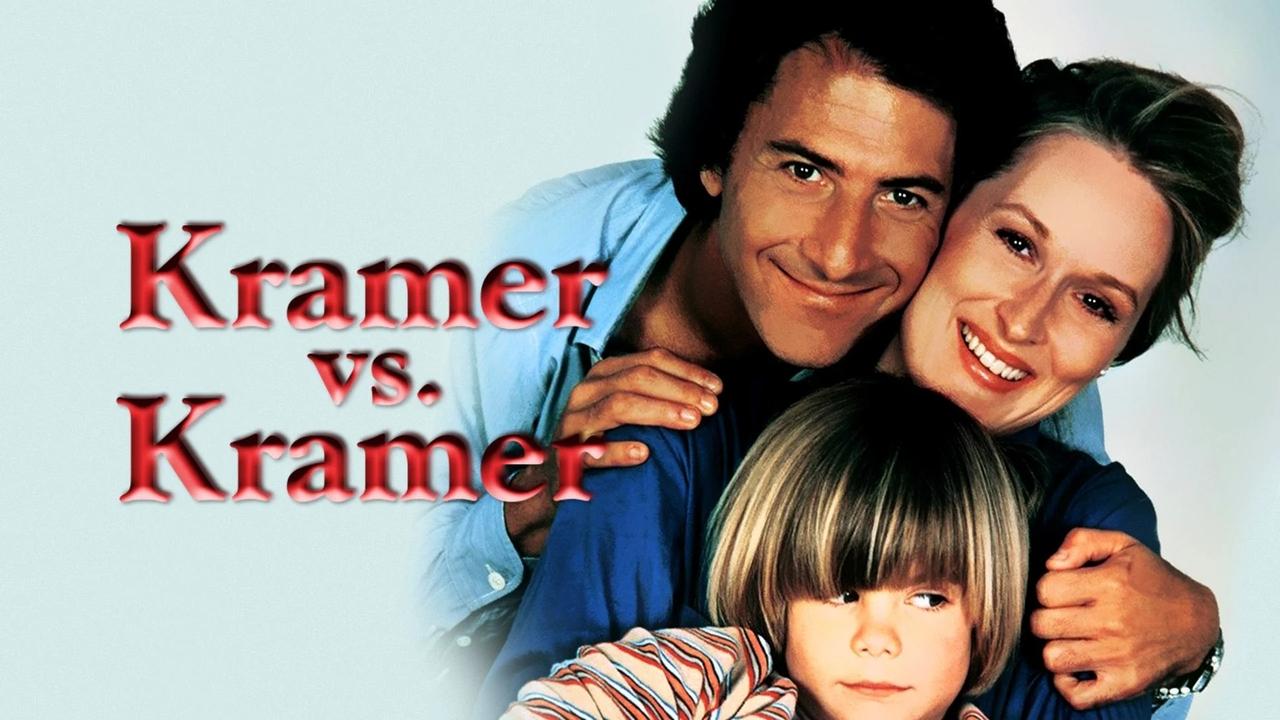
When this eventually hit the home video market in the early 80s, it became a staple of the "prestige" shelf at local rental spots. It was the tape parents rented to feel something real between the latest slashers and sci-fi romps. The cover art, featuring a fractured family portrait, became an icon of the divorce-heavy 80s. I remember seeing that thick Columbia Pictures VHS box at my local shop, its spine worn white from being pulled off the shelf so many times by people looking for a mirror to their own domestic struggles.
Kramer vs. Kramer succeeds because it refuses to provide an easy catharsis. It’s a film about the "Me Decade" crashing into the reality of "We." It challenges the traditional 70s cynical ending by offering something more complex: a bittersweet maturity. It suggests that while love might not be enough to save a marriage, it might be just enough to help two people stop hurting each other for the sake of the person they both created. It’s a quiet, philosophical powerhouse that still packs a punch in its silence.
Keep Exploring...
-
Rain Man
1988
-

Rocky
1976
-
Manhattan
1979
-

The Sound of Music
1965
-

The Color Purple
1985
-

The Graduate
1967
-
Marathon Man
1976
-
Raging Bull
1980
-
The Elephant Man
1980
-

Gandhi
1982
-

Amadeus
1984
-

The Towering Inferno
1974
-

Close Encounters of the Third Kind
1977
-
An Officer and a Gentleman
1982
-

Rocky III
1982
-

WarGames
1983
-
The Karate Kid
1984
-
Network
1976
-
Annie Hall
1977
-
Being There
1979