Nosferatu the Vampyre
"Death is not the worst. Loneliness is."
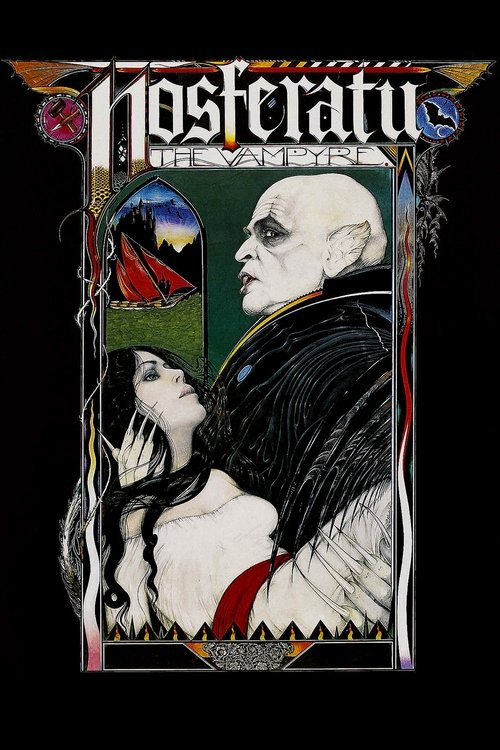
The opening sequence of Werner Herzog’s Nosferatu the Vampyre doesn't feature a jump scare or a dramatic orchestral sting. Instead, it’s a slow, agonizing pan across the mummified remains of the victims of a 19th-century cholera epidemic. These aren't props; Herzog famously used actual mummies from a museum in Guanajuato. As the camera lingers on their frozen, screaming faces, you realize you aren't in for a standard "monster movie." You’re entering a dream—or rather, a feverish, beautiful nightmare that smells of damp earth and ancient silk.

I first encountered this film on a battered Gaumont Video VHS tape I’d fished out of a bargain bin. I remember it vividly because I was eating a slightly-too-salty bag of pretzels at the time, and the contrast between my mundane snacking and the cosmic gloom on the screen made the film feel even more alien. On a CRT television, the shadows weren't just black; they were a thick, grainy abyss that seemed to leak out of the screen.
The Face of Eternal Exhaustion
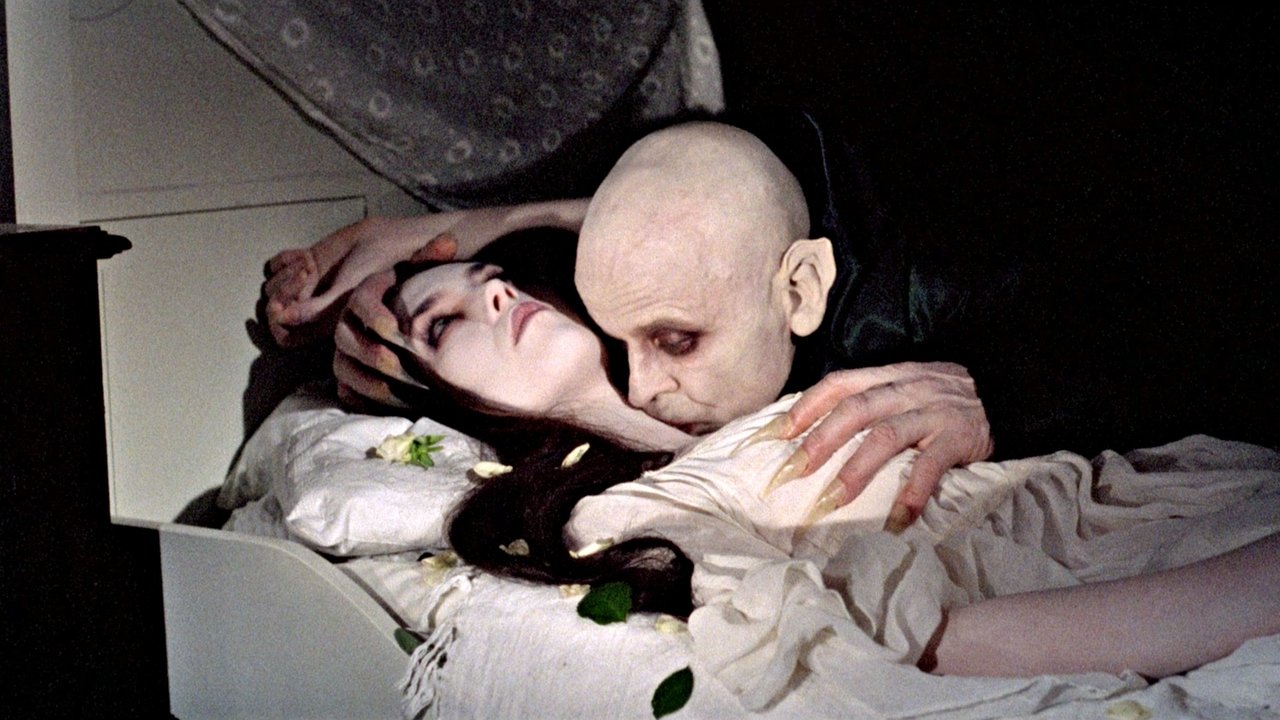
While the 1970s was a decade defined by the rise of the slasher and the visceral gore of the "New Hollywood" horror wave, Herzog went in the opposite direction. He looked back to F.W. Murnau’s 1922 silent masterpiece and decided to give the monster a soul—and a very tired one at that. Klaus Kinski, sporting ears like a bat and fingernails like talons, delivers a performance that redefined the vampire.
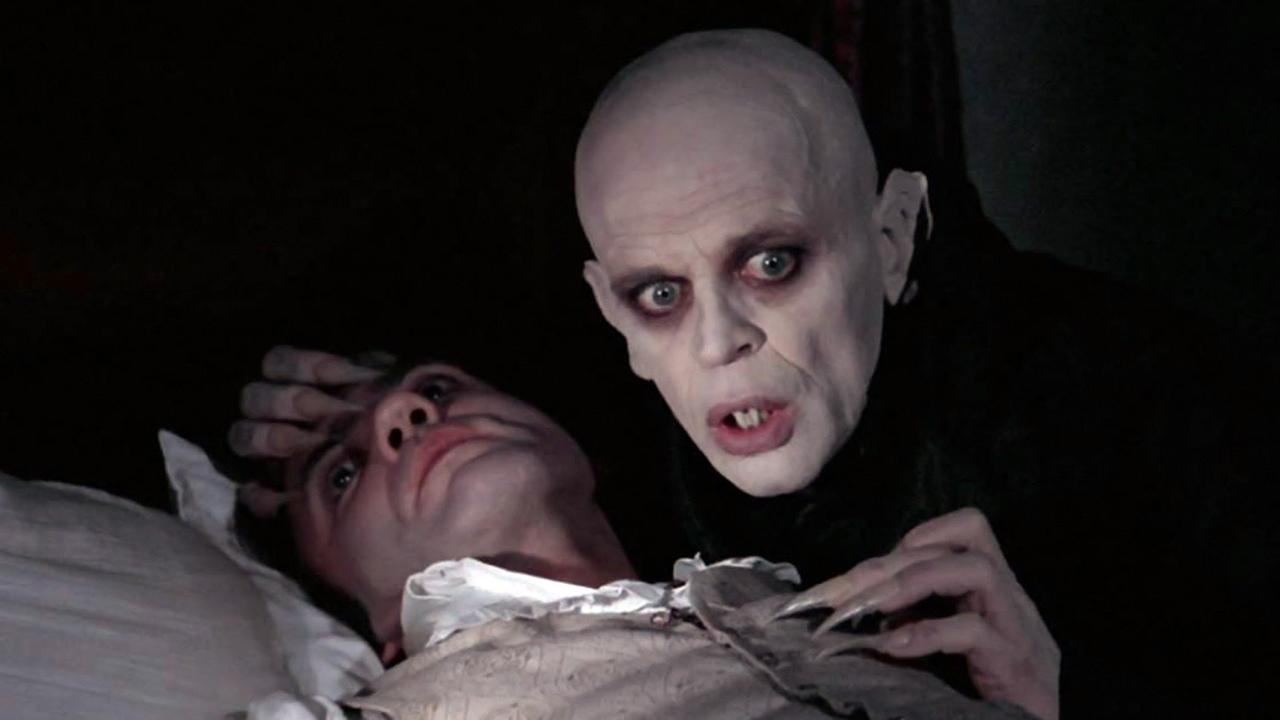
Kinski’s Dracula isn't a suave seducer like Christopher Lee or Frank Langella. He is a pestilential thumb with teeth, a creature so burdened by his own immortality that he moves as if underwater. When he tells Bruno Ganz’s Jonathan Harker that "time is an abyss," you don’t just hear the words; you see the weight of centuries in the way Kinski slumps his shoulders. It is a masterclass in stillness. Kinski was notoriously difficult to work with—a man who once famously screamed at a film crew for hours—but under Herzog’s direction, that volatility is channeled into a quiet, vibrating desperation.
A Symphony of Rats and Shadows
Herzog is the king of the "indie hustle," a man who would rather move a mountain than use a matte painting. To capture the arrival of the plague in Wismar, he didn't just suggest a rat infestation; he imported 11,000 lab rats from Hungary. When he realized they were too "clean-looking" for a horror movie, he had them dyed gray with hair dye. The sight of thousands of these creatures swarming the town square while the citizens dance a final, macabre waltz is one of the most haunting images in cinema history.
The cinematography by Jörg Schmidt-Reitwein (who also shot Herzog’s The Enigma of Kaspar Hauser) looks like a series of Dutch Master paintings come to life. The lighting is low, naturalistic, and oppressive. It’s paired with a transcendent score by Popol Vuh, whose synthesizers and choral arrangements create a sense of "ecstatic truth" that elevates the film above mere genre exercise. It’s a movie you don't just watch; you inhale it.
The Ethereal vs. The Rot
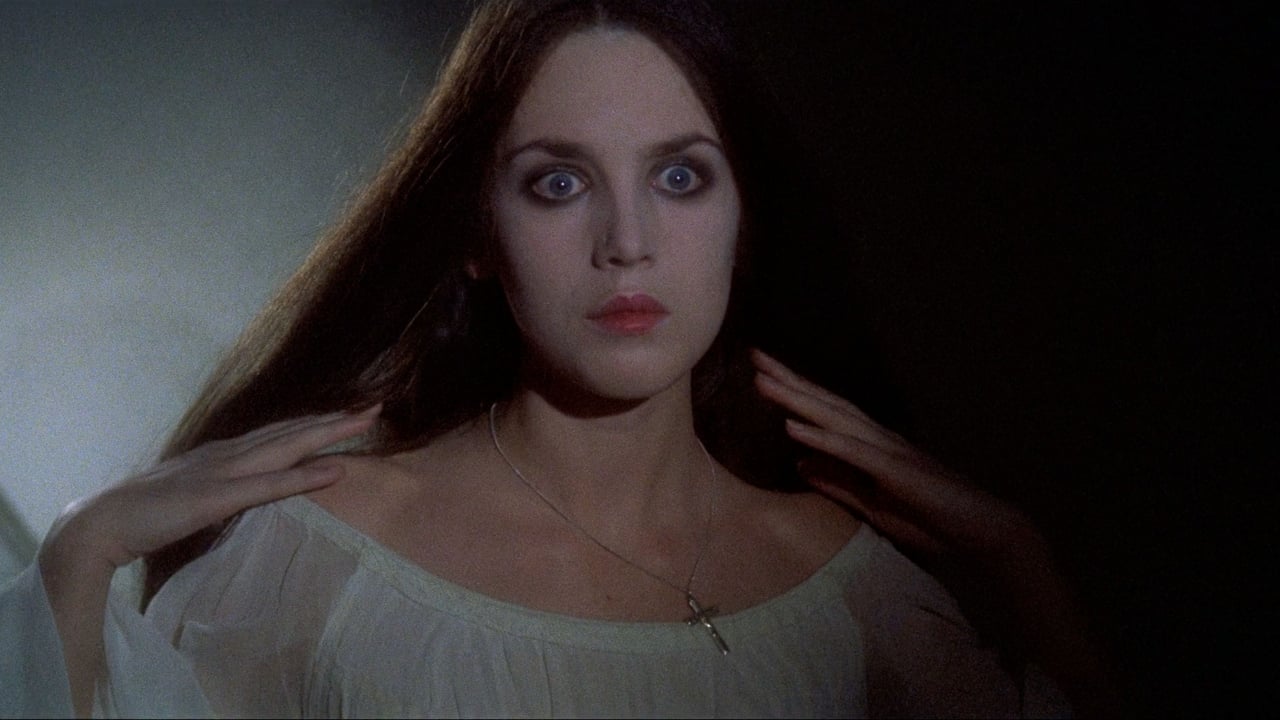
Opposite Kinski’s rot is Isabelle Adjani as Lucy Harker. In the late 70s, Adjani was the ultimate muse of European art cinema, and here she is photographed like a Pre-Raphaelite ghost. Her pale skin and wide, dark eyes provide the film's moral center. While the men around her—including a frustratingly skeptical Dr. Van Helsing played by Walter Ladengast—refuse to believe in the supernatural, Lucy understands the stakes immediately.
The film's ending is a departure from the 1922 original and Bram Stoker’s novel, offering a cynical, 1970s-tinted twist that suggests evil isn't something you can simply stake through the heart and forget. It’s a transition from the gothic tradition into a more modern, existential dread. The final shots of a rider galloping across a barren landscape stayed with me for days, long after I’d finished my pretzels and turned off the humming VCR.
Werner Herzog’s Nosferatu the Vampyre is a rare remake that manages to honor its predecessor while carving out its own terrifying identity. It captures the transition of the late 70s perfectly—combining the artistic ambition of the auteur era with the practical, "get it done" grit of independent filmmaking. It’s a film about the loneliness of being a monster and the horror of being a victim, wrapped in some of the most beautiful imagery ever put to celluloid. If you only ever see one "art-house" horror film, make it this one. Just maybe skip the pretzels.

Keep Exploring...
-
Aguirre, the Wrath of God
1972
-
Eraserhead
1977
-
Peeping Tom
1960
-
What Ever Happened to Baby Jane?
1962
-

Repulsion
1965
-

Day of the Dead
1985
-
Badlands
1974
-
Murder on the Orient Express
1974
-

The Conversation
1974
-
The Texas Chain Saw Massacre
1974
-
Carrie
1976
-
Dawn of the Dead
1978
-

Halloween
1978
-

Invasion of the Body Snatchers
1978
-
Midnight Express
1978
-
Possession
1981
-

The Evil Dead
1981
-

A Nightmare on Elm Street
1984
-
Rosemary's Baby
1968
-
Don't Look Now
1973