The Amityville Horror
"Evil has a new address and a very high mortgage."
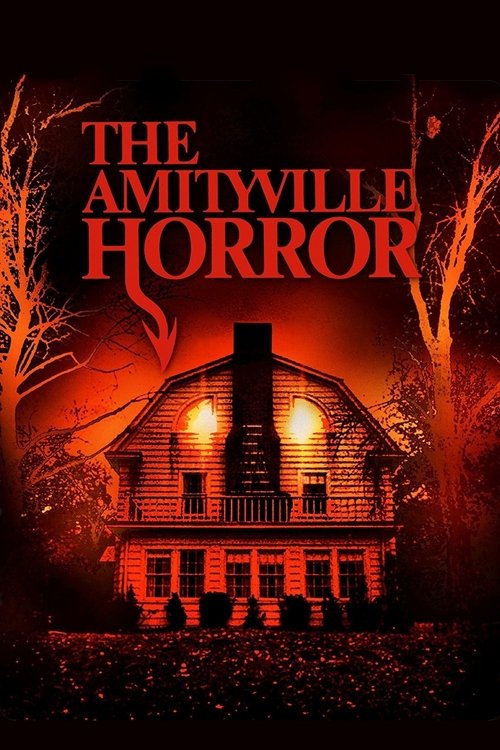
I watched this film again last Tuesday while struggling to assemble a flat-pack IKEA desk, and honestly, the Lutz family’s demonic haunting seemed significantly more manageable than those cryptic Swedish instructions. There is something deeply relatable about The Amityville Horror (1979) that has nothing to do with ghosts and everything to do with the terror of homeownership.
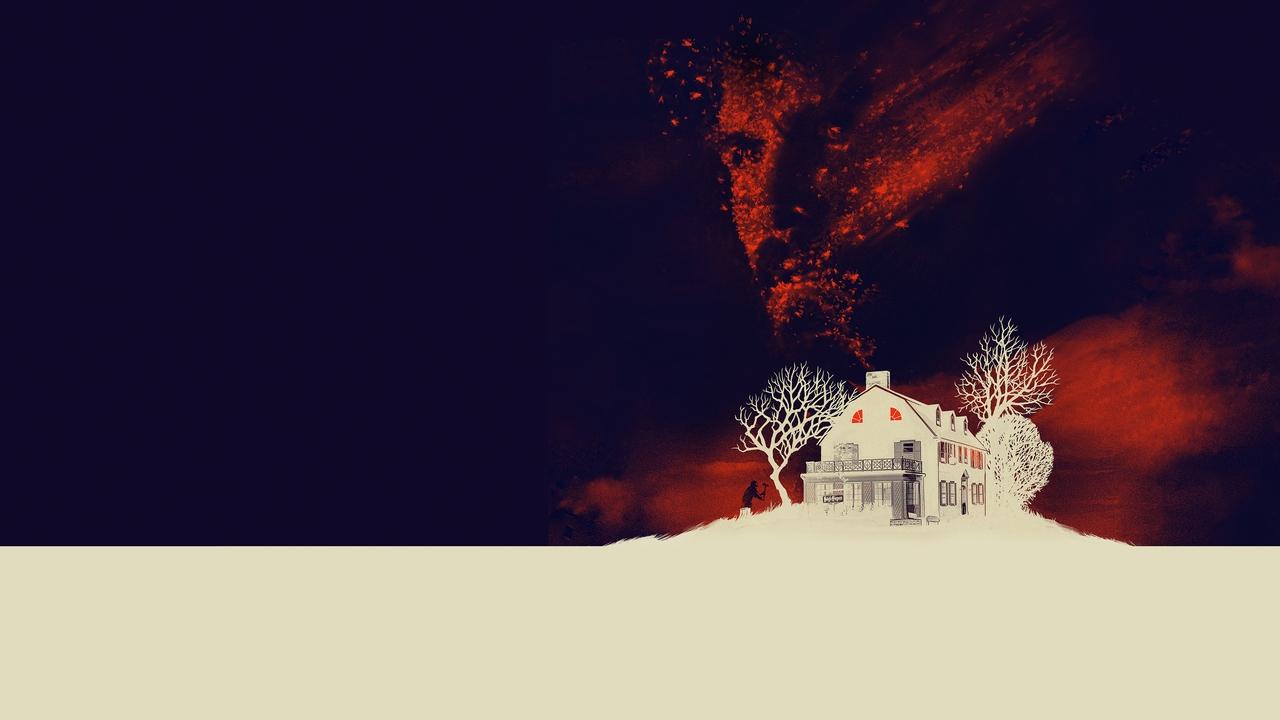
Long before it was a sprawling franchise of increasingly questionable sequels and remakes, The Amityville Horror was a cultural phenomenon. It was the quintessential "based on a true story" campfire tale that gripped the late 70s. While modern audiences might find the pacing a bit deliberate—or "slow," if you haven't had your coffee—there is an undeniable, sticky dread to this film that most CGI-heavy jump-scare fests fail to replicate.
The Ultimate Real Estate Nightmare
The premise is the stuff of suburban legends: George and Kathy Lutz (James Brolin and Margot Kidder) move into a gorgeous, Dutch Colonial house in Long Island. The catch? It was the site of a gruesome mass murder just a year prior. But hey, the price is right! I love how the film captures that specific 1970s "New Hollywood" aesthetic—brown corduroy, thick beards, and a lingering sense of post-Watergate cynicism.
Director Stuart Rosenberg (who gave us the infinitely cooler Cool Hand Luke) treats the house not just as a setting, but as the lead antagonist. Those iconic quarter-circle windows look like malevolent eyes, and the film does a fantastic job of making the architecture feel oppressive. When the black goo starts bubbling up in the toilets and the walls begin to "bleed," it feels like a violation of the American Dream. It’s not just a ghost story; it’s a story about a family falling apart under the weight of something they can’t fix with a toolbox.
Brolin’s Beard and Steiger’s Shout
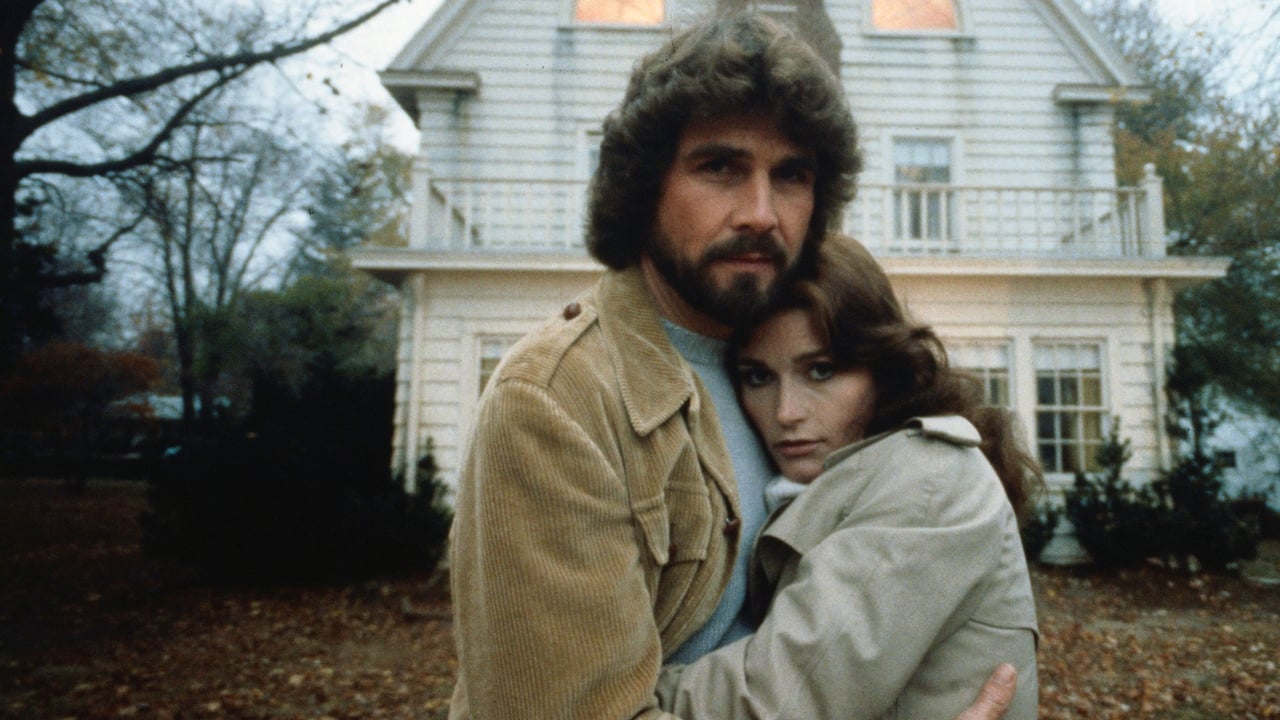
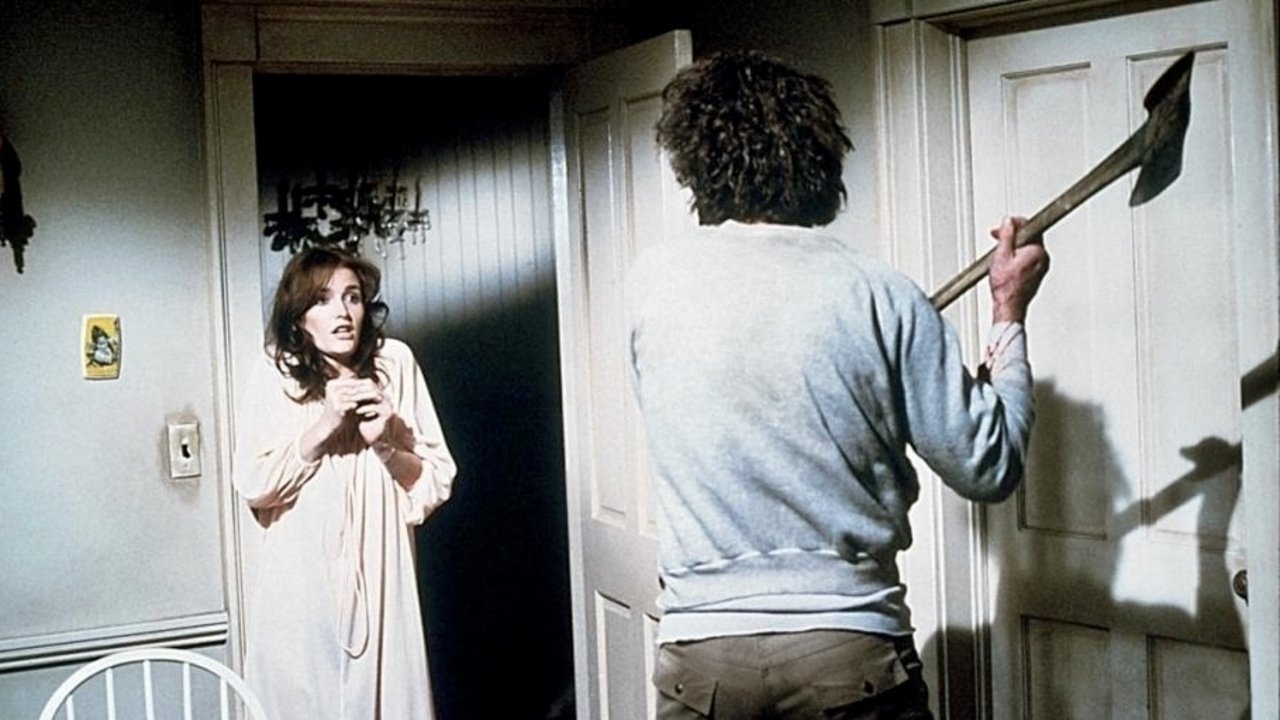
The performances are where the film gets its human friction. James Brolin is fantastic here, slowly transforming from a happy-go-lucky dad into a brooding, axe-wielding shell of a man. Honestly, Brolin’s beard is doing 40% of the heavy lifting in terms of atmosphere; as it gets more unkempt, you know the haunting is leveling up. Margot Kidder, fresh off her iconic turn as Lois Lane in Superman (1978), brings a wonderful, frantic energy to Kathy. You really feel her desperation as she tries to hold her family together while her husband stares into the fireplace for six hours at a time.
Then, we have the legendary Rod Steiger as Father Delaney. If you like your acting "loud," Steiger is your man. He doesn’t just perform; he erupts. His encounters with the house’s unseen forces—including a truly disgusting swarm of actual flies—are played with such high-octane intensity that they almost feel like they belong in a different movie. But in the context of a 70s horror flick, it works. It adds to the feeling that the world is tilting off its axis.
The AIP Hustle and the VHS Legacy
What fascinates me about Amityville is its pedigree. This was produced by American International Pictures (AIP), a studio legendary for churning out B-movie schlock and drive-in fodder. But with Amityville, they hit the big leagues. Working with a modest $4.7 million budget, they turned a profit of over $86 million. It was the ultimate indie success story of its era, proving that you didn’t need a massive studio machine to create a blockbuster if you had a "true" story that terrified the public.
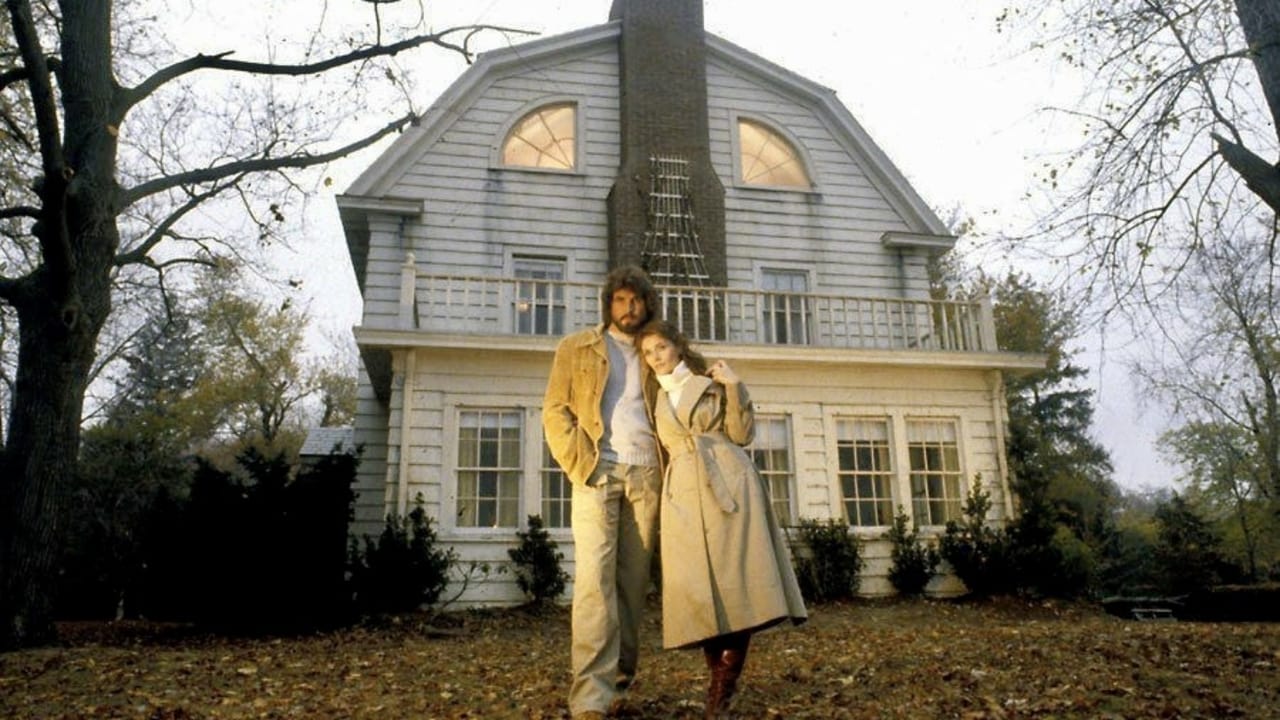
The practical effects, led by the crew’s ingenuity, hold up surprisingly well because they feel physical. The flies were real (and supposedly very difficult to manage on set), and the "black goo" had a viscous, stomach-turning quality that CGI just can't mirror. I still remember the first time I saw the box art for this in the "Horror" aisle of my local rental shop. The image of the house with those glowing red windows was a staple of the VHS era. It was one of those tapes that was always slightly worn out at the "Get Out!" scene because everyone kept rewinding it to see if they missed a ghost in the shadows.
Special shout-out to Lalo Schifrin (the genius behind the Mission: Impossible theme). His score for this film is genuinely unnerving. He uses a high-pitched, nursery-rhyme-gone-wrong vocal melody that gets under your skin and stays there. It’s the kind of music that makes you want to turn all the lights on in your own house.
While it doesn't quite reach the heights of The Exorcist (1973) or The Shining (1980), The Amityville Horror is a rock-solid piece of genre history. It’s a film that understands that the most frightening things aren't always the monsters under the bed, but the realization that your "safe space" has turned against you. It captures a specific moment in time when the American suburban ideal was curdling into something darker. If you can handle the 70s pacing, it’s a journey into domestic dread that still delivers a chill. Just maybe don't watch it right before you sign a mortgage.

Keep Exploring...
-
The Amityville Horror
2005
-
Black Christmas
1974
-

The Hills Have Eyes
1977
-

Invasion of the Body Snatchers
1978
-
Friday the 13th
1980
-
The Fog
1980
-
Halloween II
1981
-
The Howling
1981
-
Children of the Corn
1984
-
Cannibal Holocaust
1980
-

Scanners
1981
-

A Nightmare on Elm Street Part 2: Freddy's Revenge
1985
-

Day of the Dead
1985
-

Re-Animator
1985
-
Critters
1986
-
The Texas Chainsaw Massacre 2
1986
-
A Nightmare on Elm Street 3: Dream Warriors
1987
-
Bad Taste
1987
-
Hellbound: Hellraiser II
1988
-
Killer Klowns from Outer Space
1988