The Jerk
"From rags to riches to a thermos."

I was halfway through a bowl of lukewarm Spaghetti-Os when Steve Martin looked into the camera and deadpanned, "I was born a poor black child." At that moment, I realized that The Jerk isn't just a movie; it’s a psychological endurance test for anyone who takes cinema too seriously. This was Steve Martin’s big-screen debut, and he didn’t just walk through the door—he tripped over the threshold, spilled his drink on the rug, and somehow convinced the host to give him the deed to the house.
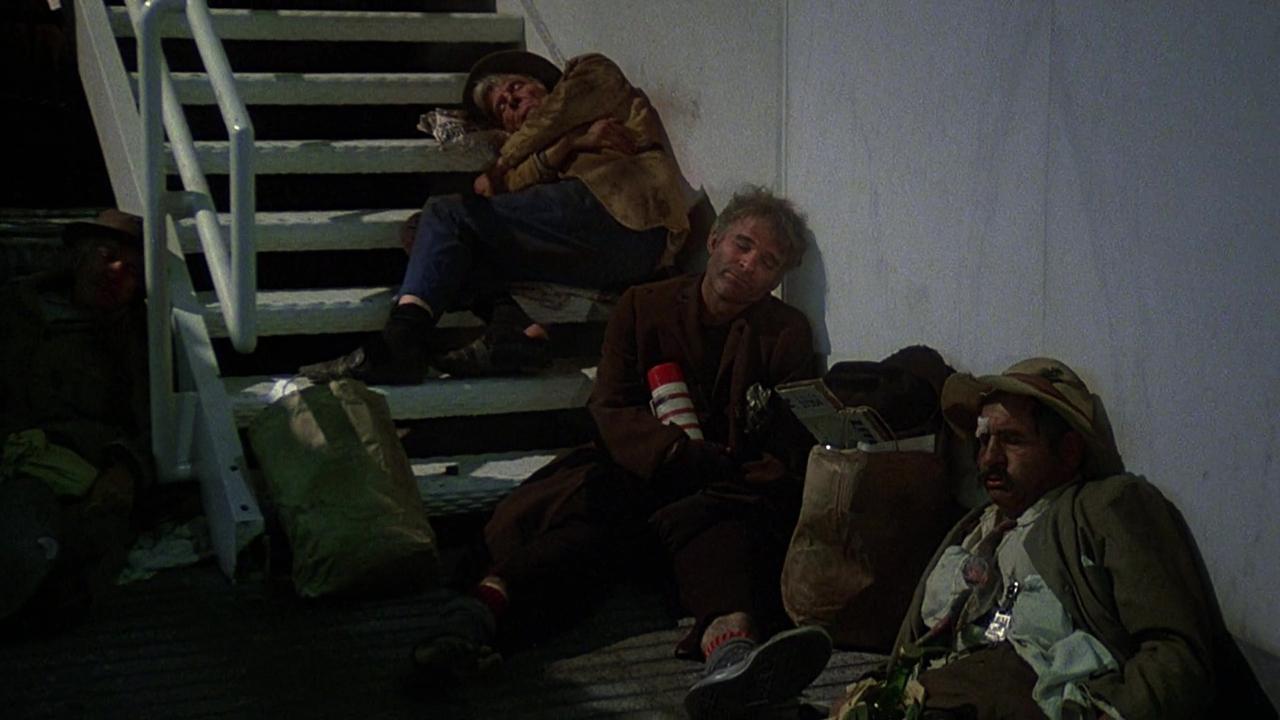
There is a specific kind of manic energy in late-70s comedy that we just don’t see anymore. It’s that bridge between the cynical, gritty "New Hollywood" of the early 70s and the glossy, high-concept blockbusters of the 80s. The Jerk sits right in the middle of that transition, feeling like a weird, wonderful fever dream. I watched this last night while my neighbor was power-washing his driveway at 10 PM, and the aggressive, repetitive rhythm of the water weirdly synced up with Navin’s "Things in this room" monologue. It was oddly therapeutic.
The Architecture of the Absolute Idiot
What makes Steve Martin work as Navin R. Johnson isn't just that he’s playing "dumb." It’s the total, unwavering sincerity he brings to the stupidity. Navin doesn’t know he’s in a comedy. When he gets excited about his name finally appearing in the phone book—the "Random House" of his dreams—he isn't winking at the audience. He is genuinely, purely thrilled to be "somebody." The phone book scene is the most accurate depiction of the American Dream ever captured on celluloid.
The script, co-written by Steve Martin and Carl Gottlieb (who you might remember as the guy who wrote Jaws), is a masterclass in the "joke-per-minute" ratio. It doesn’t give you time to breathe. If a joke about Navin’s "rhythm" doesn't land, there’s a sight gag involving a falling gas station or a dog named Shithead right behind it. Director Carl Reiner (the genius behind The Dick Van Dyke Show) keeps the camera steady and the framing simple, allowing Martin’s rubber-limbed physicality to do the heavy lifting. Reiner understood that you don’t need fancy tracking shots when you have a man who can make wearing a thermos look like a Shakespearean tragedy.
A Love Story for the Genuinely Hopeless

One thing I didn't expect on this rewatch was how much the romance actually works. Bernadette Peters as Marie is the perfect foil for Navin. She plays it with this ethereal, flute-playing sweetness that should feel ridiculous, but instead, it grounds the movie. It probably helped that Martin and Peters were a real-life couple at the time; their chemistry on the beach during "Tonight You Belong to Me" is so earnest it almost belongs in a different, better-behaved movie.
But then, the movie pivots. Navin invents the "Opti-Grab"—a simple plastic handle for glasses—and becomes a multimillionaire. This is where the satire bites a little harder. Navin’s "riches" phase is a neon-soaked nightmare of 1970s excess. He buys a mansion that looks like a disco threw up on a French chateau, complete with a specialized room for his "prizefight" posters. It’s a hilarious takedown of the nouveau riche, but Martin never loses that "jerk" DNA. Even when he’s wearing a tuxedo and sipping wine, he’s still the guy who thinks "Lord have mercy" is a secret code.
The Tape That Wouldn't Quit
If you grew up in the 80s or 90s, you probably remember the specific look of The Jerk on a VHS box. It was usually that bright yellow cover, or the one with Steve Martin looking bewildered while holding a bunch of random junk. It was a video store staple because it was the ultimate "safe bet." It didn't matter if you were ten or fifty; the sight of a man accidentally joining a "cat juggling" protest is universally funny.
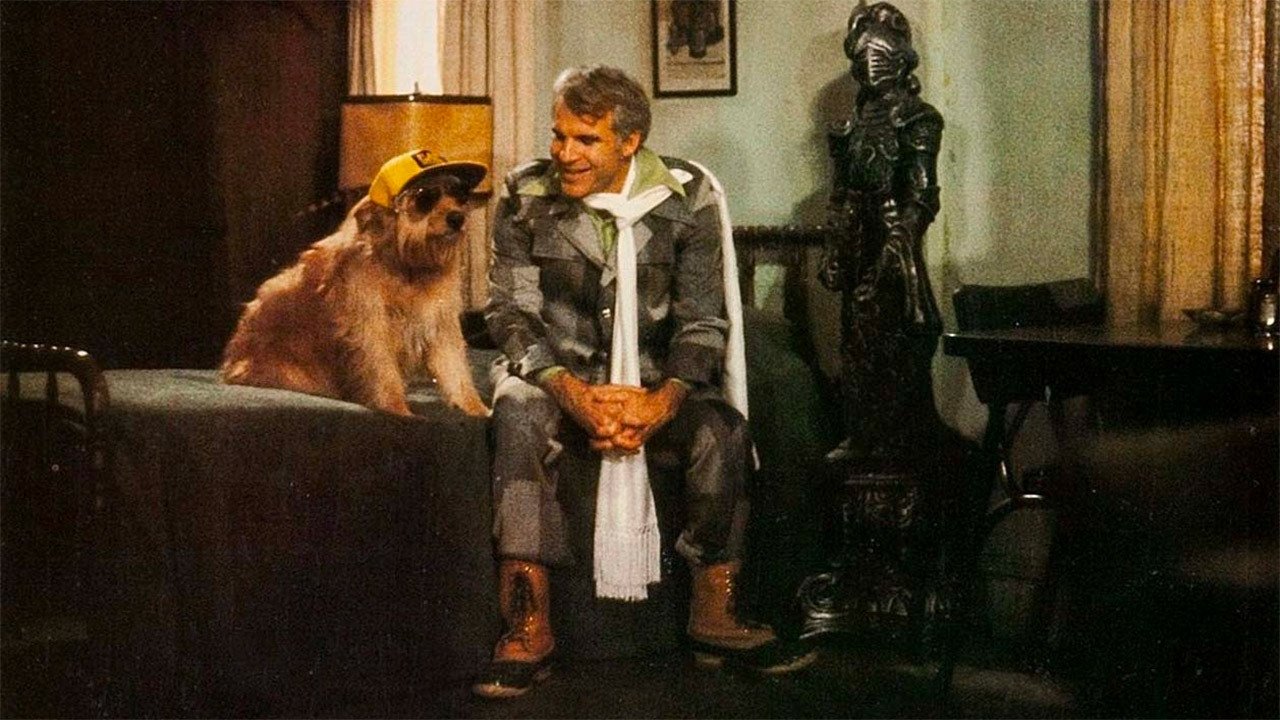
Interestingly, the "Opti-Grab" itself became a bit of a meta-joke. In the film, the invention leads to a massive class-action lawsuit because it causes people to become cross-eyed. In real life, the prop was just a bit of molded plastic, but Carl Gottlieb (who also plays Iron Balls McGinty) has mentioned in interviews that they actually had to be careful with the design so it didn't look too much like a real product someone might try to sue. It’s the kind of practical, low-budget ingenuity that defined the era. They didn't have CGI to fix the gags; Steve Martin actually had to fall down those stairs, and he did it with the grace of a collapsing folding chair.
Ultimately, The Jerk works because it has a massive heart buried under its layers of absurdity. It’s a movie that celebrates the idiot in all of us—the part that just wants to find a "special purpose" and a nice girl to play the ukulele with. It’s loud, it’s occasionally offensive in that specific 1979 way, and it’s completely unapologetic.
If you haven’t seen it in a decade, give it another spin. You’ll find that the jokes have aged surprisingly well, mostly because they aren't tied to topical pop culture references, but to the timeless reality of human gullibility. Just make sure you have your glasses on straight before you start. You wouldn't want to end up cross-eyed.

Keep Exploring...
-
Dirty Rotten Scoundrels
1988
-
Fast Times at Ridgemont High
1982
-
¡Three Amigos!
1986
-

Murder by Death
1976
-
Being There
1979
-
Caddyshack
1980
-

History of the World: Part I
1981
-
Stripes
1981
-
48 Hrs.
1982
-

Creepshow
1982
-
National Lampoon's Vacation
1983
-

Risky Business
1983
-
Zelig
1983
-

Romancing the Stone
1984
-
Splash
1984
-

Charade
1963
-
Batman
1966
-
M*A*S*H
1970
-
Harold and Maude
1971
-

Bowfinger
1999