Flash Gordon
"He’ll save every one of us."

There is a specific, neon-drenched madness that only exists when a British noir director, an Italian mega-producer, and a rock band like Queen decide to reinvent a 1930s comic strip. I watched this most recent viewing on a dusty laptop while my neighbor was loudly practicing the bassoon, and honestly, the bassoon added a certain avant-garde texture to the Mongo scenes that I think producer Dino De Laurentiis would have actually respected.
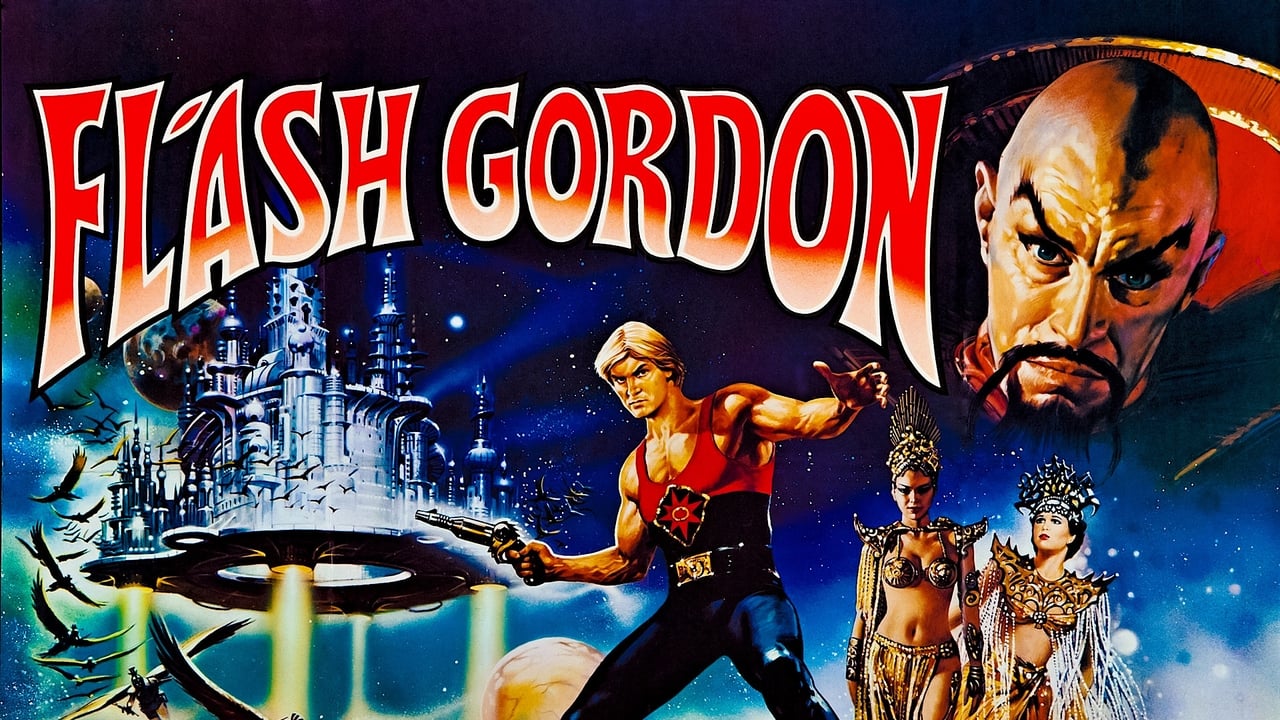
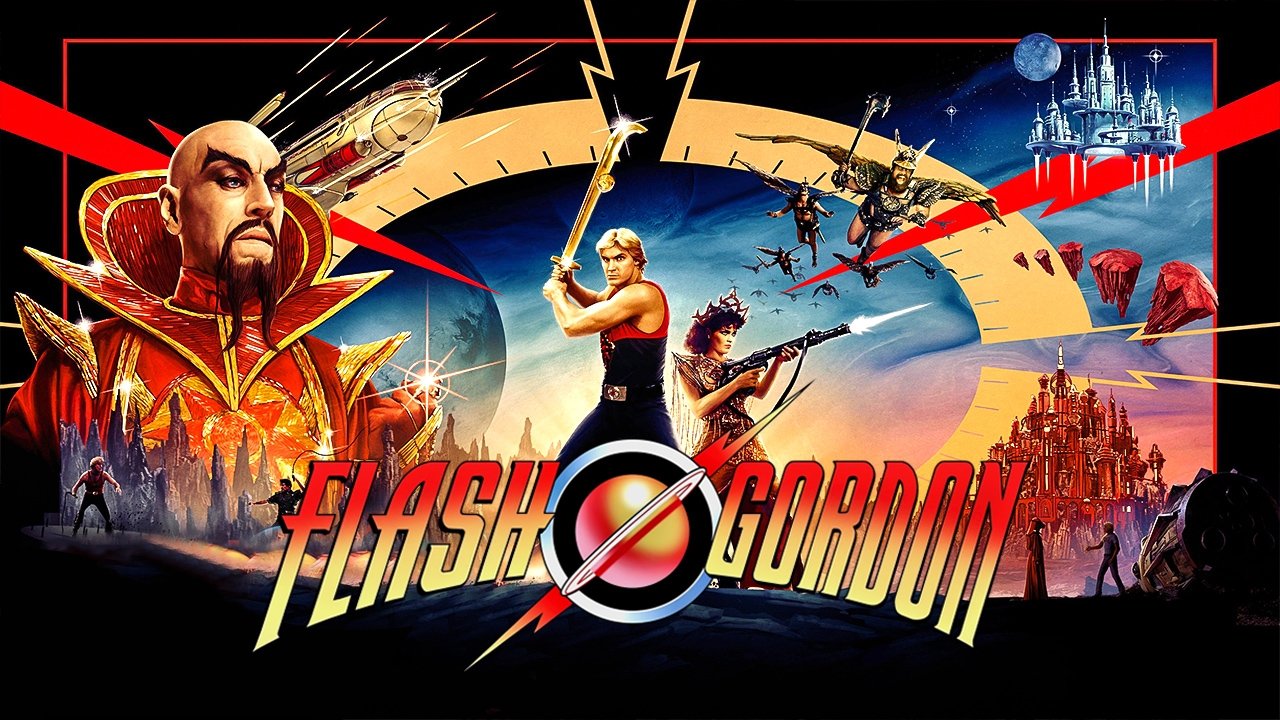
When Flash Gordon hit theaters in 1980, it was essentially the "Anti-Star Wars." While George Lucas was leaning into the "used universe" aesthetic—all grimy metal and desert dust—director Mike Hodges decided to paint every frame with the primary colors of a fever dream. The result is a film that feels less like a space opera and more like a high-budget pantomime performed inside a lava lamp.
The Aesthetic of the Excess
The first thing that hits you isn't the story; it's the sheer, unadulterated visual noise. The sky of the planet Mongo doesn’t look like space; it looks like a chemical spill in a luxury aquarium. This was achieved through a practical effect that I find endlessly more charming than modern CGI: they used colored oils and dyes injected into massive water tanks. It gives the atmosphere a swirling, psychedelic quality that makes the characters look like they’re walking through a mood ring.
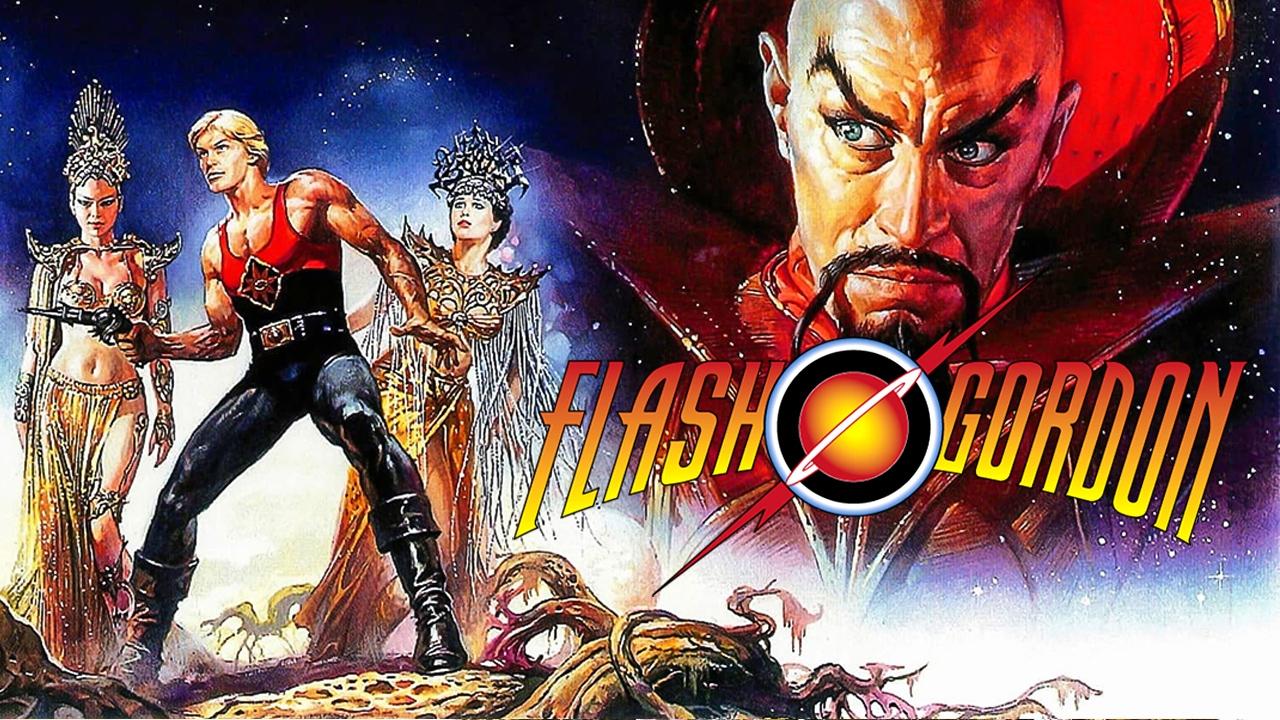
Sam J. Jones plays Flash as the ultimate "aw-shucks" American quarterback, a man who reacts to intergalactic execution and alien temptresses with the same mild confusion he might feel if he lost his car keys. Beside him, Melody Anderson as Dale Arden brings a spunky, 1940s-inspired energy that anchors the camp. But let’s be real: we are all here for the villains. Max von Sydow as The Emperor Ming is a masterclass in how to deliver lines with enough gravitas to sink a battleship while wearing a gold-sequined robe that weighs more than he does. He doesn’t wink at the camera; he plays it entirely straight, which makes the insanity around him ten times funnier.
Queen, Quests, and the VHS Glow
You cannot talk about this movie without talking about the music. Queen didn’t just write a soundtrack; they wrote a pulse. The stomping bassline and Freddie Mercury’s soaring vocals turn what could have been a dragging adventure into a high-octane music video. It’s one of the few films where the score actually dictates the editing rhythm of the action.
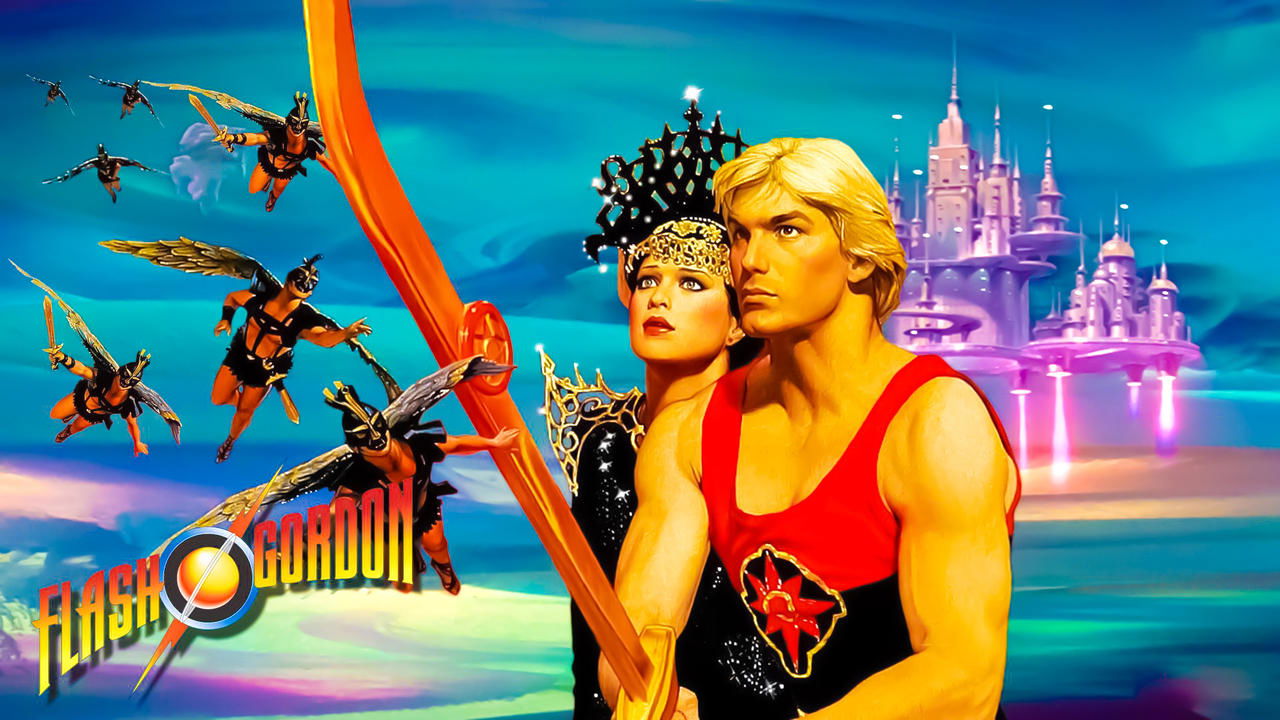
For many of us, the true legacy of Flash Gordon wasn't found in a theater, but on a worn-out VHS tape with a bright red spine sitting on a rental store shelf. The box art—featuring Flash holding a sword while lightning crashed behind him—promised a level of "spectacle" that the 19-inch CRT televisions of the 80s could barely contain. Because the film is so episodic and colorful, it became the quintessential "rewatch" movie. You didn't need to follow the plot closely; you just wanted to get to the "Wood Beast" scene where Timothy Dalton (playing a very swashbuckling Prince Barin) has to stick his hand into a hollow stump.
The action choreography is delightfully clunky. The "football fight" in Ming’s court, where Flash uses an ornamental egg like a pigskin to tackle Ming’s guards, is peak 80s cinema. It’s physically impossible, narratively ridiculous, and I would trade a dozen modern Marvel fight scenes for one more sequence of Brian Blessed yelling "GORDON'S ALIVE!" while wearing hawk wings.
The Mystery of the Missing Voice
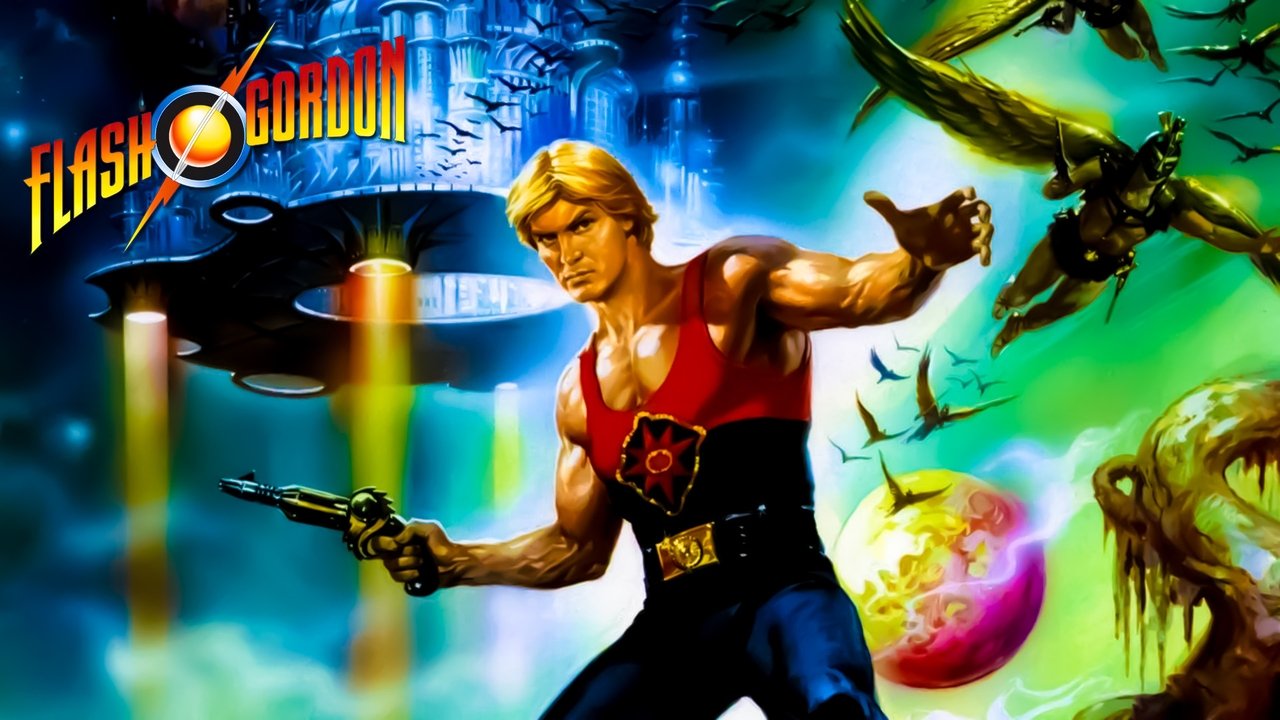
One of the more fascinating, and slightly tragic, behind-the-scenes stories involves our lead. Sam J. Jones had a massive falling out with Dino De Laurentiis during post-production—reportedly over unpaid expenses and artistic differences—and he left the project before he could finish his ADR (Automated Dialogue Replacement).
As a result, most of Flash’s dialogue in the finished film isn't actually Sam J. Jones. He was dubbed by a professional voice actor named Peter Marinker. Once you know this, the movie takes on an even weirder, slightly detached quality. It contributes to that "forgotten" feeling the movie has; it’s a blockbuster whose lead actor was effectively erased from the audio track of his own breakout role. This might explain why the film didn't launch Jones into the stratosphere like Star Wars did for its cast, but it cemented his status as a cult icon who eventually got his flowers in the movie Ted.
Flash Gordon is a miracle of mismanaged intentions. It tries to be an epic, settles for being a camp classic, and ends up being one of the most visually distinct films of the 20th century. It’s a reminder that before movies became obsessed with "gritty realism," they were allowed to be loud, sparkly, and unashamedly fun. If you haven't seen it recently, find the biggest screen you can, crank the Queen soundtrack until your neighbors complain, and enjoy the beautiful, neon chaos. It’s a Hail Mary pass that actually connects.
Keep Exploring...
-
Star Trek III: The Search for Spock
1984
-

Masters of the Universe
1987
-
Tron
1982
-
Superman III
1983
-
Dune
1984
-

Superman
1978
-
Moonraker
1979
-

Superman II
1980
-
Never Say Never Again
1983
-
Mad Max Beyond Thunderdome
1985
-
Logan's Run
1976
-
Conan the Destroyer
1984
-
Romancing the Stone
1984
-
The Jewel of the Nile
1985
-
Star Trek V: The Final Frontier
1989
-
Mad Max
1979
-
Time Bandits
1981
-
King Kong
1976
-
Conan the Barbarian
1982
-

The Rocketeer
1991