Escape to Victory
"Stallone, Caine, and Pelé: The ultimate underdog match."
There is a specific kind of 1980s fever dream that only occurs when a legendary director like John Huston—the man who gave us The Maltese Falcon and The African Queen—decides to spend $10 million on a movie where the star of Rocky plays goalie for a team of Allied POWs coached by Michael Caine. I first encountered Escape to Victory (or simply Victory, as the big, blocky font on the VHS box screamed) during a rainy Saturday afternoon while recovering from a wisdom tooth extraction. The lingering taste of medicinal gauze and the hazy glow of my family’s old Magnavox TV somehow made the grit of a German prison camp feel strangely tangible.
It is a film that shouldn’t work. On paper, it’s a bizarre chimera: one part somber WWII drama, one part The Great Escape knock-off, and one part high-stakes sports flick. Yet, through some alchemy of star power and Huston’s old-school craftsmanship, it becomes one of the most purely entertaining artifacts of its era.
The Greatest Locker Room Ever Assembled
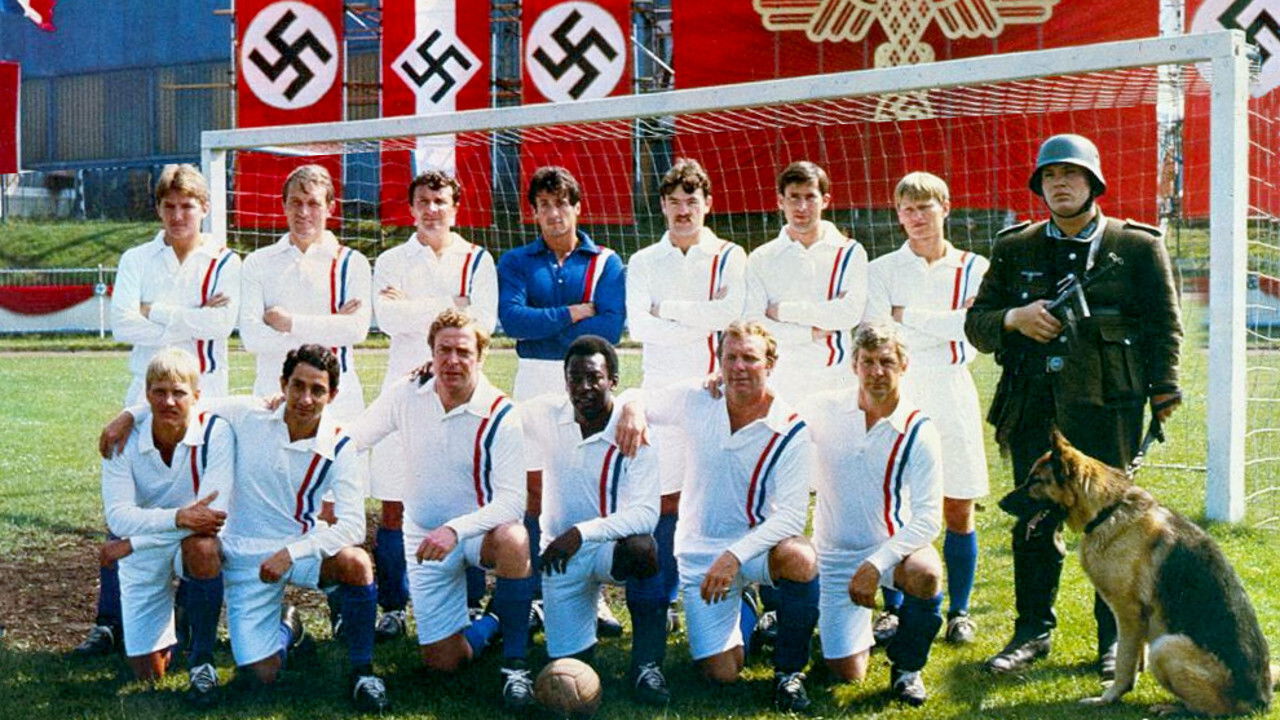
The premise is pure high-concept gold. In a Nazi POW camp, Major Karl von Steiner (Max von Sydow, bringing his usual gravitas to a "sympathetic" Nazi role) recognizes a former English professional footballer in Captain John Colby (Michael Caine). Steiner proposes a "friendly" match between the Germans and the prisoners. What starts as a propaganda stunt evolves into a literal life-or-death struggle when the French Resistance gets involved.
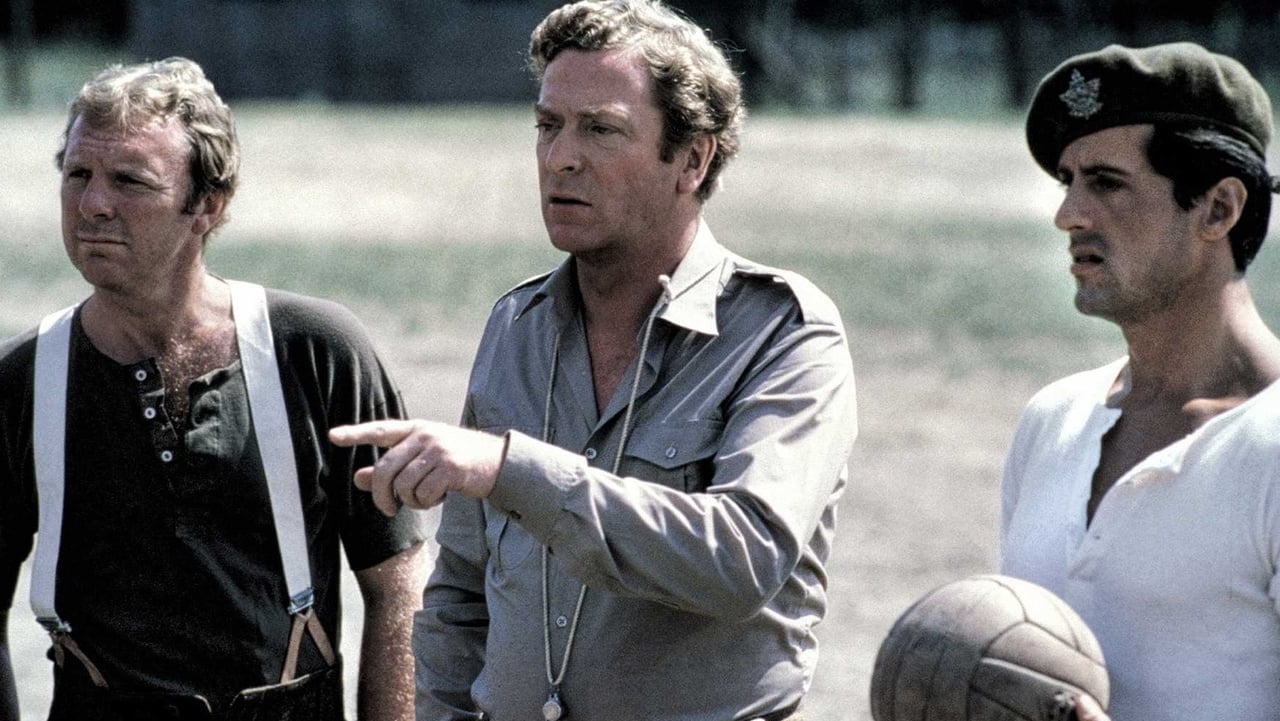
The casting is where the movie leans into its beautiful absurdity. You have Michael Caine doing the heavy lifting in the acting department, looking like he’s trying to remember if he left the oven on back in London. Then you have Sylvester Stallone as Captain Robert Hatch, the brash American who doesn't understand soccer but is a maestro at escaping. Stallone’s performance is essentially Rocky Balboa if he’d been drafted into the infantry and never learned how to use his hands for anything but punching and catching.
But the real magic happens when the "team" is rounded out. Huston didn’t just hire actors who could kick a ball; he hired the greatest players on the planet. Seeing Pelé (playing Cpl. Luis Fernandez), Bobby Moore, and Osvaldo Ardiles sharing screen time with the guy who played Hamlet is the kind of cross-over event that makes modern superhero movies look timid. Watching Pelé perform a bicycle kick in slow motion is still more impressive than any CGI spectacle released in the last decade.
Practical Grit and the VHS Glow
Because this was 1981, there are no digital crowds or green-screened stadiums. When the final match kicks off in the Colombes Stadium in Paris, you feel the weight of the mud and the very real impact of the tackles. John Huston lets the camera stay wide, allowing the genuine athleticism of the professional players to carry the tension. There’s a wonderful, tactile quality to the production—the heavy wool of the uniforms, the dirt under the fingernails, and the terrifyingly primitive goalie gloves Stallone has to wear.
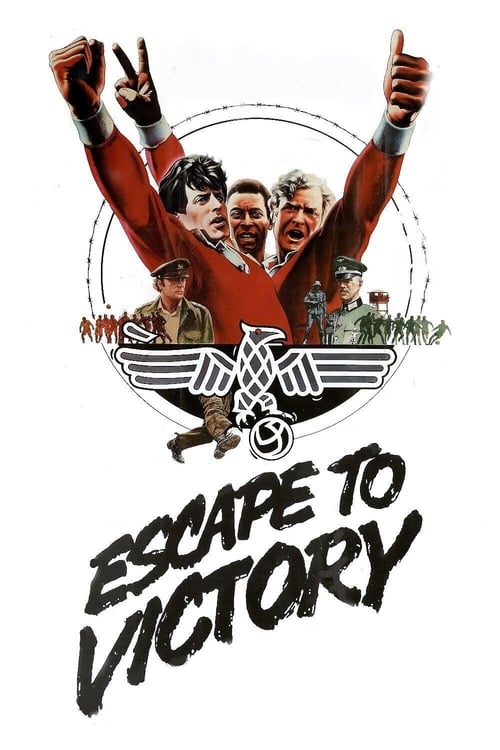
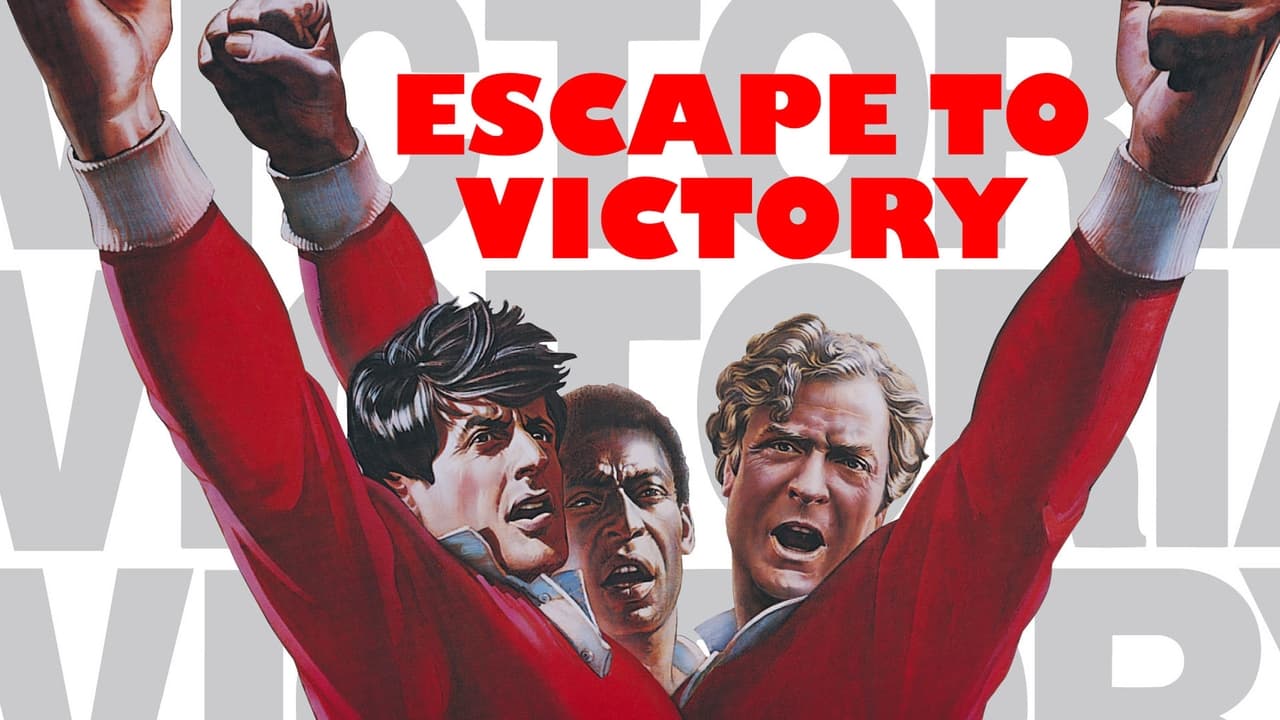
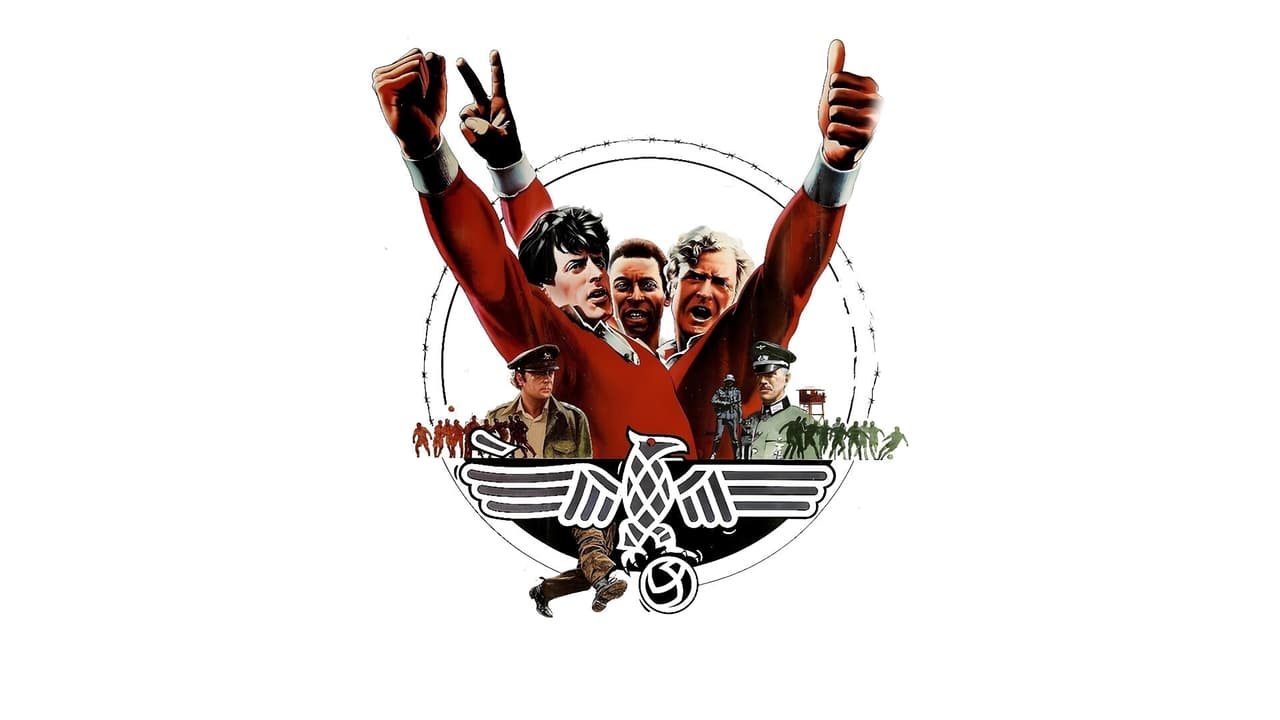
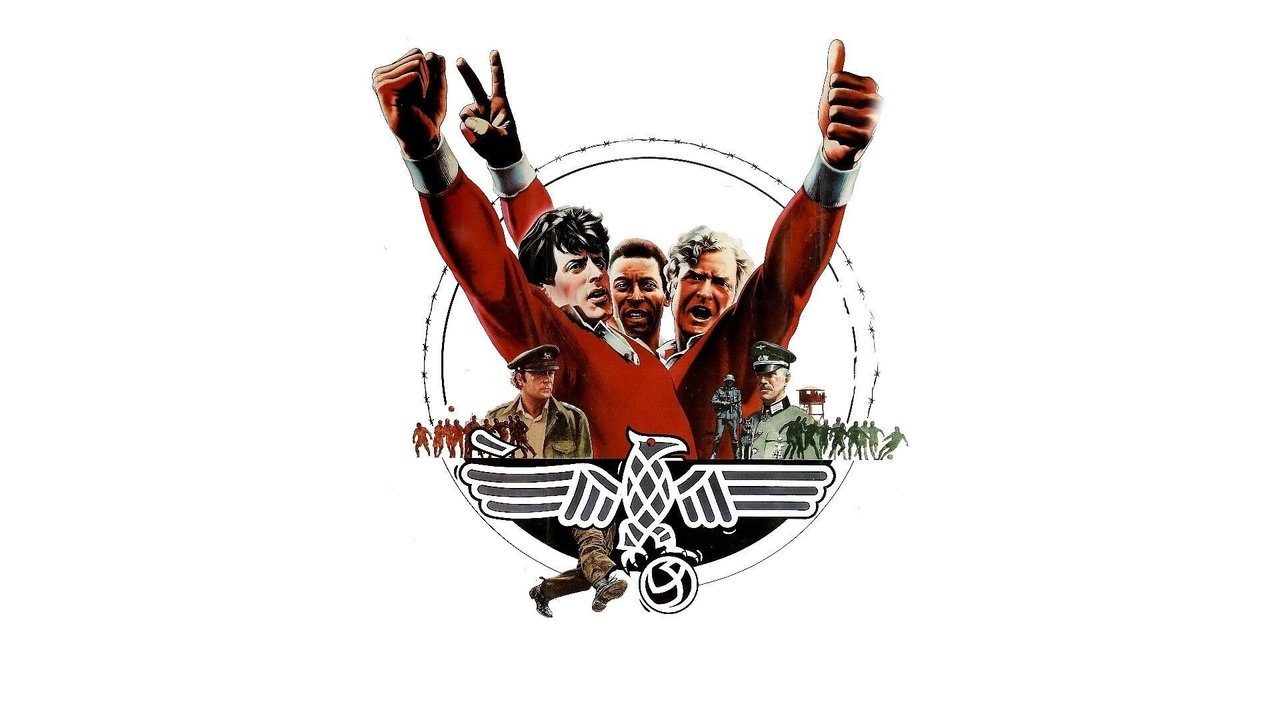
For those of us who grew up in the VHS era, Escape to Victory was a rental store staple. The cover art, featuring Stallone looking intensely heroic next to a soaring Pelé, promised a level of action that the film actually delivers in its final third. I remember the tracking on our home tape being slightly warped right at the moment of the climactic penalty kick, adding a layer of unintended "is he going to make it?" suspense that no theatrical screening could replicate.
The film also benefits from a score by Bill Conti, who had already defined Stallone’s career with the Rocky theme. Here, he trade-marks a jaunty, militaristic heroism that tells you exactly how to feel: patriotic, nervous, and eventually, triumphant. It’s not subtle, but in a movie where a Brazilian soccer legend teaches a New Yorker how to play "the beautiful game" in a Nazi camp, subtlety is a discarded jersey.
The "Rocky" of the Pitch
The production wasn't without its behind-the-scenes ego clashes. Legend has it that Sylvester Stallone—fresh off the massive success of the first two Rocky films—originally insisted that his character should score the winning goal. The writers had to gently explain that as the goalkeeper, that would be... well, impossible. Instead, he was given a dramatic penalty save, which he reportedly performed so enthusiastically that he actually broke a rib during filming.
There’s also the fascinating historical footnote that the film is loosely (very loosely) based on the "Death Match" of 1942, where Ukrainian players took on the Nazis in occupied Kyiv. In real life, the consequences were tragic and grim. Huston and his screenwriters, however, opted for the "New Hollywood" blockbuster approach, favoring a crowd-pleasing finale that prioritized the spirit of defiance over historical accuracy.
Escape to Victory is a relic of a time when movies could be unapologetically "big" without being part of a twelve-film cinematic universe. It’s a drama that treats its stakes seriously but never forgets that we’re ultimately here to see the underdogs stick it to the villains on the field. It’s got the grit of a 70s war movie and the heart of an 80s sports classic.
If you haven't seen it, find the best copy you can (or a grainy recording on a dusty tape if you want the authentic experience). It’s a reminder that sometimes, all you need for a great movie is a ball, a goal, and a cast that makes absolutely no sense on paper but perfect sense on the screen. It doesn't quite reach the heights of Huston's masterpieces, but as a piece of pure entertainment, it’s a champion.
Keep Exploring...
-
A Bridge Too Far
1977
-
Sophie's Choice
1982
-
Red Dawn
1984
-
Heartbreak Ridge
1986
-

Hannah and Her Sisters
1986
-
The Longest Day
1962
-
Patton
1970
-
Casualties of War
1989
-
Glory
1989
-

Over the Top
1987
-
Lock Up
1989
-
M*A*S*H
1970
-

Platoon
1986
-
Rocky II
1979
-
First Blood
1982
-
Rocky III
1982
-

Rambo: First Blood Part II
1985
-
Rocky IV
1985
-
All the President's Men
1976
-
Marathon Man
1976