An Officer and a Gentleman
"Love is the only thing he can't outrun."

The first thing I always remember about An Officer and a Gentleman isn't the white dress uniform or the soaring chorus of "Up Where We Belong." It’s the dirt. For a movie that eventually became the gold standard for 1980s romantic grandiosity, Taylor Hackford’s 1982 smash hit spends a surprising amount of time in the mud, the rain, and the grim, gray reality of a dead-end factory town. I rewatched this recently while unsuccessfully trying to fold a fitted sheet—a task that requires a level of discipline and spatial awareness I clearly lacked, making me feel even more like a recruit failing a bunk-check.

What strikes me now is how much this film feels like a bridge between two eras. It has the gritty, character-driven soul of 1970s New Hollywood, but it’s wrapped in the high-concept, crowd-pleasing package that would define the Reagan-era blockbuster. It’s a movie about the military that isn't really about war; it’s about whether a person can actually change their DNA through sheer, stubborn willpower.
The Drill Instructor and the Loner
At the center of it all is Richard Gere as Zack Mayo. This was the role that turned Gere from a "working actor" into a "superstar whose face could sell a billion posters." He’s playing a classic archetype: the aloof loner with a chip on his shoulder the size of an aircraft carrier. Zack is the son of a drunken sailor (Robert Loggia, playing a truly miserable human being with frightening ease) who joins the Navy Aviation Officer Candidate School not out of patriotism, but because he has literally nowhere else to go.
His foil is Sergeant Emil Foley, played by Louis Gossett Jr. in a performance that deservedly won him an Oscar. Gossett Jr. didn’t just play a drill instructor; he became the archetype. Apparently, he stayed in a separate barracks from the rest of the cast and maintained his "Sergeant" persona 24/7 during filming to keep the younger actors genuinely intimidated. It worked. When he’s screaming in Gere’s face in the rain, you aren’t watching a choreographed scene—you’re watching a psychological war. The famous "I got nowhere else to go!" scene is the emotional pivot of the film. Gere’s squint is doing 40% of the acting in that moment, and it’s still more than enough to break your heart.
The Puget Sound Debs
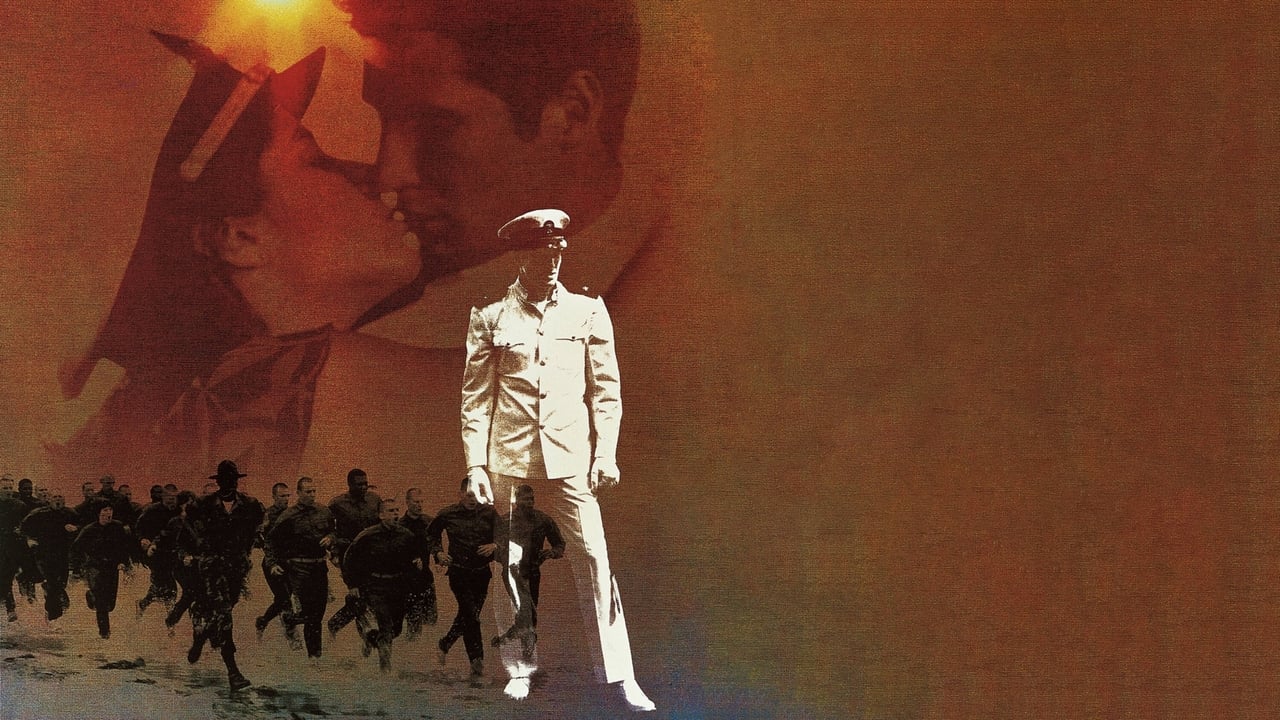
While Zack is battling Foley, he’s also navigating the local social minefield of Port Townsend. This is where the movie gets its "Drama" credentials. The local girls, nicknamed "Puget Sound Debs," are looking for a ticket out of their dead-end lives via a marriage to a future officer. Debra Winger plays Paula, a factory worker who sees Zack as more than a meal ticket, though he’s too emotionally stunted to believe her.
Debra Winger is the secret weapon here. She has a grounded, husky-voiced reality that cuts through the melodrama. It’s well-documented that she and Gere didn't get along on set—she famously compared him to a "brick wall"—but that friction translates into an incredible, combustible chemistry. Their romance doesn't feel like a fairy tale; it feels like two people who are desperately afraid of being used.
The tragedy of the film actually belongs to the secondary couple, Sid (David Keith) and Lynette (Lisa Blount). If Zack and Paula represent the hope of escaping one's circumstances, Sid and Lynette represent the crushing weight of those same circumstances. The townies are the most tragic part of the movie, and David Keith delivers a performance so vulnerable it almost makes the main plot feel light by comparison.
A VHS Era Powerhouse
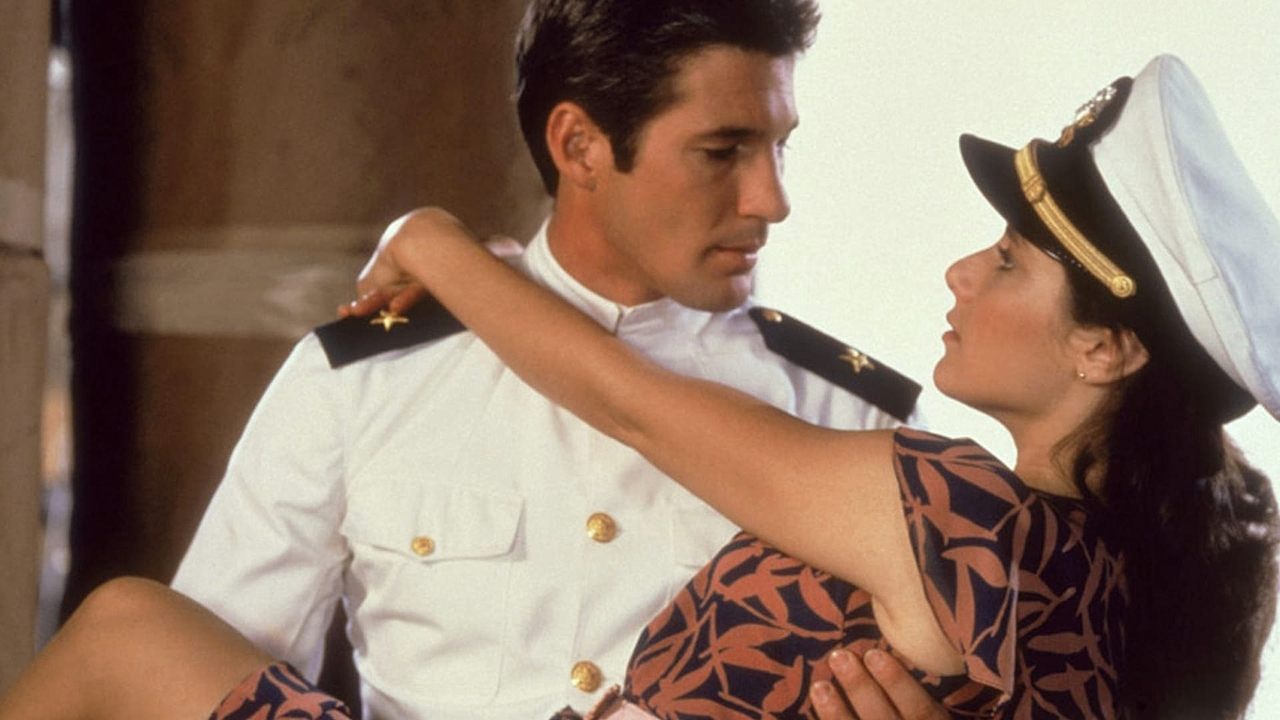
In the mid-80s, you couldn't walk into a video rental store without seeing that Paramount Home Video clamshell case featuring Gere in his whites. It was the ultimate "compromise" rental: enough military grit and martial arts training for the guys, and a soaring romance for the girls. I remember the specific texture of those early 80s Paramount tapes—the blue warning screen and the way the film grain looked extra thick on a CRT television.
The film was a massive gamble that paid off. With a modest $7.5 million budget, it pulled in nearly $130 million domestically. It’s a masterclass in how to build a "Big Moment" movie. Director Taylor Hackford (who would later give us Ray and Against All Odds) knew exactly when to let the cinematography by Donald E. Thorin soak in the Pacific Northwest atmosphere and when to tighten the screws on the training sequences. Interestingly, the iconic ending—where Zack carries Paula out of the factory—was something Gere originally thought was "too sappy." He only agreed to film it because Hackford insisted they try it once. When they played it back with the music, the crew started cheering. Gere conceded, and a million movie posters were born.
An Officer and a Gentleman manages to be both cynical and deeply sentimental at the same time. It captures a very specific American anxiety about class and the desperate need to "be something," while still delivering the endorphin rush of a classic Hollywood ending. It’s more than just a uniform and a song; it’s a film that earns its tears by first making you trudge through the mud. If you haven't seen it in a while, it’s time to report back to duty.
Keep Exploring...
-

Flashdance
1983
-
Out of Africa
1985
-
Witness
1985
-
The Karate Kid Part II
1986
-

Dirty Dancing
1987
-

Fatal Attraction
1987
-

Moonstruck
1987
-
Days of Heaven
1978
-

The Blue Lagoon
1980
-

The Sound of Music
1965
-
Cocktail
1988
-
Working Girl
1988
-
Doctor Zhivago
1965
-

The Graduate
1967
-
Manhattan
1979
-
Sophie's Choice
1982
-

Risky Business
1983
-

Footloose
1984
-
Starman
1984
-
Nine 1/2 Weeks
1986