Gandhi
"A peaceful war for a nation's soul."
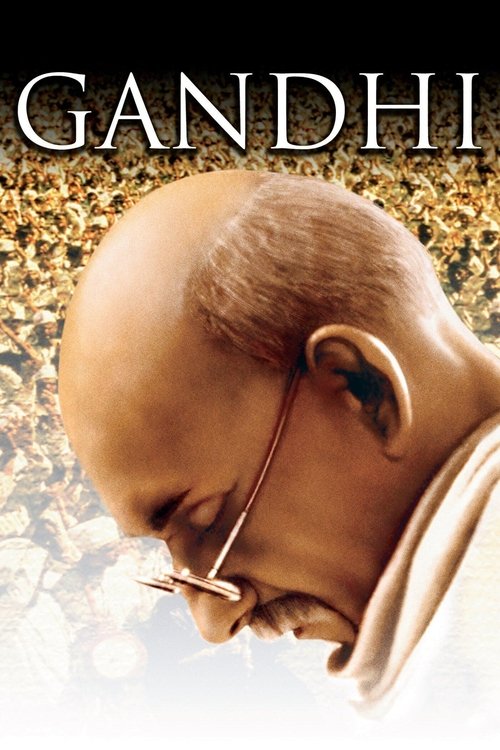
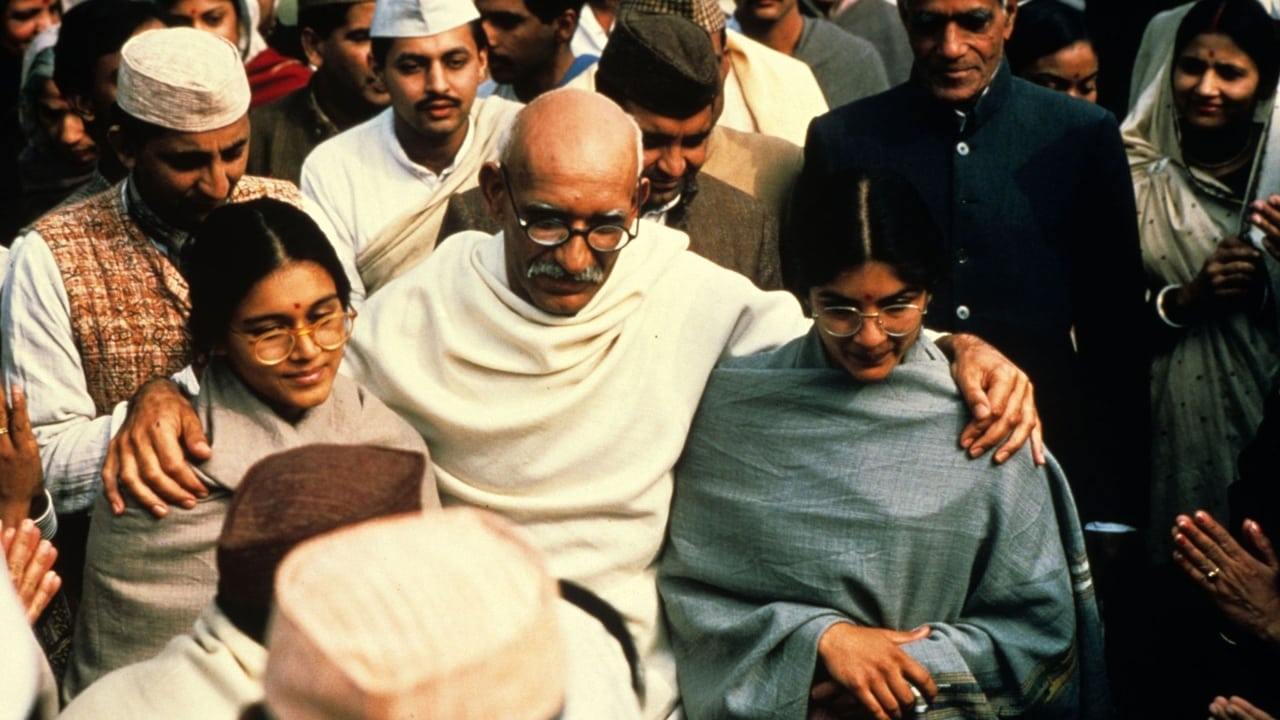
Standing amidst 300,000 real human beings—not digital pixels, not rubber clones, but actual people filling the frame until they hit the horizon—you realize that Richard Attenborough didn’t just make a movie; he staged a historical event. In an era where we’re used to "epic" scale being managed by a guy at a computer in Burbank, watching the 1982 masterpiece Gandhi feels like witnessing a miracle of logistics and stubborn willpower. It is a film as massive as the sub-continent it depicts, yet it remains anchored by a performance so intimate it feels like eavesdropping on a prayer.
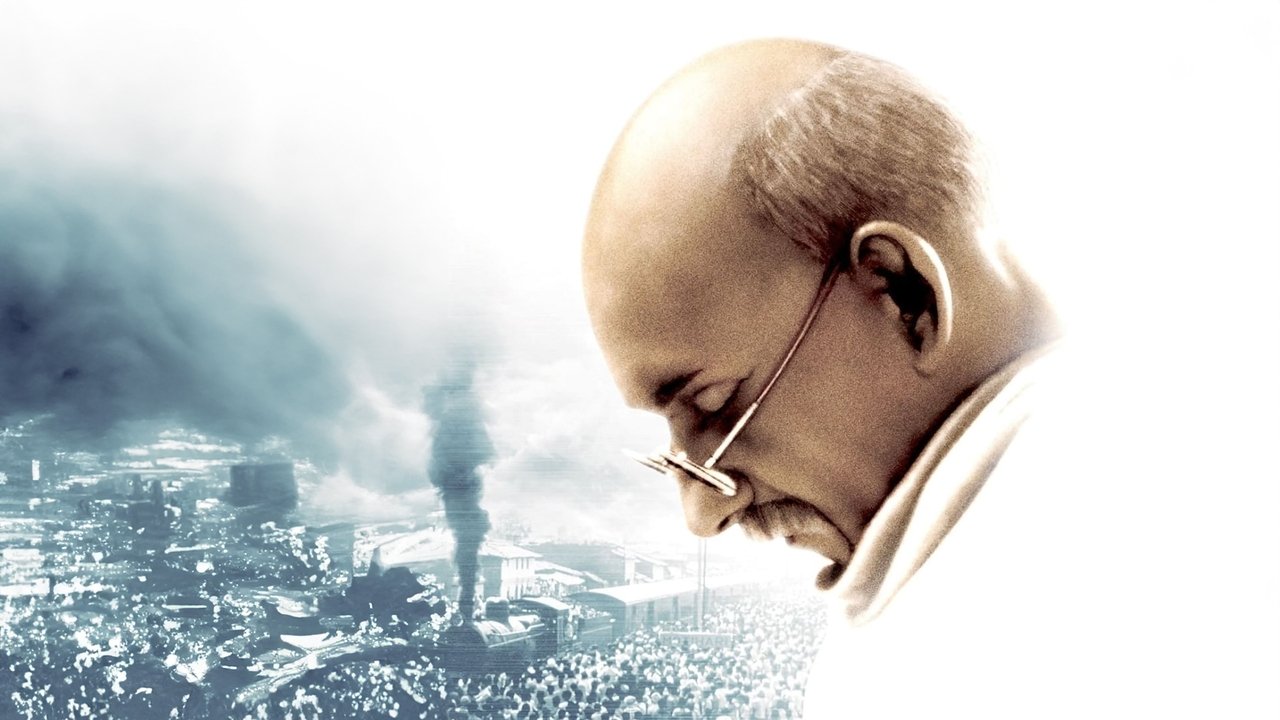
I watched this most recent time on a Tuesday afternoon while trying to fix a leaky kitchen faucet. I ended up sitting on the linoleum with a wrench in my left hand and a cold samosa in my right, completely forgetting the plumbing for three hours. That is the gravity this film exerts.
The Man in the Loincloth vs. The Empire
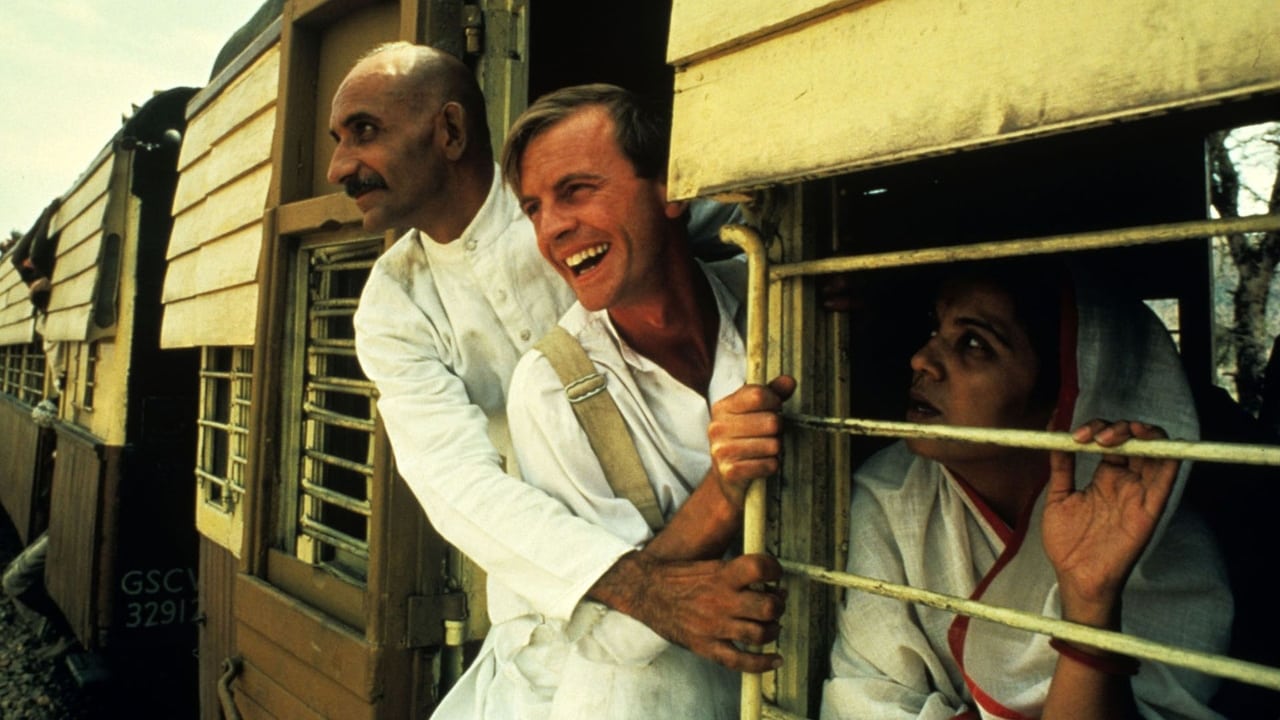
The genius of Ben Kingsley's portrayal is that he avoids the "stained glass window" trap. It would have been so easy to play Mohandas K. Gandhi as a static saint, a figure to be worshipped rather than understood. Instead, Kingsley—who lost weight, practiced yoga, and even learned to spin thread exactly like the Mahatma—gives us a man who is shrewd, witty, and occasionally frustratingly stubborn.
His Gandhi is a master of "branding" before that was even a word. He understood that the image of a small, brown man in a homespun wrap standing against the feathered caps and polished boots of British officers was a visual argument the Empire could never win. There’s a delicious intellectual weight to the scenes where he debates John Gielgud (playing Lord Irwin) or Trevor Howard; you can see him thinking three moves ahead, using his own perceived weakness as a blunt-force weapon. Most biopics today are just glorified Wikipedia entries with better lighting, but Gandhi functions as a genuine psychological profile of a revolutionary who weaponized peace.
The Two-Tape Prestige Monster
For those of us who grew up navigating the aisles of local video stores, Gandhi held a specific kind of status. It was the ultimate "prestige" rental, usually packaged in a chunky, double-VHS box because its 191-minute runtime simply couldn't fit on one spool. It sat on the shelves like a challenge. Renting it felt like an adult rite of passage. If you could sit through both tapes without fast-forwarding to the Salt March, you were officially a "serious" film fan.
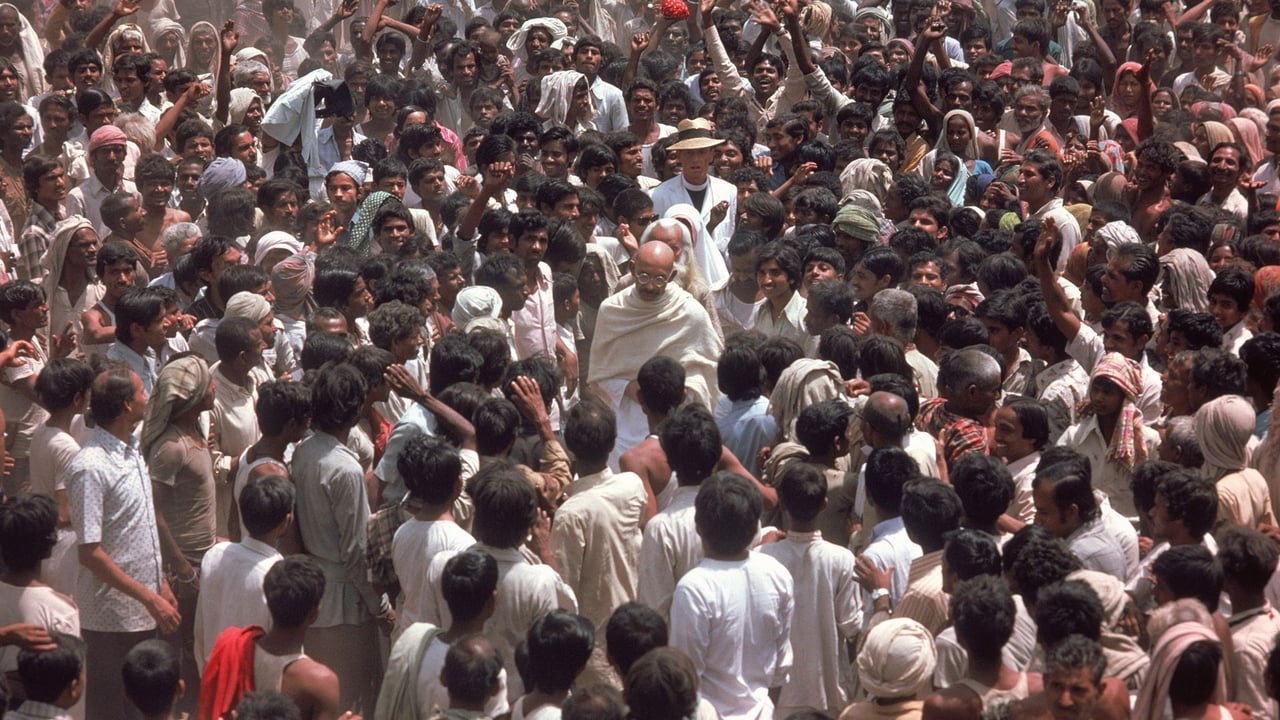
The film arrived at a fascinating crossroads in cinema history. Released in 1982, it stood as a defiant roar of Old Hollywood craft—practical effects, thousands of extras, and sweeping 70mm cinematography by Billy Williams—just as the industry was pivotally shifting toward the high-concept, merchandise-heavy blockbusters of the Reagan era. It proved that a thoughtful, cerebral drama could still be a box-office titan, pulling in over $77 million (a massive haul at the time) and sweeping the Oscars.
A World Record in Every Frame
The sheer "how-did-they-do-that" factor of this production is staggering. Take the funeral sequence: Richard Attenborough utilized over 300,000 extras. To this day, it holds the Guinness World Record for the most people in a single movie scene. There is a weight to that crowd—a collective breath—that you just can’t replicate with a green screen. You can feel the heat and the dust.
Behind the scenes, the stories are just as legendary. Richard Attenborough spent 20 years trying to get this made, at one point selling his house and his prized art collection just to keep the dream alive. It’s also worth noting the script by John Briley doesn't shy away from the messy reality of the Partition, though it certainly simplifies some of the complex friction between Gandhi and Jinnah. Still, the film’s score by Ravi Shankar provides a haunting, rhythmic soul to the proceedings that keeps the three-hour runtime from ever feeling like a slog.
The Philosophy of the Stubborn Soul
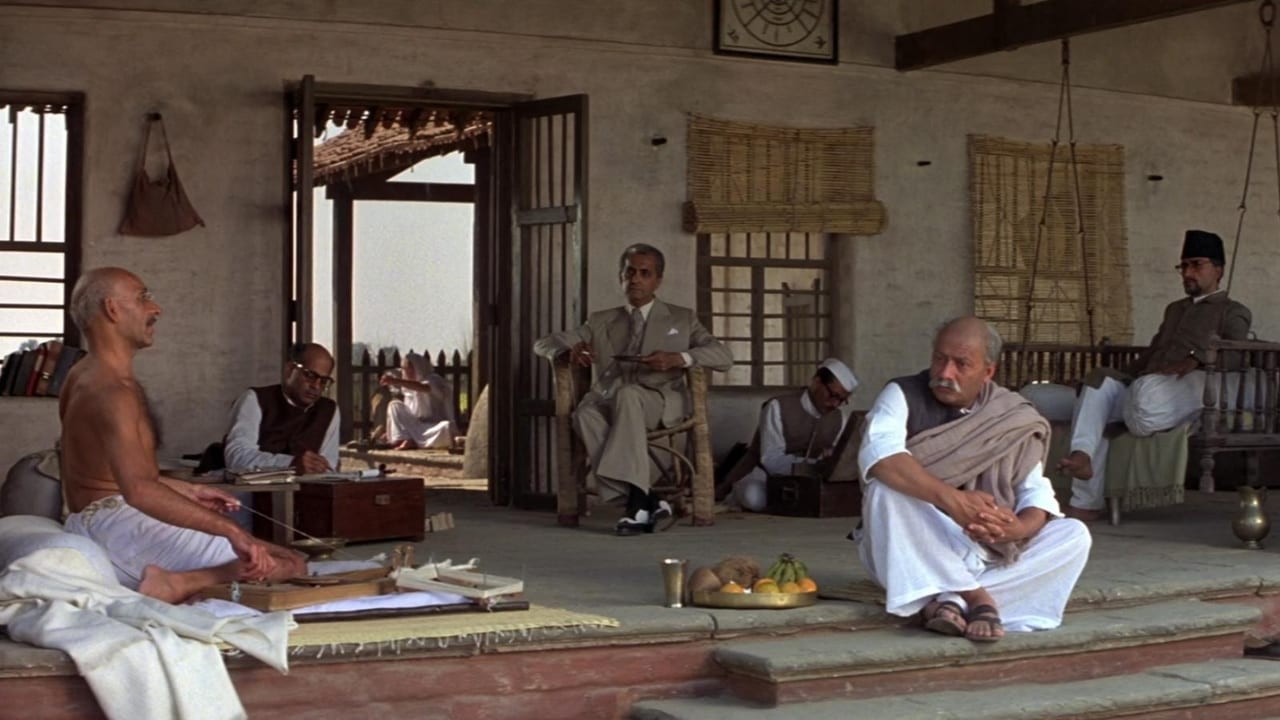
At its core, Gandhi asks a deeply uncomfortable question that still resonates: Can a single soul be more stubborn than an armed empire? The film treats non-violence not as a passive retreat, but as a proactive, aggressive psychological strategy. The scene at the Dharasana Salt Works, where protestors voluntarily walk into the clubs of British-led police without raising a hand, is one of the most difficult and profoundly moving sequences ever filmed. It’s a moment that forces the viewer to grapple with the idea of moral high ground as a physical space one must die to occupy.
Looking back, the British Empire’s biggest mistake wasn't the salt tax; it was underestimating a man who realized that if you're willing to suffer enough, you make your oppressor's power irrelevant.
Gandhi is the kind of cinema that feels like it was carved out of stone. While it may lean into the "Great Man" theory of history a bit heavily for modern tastes, the sheer craftsmanship and Ben Kingsley’s transformative performance make it an essential watch. It’s a sprawling, cerebral epic that manages to be both a massive history lesson and a quiet character study. If you find the double-VHS set at a garage sale, grab it—but make sure you’ve got a full evening and a comfortable chair. It’s a long walk, but every step is worth it.
Keep Exploring...
-
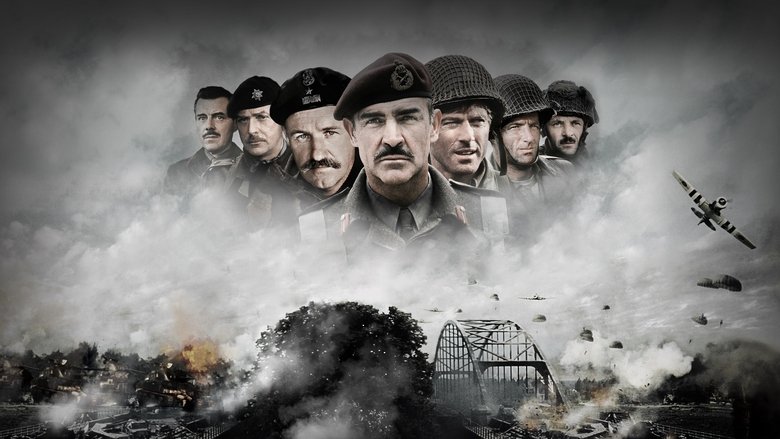
A Bridge Too Far
1977
-
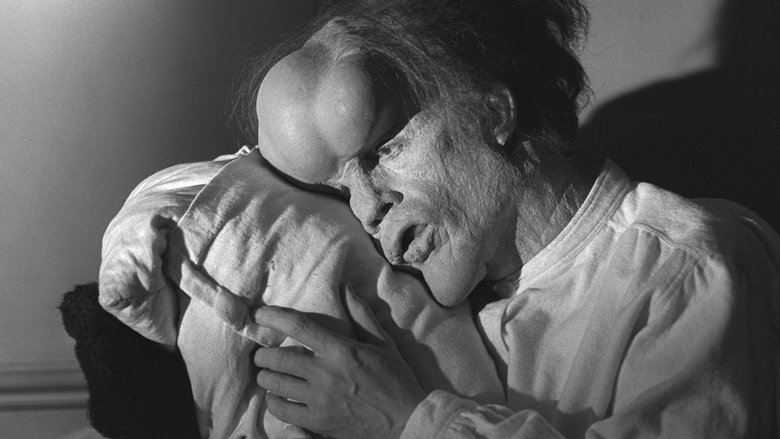
The Elephant Man
1980
-
Amadeus
1984
-

The Color Purple
1985
-
Empire of the Sun
1987
-
Ran
1985
-
The Last Emperor
1987
-
Manhattan
1979
-

Chariots of Fire
1981
-
Das Boot
1981
-
Spartacus
1960
-

The Breakfast Club
1985
-
Judgment at Nuremberg
1961
-
Planet of the Apes
1968
-

The Right Stuff
1983
-
Out of Africa
1985
-

Wall Street
1987
-
Harakiri
1962
-
Andrei Rublev
1966
-
Mirror
1975