Sophie's Choice
"Some secrets are too heavy to carry alone."
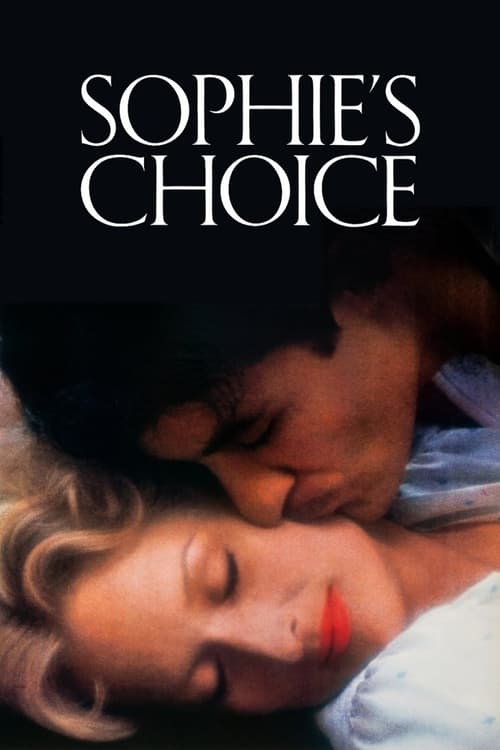
The title of this film has been hijacked by pop culture. It’s been turned into a casual shorthand for any annoying decision, like choosing between two brands of laundry detergent or deciding which restaurant to pick for a first date. But sitting down with the actual movie—not the meme, not the cultural punchline—is a sobering reminder of why that colloquialism feels so dirty. I watched this on a rainy Tuesday with a cup of peppermint tea that had gone cold, and the chill in the room seemed to migrate into my bones as the credits rolled.
The Brooklyn Golden Hour
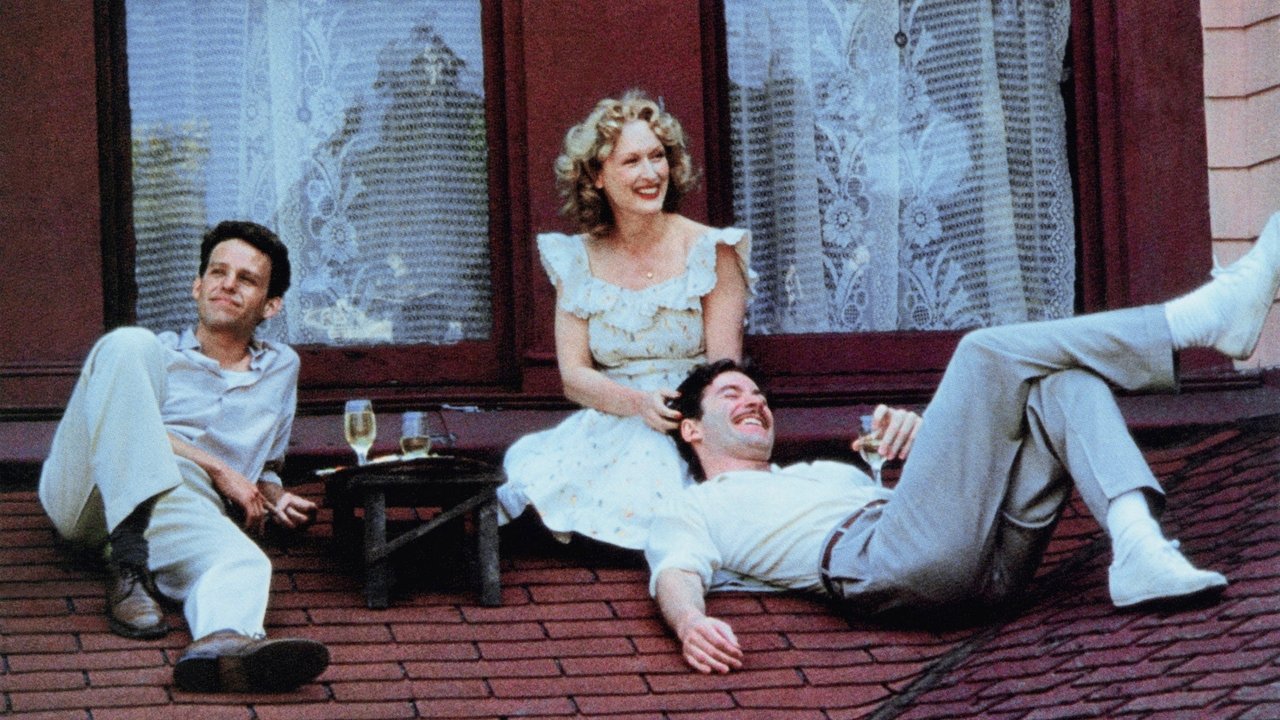
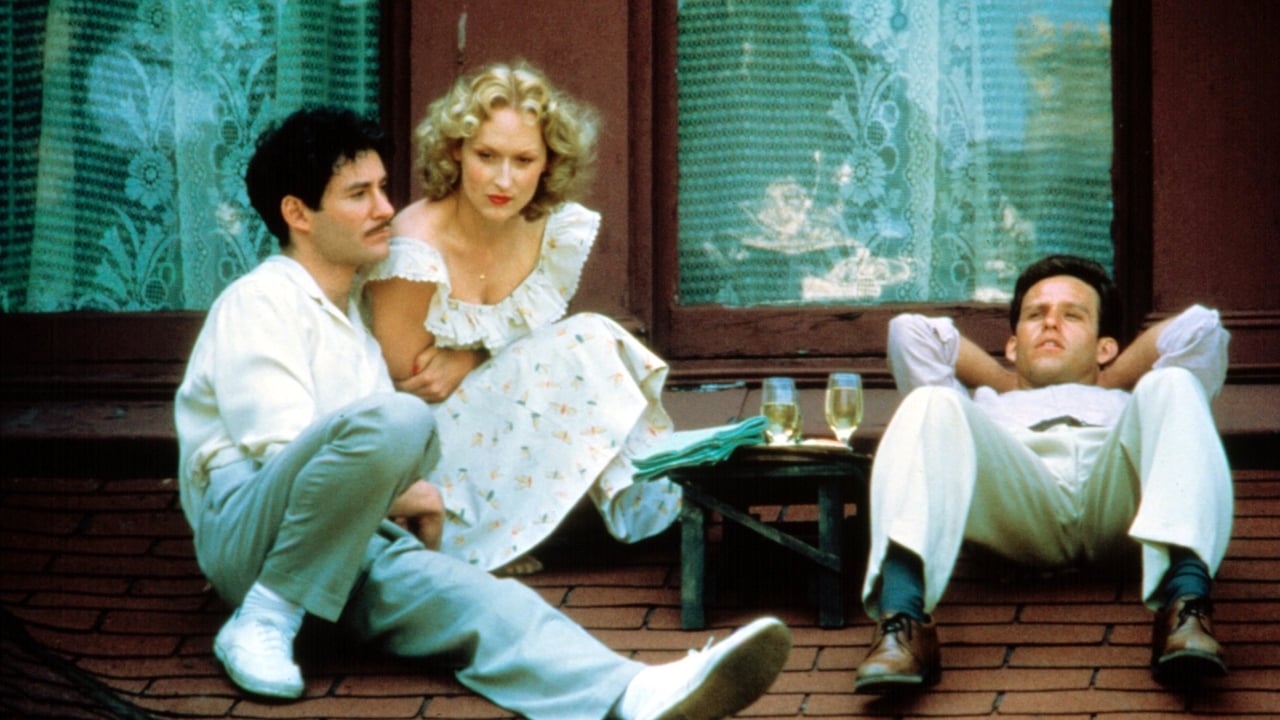
Set in 1947, we follow Stingo (Peter MacNicol), a young, aspiring writer from the South who moves into a pink boarding house in Brooklyn. He is our surrogate, the wide-eyed innocent who stumbles into the orbit of two charismatic, deeply damaged neighbors: Sophie (Meryl Streep) and Nathan (Kevin Kline). At first, the film feels almost like a tragic romance from another era. There is a lushness to the way Néstor Almendros films their picnics and their dress-up parties. It’s golden and hazy, the kind of New York summer that feels like it could last forever.
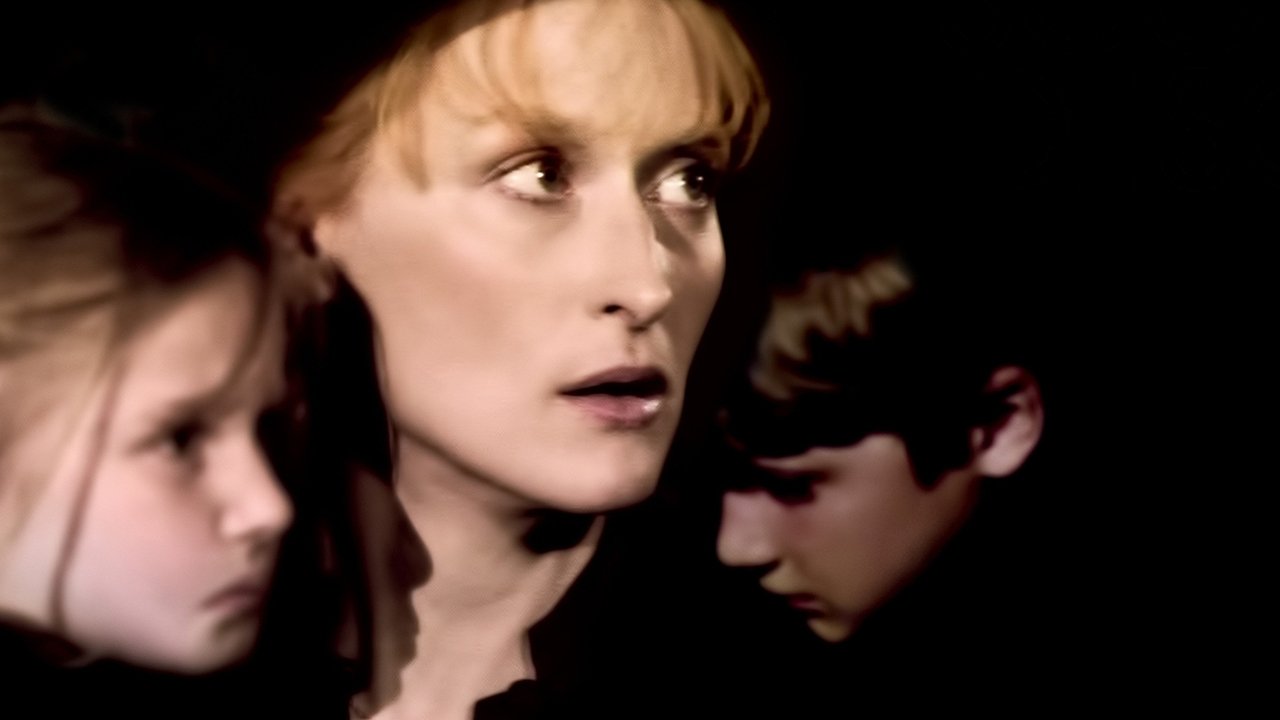
But Nathan is a lightning storm of a human being. This was Kevin Kline’s film debut, and he is a revelation here—charismatic enough to make you fall in love with him in one scene and the cinematic equivalent of a live wire in a puddle in the next. He swings from manic devotion to paranoid cruelty with a speed that makes your neck ache. Between them is Sophie, a Polish Catholic survivor of Auschwitz who seems to be held together by sheer willpower and Nathan’s volatile love. As Stingo falls for her, the golden Brooklyn light begins to fade, replaced by the desaturated, clinical gray of Sophie's memories.
The Weight of the Unspoken
Let’s talk about Meryl Streep. I know, it’s a cliché to praise her, but this isn't just "good acting." It’s an exorcism. She famously begged director Alan J. Pakula for the part, even falling to her knees to convince him. She learned Polish and German, and she carries herself with a physical fragility that makes it look like her skin is translucent.
When the film shifts into the flashbacks of her time in Poland and eventually the camp, the "Drama" genre tag feels insufficient. It’s a horror movie where the monster is human bureaucracy and casual malice. Alan J. Pakula treats these scenes with a terrifying, quiet restraint. There is no soaring, manipulative score during the most famous moments. There is just the sound of the wind, the crunch of gravel, and the unthinkable weight of a decision that no human being should ever have to make.
The contrast between the "present" in Brooklyn and the "past" in the camp is where the film finds its power. You realize that Sophie isn't just living her life; she is performing it. She is trying to pretend that she isn't a ghost. Every smile she gives Stingo is a victory over a past that wants to swallow her whole.
A Prestige Relic of the VHS Era
In the mid-80s, Sophie's Choice was a staple of the "Prestige" section in video rental stores. It was the movie you rented when you wanted to prove you were a "serious" film watcher, usually housed in a black or cream-colored clamshell case that looked like a tombstone. It’s a film that gained a second, perhaps even more intense life on home video because it’s almost too private for a theater. Watching it alone or with a close friend in a living room allowed for the kind of ugly, unrestrained sobbing that the material demands.
I remember seeing those worn-out tapes on the shelves and thinking the cover looked like a romance novel. The marketing often leaned into the "love triangle" aspect to get people through the door, which is one of the great bait-and-switch maneuvers in Hollywood history. You come for the Brooklyn romance; you stay for the soul-crushing meditation on survivor's guilt.
The practical craft here is peak early-80s filmmaking. There are no digital tricks to hide behind. When you see the sheer scale of the Auschwitz recreations or the hollowed-out look in Meryl Streep’s eyes after she lost twenty pounds for the role, you’re seeing the tangible commitment of an era that valued physical transformation over everything else.
Sophie's Choice is not a movie you watch twice in one week, or even once a year. It is an experience that leaves a permanent mark on your psyche. It’s an unflinching look at the way trauma doesn't just end when the war does; it lingers in the air, in the way we love, and in the secrets we keep to keep ourselves sane. It earns every bit of its reputation, and while it will leave you feeling emotionally hollowed out, it’s a journey that reminds us of the terrible, beautiful complexity of being human. If you can handle the weight, it is essential viewing.


Keep Exploring...
-
All the President's Men
1976
-
A Bridge Too Far
1977
-
Barry Lyndon
1975
-
Doctor Zhivago
1965
-
West Side Story
1961
-
The Longest Day
1962
-
Patton
1970
-
Casualties of War
1989
-
Glory
1989
-
Come and See
1985
-
The Deer Hunter
1978
-

Apocalypse Now
1979
-
Witness
1985
-

Platoon
1986
-
Empire of the Sun
1987
-

Full Metal Jacket
1987
-
Good Morning, Vietnam
1987
-
Escape to Victory
1981
-

Risky Business
1983
-
Starman
1984