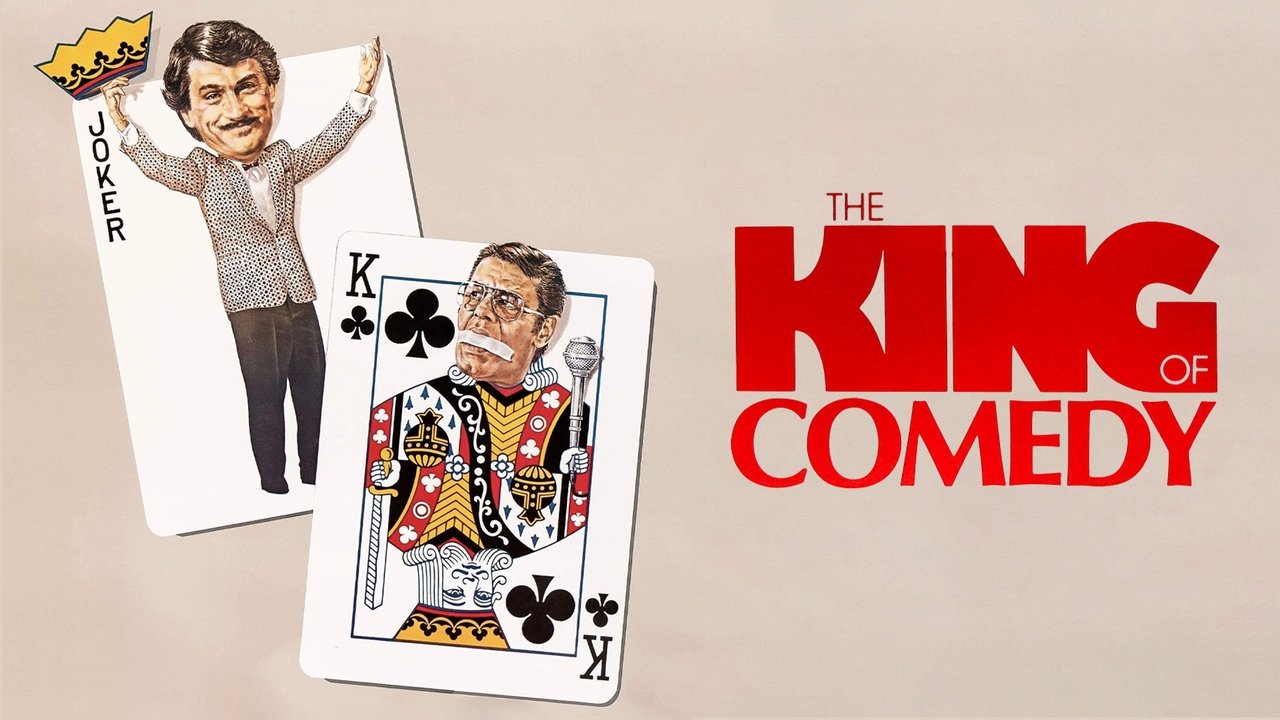
The King of Comedy
"Some fans don't just want an autograph."

The first time I saw The King of Comedy, I was sitting in a beanbag chair that smelled vaguely of damp basement, nursing a lukewarm Tab soda that had lost its carbonation twenty minutes earlier. It was a fitting atmosphere. Martin Scorsese’s 1982 masterpiece—and I don’t use that word lightly—is the cinematic equivalent of a wet wool sweater. It’s itchy, it’s uncomfortable, and you can’t wait to take it off, yet it’s the most fascinating thing in your closet.
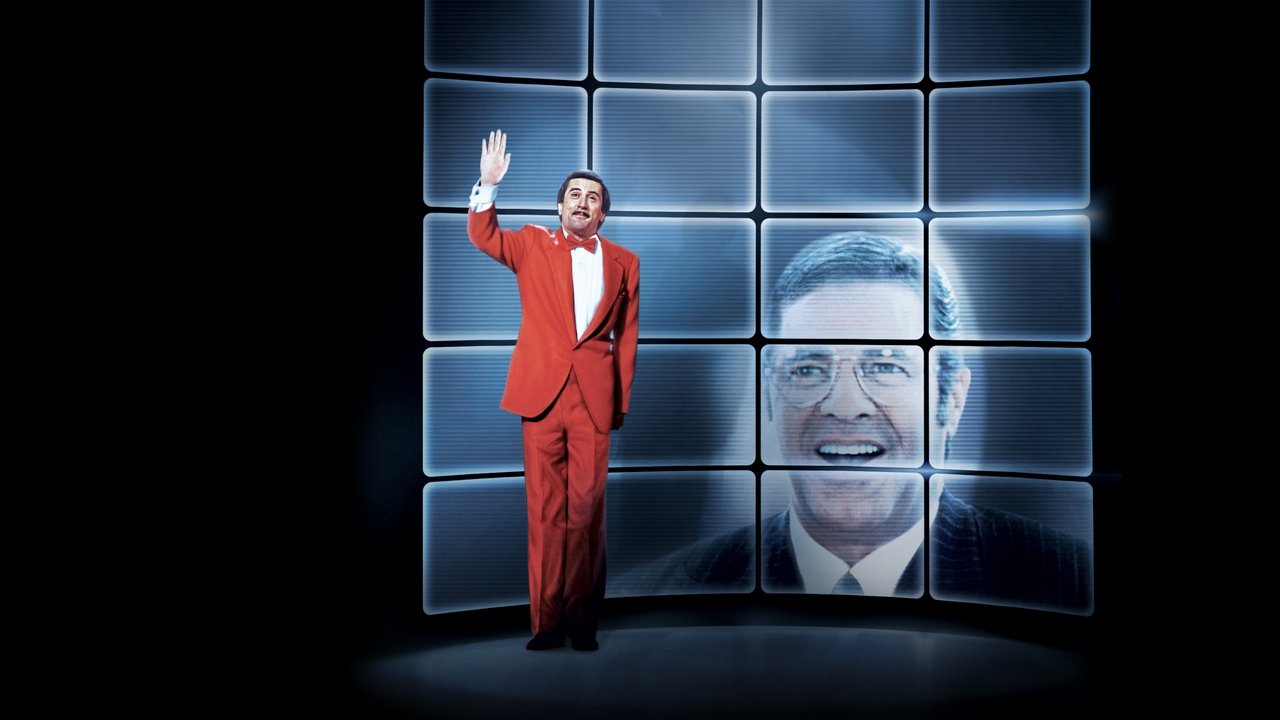
Coming off the high-octane grit of Raging Bull, audiences in 1982 probably expected Robert De Niro to hit them with something explosive. Instead, he gave them Rupert Pupkin: a man whose most dangerous weapon isn't a boxing glove or a .44 Magnum, but a complete and total lack of self-awareness. It’s a film that was notoriously ignored upon release, clawing its way back from "box office bomb" status to "prophetic cult classic" through years of word-of-mouth and worn-out VHS rentals.
The Anatomy of a Cringe
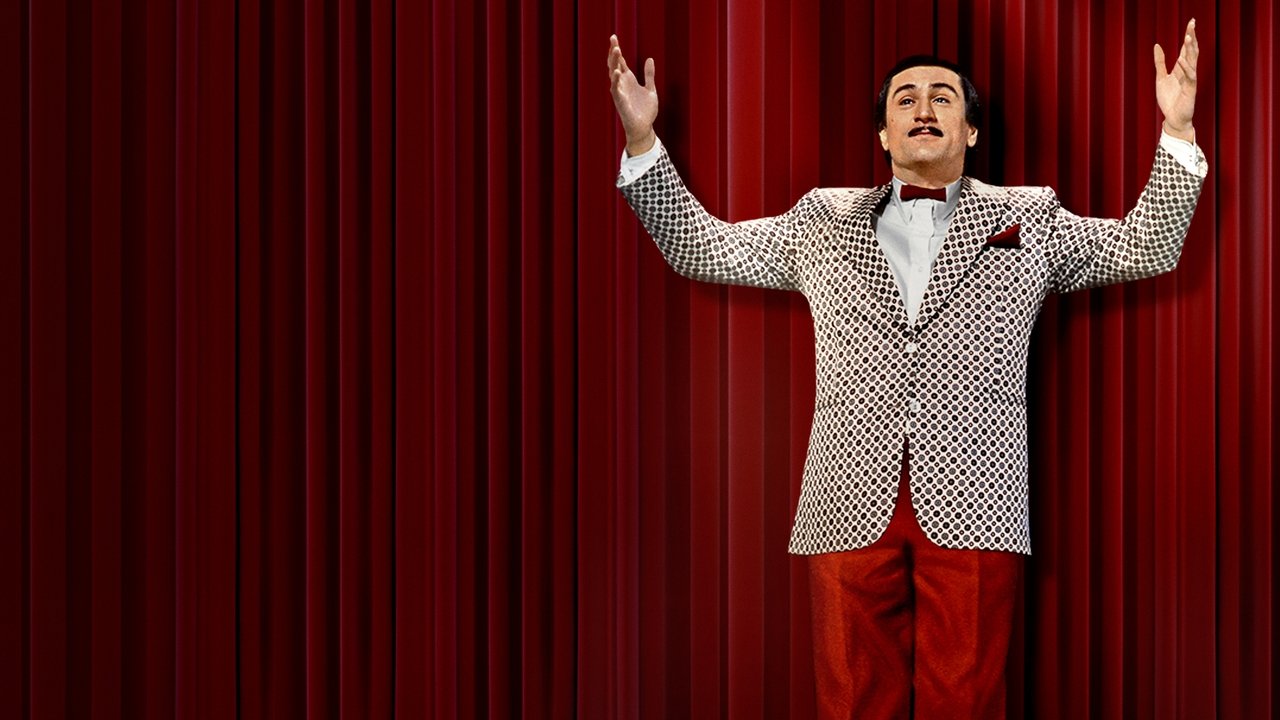
Rupert Pupkin is a thirty-something autograph hound living in his mother's basement—though we only ever hear her yelling from off-screen—who is convinced he’s just one break away from hosting a late-night talk show. He doesn't just admire Jerry Langford (played with a weary, stone-faced perfection by Jerry Lewis); he believes they are peers who haven't met yet.
Robert De Niro is terrifying here precisely because he isn't playing a monster. He’s playing a "nice guy" who refuses to take 'no' for an answer. With his pencil-thin mustache, polyester suits, and a smile that never quite reaches his eyes, De Niro creates a character that predates the modern influencer era by forty years. Rupert Pupkin is essentially a TikTok star born in the wrong decade, a man desperate for the destination of fame without having the map to get there.
The tension doesn't come from violence, but from social catastrophe. When Rupert shows up uninvited to Jerry’s country house with Diahnne Abbott (playing the skeptical but seduced Rita), the awkwardness is so thick you could cut it with a knife. I remember pausing my tape during that scene just to take a breath; it’s a level of secondhand embarrassment that most horror movies can't match for pure heart-pounding dread.
Jerry Lewis and the Price of Fame
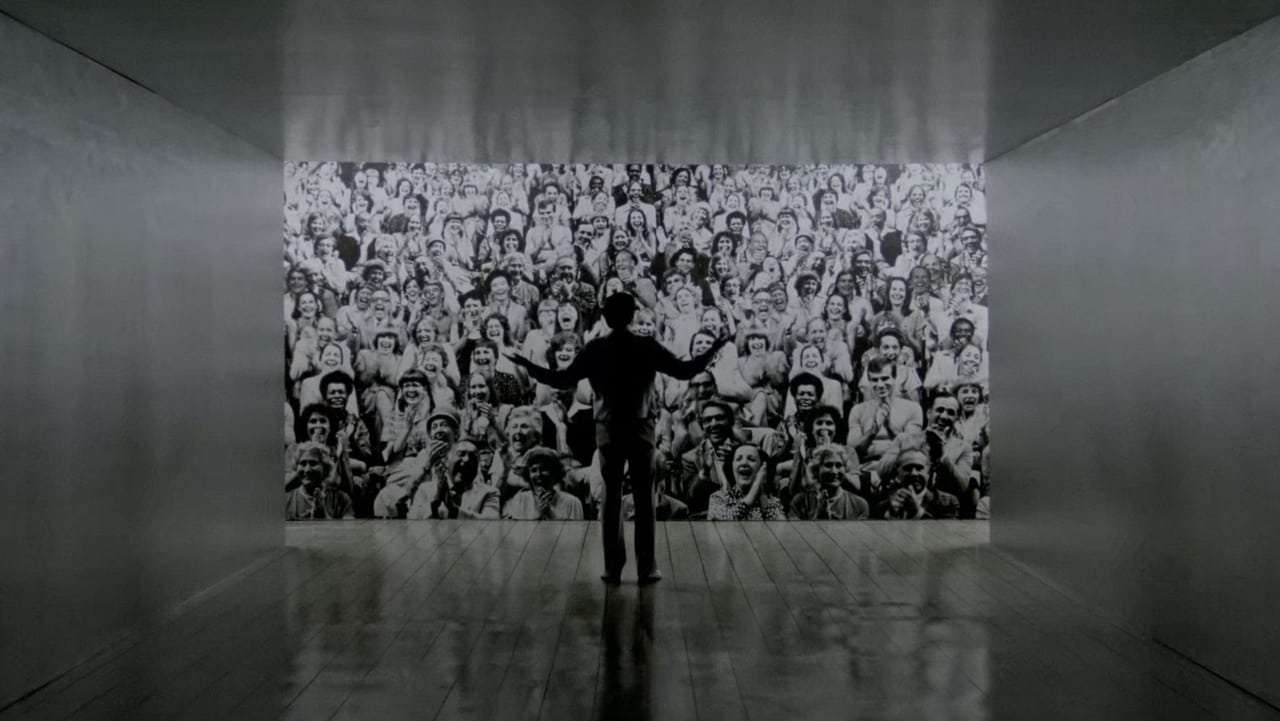
The real genius of the casting, however, is Jerry Lewis. For an actor known for "The Nutty Professor" and slapstick antics, his performance as Jerry Langford is a revelation of restraint. He plays Langford as a man who is utterly hollowed out by his own success. He’s a statue of a human being, walking through a world of people who want a piece of him.
The dynamic between the two is legendary, partly because the tension on set was real. To get a genuine reaction of rage out of Lewis during the climax, De Niro—ever the Method actor—allegedly hurled a string of anti-Semitic slurs at him before the cameras rolled. It worked. The look of pure, cold loathing on Lewis’s face isn't just acting; it’s a man who has finally had enough of the "fans."
And then there’s Sandra Bernhard as Masha, the wealthy, hyper-obsessed stalker who teams up with Rupert. If De Niro provides the cringe, Bernhard provides the chaos. Her scenes with a kidnapped, duct-taped Jerry Lewis are some of the most bizarrely compelling moments in 80s cinema. She’s electric, dangerous, and completely unpredictable—a perfect foil to Rupert’s delusional politeness.
From Box Office Bomb to VHS Legend
It’s hard to believe now, but The King of Comedy was a financial disaster. It cost roughly $19 million—a massive sum for a character study in 1982—and made back a measly $2.5 million. Critics didn't know what to do with it. Was it a comedy? There aren't many jokes. Was it a drama? It’s too absurd.
The film found its life on the shelves of independent video stores. It was the kind of movie a savvy clerk would hand you when you said you liked Taxi Driver but wanted something "different." On VHS, the film’s flat, televisual lighting (the work of cinematographer Fred Schuler) actually felt more at home. It looked like the very medium Rupert was trying to conquer. The home video revolution allowed us to rewind Rupert’s stand-up routine, dissecting his mediocre jokes to see if he was actually "good" or if the joke was entirely on him.
Turns out, the joke was on us. The film’s ending—which I won’t spoil, but involves a monologue that is either a triumph or a hallucination—remains one of the most debated finales in Scorsese’s filmography. It’s a cynical, biting look at a culture that rewards notoriety regardless of merit.
Stuff You Didn't Notice:
The title was almost The Pride of New Jersey, which sounds like a Bruce Springsteen B-side. The "Jerry Langford Show" set was built to be an exact replica of The Tonight Show at the time. Frederick de Cordova, who plays the producer Bert Thomas, was the actual producer of The Tonight Show Starring Johnny Carson. The film’s budget ballooned because Scorsese, ever the perfectionist, spent months in the editing room trying to find the right "uncomfortable" rhythm. * The legendary Robbie Robertson (of The Band) produced the soundtrack, giving the film a slick, urban sound that perfectly underscores Rupert’s lonely nights in Manhattan.
The King of Comedy isn't a "fun" watch in the traditional sense, but it is an essential one. It’s a movie that gets under your skin and stays there, making you question every celebrity encounter or "viral" moment you see today. It’s Scorsese at his most satirical and De Niro at his most brave. If you’ve only ever seen the duo in gangster epics, you owe it to yourself to see them tackle the much scarier world of late-night television. Just make sure you have a stiff drink—and maybe a better snack than a stale bagel—ready for when the cringe starts to settle in.
Keep Exploring...
-
Raging Bull
1980
-

The Lost Boys
1987
-
After Hours
1985
-

Taxi Driver
1976
-
Mean Streets
1973
-
Manhattan
1979
-
The Color of Money
1986
-
The Wolf of Wall Street
2013
-
The Goonies
1985
-
Big Trouble in Little China
1986
-
The Princess Bride
1987
-

The Breakfast Club
1985
-

Big
1988
-
Scrooged
1988
-

All Dogs Go to Heaven
1989
-
Say Anything...
1989
-

Midnight Run
1988
-
The Last Temptation of Christ
1988
-
When Harry Met Sally...
1989
-

The Irishman
2019