Never Say Never Again
"He said never. He lied. We won."
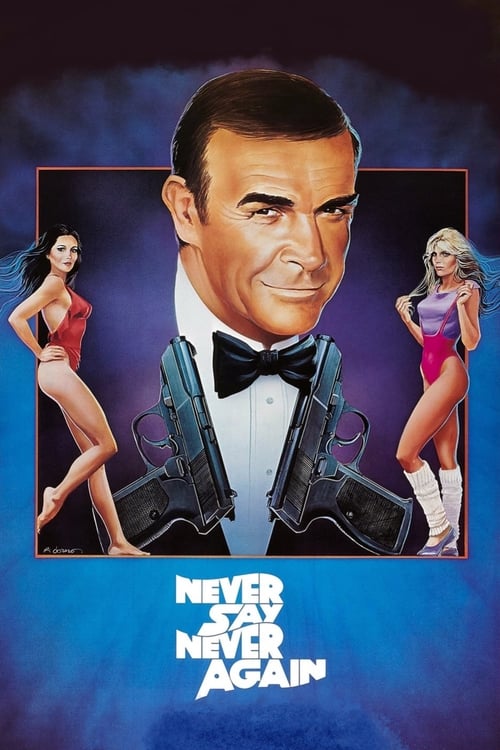
In 1983, the world was already comfortably settled into the campy, gadget-heavy era of Roger Moore, but a legal loophole larger than a Vulcan bomber allowed the original 007 to suit up one last time. Seeing Sean Connery return to the role that defined him—and the entire action genre—was the cinematic equivalent of a legendary heavyweight boxer stepping back into the ring for one final, unsanctioned exhibition match. It shouldn't have worked, and by all rights of franchise continuity, it shouldn't even exist. Yet, here we are, looking back at the "renegade" Bond film that gave us a glimpse of what a more grounded, slightly cynical 007 could look like before the 1980s turned everything into a neon-soaked cartoon.

The Great Bond Showdown of '83
To understand the weight of Never Say Never Again, you have to appreciate the cultural climate of 1983. It was the year of the "Battle of the Bonds." Eon Productions released Octopussy starring Roger Moore, while independent producer Jack Schwartzman (who I’m convinced had the most stressful job in Hollywood that year) backed this remake of Thunderball. I watched this on a dusty CRT monitor while eating a bowl of lukewarm spaghetti, and the weird jazz soundtrack actually paired perfectly with the carbs.
Unlike the official franchise, which was leaning into "Tarzan yells" and clown suits, director Irvin Kershner—fresh off the triumph of The Empire Strikes Back—brought a more character-driven sensibility to the table. Sean Connery, looking remarkably fit for a man who had supposedly retired from the tuxedo over a decade prior, plays Bond as a veteran who’s being put out to pasture by a new, bureaucratic M. It’s a meta-commentary on the actor himself, and Connery leans into it with a weary, arched-eyebrow charm that Moore never quite tapped into.
Practical Bruises and Digital Poker
The action in Never Say Never Again feels refreshingly tactile compared to the sleek, stunt-man-heavy sequences of its contemporaries. The early fight at the Shrublands health spa is a standout piece of choreography. It’s messy, brutal, and involves Sean Connery using whatever is at hand to survive. There’s a weight to the hits that you only get from pre-CGI practical filmmaking, where you can almost feel the sawdust and linoleum.
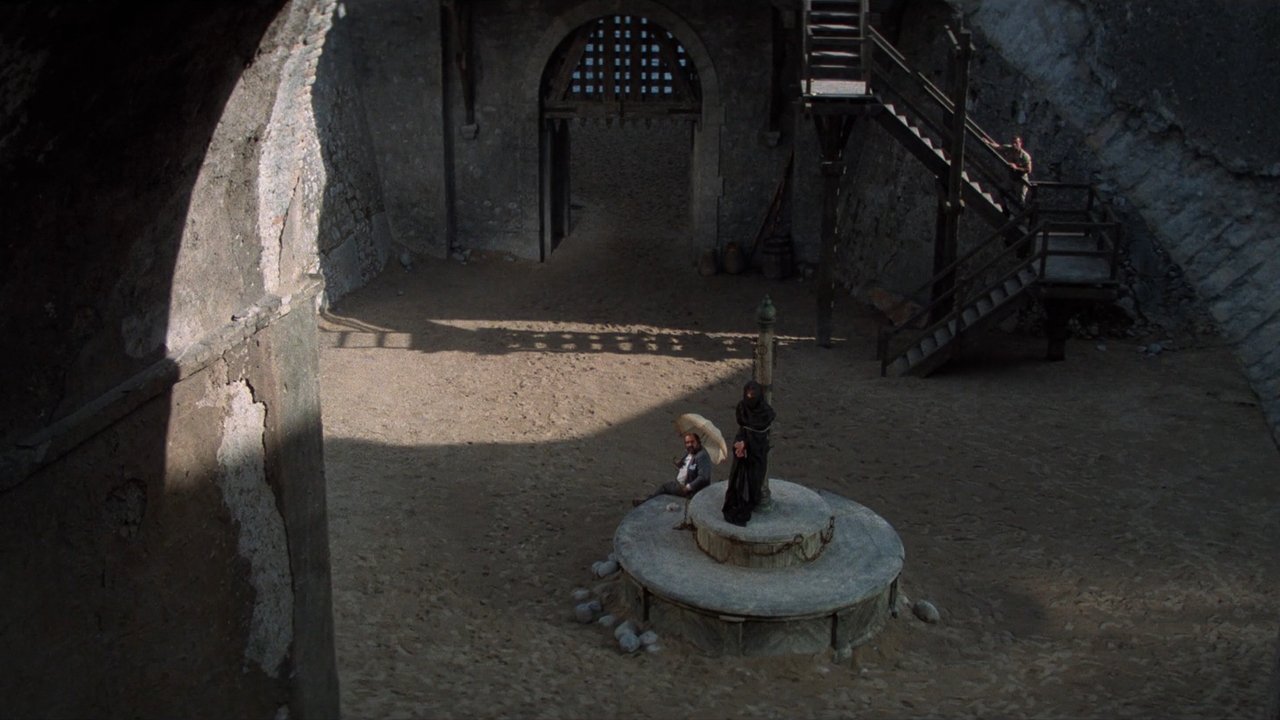
Then there’s the "Domination" scene. Instead of a standard baccarat game, Bond and the villainous Maximilian Largo, played with a delightful, twitchy eccentricity by Klaus Maria Brandauer (who had just come off the Oscar-winning Mephisto), play a high-stakes holographic video game. In 1983, this was the height of high-tech blockbuster spectacle. Today, it’s a glorious relic of the early Reagan-era obsession with the "computer age." It’s ridiculous, but the tension Kershner builds through close-ups and sound design makes it more gripping than any car chase.
Speaking of stunts, the motorcycle pursuit featuring a blacked-out Yamaha is peak 80s cool. It wasn't just a prop; it was part of a $36 million budget that clearly went toward making the film feel "bigger" than the official Bond entries. While it pulled in a massive $160 million at the box office, it was the VHS release that turned this into a staple of every collector's shelf. Because it didn't have the famous gunbarrel opening or the John Barry score, it always felt like a "forbidden" Bond movie you discovered in the back of a rental store.
Villains, Vamps, and a New Hope
If Connery is the anchor, the supporting cast provides the flair. Barbara Carrera as Fatima Blush is arguably the most entertaining Bond woman of the entire decade. She is a whirlwind of psychopathic energy and high-fashion lethalness. Her performance is so big it nearly threatens to derail the movie, but in an era of "more is more," she’s exactly what the film needed. Opposite her, a young Kim Basinger as Domino Petachi brings a vulnerability that serves as a perfect foil to Largo’s madness.
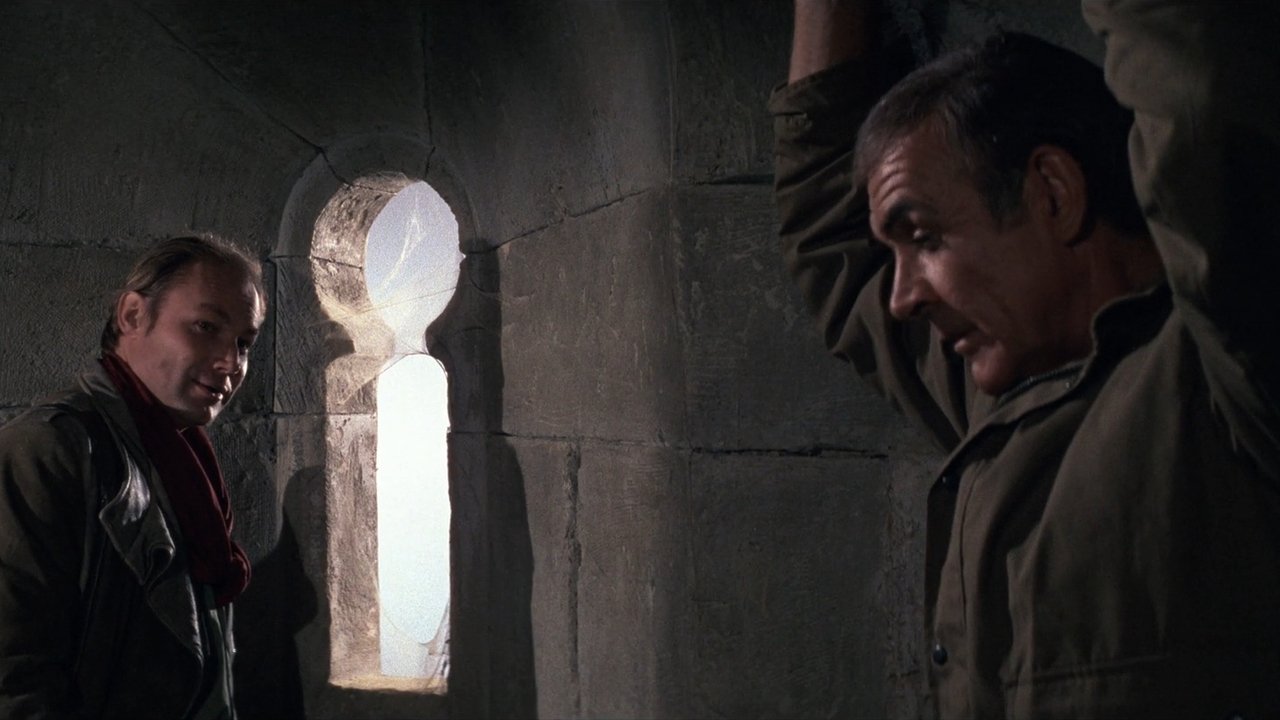
However, we have to talk about the music. Michel Legrand’s score is the most divisive element of the film. The score sounds like it was composed for a high-end elevator in a Vegas hotel. It lacks the brassy, heroic punch we associate with 007, opting instead for a lounge-lizard jazz vibe that makes some of the action feel strangely light. It’s a reminder that while they had the man, they didn't have the "brand" music, and the movie suffers slightly for it.
The production was famously troubled—Sean Connery reportedly took over many directorial duties, and martial artist Steven Seagal (long before his own film career) accidentally broke Connery’s wrist during training. Yet, despite the behind-the-scenes chaos and the legal battles that eventually buried this version of the character, the film remains a fascinating "What If?" It’s a more human Bond, a blockbuster that relied on the charisma of its lead rather than the gadgets in his pockets.
Ultimately, Never Say Never Again is a glorious anomaly. It’s a film that exists because of a legal grudge, yet it treats the character with more respect than the "official" series often did at the time. It’s the last time we got to see the man who started it all play the role with his original swagger, and for that alone, it’s a vital piece of 80s action history. If you can get past the lack of the classic theme song, you'll find a thriller that’s surprisingly light on its feet and genuinely fun to watch.
Keep Exploring...
-
Thunderball
1965
-
You Only Live Twice
1967
-
Moonraker
1979
-
For Your Eyes Only
1981
-
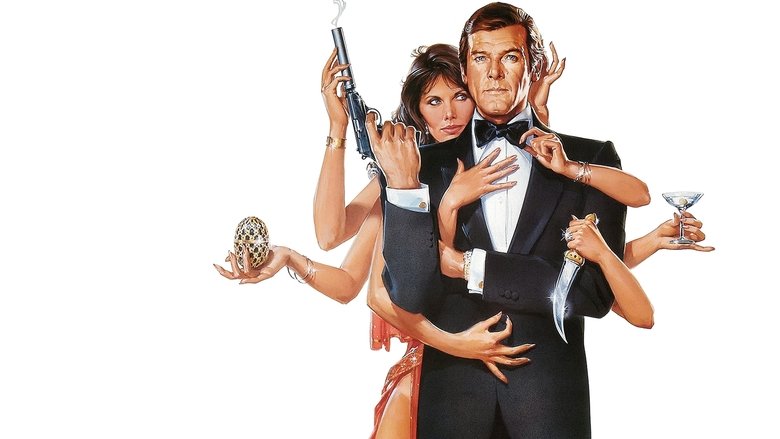
Octopussy
1983
-
A View to a Kill
1985
-
The Living Daylights
1987
-
Live and Let Die
1973
-
The Spy Who Loved Me
1977
-
Licence to Kill
1989
-
Dr. No
1962
-
Diamonds Are Forever
1971
-

Goldfinger
1964
-
On Her Majesty's Secret Service
1969
-
From Russia with Love
1963
-
The Man with the Golden Gun
1974
-
GoldenEye
1995
-
Tomorrow Never Dies
1997
-
Die Another Day
2002
-
Spectre
2015