Sudden Impact
"Justice has a very big caliber."
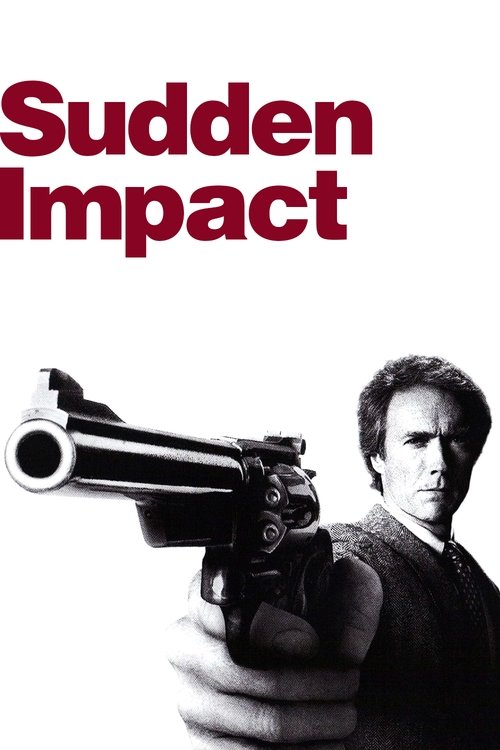
By 1983, the world had mostly decided what a "Dirty Harry" movie was: a gritty, sun-drenched San Francisco police procedural where the bureaucracy was the enemy and a .44 Magnum was the only solution. Then Clint Eastwood stepped behind the camera for the fourth installment, Sudden Impact, and pivoted the franchise into something closer to a noir-inflected slasher film. It was the moment Harry Callahan transitioned from a controversial anti-hero into a full-blown Reagan-era superhero. I watched this recently while sitting on a slightly damp patio chair with a bowl of overly salted popcorn, and honestly, the saltiness of the snack perfectly matched the crusty demeanor of Inspector Callahan.
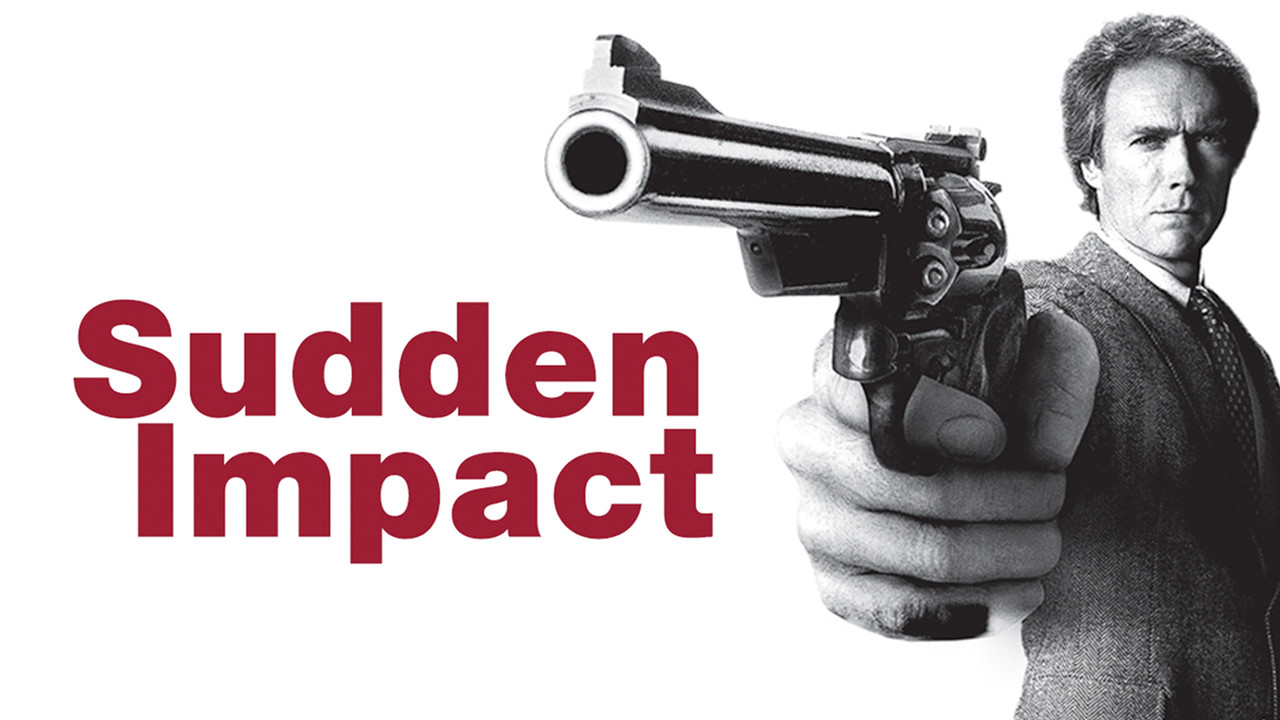
The Quote That Conquered the World
You can’t talk about Sudden Impact without addressing the elephant in the room—or rather, the quote in the diner. "Go ahead, make my day" isn't just a line of dialogue; it became a cultural tectonic shift. It’s easy to forget how much of a behemoth this film was. With a budget of $22 million, it raked in $150 million worldwide. Adjusted for inflation, that’s over $465 million today. It wasn't just a hit; it was a phenomenon that saw President Ronald Reagan actually using the catchphrase in televised speeches to threaten a veto.
The scene itself—Harry thwarting a robbery while holding a cup of coffee—is a masterpiece of escalating tension and pure, unadulterated machismo. The way Clint Eastwood frames his own face, all squinting eyes and weathered skin, turns the character into a living monument. The action choreography here is simple but punchy. There’s no shaky-cam or hyper-editing; it’s just clear, rhythmic violence. When the .44 Magnum finally barks, the sound design makes it feel like a cannon blast, a staple of the 80s action aesthetic where bigger was always better.
A Different Kind of Vigilante
What makes Sudden Impact stand out from its predecessors is the co-protagonist. Sondra Locke plays Jennifer Spencer, a woman systematically hunting down and executing the group of men (and one particularly vile woman) who brutally raped her and her sister years prior. This shifts the movie into "rape-revenge" territory, a subgenre usually reserved for grimy grindhouse flicks like I Spit on Your Grave.
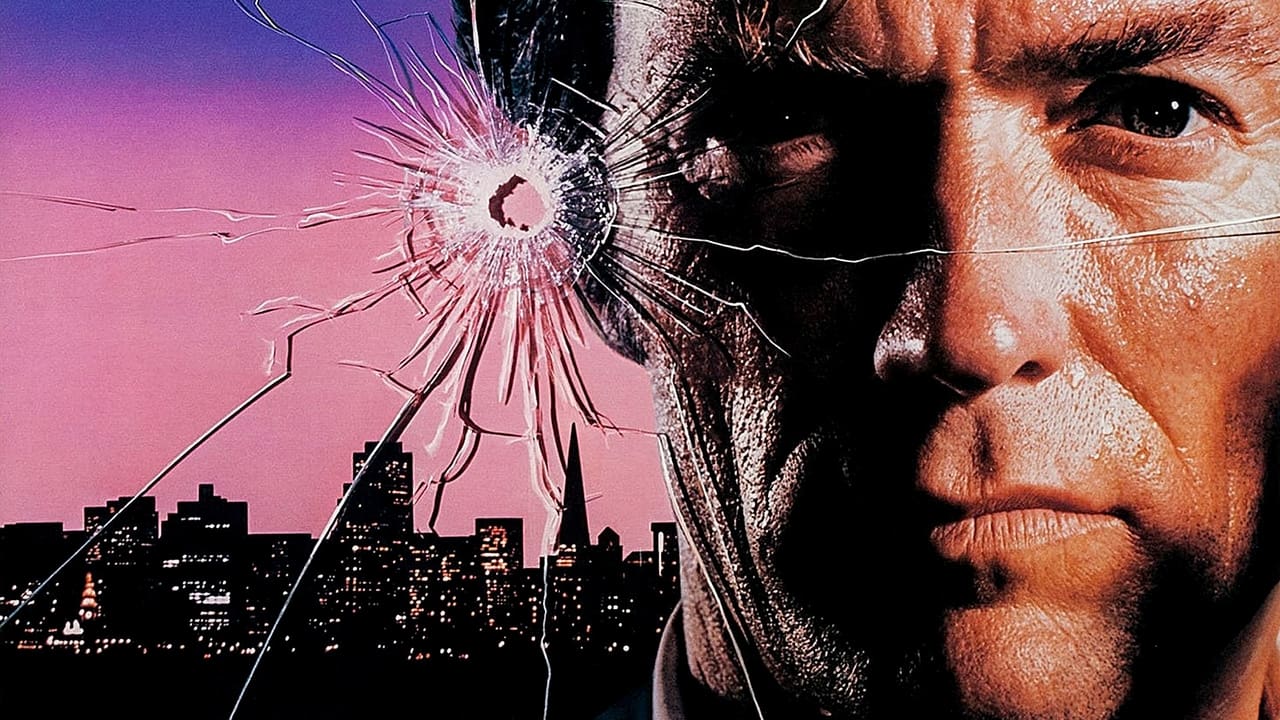
Eastwood, directing himself, makes the fascinating choice to let Locke’s story breathe. She isn't just a victim for Harry to save; she’s a mirror for his own brand of extra-judicial justice. Harry Callahan is basically a slasher movie villain who happens to have a badge, and watching him track a "serial killer" who is essentially doing exactly what he does—cleaning up the "trash" the courts won't touch—creates a weird, dark irony. The cinematography by Bruce Surtees, often called the "Prince of Darkness," leans heavily into this. The film is full of deep shadows and high-contrast lighting that feels more like a 1940s noir than a 1980s action blockbuster. It’s moody, atmospheric, and surprisingly bleak.
The VHS Gold Standard
For those of us who grew up in the era of wood-paneled basements, the Warner Bros. "clamshell" VHS case for Sudden Impact was a permanent fixture on video store shelves. It was the kind of tape you’d rent on a Friday night because the cover art promised a level of intensity that PG-13 movies couldn't touch. Watching it now, I’m struck by the practical nature of the production. The car chase through the hills of Santa Cruz involves real steel hitting real pavement—none of that weightless CGI nonsense we see in modern Fast & Furious entries. When a car flips here, you can practically smell the burnt rubber and leaking oil.
The film also features one of the most delightfully 80s villains in Mick, played with oily menace by Paul Drake. He’s the kind of over-the-top scumbag that only existed in this decade—all snarls and greasy hair. Watching Harry go up against him and his gang of misfits provides the cathartic payoff the audience craves. However, the bulldog "Meathead" is arguably the best character in the movie, serving as the perfect silent partner for a man who hates talking to people.

Practical Grime and Polished Steel
While the screenplay by Joseph Stinson and Dean Riesner can be a bit clunky with its "Dirty Harry-isms" (Harry's rants to his superiors like Pat Hingle and Bradford Dillman feel a bit like a "greatest hits" compilation), the film's momentum is undeniable. Lalo Schifrin returns for the score, but he swaps the jazzy, urban funk of the 1971 original for a more synthesised, urgent 80s pulse. It’s the sound of a franchise modernizing itself in real-time.
Sudden Impact might not have the raw, cynical edge of the original Dirty Harry, but it’s the most "cinematic" of the sequels. It’s a film that knows exactly what its audience wants—big guns, pithy one-liners, and a clear (if morally grey) sense of justice—and it delivers those things with the efficiency of a Smith & Wesson. It represents the peak of Eastwood's star power, a moment where he could take a gritty revenge story and turn it into the biggest hit of the year.
In the end, Sudden Impact is a fascinating relic of a time when the biggest movie star in the world could also be its most brooding director. It’s a dark, stylish, and occasionally goofy action-thriller that proved Harry Callahan was more than just a character—he was an institution. Even if some of the 80s tropes feel a bit dated, the core appeal of watching a man with a giant gun say something cool before cleaning up the streets remains an evergreen cinematic pleasure. Just make sure you bring your own coffee to the viewing.
Keep Exploring...
-
The Dead Pool
1988
-
Dirty Harry
1971
-

The Enforcer
1976
-

Magnum Force
1973
-
Blood Work
2002
-
Lethal Weapon 2
1989
-
Heartbreak Ridge
1986
-
Cobra
1986
-
Raw Deal
1986
-

Midnight Run
1988
-
In the Line of Fire
1993
-
First Blood
1982
-
Beverly Hills Cop
1984
-
Rambo: First Blood Part II
1985
-
Witness
1985
-
Beverly Hills Cop II
1987
-
Lethal Weapon
1987
-
A Perfect World
1993
-
Bullitt
1968
-
Marathon Man
1976