Videodrome
"Slide it in. Turn it on. Lose your soul."
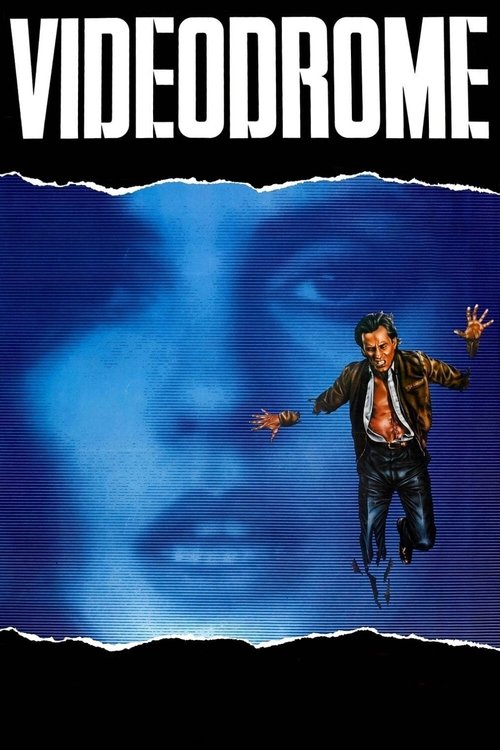
The hum of a cathode-ray tube television has a specific, ozone-heavy scent that I can still smell when I close my eyes. It’s the smell of 1983. Back then, the television wasn’t just a piece of furniture; it was a pulsating guest in our living rooms, a glowing hearth that promised the world while slowly cooking our retinas. I recently revisited David Cronenberg’s Videodrome while my neighbor was power-washing his driveway—the relentless, droning mechanical hum outside perfectly synchronized with the electronic dread on my screen. It felt like the movie was trying to bleed out of the frame and into my apartment.
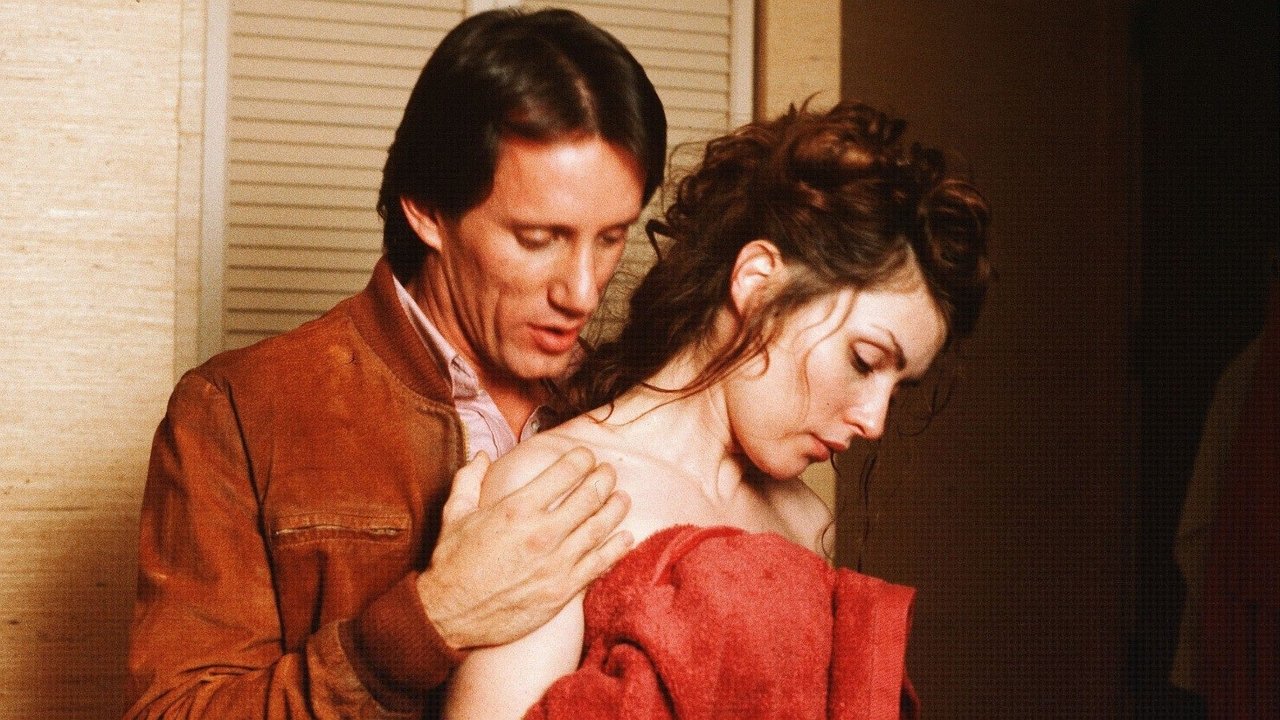
The Oily Ambition of Max Renn
At the center of this hall of mirrors is Max Renn, played with a frantic, oily desperation by James Woods. Max is the president of CIVIC-TV, a bottom-feeding UHF station looking for "the next big thing" in transgressive programming. James Woods was a perfect choice here; he has a way of looking like he hasn't slept in three days and has survived entirely on caffeine and cigarettes. When he discovers "Videodrome"—a broadcast of plotless, hyper-violent torture—he thinks he’s found a goldmine. He doesn't realize he’s actually found a signal that causes brain tumors, hallucinations, and a literal physical restructuring of the human body.
Joining him on this downward spiral is Debbie Harry, who was at the absolute zenith of her fame with Blondie at the time. As Nicki Brand, a radio host with a taste for self-inflicted pain, she brings a cool, detached eroticism to the film that makes the horror feel even more intimate. Her chemistry with James Woods is fascinating because it feels genuinely dangerous. Max Renn is basically a 1980s version of a doom-scrolling Twitch streamer with a darker tailor, and Nicki is the one who pushes him over the edge of the screen and into the abyss.
The Prophet of the New Flesh
What makes Videodrome a pillar of the New Hollywood transition is how it treats technology as a biological invader. This was the era of the "Video Nasties" panic in the UK and the moral majority in the US, where people genuinely feared that watching "bad" tapes would rot the fabric of society. Cronenberg took that literal fear and made it physical.

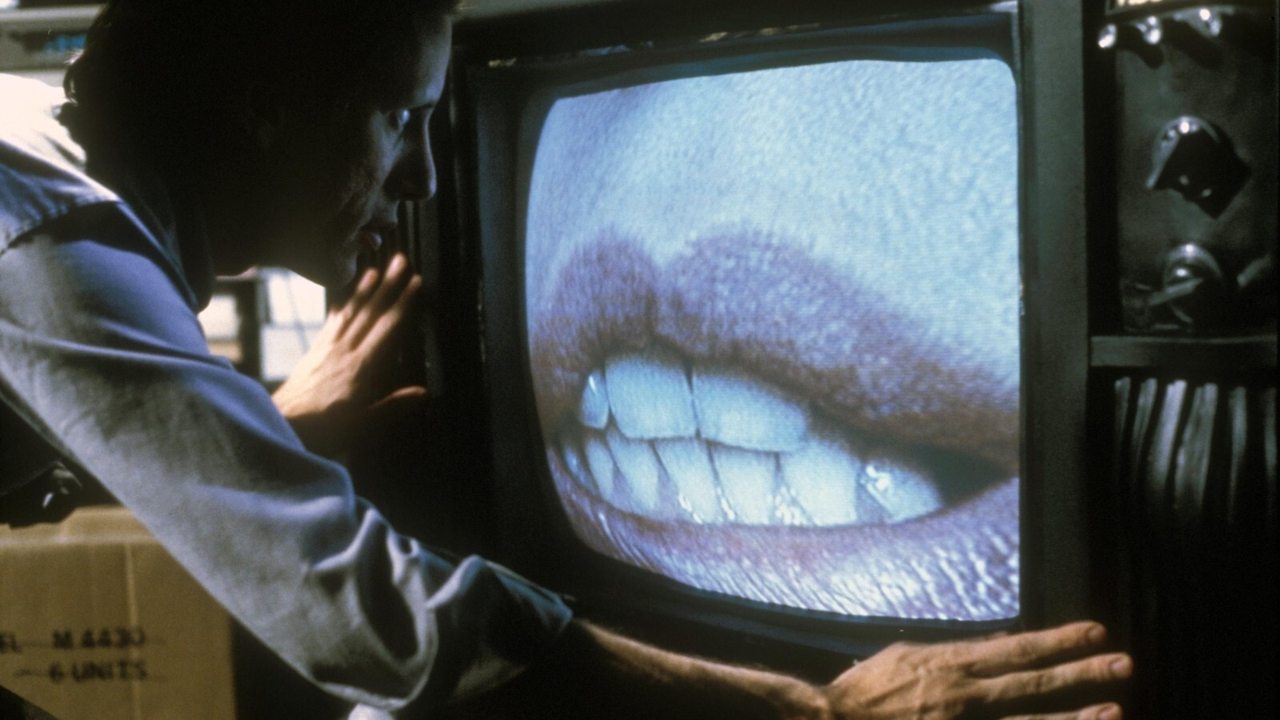
The practical effects by Rick Baker are the stuff of legend, and they remain more disturbing than anything a modern render farm could spit out. To achieve the "breathing" television set, Rick Baker used a sheet of flexible dental dam material with a vacuum system and a video projector. When James Woods presses his face into the screen, it isn't a digital trick; it's a man interacting with a distended, mechanical lung. The infamous "stomach-slit" scene—where Max’s torso opens up to receive a VHS tape—was done using a complex latex prosthetic that required James Woods to be bolted to a chair for hours while technicians pumped lubricant and cables through the "wound."
Apparently, James Woods was so unsettled by the "flesh gun" effect—where his hand merges with a handgun via a series of veiny, throbbing cables—that he was constantly checking his own skin for irritation. It's that level of tactile, wet, uncomfortable reality that gives the film its staying power. It feels like the movie was grown in a petri dish rather than filmed on a set.
A Cult Born in the Rental Aisles
The film was a spectacular commercial failure upon its initial release, clawing back only about $2 million on a $6 million budget. Critics at the time didn't know what to do with it; it was too "art-house" for the slasher fans and too "gross" for the high-brow crowd. But then came the VHS revolution. Videodrome became the ultimate "have you seen this?" tape in the back corner of independent video stores. The original box art often emphasized the horror elements, tricking teenagers into renting a deeply philosophical treatise on media theory.
It turns out the character of Brian O’Blivion (Jack Creley) was actually based on Marshall McLuhan, the famous media theorist who coined the phrase "the medium is the message." Cronenberg, who had been a student of McLuhan's, took that academic concept and turned it into a nightmare where the medium literally rewrites your DNA.
The production was a bit of a chaotic scramble. Cronenberg was reportedly writing scenes the morning of the shoot, leading to a dreamlike, disjointed narrative that actually works in the film's favor. It feels like a hallucination because, in many ways, it was. The ending was changed multiple times during filming because they couldn't decide how to resolve Max’s transformation.
Videodrome isn't a "fun" watch in the traditional sense, but it is an essential one. It’s a film that predicted our current reality—where we are constantly plugged into a stream of images that dictate our politics, our desires, and our identities—decades before the first smartphone was even a sketch on a napkin. It’s dark, sweaty, and profoundly weird. If you’ve never experienced the "New Flesh," turn off the lights, ignore the buzzing in your ears, and let the long-lost signal of Channel 83 take over. Just don't blame me if you start looking for a slot in your stomach to put the remote.

Keep Exploring...
-

The Fly
1986
-

The Thing
1982
-
The Dead Zone
1983
-
Dead Ringers
1988
-

Scanners
1981
-
Alien
1979
-
Angel Heart
1987
-
Dawn of the Dead
1978
-

Invasion of the Body Snatchers
1978
-

Day of the Dead
1985
-
eXistenZ
1999
-
The Shining
1980
-

An American Werewolf in London
1981
-

Star Trek II: The Wrath of Khan
1982
-
The Terminator
1984
-
Blue Velvet
1986
-

The Name of the Rose
1986
-

Predator
1987
-
RoboCop
1987
-

Eastern Promises
2007