Children of the Corn
"Out of the fields and into your nightmares."
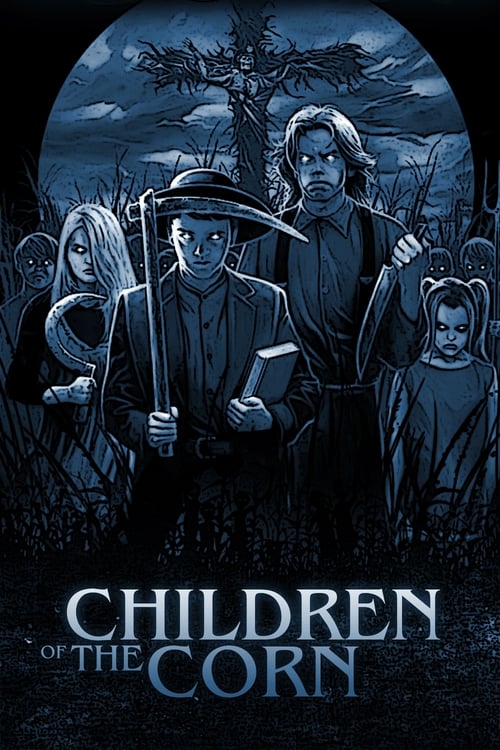
The opening scene of Children of the Corn still gets me. You’re in a sleepy Nebraska diner, the sunlight is sickly sweet, and suddenly, a group of kids turns a coffee shop into a slaughterhouse with meat cleavers and poise. It’s an all-timer of an intro that promises a level of folk-horror nastiness the rest of the movie struggles to maintain. I watched this most recently on a rainy Tuesday while trying to peel a very stubborn clementine, and honestly, the struggle with the fruit provided more tension than the film's middle thirty minutes, but there is something undeniably magnetic about this 1984 oddity.
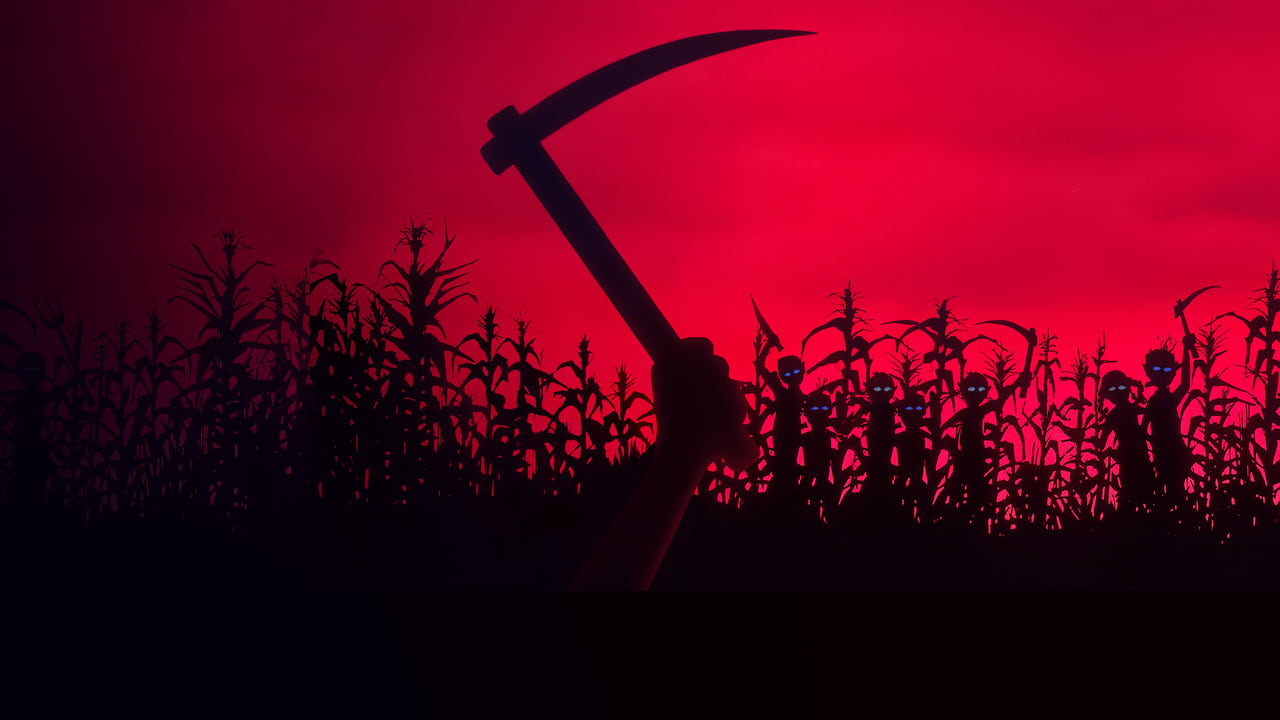
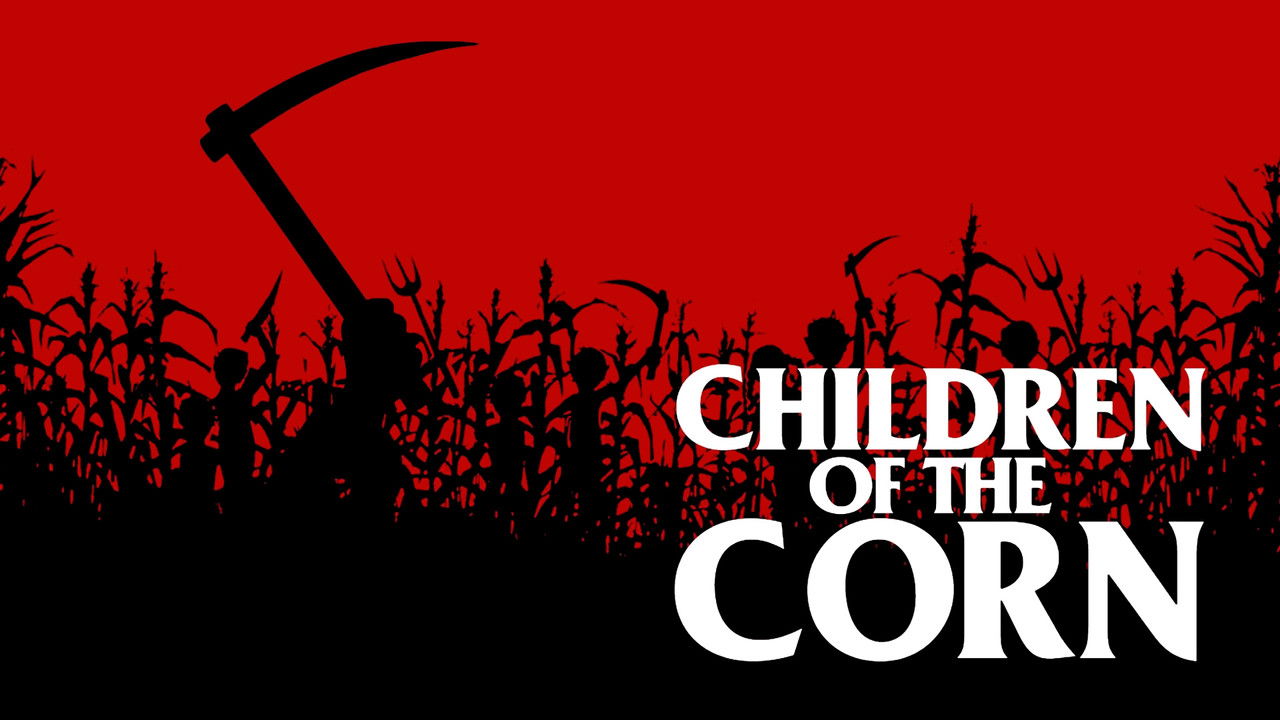
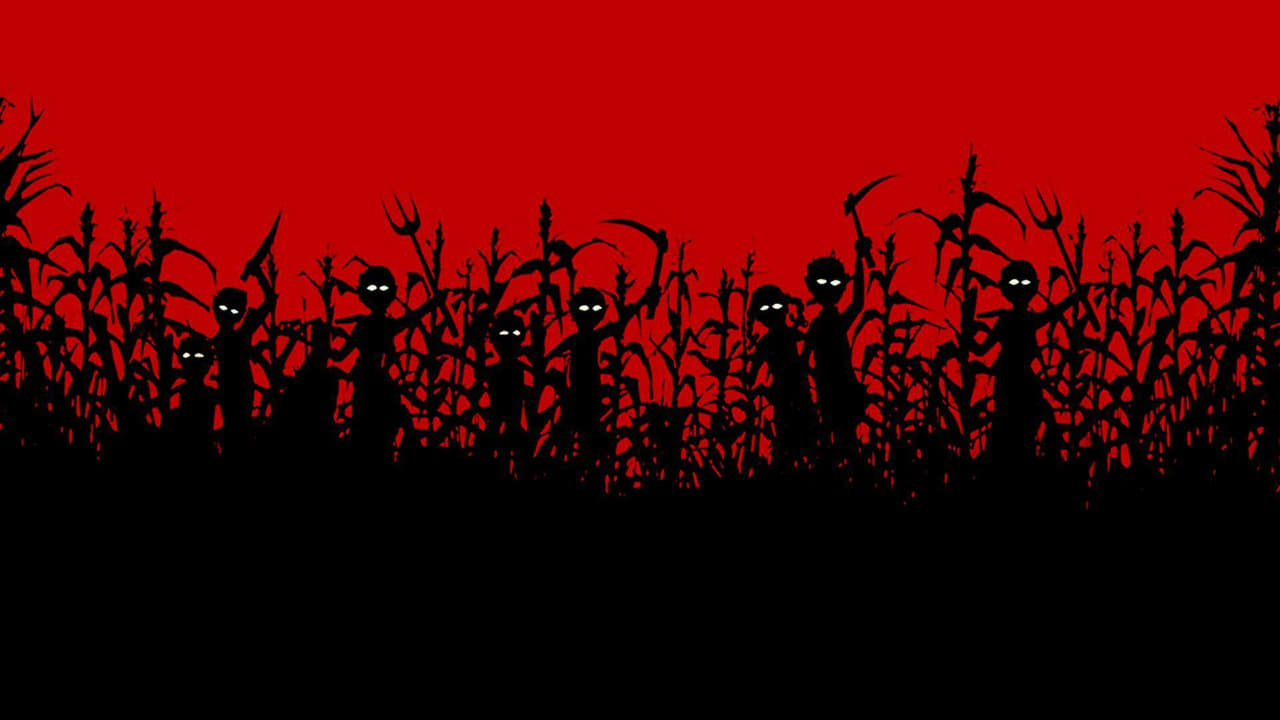
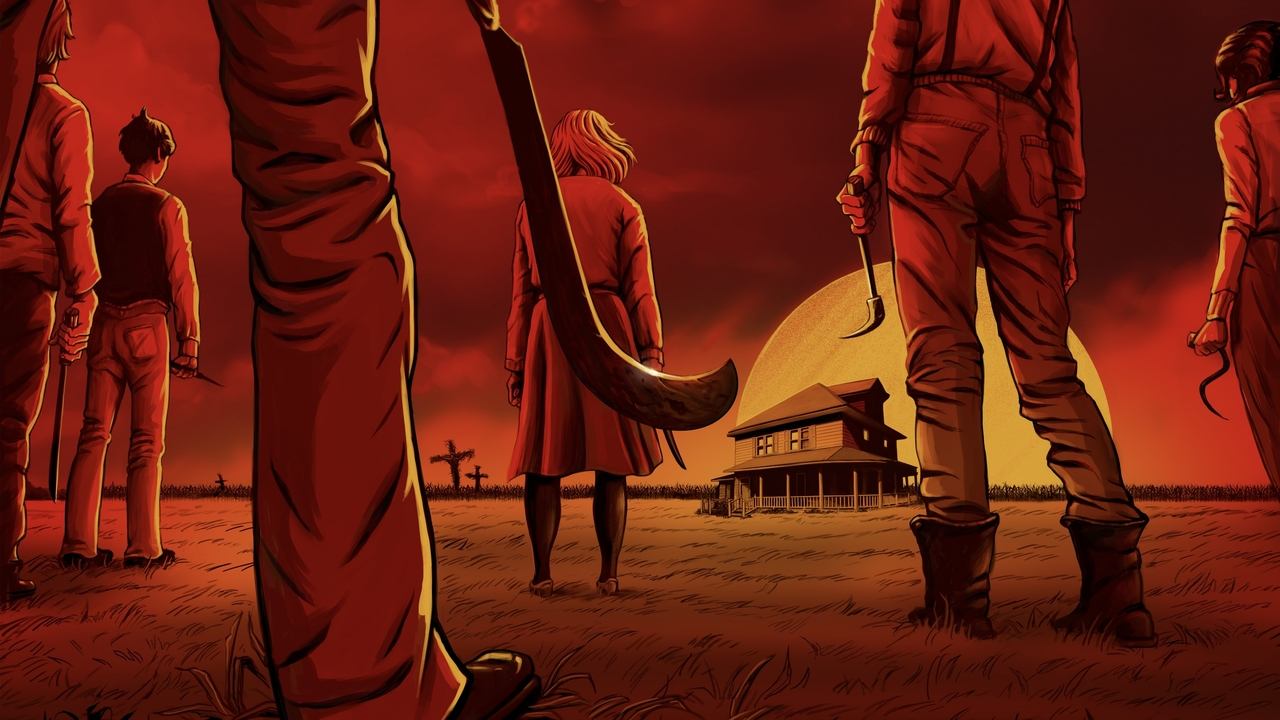
Directed by Fritz Kiersch, this was an early attempt to tap into the Stephen King goldmine during the height of the 1980s horror boom. It’s a low-budget production that screams "independent hustle," filmed mostly in Iowa (not Nebraska) for a measly $800,000. While the film has its flaws, it’s a foundational text for anyone who spent their Friday nights roaming the aisles of a local video store, lured in by that iconic cover art featuring a scythe-wielding silhouette against a blood-red sun.
The Gospel of Isaac and Malachai
While the "adult" leads—Peter Horton (later of thirtysomething) and Linda Hamilton (just months away from becoming an icon in James Cameron’s The Terminator)—do their best with the material, they are essentially just walking meat-sacks meant to react to the town’s real stars. The film belongs entirely to the children, specifically the terrifying duo of Isaac and Malachai.
John Franklin, who played the boy-preacher Isaac, was actually 24 years old at the time of filming. A growth hormone deficiency allowed him to play a child, and he brings a creepy, sophisticated stillness to the role that a real twelve-year-old likely couldn't have managed. Then there’s Courtney Gains as Malachai. With his shock of red hair and a sneer that looks like it was carved out of a pumpkin, Gains is the heavy lifting of the movie’s threat. He’s the physical enforcer to Isaac’s spiritual leader, and his performance is the only thing in the movie that feels genuinely dangerous. Every time he’s on screen, the movie shifts from a campy King adaptation into something much more visceral.
VHS Gold and Practical Pitfalls
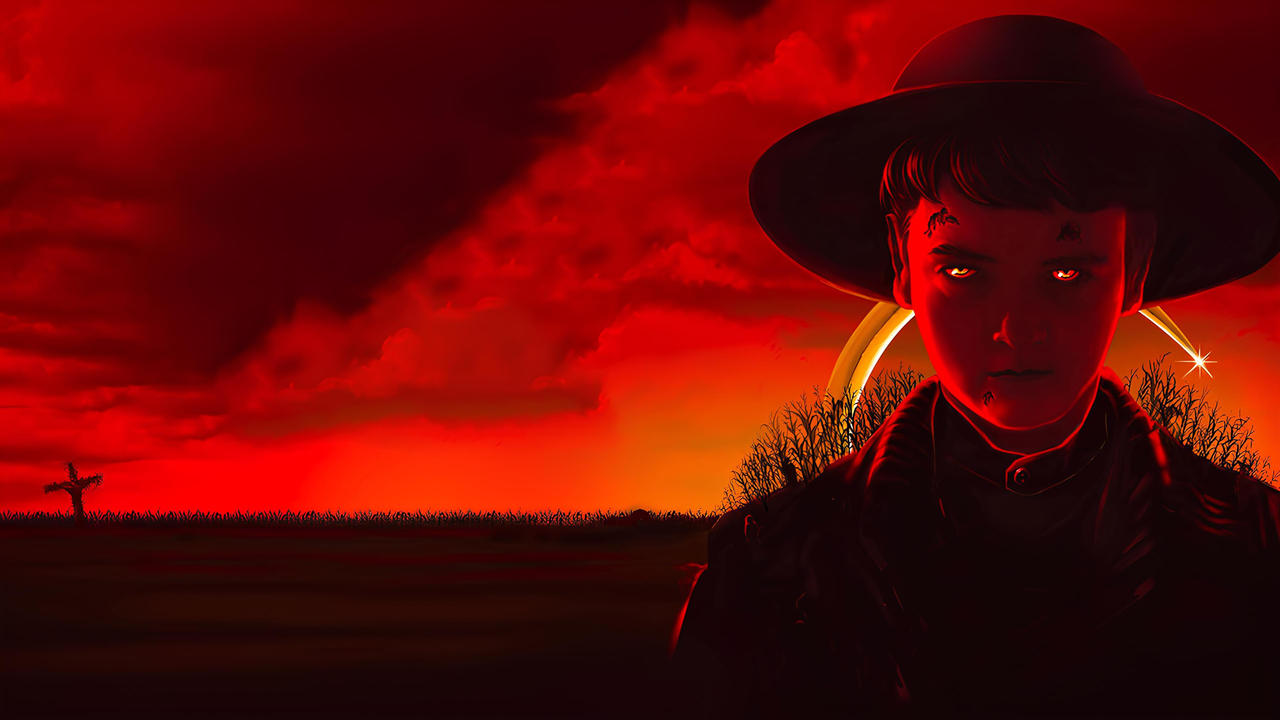
In the 80s, Children of the Corn was a titan of the rental shelf. It’s the kind of movie that worked perfectly on a slightly fuzzy VHS tape played on a 19-inch CRT television. The grain of the film and the muted colors of the cornfields actually helped hide some of the production's budgetary limitations. When you watch it in high definition today, you start to see the seams—specifically the "He Who Walks Behind the Rows" effects.
The finale involves a supernatural entity in the corn that was achieved through some... let's call them "creative" practical effects. Between the red light bulbs and the animated "burrowing" effect through the dirt, the climax looks like a sentient orange lint ball is trying to escape the frame. It’s a far cry from the makeup effects mastery of someone like Rob Bottin or Stan Winston, but there’s a charm to it. You can see the crew trying to make a $100 sequence look like $10,000. It doesn't work, but I appreciate the swing.
The score by Jonathan Elias is the secret weapon here. It uses a discordant children’s choir that sounds like a playground chant from hell. It’s a technique that’s been used a thousand times since, but here, it adds a layer of dread to the wide-open Nebraska landscapes that the cinematography occasionally fails to capture.
The Independent Spirit of Gatlin
What makes Children of the Corn a fascinating "indie gem" isn't necessarily its polish, but its endurance. It was a massive financial success, raking in over $14 million against that tiny budget. That’s the dream of independent horror: find a hook, keep the locations simple (mostly fields and a few dusty rooms), and let the marketing do the work. The film was produced by Donald P. Borchers, who clearly knew how to stretch a dollar. They even cast R.G. Armstrong—a veteran of Sam Peckinpah Westerns—as the crotchety gas station owner to give the film a bit of veteran "grit" right at the start.
The movie’s legacy is also a testament to the power of the franchise. It spawned nearly a dozen sequels and remakes, most of which went straight to video. But the 1984 original remains the only one with that specific brand of "Sunbelt Gothic" weirdness. It captures a specific fear of the rural unknown—the idea that if you turn off the main highway, you might stumble into a world where the old rules don't apply and the kids have stopped playing tag and started sharpening farm implements.
Ultimately, Children of the Corn is a vibe-heavy piece of 80s horror history that stays afloat thanks to its villains and its premise. It’s not as polished as Cujo (1983) or as terrifying as The Shining (1980), but it has a gritty, low-budget personality that’s hard to hate. It’s the perfect "midnight movie" for when you want something that feels like a campfire story. Just maybe avoid eating corn on the cob while you watch it; it feels a little too much like taking sides.
Keep Exploring...
-
Halloween II
1981
-
A Nightmare on Elm Street 3: Dream Warriors
1987
-
Hellbound: Hellraiser II
1988
-

The Hills Have Eyes
1977
-
Friday the 13th Part 2
1981
-
Friday the 13th Part III
1982
-
Friday the 13th: The Final Chapter
1984
-
Friday the 13th Part VI: Jason Lives
1986
-

Cujo
1983
-
A Nightmare on Elm Street 4: The Dream Master
1988
-

Halloween 4: The Return of Michael Myers
1988
-
The Amityville Horror
1979
-
Friday the 13th
1980
-
The Howling
1981
-

A Nightmare on Elm Street Part 2: Freddy's Revenge
1985
-
Critters
1986
-
The Texas Chainsaw Massacre 2
1986
-
Bad Taste
1987
-
Killer Klowns from Outer Space
1988
-
Phenomena
1985