Conan the Destroyer
"Bigger muscles, weirder magic, and 100% more Grace Jones."
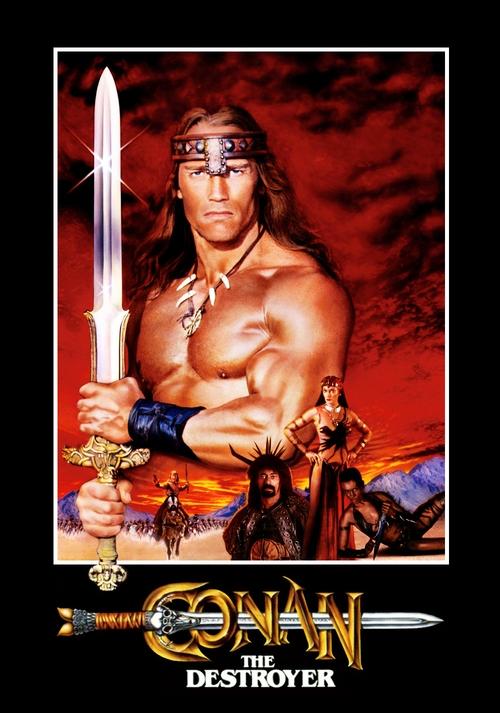
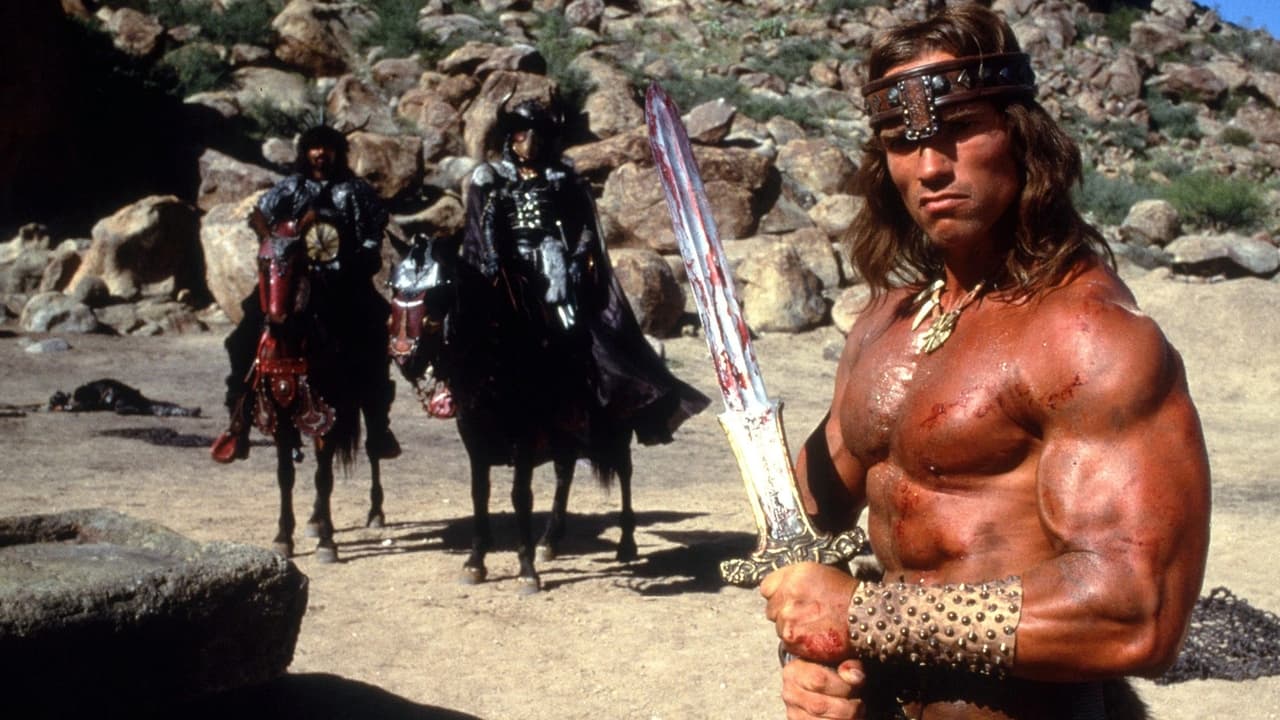
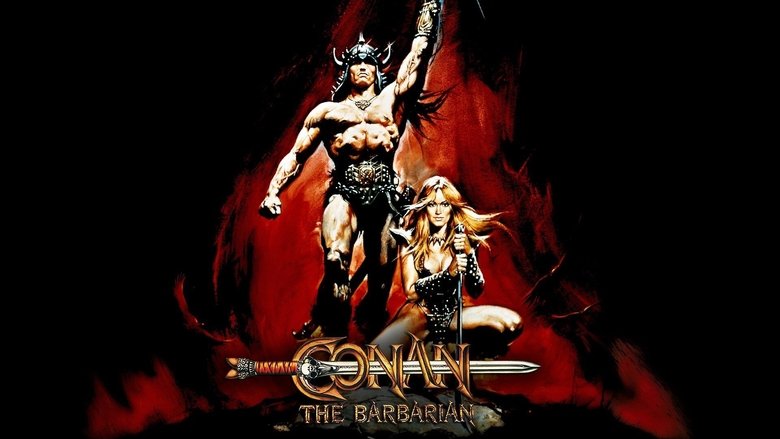
If 1982’s Conan the Barbarian was a Nietzschean fever dream soaked in blood and Wagnerian ambition, its 1984 sequel, Conan the Destroyer, is the cinematic equivalent of a heavy metal van painting come to life. By the time this hit theaters, Arnold Schwarzenegger was on the precipice of becoming the biggest star on the planet—The Terminator would arrive just four months later—and you can feel the production shifting gears. Gone is the grim, R-rated philosophy of John Milius; in its place is a PG-rated, colorful Dungeons & Dragons campaign directed by veteran craftsman Richard Fleischer (20,000 Leagues Under the Sea).

I recently revisited this while eating a bowl of lukewarm SpaghettiOs—the exact kind of "refined" cuisine this movie demands—and I was struck by how much more fun it is than the original, even if it lacks that film's operatic weight. It’s a quest movie, pure and simple, and while the film’s plot has the structural integrity of a wet graham cracker, it moves with a clip that the first film often lacked.
The Weirdest Fellowship in Fantasy History
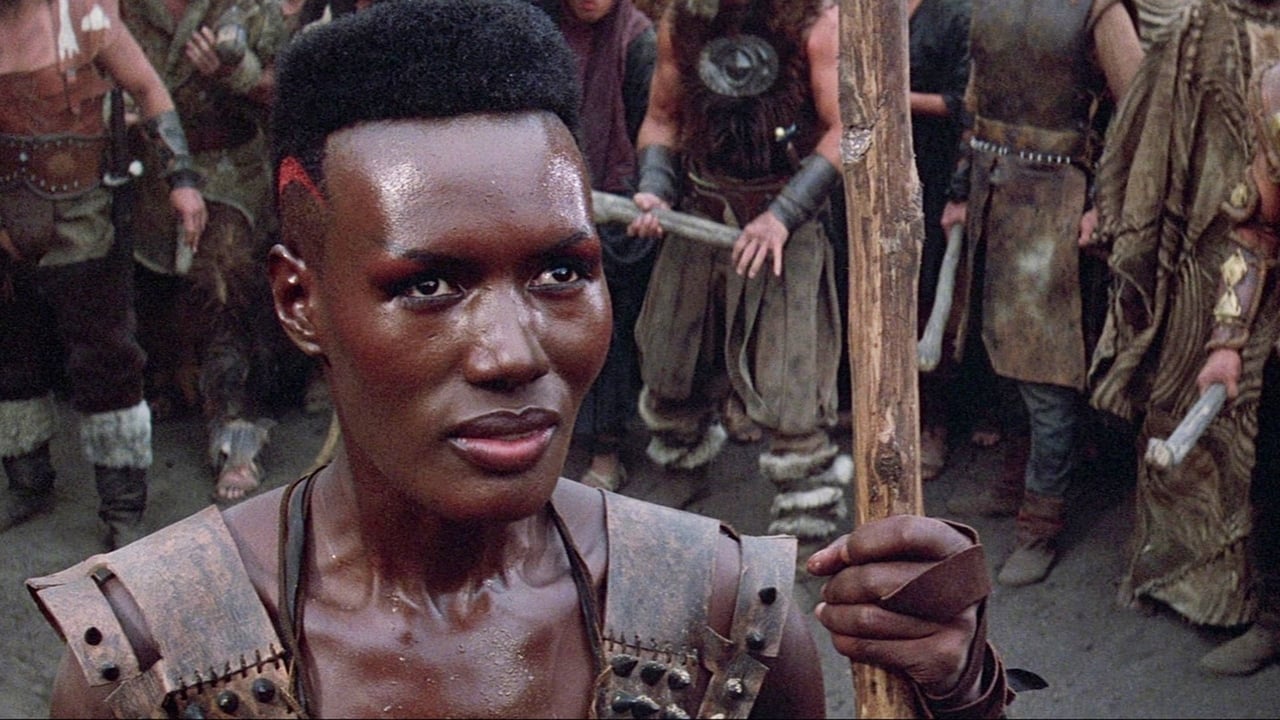
What really makes Destroyer sing for me is the bizarre assembly of talent. You’ve got Arnold, looking more Herculean than ever, paired with Grace Jones as Zula. Let’s be real: Grace Jones is the only person on earth who can make Arnold Schwarzenegger look like a well-behaved suburban dad. Her energy is feral, her outfits are iconic, and she brings a legitimate physical menace to the screen. Apparently, she was so intense during filming that she accidentally sent several stuntmen to the hospital because she didn't quite understand the concept of "pulling" her strikes with that massive staff.
Then you have Wilt Chamberlain as Bombaata. Watching the NBA’s greatest stat-stuffer tower over Arnold is a visual trip that never gets old. It’s a rare moment where the "Austrian Oak" looks like a sapling. Rounding out the crew are Mako, returning as the wizard Akiro (bless his heart for grounding this silliness), and Tracey Walter as Malak. I'll be honest: Tracey Walter’s Malak is the most annoying sidekick this side of Jar Jar Binks, but he serves his purpose as the "inept thief" archetype that every 80s fantasy flick seemingly required by law.
Practical Magic and Mirror Rooms

From a technical standpoint, Destroyer is a treasure trove for fans of the Practical Effects Golden Age. The sequence in the Ice Castle, where Conan fights a man-ape in a room of mirrors, is a masterclass in low-tech ingenuity. They used actual mirrors and clever camera angles to create a disorienting, kaleidoscopic nightmare that CGI simply couldn't replicate with the same "tactile" feel.
The climax features a transformation into the god Dagoth, a creature designed by the legendary Carlo Rambaldi (the man who gave us E.T. and the mechanical head effects in Alien). While Dagoth looks a bit like a giant, grumpy rubber suit today, there’s a weight and a slime-factor to it that I find infinitely more charming than a digital render. It feels like something the actors can actually touch and hide from, which keeps the stakes feeling grounded even when Sarah Douglas (playing the evil Queen Taramis with delicious Superman II camp) is screaming about ancient prophecies.
The VHS Gold Standard
For those of us who grew up in the 80s and 90s, Conan the Destroyer wasn’t just a movie; it was a permanent fixture of the "Action" aisle. I can still see the Thorn EMI VHS box art in my head—Renato Casaro’s painting of Arnold holding a sword aloft, flanked by the cast, drenched in hues of sunset orange and gold. It was the kind of box art that promised a world of infinite adventure, and unlike many "bait and switch" rentals of the era, the movie actually delivers on that specific "Saturday afternoon" vibe.
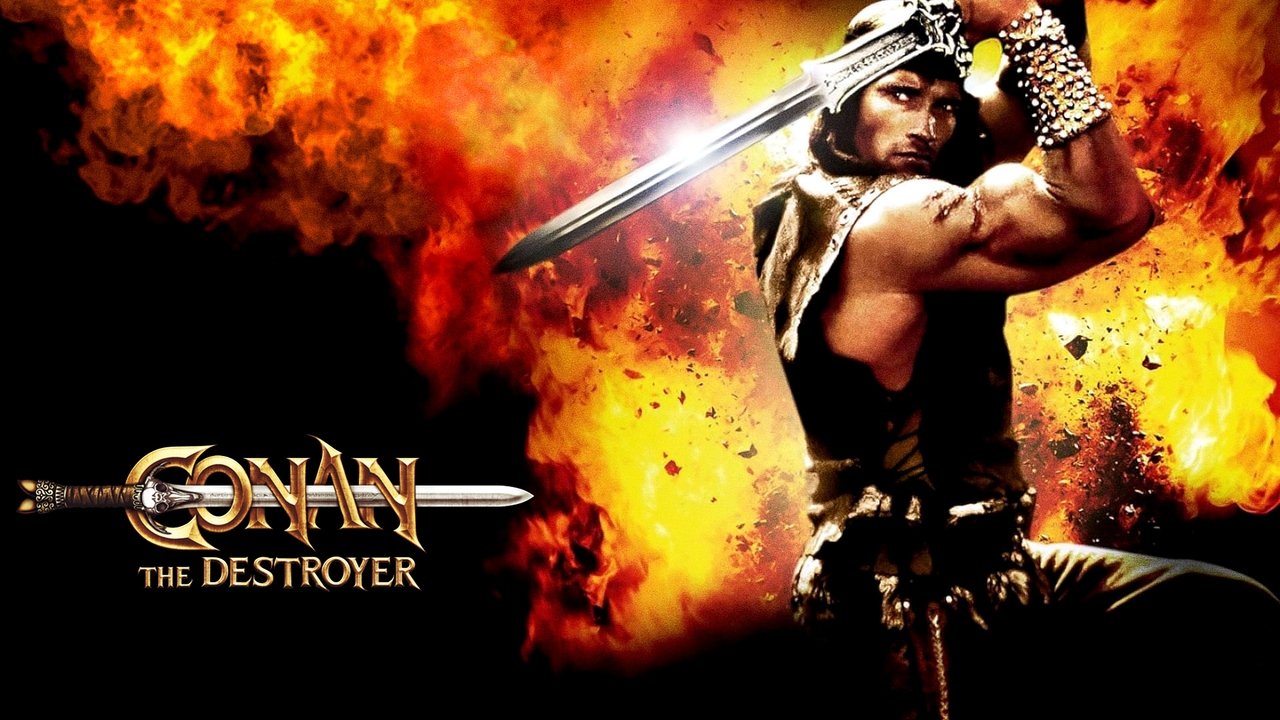
The score by Basil Poledouris is the secret weapon here. He reprises his themes from the first film but adds a jaunty, adventurous brass section that tells you exactly how to feel: this isn't a funeral for a civilization; it's a treasure hunt. The music elevates every scene, making even the cheesier moments feel like part of a grand tapestry.
Ultimately, Conan the Destroyer is a transitional fossil. It captures the exact moment Hollywood realized that Arnold wasn't just a bodybuilder—he was a brand. While it lacks the "art-house with muscles" vibe of the first film, it compensates with a delightful, b-movie energy that makes it incredibly easy to watch. It’s a film that knows exactly what it is: a breezy, 103-minute excuse to watch a giant man hit things with a sword.
If you’re looking for high-brow fantasy, look elsewhere. But if you want to see a movie where an NBA legend, a high-fashion icon, and a future Governor of California fight a rubber god in a castle made of mirrors, this is your holy grail. It’s the kind of movie that reminds me why I fell in love with cinema in the first place—not for the logic, but for the spectacle. Grab some snacks, ignore the plot holes, and enjoy the ride.
Keep Exploring...
-
Conan the Barbarian
1982
-

Masters of the Universe
1987
-
Willow
1988
-
Highlander
1986
-
Flash Gordon
1980
-
The Dark Crystal
1982
-
Superman III
1983
-
Romancing the Stone
1984
-
Star Trek III: The Search for Spock
1984
-
Ladyhawke
1985
-
Legend
1985
-

Return to Oz
1985
-
The Black Cauldron
1985
-
The Jewel of the Nile
1985
-

The Golden Child
1986
-
Young Guns
1988
-
Star Trek V: The Final Frontier
1989
-

The Karate Kid Part III
1989
-
Raw Deal
1986
-

Red Heat
1988