Ghostbusters
"Nuclear accelerators, unpaid academics, and a giant marshmallow."
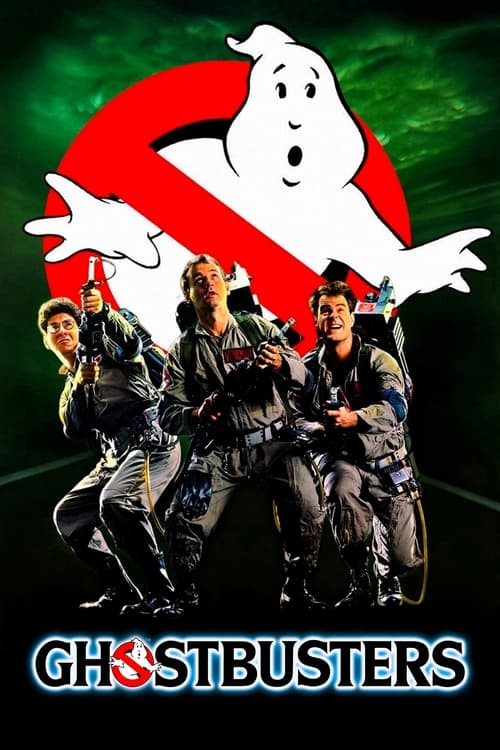
I remember staring at the VHS box for Ghostbusters at my local Video Hut—the one where the owner always smelled like menthol cigarettes and cheap floor wax—and thinking that the red "no-ghost" logo was the coolest thing I’d ever seen. Back then, you didn’t just watch a movie; you owned the iconography. Looking at that tape today, with its slightly sun-bleached spine, I’m reminded of how rare it is for a film to be this perfectly calibrated. It’s a blue-collar comedy, a genuine horror flick, and a high-concept sci-fi blockbuster all taped together with cynical New York wit.
Blue-Collar Heroes with Nuclear Backpacks
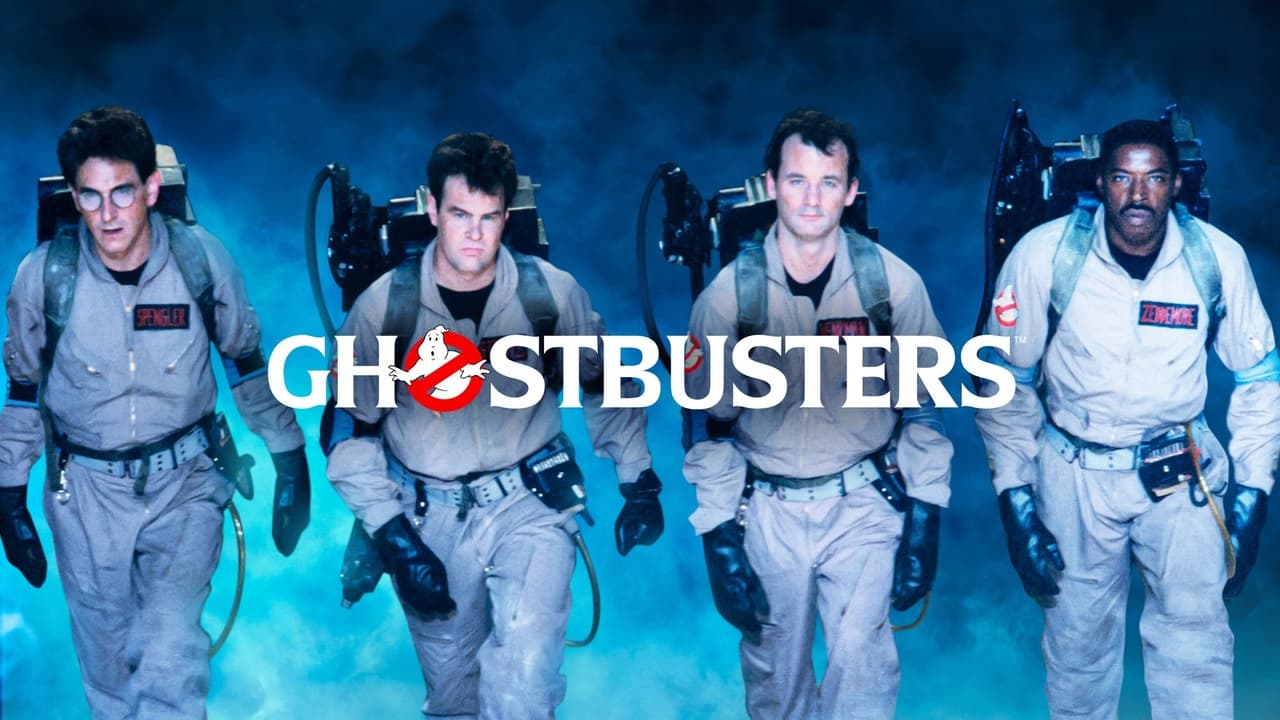
The genius of Dan Aykroyd and Harold Ramis’s screenplay is that it treats the supernatural like a plumbing problem. When Peter Venkman, Ray Stantz, and Egon Spengler get kicked out of their cushy university positions, they don't set out to save the world; they set out to pay the rent. I watched this again recently while my radiator was making a sound like a dying walrus, and it struck me how much the Ghostbusters feel like actual contractors. They’ve got the stained jumpsuits, the cluttered office, and a receptionist, Janine Melnitz (Annie Potts), who is clearly overqualified and underpaid.
Bill Murray is the engine that makes the whole machine purr. As Venkman, he is essentially a high-functioning con man with a Ph.D. who seems more interested in flirting with Sigourney Weaver’s Dana Barrett than checking PKE meters. Venkman is technically a terrible scientist who should probably be in jail for his ethical lapses, yet Murray plays him with such effortless, breezy charm that you can’t help but root for the guy. His deadpan reaction to being "slimed" is the gold standard for comedic timing—he doesn't scream; he just laments the state of his physical personhood.
The Alchemy of the SNL Generation
The chemistry here is lightning in a bottle. You have Aykroyd as the wide-eyed "true believer," Ramis as the hyper-intelligent straight man who "collects spores, molds, and fungus," and Murray as the chaotic neutral force. Adding Ernie Hudson as Winston Zeddemore later in the film provides a much-needed "everyman" perspective—his line about believing anything as long as there’s a steady paycheck is the most relatable moment in 80s cinema.
Then there’s Rick Moranis as Louis Tully. His portrayal of the ultimate annoying neighbor is so precise it’s almost painful. The scene where he’s locked out of his apartment while a Terror Dog breathes down his neck is a masterclass in physical comedy. It’s a reminder of a time when comedy wasn't just about rapid-fire punchlines, but about specific, lived-in character beats. The film trusts its actors to riff, and you can feel the improvisational energy of the late-70s Saturday Night Live era bleeding through every frame.
Practical Magic and the Stay Puft Nightmare
Before the world was flattened by CGI, we had the Practical Effects Golden Age. Watching the Stay Puft Marshmallow Man stomp through Columbus Circle still feels weightier and more "real" than any modern digital kaiju. The effects team, led by Richard Edlund (fresh off Star Wars), used matte paintings, miniatures, and guys in actual suits to create a New York that was being invaded by the afterlife.
The Stay Puft suit alone cost about $20,000 to build (and they destroyed two of them during filming), but the investment paid off. There is a tactile quality to the horror—the way the library ghost transforms, the terrifyingly sharp claws of the Terror Dogs, the flickering glow of the proton streams. It felt dangerous. Even the sound design by Elmer Bernstein, with that jaunty but eerie score, tells you that while this is a comedy, the stakes are very much apocalypse-adjacent.
A Cultural Juggernaut
It’s hard to overstate how much this movie dominated the mid-80s. With a budget of $30 million—huge for a comedy at the time—it went on to rake in nearly $300 million. It stayed at number one for weeks, spawning a cartoon, a toy line (I definitely owned the firehouse playset), and a theme song that still haunts every wedding reception on the planet. It was a "four-quadrant" hit before that was a marketing buzzword; my grandmother found it as funny as I did, though for entirely different reasons.

The film captured a specific 1984 zeitgeist: a mix of Reagan-era entrepreneurship and a lingering 70s cynicism toward authority. When the EPA guy (the wonderfully punchable William Atherton) tries to shut them down, the Ghostbusters aren't just fighting ghosts; they’re fighting bureaucracy. It’s a classic American underdog story, just with more ectoplasm.
Ghostbusters remains a miracle of tone. It manages to be genuinely scary in parts (that library opening still gives me the creeps) without ever losing its comedic stride. It’s a film that rewards repeat viewings because the background jokes are just as sharp as the foreground ones—look for the weird snacks Egon is always eating or the way Janine handles a telephone. It is the definitive 80s blockbuster, a movie that proves you can have big explosions and big laughs without sacrificing a shred of personality.
I’ll never get tired of watching these four idiots walk into a ballroom and decide that the best way to catch a ghost is to trash the place. It’s a celebration of the messy, the loud, and the profoundly unprofessional. Who else would you possibly call?

Keep Exploring...
-

Ghostbusters II
1989
-
Stripes
1981
-

Ghostbusters: Afterlife
2021
-
Scrooged
1988
-
Gremlins
1984
-

Big
1988
-
Twins
1988
-
Who Framed Roger Rabbit
1988
-
The Blues Brothers
1980
-

Ghostbusters: Frozen Empire
2024
-

Mary Poppins
1964
-
The Rocky Horror Picture Show
1975
-

Ladyhawke
1985
-
The Purple Rose of Cairo
1985
-
Weird Science
1985
-
Big Trouble in Little China
1986
-
The Princess Bride
1987
-

The Witches of Eastwick
1987
-
Beetlejuice
1988
-
Working Girl
1988