Indiana Jones and the Temple of Doom
"Fortune and glory, kid. Fortune and glory."
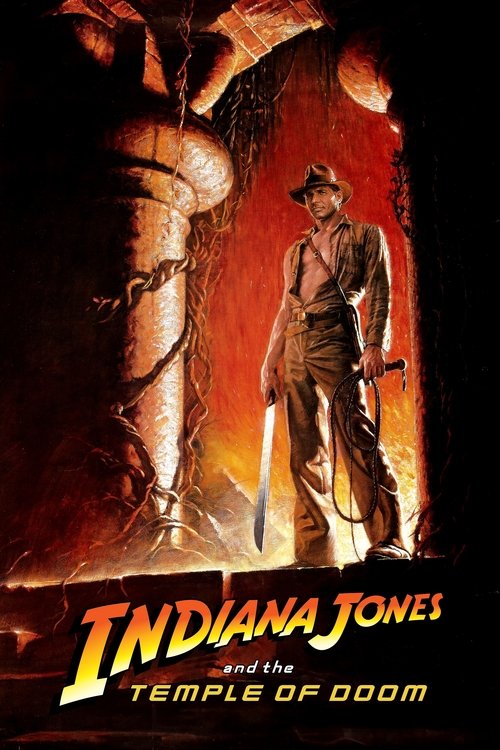
The first time I saw a man’s beating heart pulled out of his chest, I was sitting on a shag carpet eating a bowl of lukewarm SpaghettiOs. That’s the Temple of Doom experience in a nutshell. While Raiders of the Lost Ark (1981) felt like a polished Saturday morning serial, this 1984 prequel is a fever dream—a sweaty, bug-infested, cult-worshipping descent into madness that famously forced the MPAA to invent the PG-13 rating. It’s loud, it’s mean, and it’s arguably the most "directed" film in Steven Spielberg’s entire filmography.
The Prequel Nobody Expected
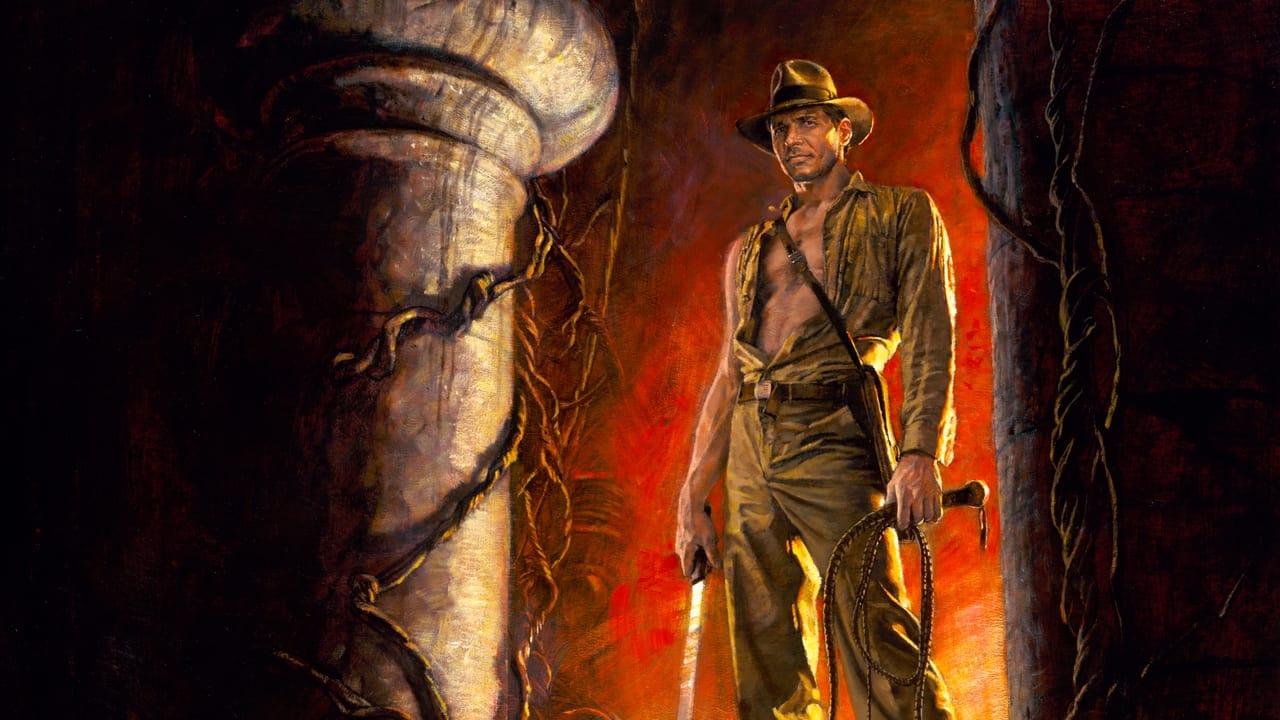
I’ve always admired the sheer audacity of starting a sequel by making it a prequel. We jump back to 1935, finding a slightly more mercenary Harrison Ford in a white tuxedo, dodging poison and submachine guns in a Shanghai nightclub. The opening "Anything Goes" musical number is Steven Spielberg flexing his Golden Age Hollywood muscles before pivoting into a plane crash via inflatable raft.
I watched this most recently on a tablet while my neighbor on a train was loudly peeling a hard-boiled egg; surprisingly, the sulfurous smell perfectly complemented the onscreen transition to the famine-stricken Indian village. It’s here the "adventure" starts, but it’s not for archeology. It’s for a kidnapped generation of children and a glowing stone. Harrison Ford is at his absolute physical peak here. There’s a ruggedness to him in this outing—muscles glistening with real sweat and grime—that feels more "action star" than the academic we met in the first film. He’s matched by Ke Huy Quan as Short Round, who provides the film’s genuine emotional core. Without Shorty, the movie might be too dark to breathe.
Practical Chaos and Mine Cart Mayhem
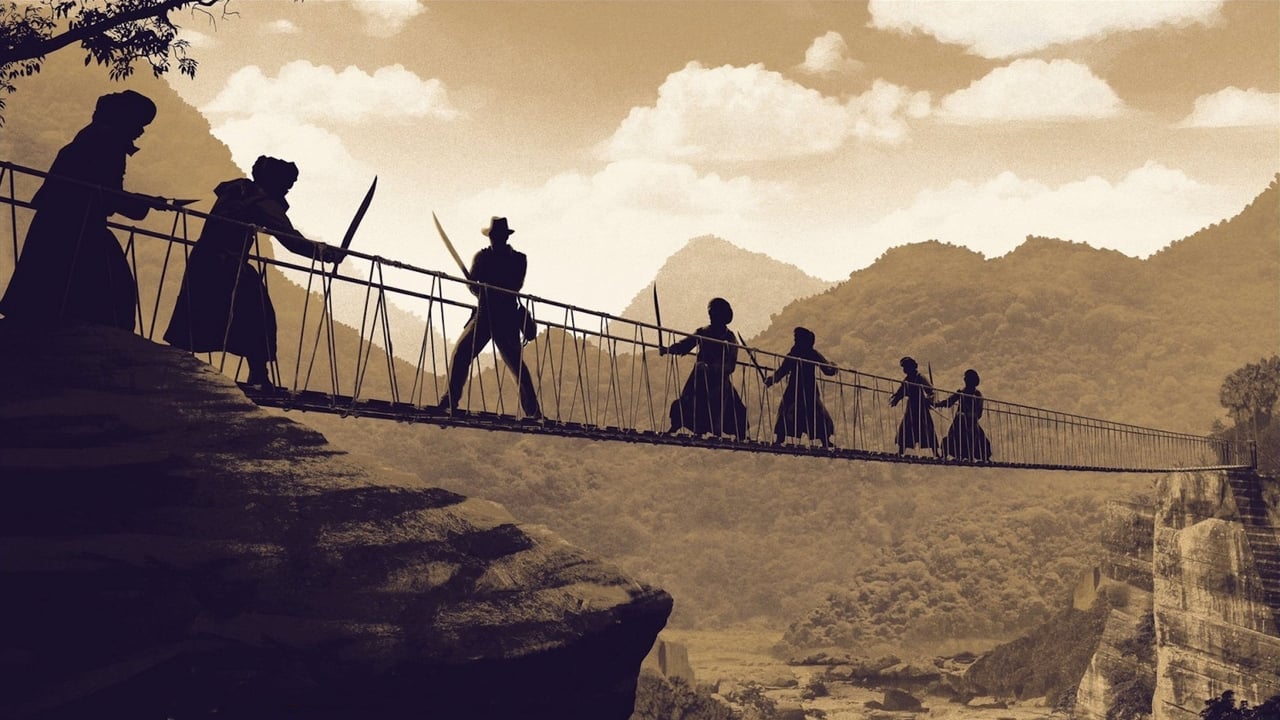
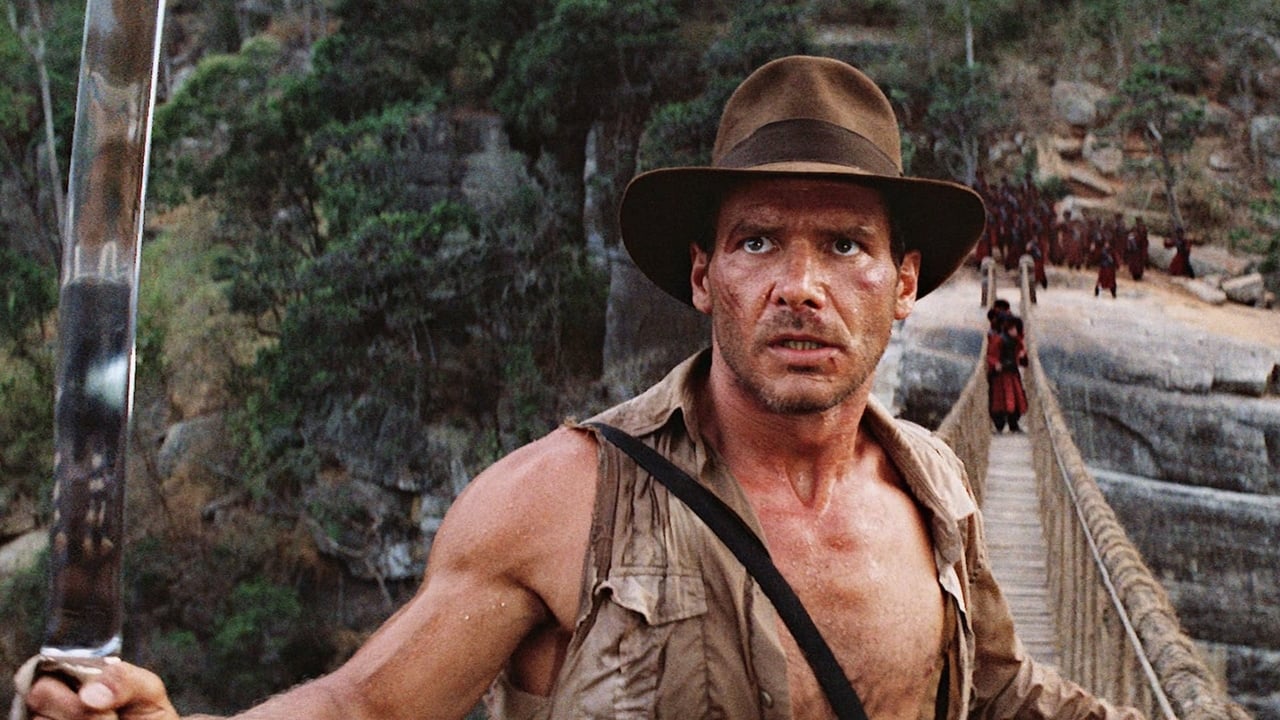
If you want to see why the 80s are considered the Golden Age of practical effects, look no further than the third act. The mine cart chase is a masterpiece of editing and miniature work. Douglas Slocombe’s cinematography uses high-contrast reds and deep shadows to turn the subterranean sets into a literal hellscape. There’s a weight to the action here that CGI simply cannot replicate. When Indy hangs off that rickety rope bridge (filmed on location in Sri Lanka), you can feel the tension in the cables.
Speaking of that bridge, it was actually built by the engineering firm Agdas; Steven Spielberg reportedly wouldn't walk across it himself, but he sent Harrison Ford across it at a full sprint. That’s the kind of 80s "just do it" filmmaking that feels terrifyingly tactile. Then there’s the Thuggee cult leader, Mola Ram. Amrish Puri delivers one of the most menacing performances in the franchise. His bug-eyed intensity is the stuff of childhood nightmares. My old VHS copy of this movie had a specific tracking flicker right as Mola Ram lowered his hand toward a victim’s chest—a digital scar from me pausing and rewinding that scene until the magnetic tape screamed for mercy.
The Scream Queen and the PG-13 Legacy
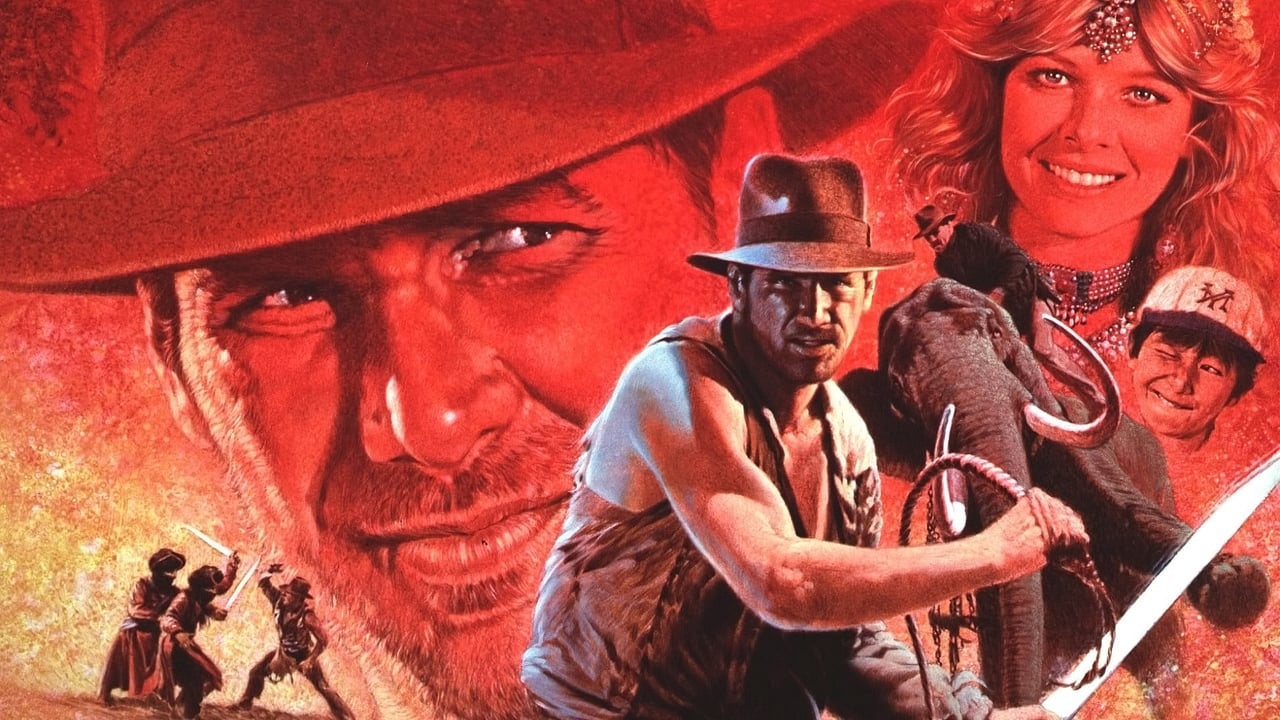
We have to talk about Willie Scott. Kate Capshaw gets a lot of grief for the constant screaming, but I’ll go to my grave defending her. Willie Scott is the most realistic character in the franchise because she reacts to bugs and human sacrifice exactly how any sane person would. She is the "fish out of water" taken to its logical, hysterical extreme. While she lacks the grit of Karen Allen’s Marion Ravenwood (Raiders of the Lost Ark), she fits the screwball comedy vibe George Lucas and Spielberg were aiming for between the bouts of gore.
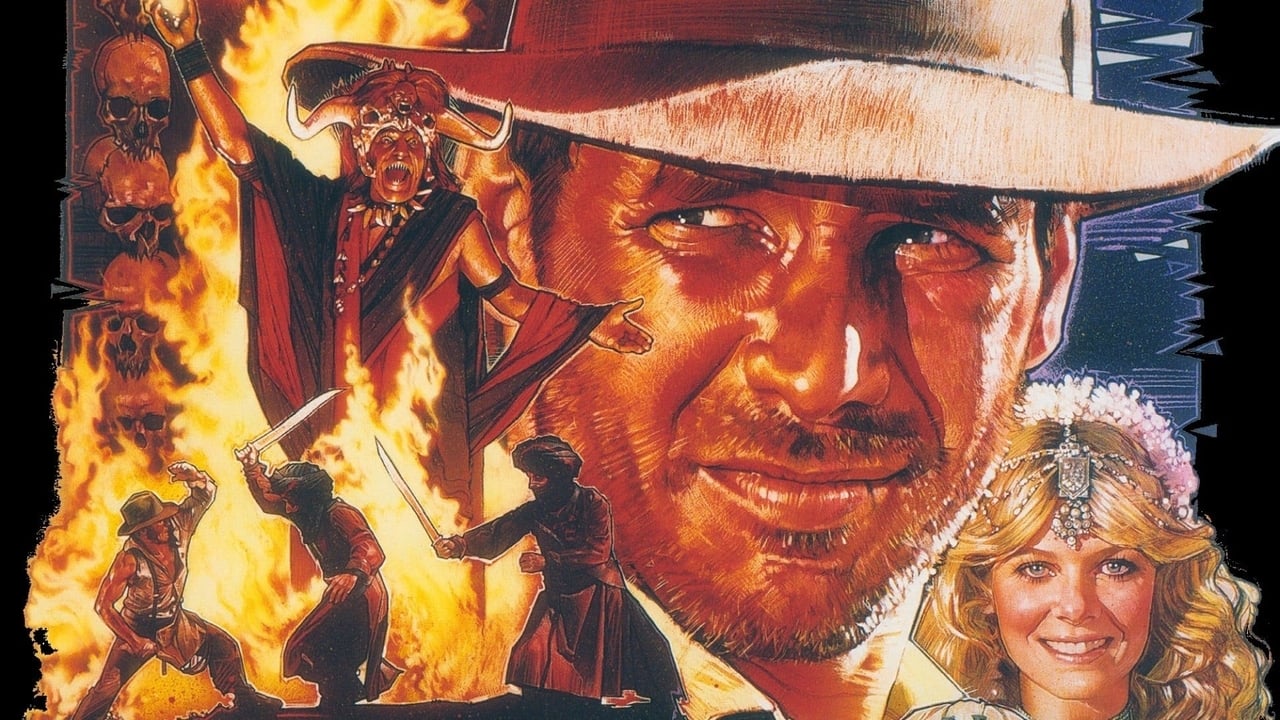
The film’s legacy, however, is written in the blood of its production. Alongside Gremlins (1984), Temple of Doom was the catalyst for the PG-13 rating. Parents in 1984 weren't exactly prepared for "chilled monkey brains" and ritualistic immolation. But that’s why it became such a massive blockbuster, pulling in $333 million on a $28 million budget. It felt dangerous. It was the "forbidden" tape at the video store, the one with the glowing red lava on the box art that promised a ride much darker than your standard Disney fare.
Stuff You Didn't Notice
The production was a logistical mountain. Harrison Ford actually suffered a severe spinal disc herniation while performing the stunt where he’s attacked by a Thuggee assassin in his bedroom, forcing production to shut down while he underwent experimental papaya enzyme treatment in hospital. If he looks like he’s in actual pain during the rack-torture scene later, it’s because he probably was.
Also, keep an ear out for the sound design by the legendary John Williams. The "Slave Children’s Crusade" theme is one of his most underrated marches, building a sense of heroic momentum that carries the film through its grimmest moments. And for the eagle-eyed: the club at the beginning is called "Club Obi Wan," a cheeky nod to George Lucas's other little franchise.
Indiana Jones and the Temple of Doom is a glorious, messy, high-octane spectacle that refuses to play it safe. It’s the black sheep of the original trilogy, but that’s exactly why it’s so vital. It’s a reminder of a time when blockbusters were allowed to be weird, mean, and genuinely frightening. If you haven't revisited it lately, turn the lights down, grab some snacks (maybe skip the grapes), and enjoy the ride.
***
The film remains a testament to the power of the 80s "event movie." It doesn't just want to entertain you; it wants to grab you by the collar and drag you through the mud, over a cliff, and straight into a pit of crocodiles. It’s exhausting, exhilarating, and purely cinematic. Even four decades later, when Indy cuts those bridge ropes, the adrenaline hit is as fresh as a new VHS tape straight out of the shrink-wrap.
Keep Exploring...
-
Raiders of the Lost Ark
1981
-
Indiana Jones and the Last Crusade
1989
-
Indiana Jones and the Kingdom of the Crystal Skull
2008
-
Indiana Jones and the Dial of Destiny
2023
-
E.T. the Extra-Terrestrial
1982
-
Jaws
1975
-
First Blood
1982
-
Return of the Jedi
1983
-
The Karate Kid
1984
-
Rambo: First Blood Part II
1985
-
The Karate Kid Part II
1986
-
Lethal Weapon 2
1989
-

Superman II
1980
-
For Your Eyes Only
1981
-
Octopussy
1983
-
The Living Daylights
1987
-
Licence to Kill
1989
-

The Lost World: Jurassic Park
1997
-
Ready Player One
2018
-
The Color Purple
1985