Nothing Left to Do But Cry
"1492: No toilets, no trains, and absolutely no logic."
I first encountered Nothing Left to Do But Cry (Non ci resta che piangere) in the back corner of a dusty "World Cinema" section of a local video store, squeezed between a Kurosawa epic and a stack of unrated exercise tapes. I watched it on a flickering CRT monitor while my roommate's cat, Barnaby, aggressively groomed himself on my lap, and honestly, the sheer absurdity of the film made the cat’s weirdness feel like part of the production design.
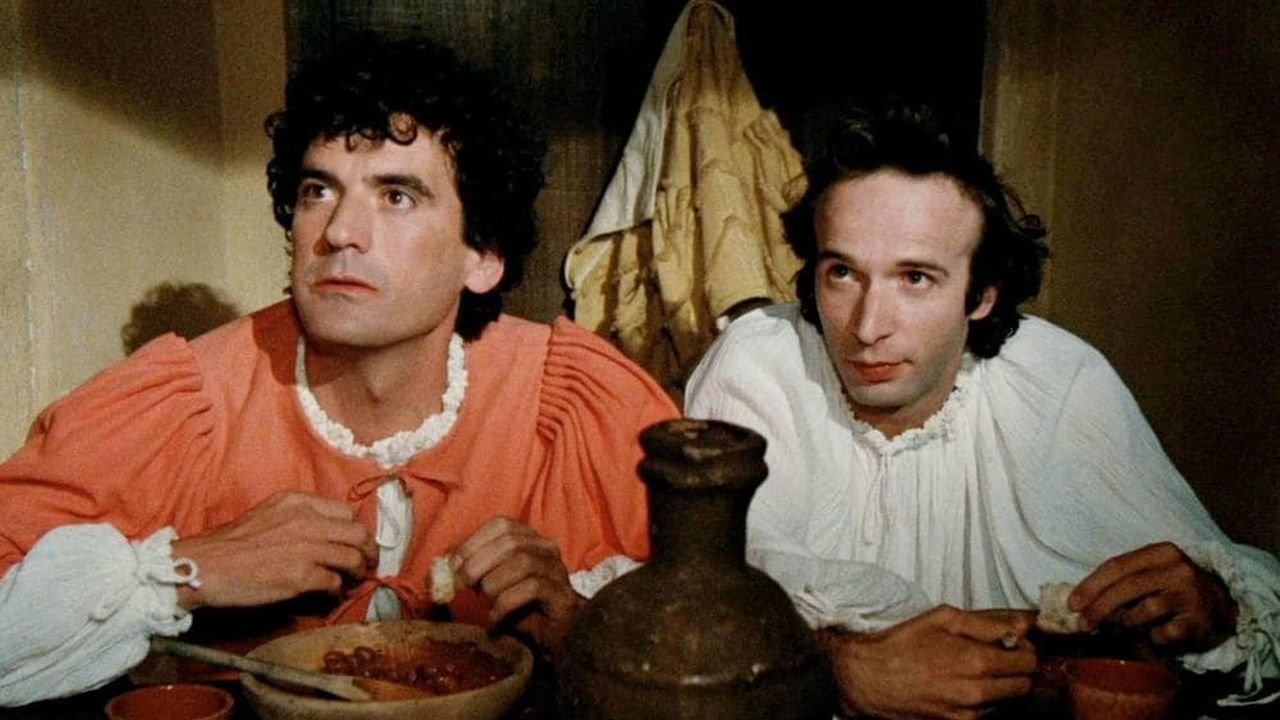
This isn’t your typical time-travel flick. There’s no DeLorean, no flux capacitor, and no lightning strikes. Instead, we have Massimo Troisi and Roberto Benigni—two of Italy’s greatest comedic exports—sitting at a railroad crossing in 1984. It starts raining. They take a wrong turn. Suddenly, they’re in 1492. That’s it. The film doesn't care how they got there, and frankly, neither do we. We’re just there for the ride.
The Physics of a Mismatched Pair
The magic of this film lies entirely in the volatile chemistry between its leads. You have Roberto Benigni (Saverio), who, even in 1984, was a human firework. Long before he was climbing over seats at the Oscars for Life is Beautiful, he was basically a caffeinated squirrel in a Renaissance tunic. Opposite him is Massimo Troisi (Mario), the master of the "napkin-sketch" performance. Troisi mumbles, he hesitates, he looks perpetually exhausted by the mere act of existing.
Watching them navigate a medieval village is like watching a jazz duo where one person is playing a frantic trumpet and the other is just occasionally hitting a gong while sighing. There’s a scene where they try to teach Leonardo da Vinci (Paolo Bonacelli) the basics of 20th-century inventions—thermometers, electricity, even the rules of Scopa (an Italian card game). It’s a masterclass in the philosophy of the absurd. They try to explain "Train" and "Steam," and Leonardo just stares at them like they’re speaking Martian. It highlights the hilarious arrogance of the modern man: we know how things work, but we have absolutely no idea how to build them from scratch. If you sent me back to 1492, I couldn't build a toaster to save my life, and this movie knows that.
A Letter to the Future (or the Past)
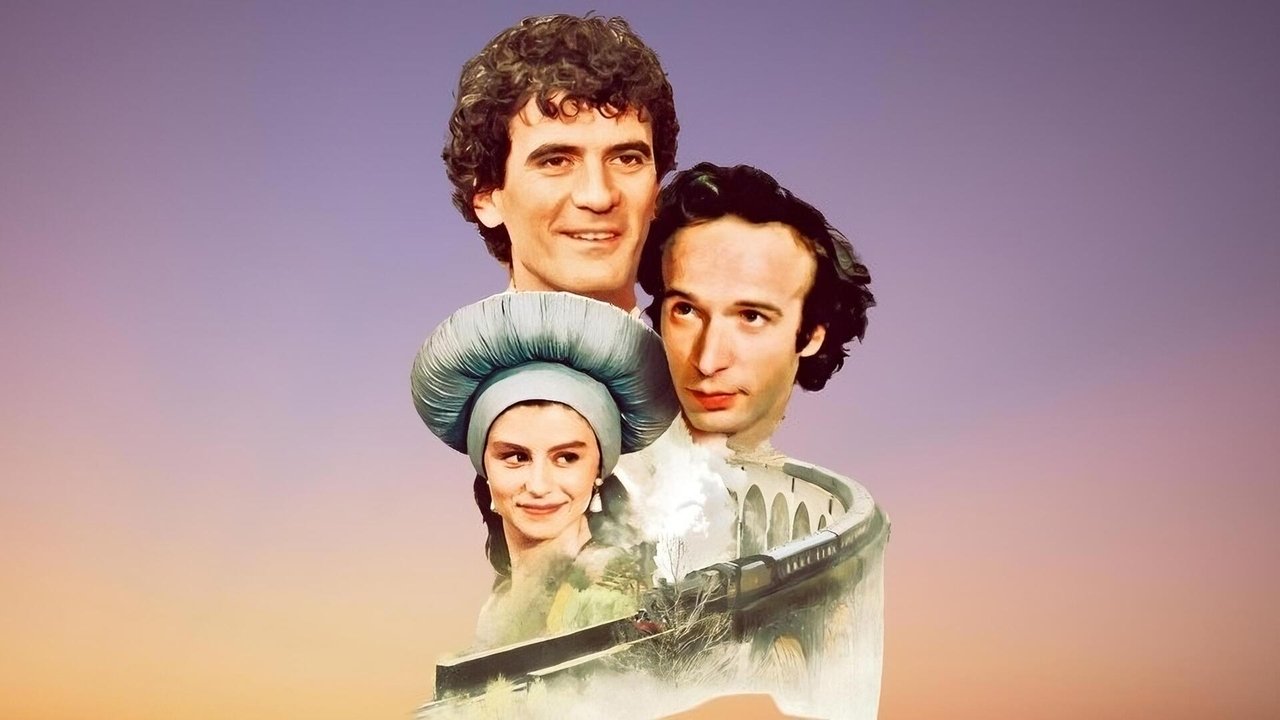
One of the film's most legendary moments is a direct homage to the Italian comedy giant Totò. Saverio and Mario decide to write a letter to Girolamo Savonarola, the fanatical friar, to plead for the release of their friend. It’s a rambling, incoherent mess of formal greetings and desperate nonsense.
This scene captures the "New Hollywood" spirit of the 80s, where directors were finally allowed to let scenes breathe and lean into improvisational chaos. Much of the movie feels unscripted, born from the genuine friendship between Benigni and Troisi. They aren't just playing characters; they’re two buddies messing around in a costume shop with a multi-million-lira budget. The pacing is intentionally shaggy, which might frustrate fans of modern, hyper-edited comedies, but for those of us who grew up on the "rewatch-until-the-tape-hisses" diet of the 80s, that shagginess is the charm. It feels like a secret you’ve been let in on.
The VHS Treasure Hunt
For international audiences, this movie is a ghost. In Italy, it’s a cultural touchstone on par with The Princess Bride, but in the English-speaking world, it vanished into the "obscure import" void. The practical effects are charmingly lo-fi—there’s no CGI to distract from the facial expressions. The "period" sets look like they were borrowed from a local opera house, and the costumes have that heavy, authentic wool-and-dirt texture that only 80s European cinema could pull off.
The underlying "cerebral" hook is Saverio’s obsession with stopping Christopher Columbus. He wants to prevent the discovery of America because his sister is dating an American soldier in 1984, and he figures if he deletes the continent, he deletes the boyfriend. It’s a wonderfully petty motivation for a grand historical intervention. It poses a funny philosophical question: Is history shaped by great men and grand visions, or is it just a series of accidents managed by people who are mostly worried about their siblings' dating lives?
Nothing Left to Do But Cry is a beautiful anomaly. It’s a film that trusts its audience to enjoy the silence between the jokes as much as the jokes themselves. While the ending feels a bit abrupt—a common symptom of films that were essentially improvised into existence—the journey is pure gold. It’s a reminder that before the blockbusters of the late 80s became obsessed with "lore" and "world-building," comedy could just be two geniuses in a field, wondering why there isn't any toilet paper in the 15th century. If you can track down a copy, even a grainy digital rip, grab a glass of wine and settle in for some of the finest comedic chemistry ever captured on celluloid.
Keep Exploring...
-
Johnny Stecchino
1991
-
Ladyhawke
1985
-
The Purple Rose of Cairo
1985
-

Scrooged
1988
-
The Adventures of Baron Munchausen
1988
-

All Dogs Go to Heaven
1989
-
Being There
1979
-
Vincent
1982
-

Mary Poppins
1964
-
La Dolce Vita
1960
-
Amarcord
1973
-
Fantozzi: White Collar Blues
1975
-

Bedknobs and Broomsticks
1971
-
Charade
1963
-
My Fair Lady
1964
-
Harold and Maude
1971
-
Ghostbusters
1984
-
Gremlins
1984
-
Big Trouble in Little China
1986
-
Evil Dead II
1987