Starman
"Love is a universal language, even with a cosmic accent."
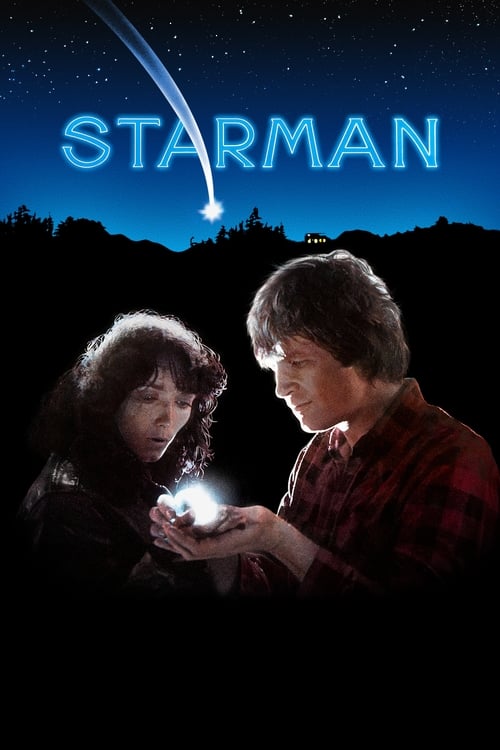
If you mention the name John Carpenter to most film buffs, they’ll immediately start humming the icy, minimalist synth theme from Halloween or describing the stomach-churning practical effects of The Thing. We think of him as the "Prince of Darkness," the guy who finds terror in suburban shadows and Antarctic research stations. But in 1984, Carpenter did something truly shocking: he made a movie that was genuinely, unironically sweet.
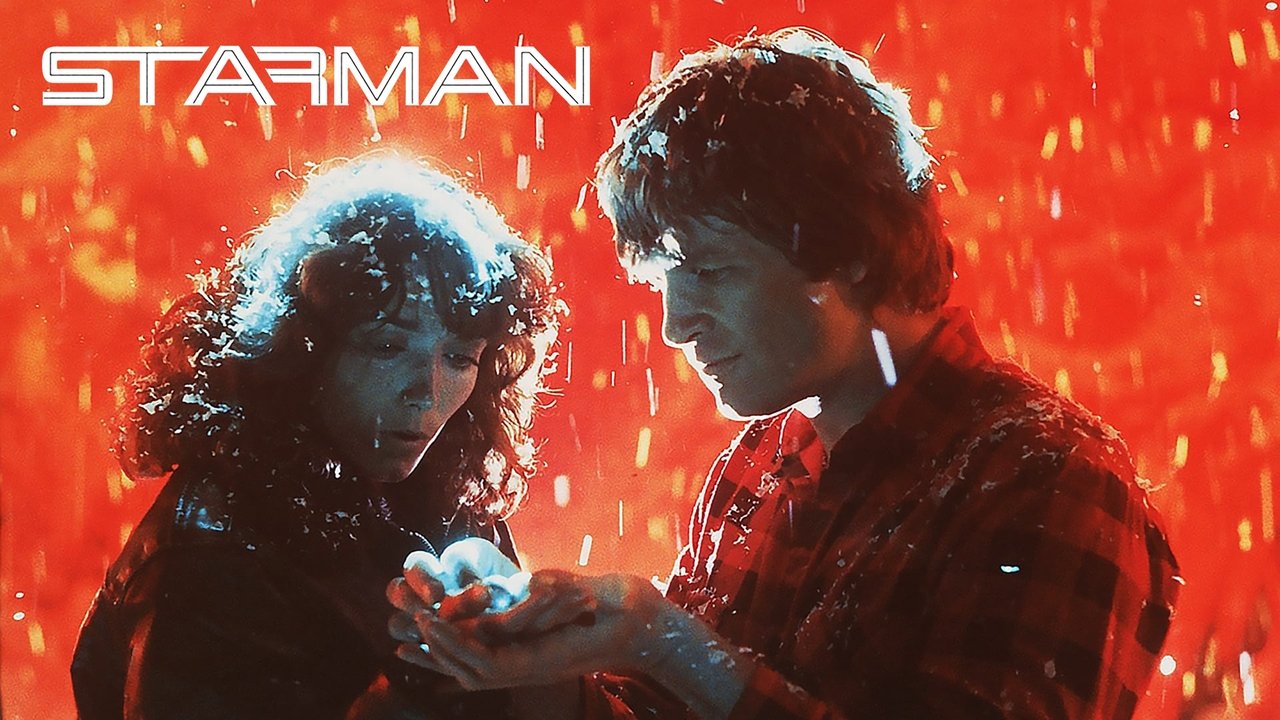
I recently revisited Starman on a lazy Tuesday evening while my neighbor was power-washing his driveway for three hours straight, and the distant, mechanical hum weirdly synced up with Jack Nitzsche’s ethereal score. It’s a film that often gets unfairly shoved into the "it’s like E.T. but for adults" drawer, but that’s a disservice. Starman is a road movie, a tender romance, and a quiet character study that manages to be more "human" than most dramas that don't involve a glowing-fingered alien.
A Different Kind of Carpenter
The premise sounds like the setup for a 1950s B-movie: an alien spacecraft is shot down by the U.S. government, and the survivor hitches a ride in the body of a woman’s deceased husband. But instead of a cold invasion story, we get a story about grief and discovery. Karen Allen plays Jenny Hayden, a widow who wakes up to find her late husband, Scott, standing in her living room. Well, sort of. It’s an alien who has "cloned" Scott’s body from a lock of hair.
What follows is a cross-country trek from Wisconsin to Arizona so the alien can catch his ride home. Carpenter, usually a master of claustrophobia, opens up the frame here, capturing the wide-open American West with a sense of wonder. There’s a specific texture to this era of filmmaking—that 35mm grain and the practical, on-location lighting—that makes the extraordinary feel grounded. Starman is basically E.T. for people who find Spielberg too sugary and want their aliens to look like a confused, pre-Lebowski Jeff Bridges.
Physicality Over Firepower
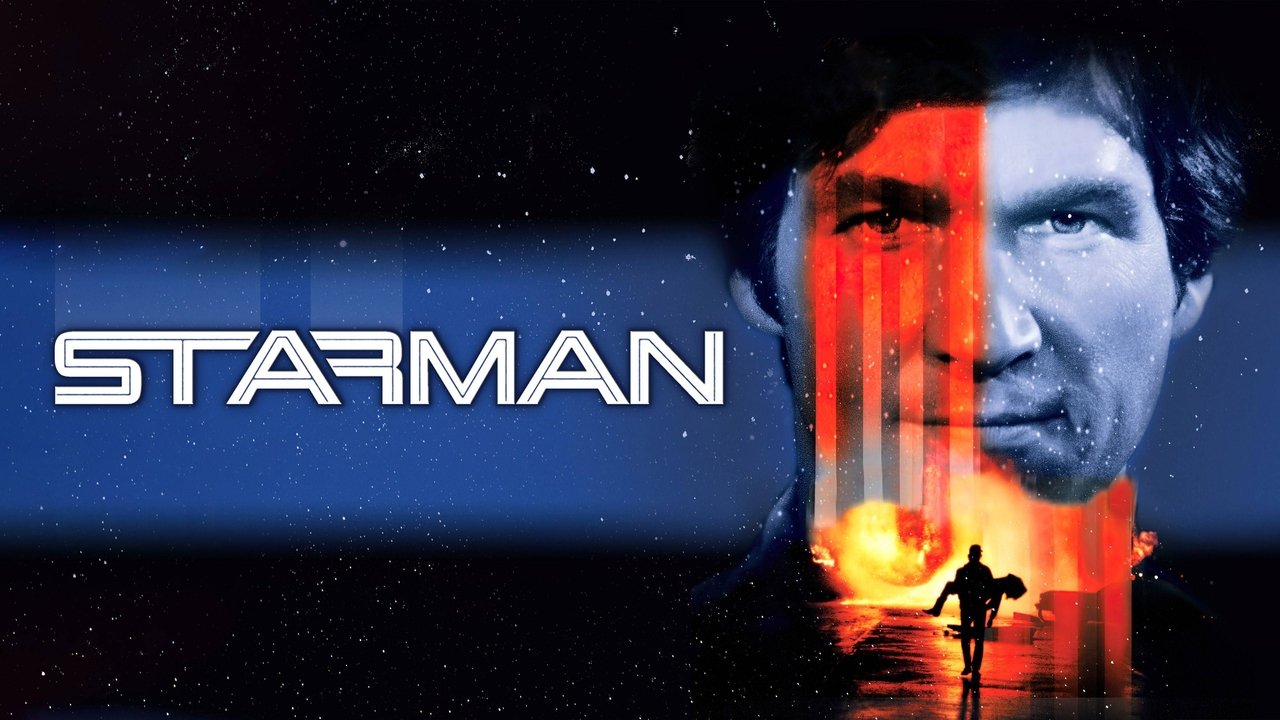
The film lives or dies on the performance of Jeff Bridges, and honestly, it’s a crime he didn’t win the Oscar for this. He doesn't just play a "clumsy guy"; he plays a sentient being learning how to operate a mammalian nervous system in real-time. He tilts his head like a bird, his movements are jerky and economical, and his speech patterns have this fascinatng, staccato rhythm. He’s discovering everything—from Dutch Apple Pie to the concept of a "yellow light" (which he hilariously interprets as "go very fast")—with a sense of bewildered curiosity.
Karen Allen is equally vital here. In many ways, she has the harder job. She has to sell the transition from sheer terror to a deep, heartbreaking affection for something that looks like her dead husband but isn't. Her performance is anchored in a very real, very 80s brand of blue-collar weariness. There’s no Hollywood glamor here, just a woman in a flannel shirt trying to process a miracle while being chased by the Feds. The chemistry isn't about heat; it's about a shared, quiet intimacy that develops over roadside diners and gas station pit stops.
The Golden Voyager in the Video Store
For those of us who grew up in the VHS era, Starman was a staple of the "Sci-Fi/Fantasy" section, usually nestled between the high-octane action of The Terminator and the weirdness of Buckaroo Banzai. I remember the Columbia Pictures clamshell case with the blue border; it looked so much more "prestige" than the slasher flicks Carpenter was known for. It was the kind of movie your parents wouldn't mind you renting because, despite the alien transformation scene (which features some fantastic, gooey practical work by Dick Smith and Stan Winston’s crew), it was ultimately a story about being kind.

There's a great bit of trivia regarding its birth: Columbia Pictures actually had two "alien visitor" scripts on their desk at the same time—Starman and E.T. the Extra-Terrestrial. They chose to develop Starman and let E.T. go to Universal, thinking our guy here had more commercial legs. While history proved them wrong on the "box office titan" front, Starman offers a maturity that the Spielberg masterpiece lacks. It deals with the military-industrial complex (represented by a delightfully dogged Charles Martin Smith and a stern Richard Jaeckel) not as faceless villains, but as people driven by a very human, very dangerous fear of the unknown.
Starman is a reminder that the 1980s weren't just about neon and synth-pop; there was a soulful, melancholic side to the decade's cinema that we don't see as often today. It’s a film that respects its audience's intelligence and their emotions in equal measure. While the special effects on the "spheres" might look a bit dated to modern eyes, the look Jeff Bridges gives Karen Allen when he finally understands what "love" means is as timeless as it gets. If you've only ever seen Carpenter’s horror work, do yourself a favor and take this road trip. It’s a journey that earns every bit of its sentiment.
Keep Exploring...
-

La Jetée
1962
-

Escape from New York
1981
-
Sophie's Choice
1982
-

Risky Business
1983
-
Cocoon
1985
-

Enemy Mine
1985
-
Weird Science
1985
-
Nine 1/2 Weeks
1986
-
Pretty in Pink
1986
-
Dangerous Liaisons
1988
-
Say Anything...
1989
-
Nineteen Eighty-Four
1984
-
Prince of Darkness
1987
-

The Big Blue
1988
-
They Live
1988
-
West Side Story
1961
-

The Party
1980
-

The Hustler
1961
-
Harold and Maude
1971
-
THX 1138
1971