The NeverEnding Story
"Your imagination is the only thing that can save us."
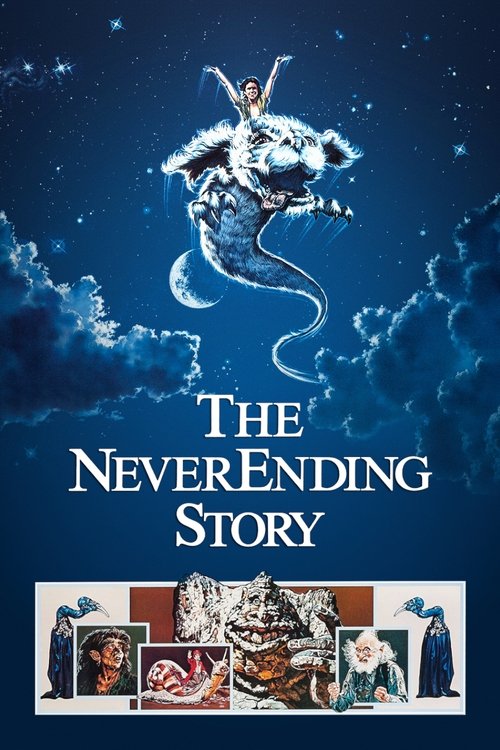
I first watched this film on a Tuesday afternoon while recovering from a mild case of the chickenpox, nursing a lukewarm bowl of canned tomato soup that I had accidentally dropped a single, salty cracker into. Looking back, that soggy cracker was a fitting companion for the absolute emotional wringer Wolfgang Petersen was about to put me through. Most "family" films of the mid-80s were content to sell toys or offer candy-colored escapism, but The NeverEnding Story had the audacity to be a heavy, existential drama disguised as a creature feature.
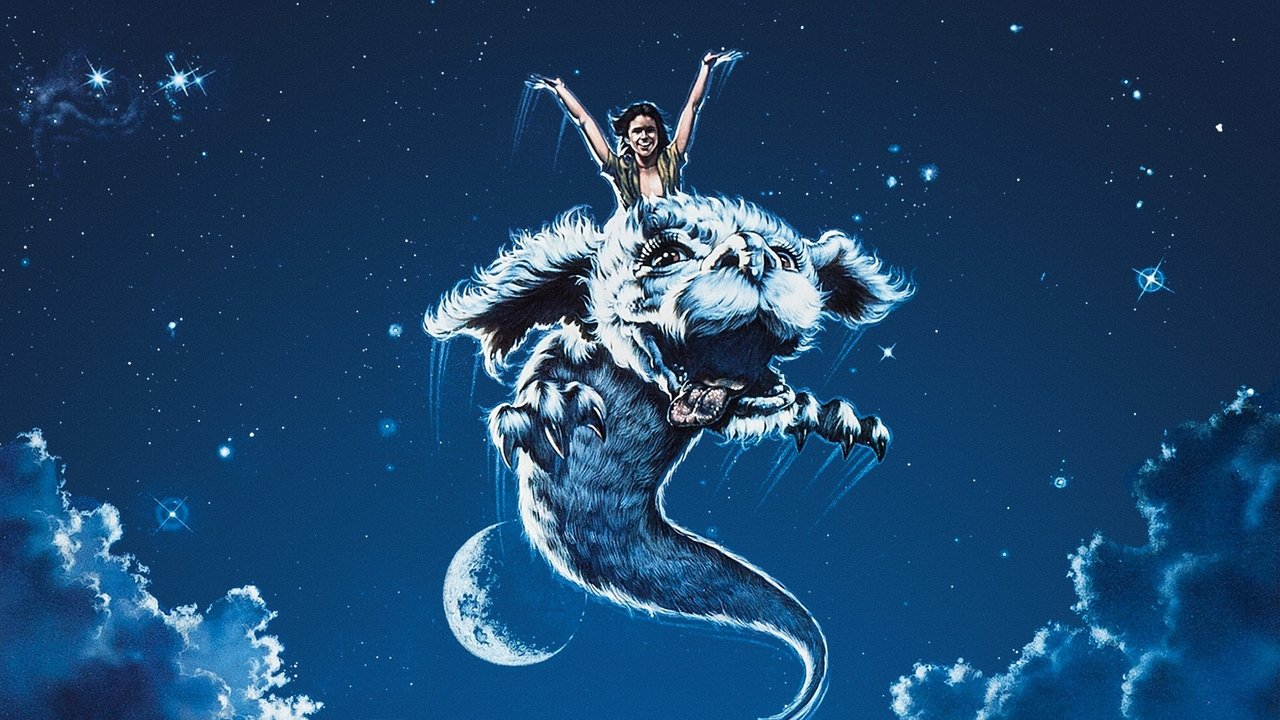
It begins not in a kingdom far away, but in the most relatable purgatory imaginable: a dusty school attic. Barret Oliver plays Bastian Balthazar Bux with a haunting, wide-eyed vulnerability that feels painfully real. He isn’t some brave hero; he’s a grieving kid bullied by jocks and misunderstood by a father who tells him to keep his feet on the ground. When he steals that book from the cranky Mr. Coreander, he isn’t just looking for an adventure—he’s looking for a place to hide from a reality that has become too heavy to carry.
The Tactile Grit of Fantasia
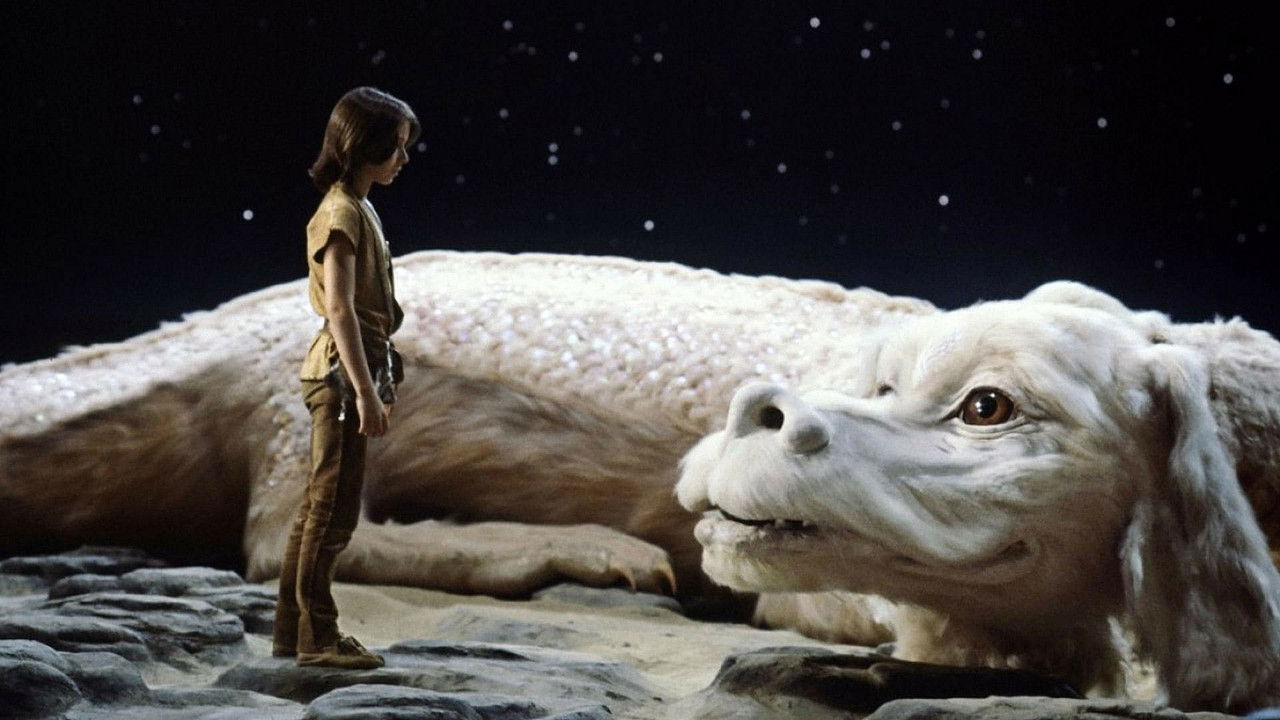
What strikes me most, decades after its theatrical run, is the sheer physical presence of this world. This was the peak of the practical effects golden age, a time when "world-building" meant building actual worlds out of plaster, foam, and hydraulic pumps. Coming off the claustrophobic success of Das Boot (1981), director Wolfgang Petersen brought a surprisingly gritty, European sensibility to the production. Fantasia doesn't feel like a studio backlot; it feels like a dream that’s started to decay.
The creatures here have a weight that CGI simply cannot replicate. The Rockbiter, voiced with a gravelly weariness by Alan Oppenheimer, remains one of the most tragic figures in 80s cinema. When he sits down and looks at his giant, powerful hands—hands that couldn't hold onto his friends as "The Nothing" took them—it’s a moment of pure, adult-grade drama. It’s a scene about the impotence of strength in the face of apathy, and it’s arguably more depressing than the first twenty minutes of Up.
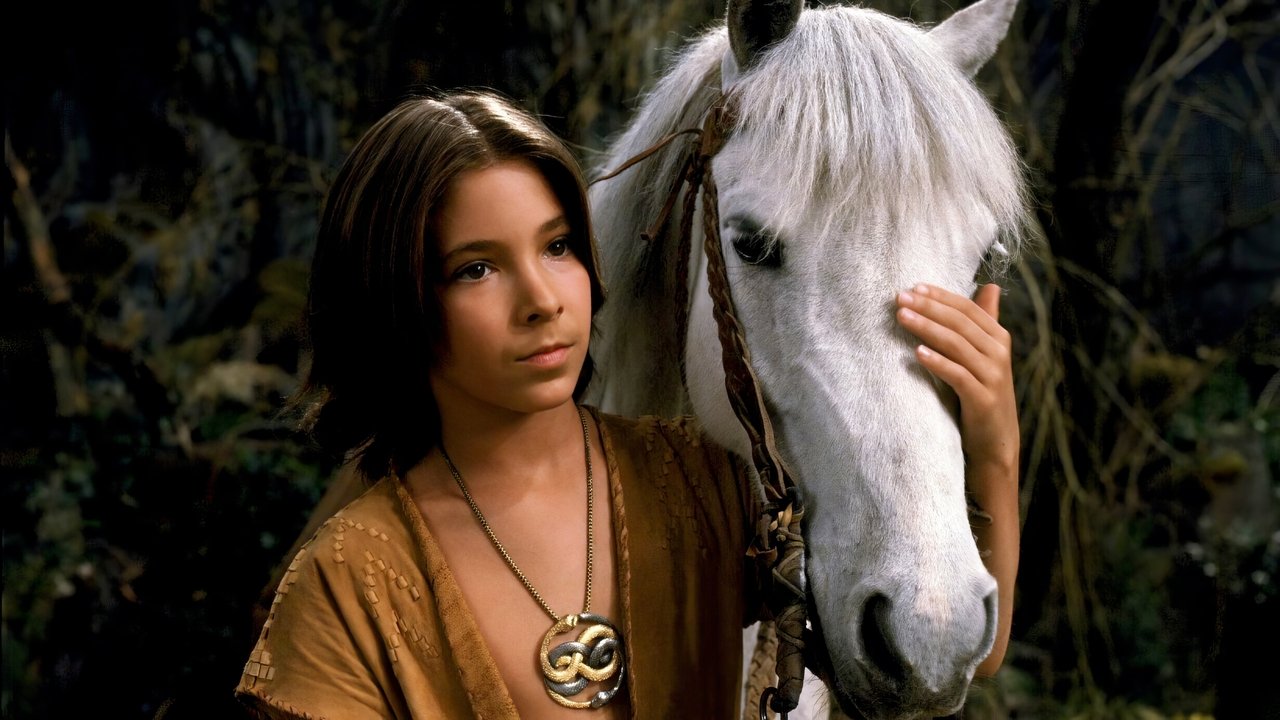
Then, of course, there is the trauma of the Swamps of Sadness. Watching Noah Hathaway as Atreyu lose his horse, Artax, is the "where were you?" moment for an entire generation of filmgoers. The drama here isn't just in the spectacle; it’s in Hathaway’s performance. He wasn't playing a stoic warrior; he was playing a child facing the literal personification of depression. Noah Hathaway actually performed many of his own stunts, including the swamp scene where a hydraulic platform malfunctioned, pinning him underwater and nearly drowning him. That sense of genuine peril bleeds through the screen.
The VHS Shelf Staple
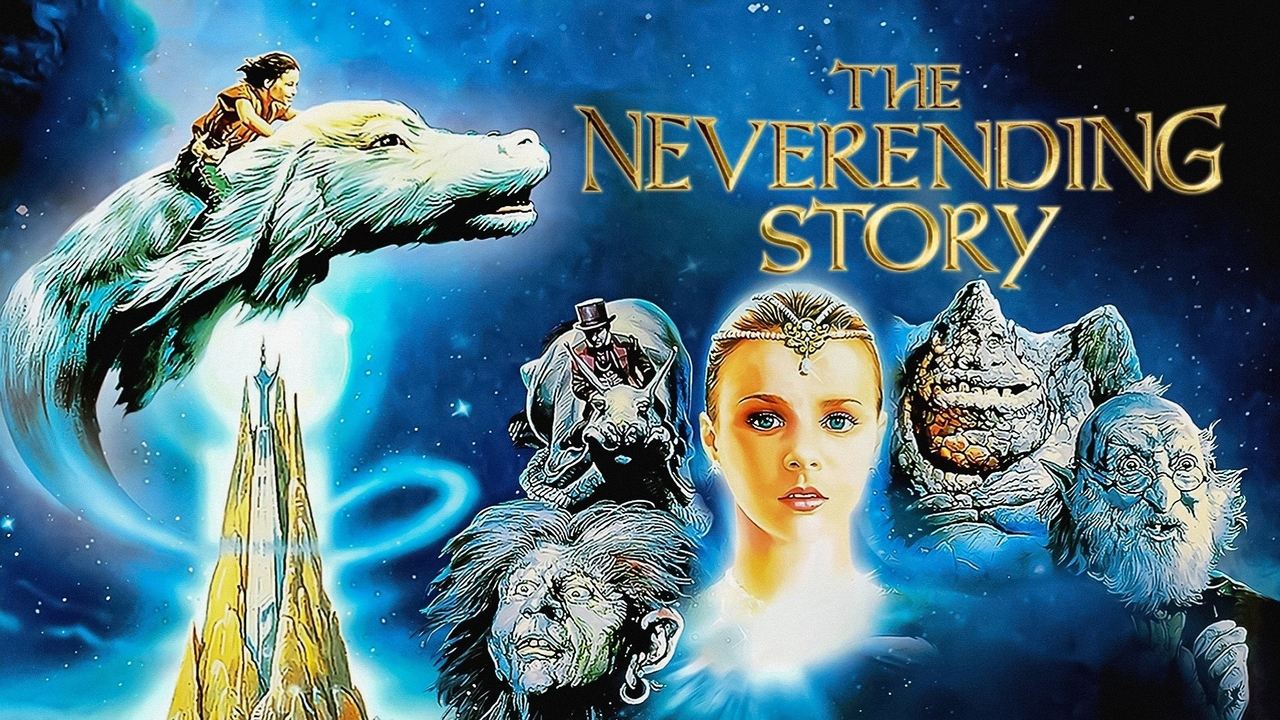
While the film was a modest success in theaters, it became a titan of the home video era. I remember the specific Warner Home Video clamshell case at my local rental shop—the one where the cover art was starting to peel at the corners because it had been pulled off the shelf so many times. The NeverEnding Story was a film made for repeat viewings because it invited the viewer to be part of the narrative, mirroring Bastian’s own experience.
The meta-narrative—the idea that Bastian is being watched by the characters just as we are watching him—was mind-blowing for a ten-year-old. It turned the act of watching a VHS tape into a participatory ritual. The score by Giorgio Moroder (who also defined the sound of the 80s with Scarface and Top Gun) added a synth-heavy, ethereal layer that made the whole experience feel like a transmission from another dimension. It’s a soundtrack that feels like it belongs on a slightly worn-out magnetic tape; that warble is part of its DNA.
Behind the Scenes of a Beautiful Disaster
Despite the onscreen magic, the production was a bit of a nightmare. The original author, Michael Ende, famously hated the movie, calling it a "revolting melodrama" and suing (unsuccessfully) to have his name removed from the credits. He felt the philosophical depth of his book had been traded for Hollywood spectacle. While he had a point, he missed the mark on the performances. Tami Stronach, as the Childlike Empress, only has a few minutes of screen time, but her desperate plea to Bastian is the film's emotional zenith. Interestingly, she lost two of her front baby teeth during filming, and the production had to fit her with flippers (false teeth) so her appearance wouldn't change mid-scene.
The film also features delightful character work from Sydney Bromley and Patricia Hayes as the bickering gnome couple, Engywook and Urgl. They provide the much-needed "kitchen-sink drama" in the middle of a world-ending crisis. It’s these small, human moments—the bickering, the grief, the fear of a lonely boy in an attic—that keep the film from floating away into pure abstraction.
The NeverEnding Story is a rare beast: a big-budget spectacle that actually has something to say about the internal lives of children. It treats Bastian’s grief and Atreyu’s failure with the same weight as the destruction of a literal continent. It’s a film that reminds me that the biggest monsters we ever face aren't giant wolves like G'mork, but the "Nothing" that happens when we stop caring about our own stories. Grab a blanket, ignore the sequels (which are a crime against cinema), and let Falkor take you for one more flight.
Keep Exploring...
-
The NeverEnding Story II: The Next Chapter
1990
-
Das Boot
1981
-
The Fox and the Hound
1981
-
Labyrinth
1986
-
The Princess Bride
1987
-
Time Bandits
1981
-
E.T. the Extra-Terrestrial
1982
-
The Dark Crystal
1982
-
The Secret of NIMH
1982
-
The Karate Kid
1984
-

Return to Oz
1985
-

An American Tail
1986
-
The Karate Kid Part II
1986
-
Willow
1988
-

All Dogs Go to Heaven
1989
-
Kiki's Delivery Service
1989
-
Castle in the Sky
1986
-

The Cat Returns
2002
-
The Spiderwick Chronicles
2008
-
Miss Peregrine's Home for Peculiar Children
2016