A View to a Kill
"Moore’s swansong: A neon-soaked cocktail of madness and microchips."
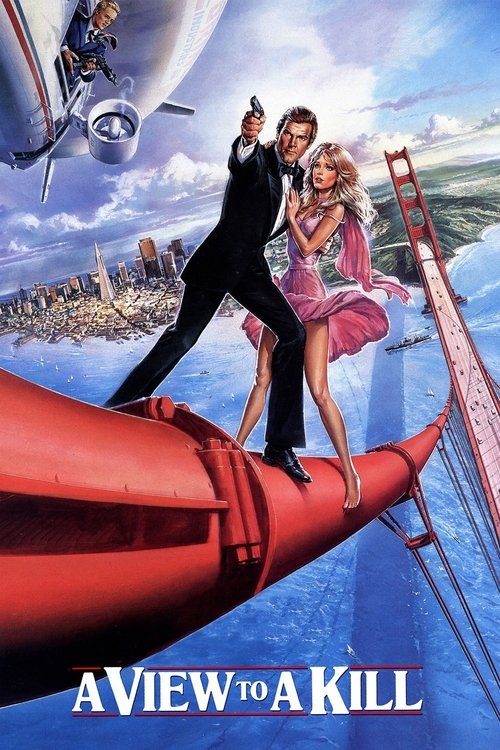
The opening bars of that Duran Duran theme song hit like a shot of pure 1985 adrenaline. It’s peak "New Wave" Bond—all synths, neon shadows, and hairspray. I watched this again last night while trying to peel a stubborn "Property of Blockbuster" sticker off an old universal remote, and it felt like the most appropriate way to revisit Roger Moore’s final outing as 007. There is a specific kind of comfort in A View to a Kill; it’s the cinematic equivalent of a well-worn leather jacket that’s a size too small but you refuse to throw away because you look too damn cool in it.
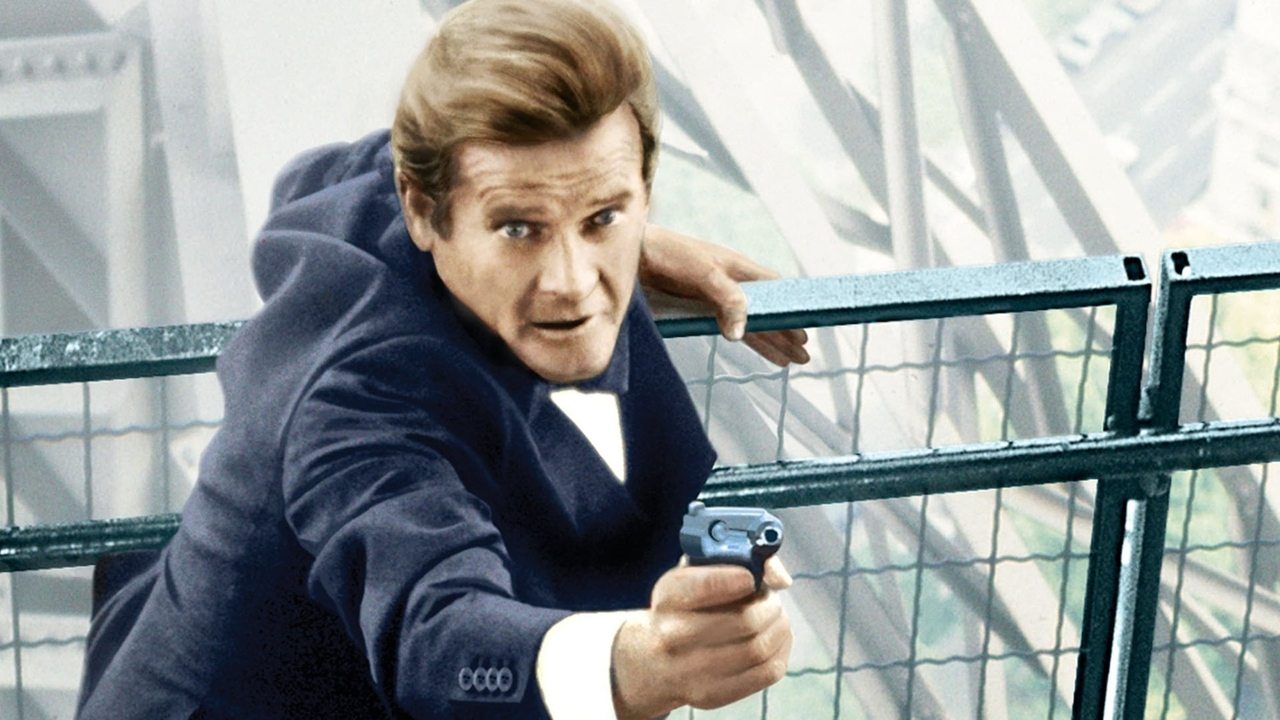
By the time this hit theaters, Roger Moore was 57 years old. There’s no avoiding it: Bond looks like he’s trying to remember where he parked his Buick while he’s supposedly infiltrating top-secret stables. He’s older than his leading lady’s mother, and the movie occasionally feels like it’s being held together by Moore's sheer, unflappable charm and a very hardworking stunt double. Yet, despite the creaky knees, there is a manic, over-the-top energy here that makes it impossible to hate.
Walken on the Wild Side
If Moore provides the stability, Christopher Walken provides the lightning. As Max Zorin, the microchip tycoon with a "God complex" and a Nazi-experiment backstory, Walken is operating on a completely different frequency than everyone else. He giggles while machine-gunning his own workers. He stares at maps with a terrifying, wide-eyed intensity. It’s one of the first times we see Walken truly lean into the "Walken-ness" that would define his career. He plays Zorin like a man who has replaced his morning internal organs with pure electricity.
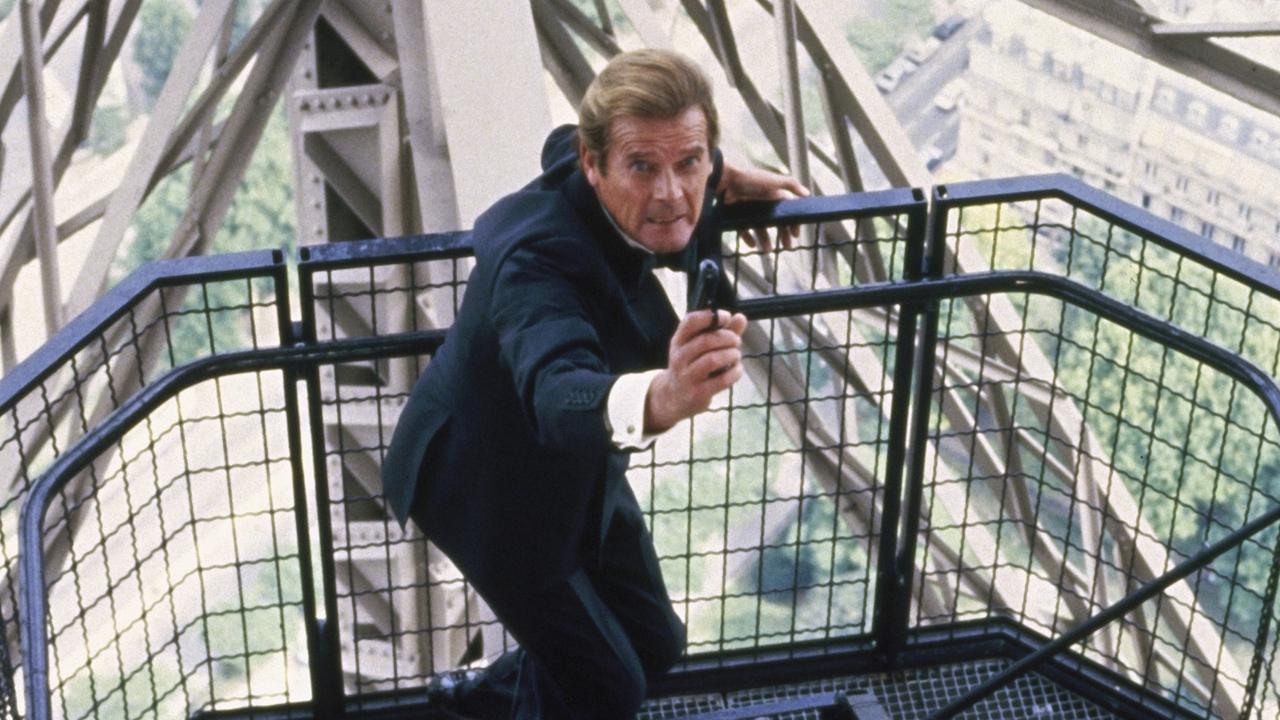
Then there’s Grace Jones as May Day. In an era of generic henchmen, Jones was a revelation. Clad in Azzedine Alaïa outfits that look like they were sharpened in a knife factory, she is the film’s true physical threat. The visual of her standing atop the Eiffel Tower before diving off is burned into the retinas of anyone who grew up with this on VHS. Speaking of the tape, I remember the CBS/Fox Video box art specifically highlighting her striking silhouette—it was a bold move that promised a Bond film with a much more aggressive, avant-garde edge than the previous entries.
Gravity-Defying Practicalities
Director John Glen (who also gave us For Your Eyes Only) was a master of the "how did they do that?" school of action. Before CGI turned every explosion into a digital blur, A View to a Kill relied on terrifyingly real stunts. The BASE jump from the Eiffel Tower wasn’t a green-screen trick; it was performed by stuntmen B.J. Worth and Don Caldvedt, one of whom was actually fired for doing an unauthorized second jump just because the light was better. That’s the kind of 80s bravado you just don't see anymore.
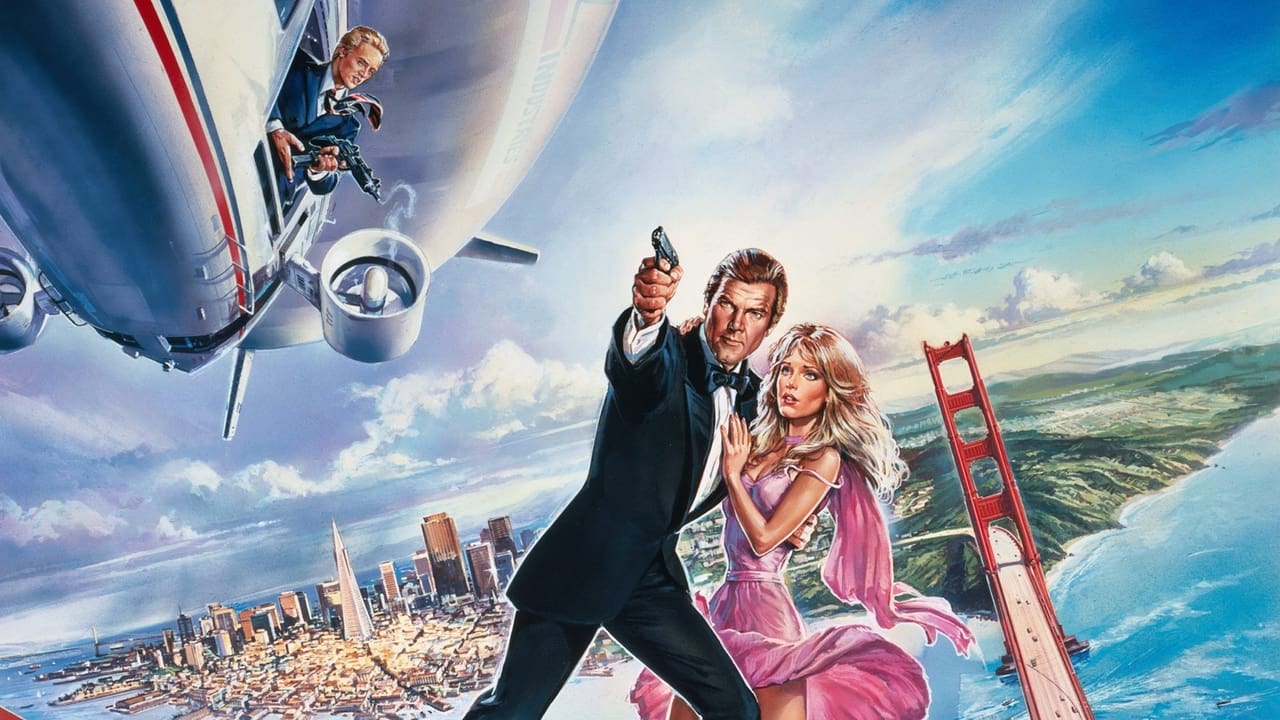
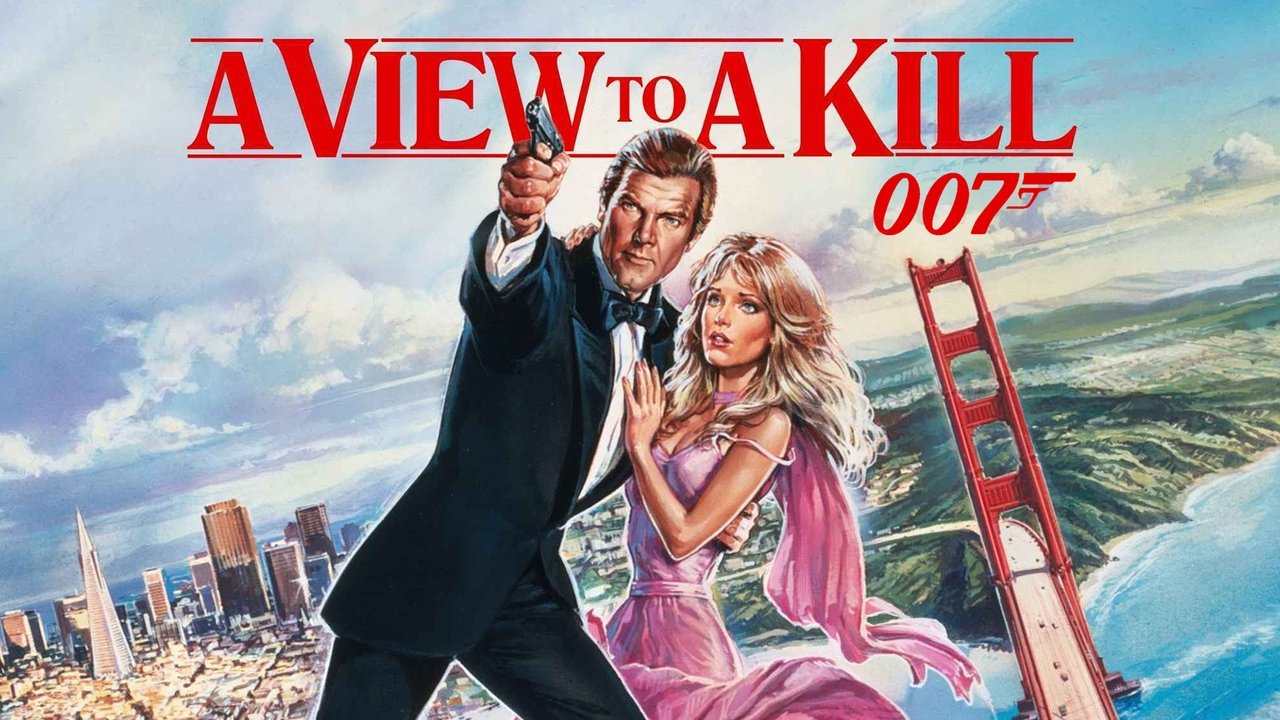
The climax atop the Golden Gate Bridge is another triumph of practical scale. Watching Bond dangle from a Zorin Industries blimp while drifting toward the orange spans of the bridge feels tangible. You can almost feel the wind whipping through Roger Moore’s (admittedly suspicious) hair. It’s a high-stakes sequence that balances out the film’s weirder choices—like the decision to play a Beach Boys cover during a high-speed ski chase. Using "California Girls" during a life-or-death pursuit is a level of camp that only the Moore era could truly pull off.
The VHS Neon Glow
The plot is essentially a tech-heavy remix of Goldfinger, swapping out Fort Knox for Silicon Valley. It’s very much a product of its time, reflecting the mid-80s anxiety about microchips and Japanese industrial dominance. But the movie’s real legacy lives in its aesthetic. It’s the most "80s" the franchise ever got. From the San Francisco locations to the appearances of a young, pre-Rocky IV Dolph Lundgren (who was dating Grace Jones at the time and was shoved into a scene as a KGB bodyguard), the film is a time capsule.
Is it perfect? Hardly. Tanya Roberts as Stacey Sutton is arguably the most helpless "expert" in the series; she spends the final act screaming like she’s auditioning for a different movie entirely. And the pacing drags in the middle when Bond spends way too much time playing "gentleman rider" at Zorin’s estate. But when that John Barry score kicks in—one of his absolute best, blending his classic brass sound with contemporary rock textures—you forgive the flaws. It’s a swan song for a specific type of Bond: the one who cared more about the vintage of his champagne than the accuracy of his Walther PPK.
A View to a Kill is the ultimate "Sunday afternoon" Bond movie. It’s a bit messy, a bit too long, and definitely a bit too old for its own good, but the combination of Christopher Walken's mania and those death-defying practical stunts makes it essential viewing for any collector. It marks the end of an era with a literal bang, leaving us with a final image of Roger Moore that, while slightly wrinkled, is still undeniably 007. Put it on, ignore the plot holes, and just enjoy the ride.
Keep Exploring...
-
For Your Eyes Only
1981
-
Octopussy
1983
-
The Living Daylights
1987
-
Licence to Kill
1989
-
Live and Let Die
1973
-
The Spy Who Loved Me
1977
-
Moonraker
1979
-
Thunderball
1965
-
The Man with the Golden Gun
1974
-
Never Say Never Again
1983
-
You Only Live Twice
1967
-
Dr. No
1962
-
Diamonds Are Forever
1971
-
On Her Majesty's Secret Service
1969
-
From Russia with Love
1963
-

Goldfinger
1964
-
GoldenEye
1995
-
Tomorrow Never Dies
1997
-
Die Another Day
2002
-
Spectre
2015