Brazil
"Bureaucracy is the ultimate terminal illness."
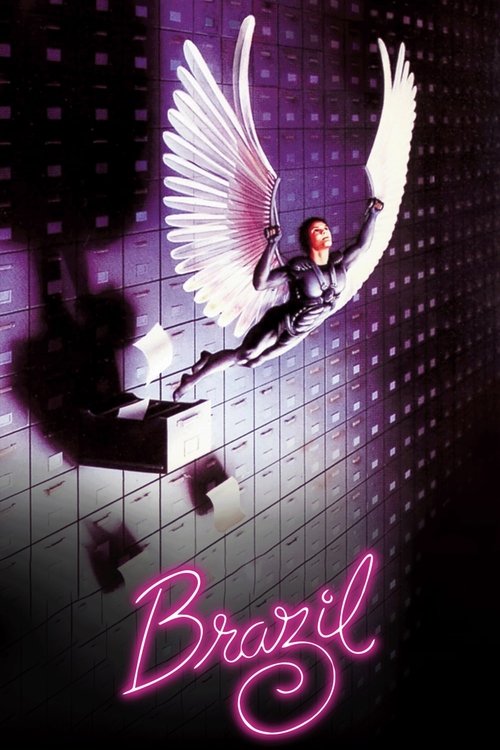
The collapse of a civilization rarely looks like a nuclear mushroom cloud; more often, it looks like a misplaced piece of paperwork. In Terry Gilliam’s Brazil, the apocalypse arrives via a literal fly in the ointment—a buzzing insect that gets squashed inside a teleprinter, causing a character’s name to change from "Tuttle" to "Buttle." From that one tiny, chitinous error, a man is kidnapped, a family is destroyed, and Jonathan Pryce's Sam Lowry begins a descent into a bureaucratic hellscape that remains the most visually inventive nightmare ever committed to celluloid.
I watched this most recent viewing while eating a slightly cold, salt-and-pepper bagel, and the sensation of chewing through that increasingly rubbery dough felt perfectly aligned with the film’s depiction of joyless, processed existence. It is a movie that makes you feel the grit in your teeth and the smell of burning rubber in your nostrils.
The Administrative Apocalypse
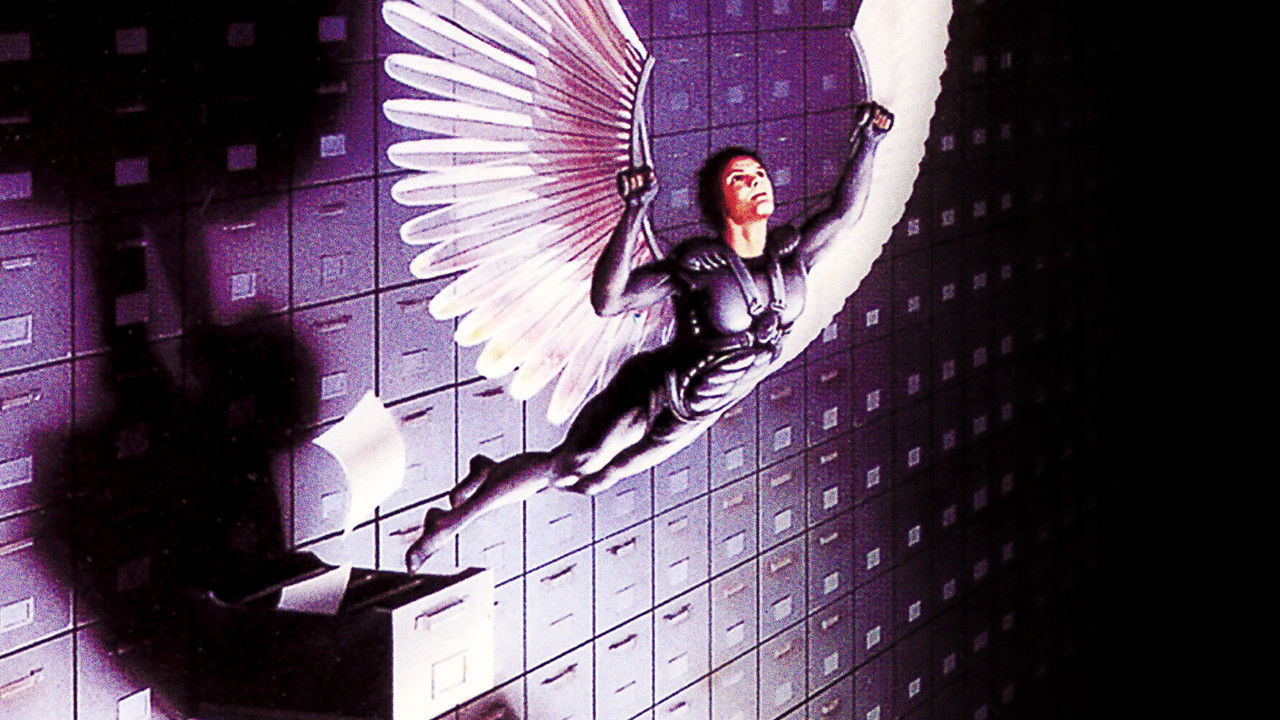
Sam Lowry isn't a rebel; he’s a man who has mastered the art of being invisible within the system. He works in "Records," a department that looks like a Victorian office mated with a 1940s submarine. Jonathan Pryce plays him with a wonderful, twitchy fragility. He’s the kind of man who finds peace only when he’s asleep, dreaming of himself as a winged knight soaring through a Turner painting to rescue a mysterious blonde.
But Gilliam’s world is one where the "future" is just a retro-fitted version of the past that keeps breaking down. Everything is connected by tubes—massive, pulsating ducts that snake through living rooms and offices like the intestines of a dying god. It’s the cinematic equivalent of a panic attack in a stationary shop, where every form must be filled in triplicate and every mistake is a capital offense. This is sci-fi that avoids the sleek chrome of Star Wars in favor of something far more relatable: the frustration of a broken toaster.
The Guerilla Heating Engineer

The film’s soul arrives in the form of Harry Tuttle, played by Robert De Niro in a performance that feels like it belongs in a different, much faster movie. Tuttle is a "renegade heating engineer" who intercepts service calls because the official Central Services department is too bogged down in red tape to actually fix anything. De Niro allegedly wanted to play the torturer Jack Lint—a role that eventually went to Michael Palin—but Gilliam had already promised it to his Monty Python troupe-mate. Instead, we got De Niro as a tactical plumber, sliding down zip-wires and treating a broken boiler like a bomb disposal unit.
The supporting cast is a "who’s who" of British character acting at its peak. Ian Holm is wonderful as Sam's boss, Mr. Kurtzmann, a man so terrified of his own shadow that he seems to be physically shrinking into his oversized desk. Then there’s Bob Hoskins as Spoor, a government repairman who treats a lack of proper paperwork as a personal insult. But the most unsettling performance comes from Michael Palin. Seeing the "nicest man in Britain" wearing a baby mask while performing state-sanctioned lobotomies is a subversion that still feels like a punch to the gut.
A Battle of Cuts and Cults
Part of the Brazil legend is the "Battle of Brazil"—a high-stakes war between Gilliam and Universal studio head Sid Sheinberg. The studio hated the bleak ending and produced a 94-minute "Love Conquers All" version that tried to turn a masterpiece of existential dread into a cheesy romance. Gilliam fought back by taking out a full-page ad in Variety asking, "When are you going to release my film?" and holding secret screenings for critics.

In the late 80s, this struggle turned Brazil into the ultimate cult object. Before it was widely available, finding a bootleg of the "Director’s Cut" was a rite of passage for film nerds. It was a movie you didn't just watch; you discovered it, usually on a grainy VHS tape that someone’s older brother had smuggled in from a film festival. The practical effects alone make it worth the hunt. The giant samurai Sam fights in his dreams was actually a stuntman on stilts in a massive suit of armor, and the "Information Retrieval" tower was a scale model so detailed it makes modern CGI look like a cartoon. The film's tactile nature—the smoke, the real fire, the actual paper flying everywhere—gives it a weight that digital environments simply cannot replicate.
Brazil is a comedy where nobody laughs and a sci-fi film where the technology is worse than what we have now. It’s a beautifully rendered warning about what happens when we prioritize the process over the person. Even decades later, it remains a movie that treats ductwork with the same reverence a Catholic priest treats a rosary, reminding me that the greatest threat to our humanity isn't a robot uprising, but a "Department of Information Retrieval" with a broken printer. It’s messy, loud, and deeply uncomfortable, which is exactly why it’s essential.


Keep Exploring...
-
Time Bandits
1981
-

The Adventures of Baron Munchausen
1988
-

Monty Python and the Holy Grail
1975
-
Monty Python's The Meaning of Life
1983
-

Spaceballs
1987
-

Bill & Ted's Excellent Adventure
1989
-

Fear and Loathing in Las Vegas
1998
-

Ferris Bueller's Day Off
1986
-

Akira
1988
-

Life of Brian
1979
-

The Breakfast Club
1985
-

Planet of the Apes
1968
-

Manhattan
1979
-

Back to the Future
1985
-

Innerspace
1987
-

Back to the Future Part II
1989
-

Breakfast at Tiffany's
1961
-

Re-Animator
1985
-

An American Werewolf in London
1981
-

Escape from New York
1981