Castle in the Sky
"The clouds are hiding a kingdom’s end."
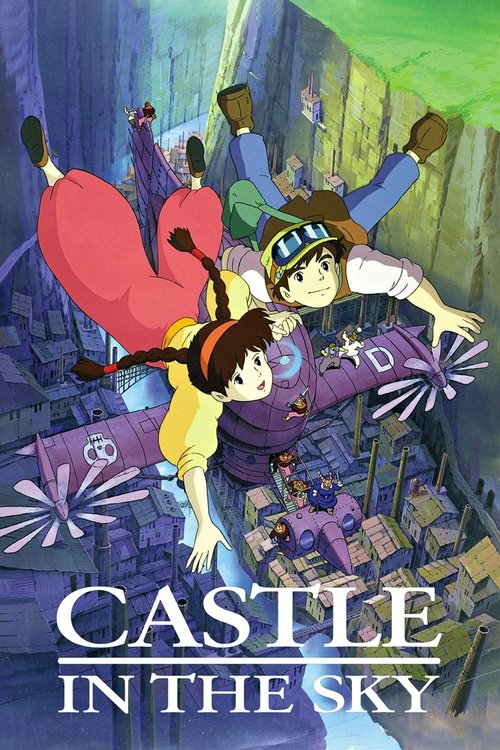
In the summer of 1986, while American audiences were lining up for the high-octane machismo of Top Gun, a fledgling Japanese studio was busy reinventing the very idea of what "the sky" could look like. Castle in the Sky wasn't just another cartoon; it was the opening salvo of Studio Ghibli. It arrived with the weight of a manifesto, proving that hand-drawn animation could carry more soul and physical impact than almost anything being shot on 35mm film in Hollywood.
I first encountered this on a bootleg VHS that looked like it had been dragged behind a bus, and even through the tracking lines and the muffled audio, the opening sequence—a girl floating down from a darkened airship like a falling leaf—stopped me cold. I was actually eating a bowl of lukewarm spaghetti at the time, and I remember a single noodle falling off my fork because I completely forgot to chew.
Engines, Steam, and Welded Iron
What strikes me most about Hayao Miyazaki’s direction here is the sheer weight of the world. In modern CGI action, things often feel floaty or weightless. But in Castle in the Sky, every airship, every piston, and every crumbling brick feels like it has mass. When Pazu, voiced by Mayumi Tanaka, races across the rooftops of his mining town, you feel the grit of the coal dust.
The action choreography is relentless. The train chase in the first act is a clinics in escalation. You’ve got the Dola gang (pirates in bug-like "flaptters"), the armored military train, and two kids on a tiny rail-cart. It’s a sequence that relies on geometry and momentum rather than just loud noises. Kotoe Hatsui, who voices the pirate matriarch Dola, brings a wonderful, gravelly energy to the screen. Dola is the grandmother we all wish we had, grenades and all. She isn't a villain; she’s an opportunist with a heart hidden under layers of leather and gunpowder.
Miyazaki’s obsession with flight is all over this film. He doesn’t just show us planes; he shows us the mechanics of how these contraptions stay aloft. The "Tiger Moth" airship is a masterpiece of design—part Victorian house, part dragonfly. It’s the kind of practical-minded fantasy that feels like it was built by a mechanic rather than an illustrator.
The Hubris of the High Ground

Beyond the explosions and the frantic escapes, there’s a deeply cerebral layer to the story. The film is technically an indie gem, the first true Ghibli production born from the success of Nausicaä of the Valley of the Wind. Isao Takahata, acting as producer, helped manage a relatively modest $3 million budget—pittance by today's standards—to create a world that feels infinite.
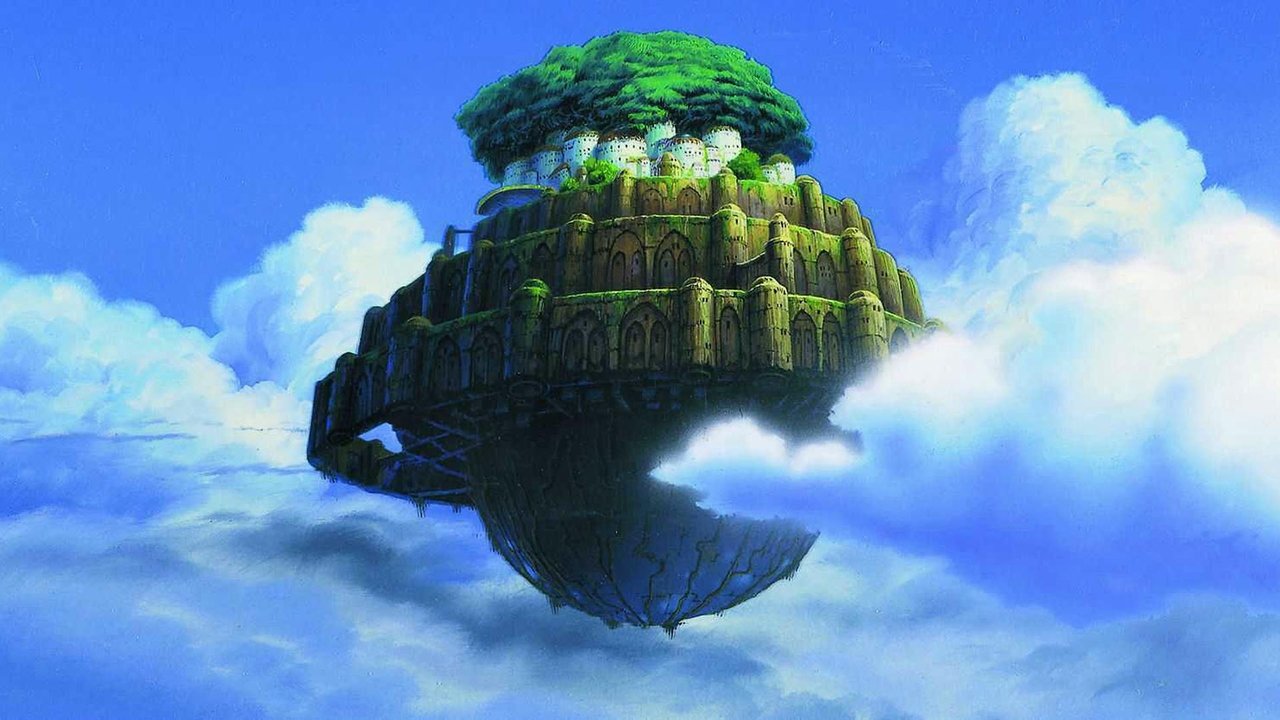
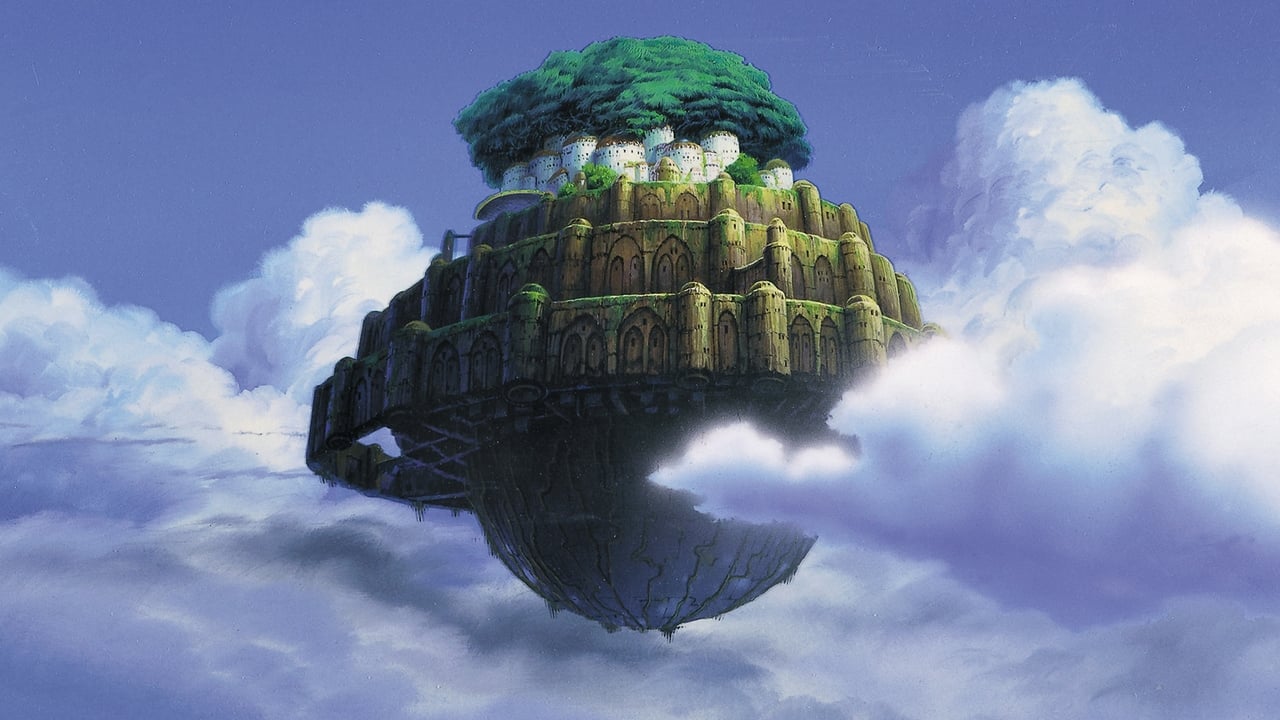
The legendary floating city of Laputa (a name borrowed from Jonathan Swift’s Gulliver’s Travels) isn't just a treasure chest. It’s a graveyard of technology. The film grapples with the idea that our greatest inventions are often the ones that lead to our undoing. Minori Terada voices the antagonist Muska with a cold, bureaucratic detachment that makes him far scarier than a screaming monster. Muska is just a glorified middle-manager with a god complex. He wants to weaponize the past, while Pazu and Sheeta (Keiko Yokozawa) just want to understand it.
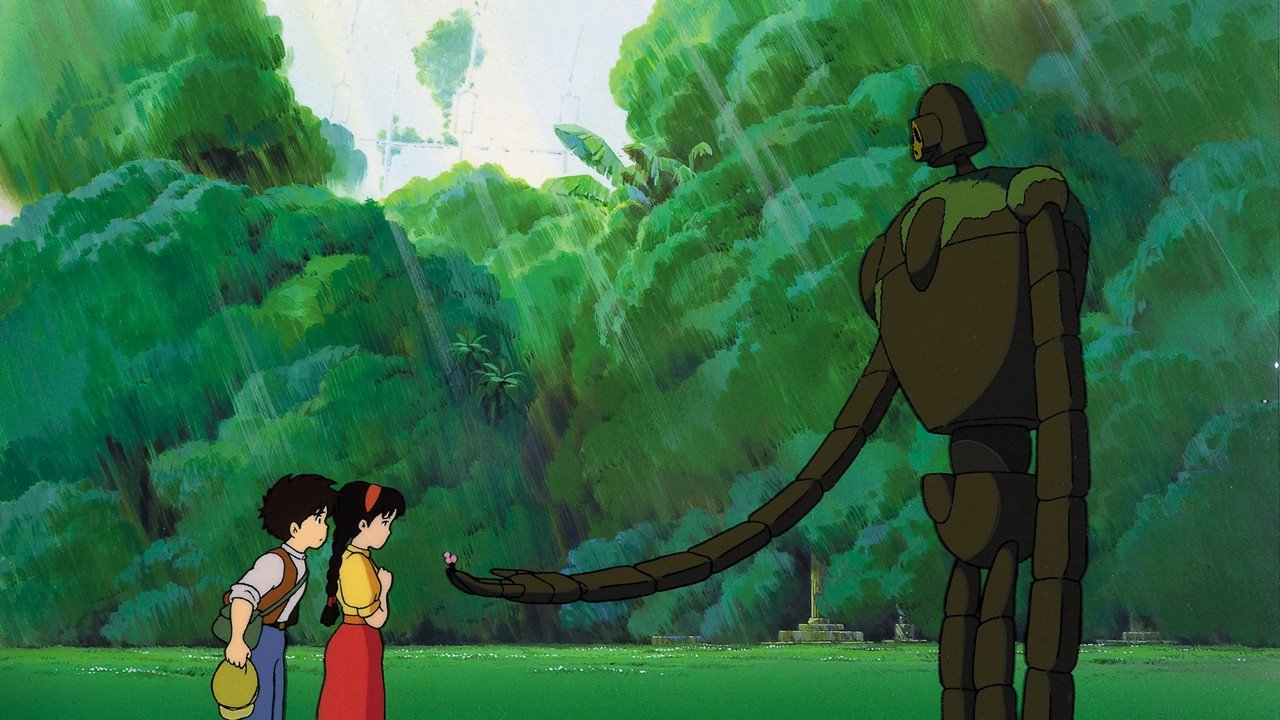
The robots on the floating island are the emotional core of the film. They are massive, terrifying engines of war, yet we see one tending to a grave and protecting a bird's nest. It’s a silent, visual argument about intent: a tool is only as violent as the person holding the remote. The score by Joe Hisaishi enhances this perfectly; it’s sweeping and orchestral, but it knows when to go quiet and let the wind do the talking.
A Legacy Written in the Dirt
The film’s climax is one of the most satisfying in cinema because it isn't about "winning" in a traditional sense. It’s about a choice to let go. There’s a specific speech Sheeta gives about how humanity cannot live apart from the soil, and it hits harder now than it did in the 80s. It’s not a preachy message; it’s a realization born from the chaos of the journey.
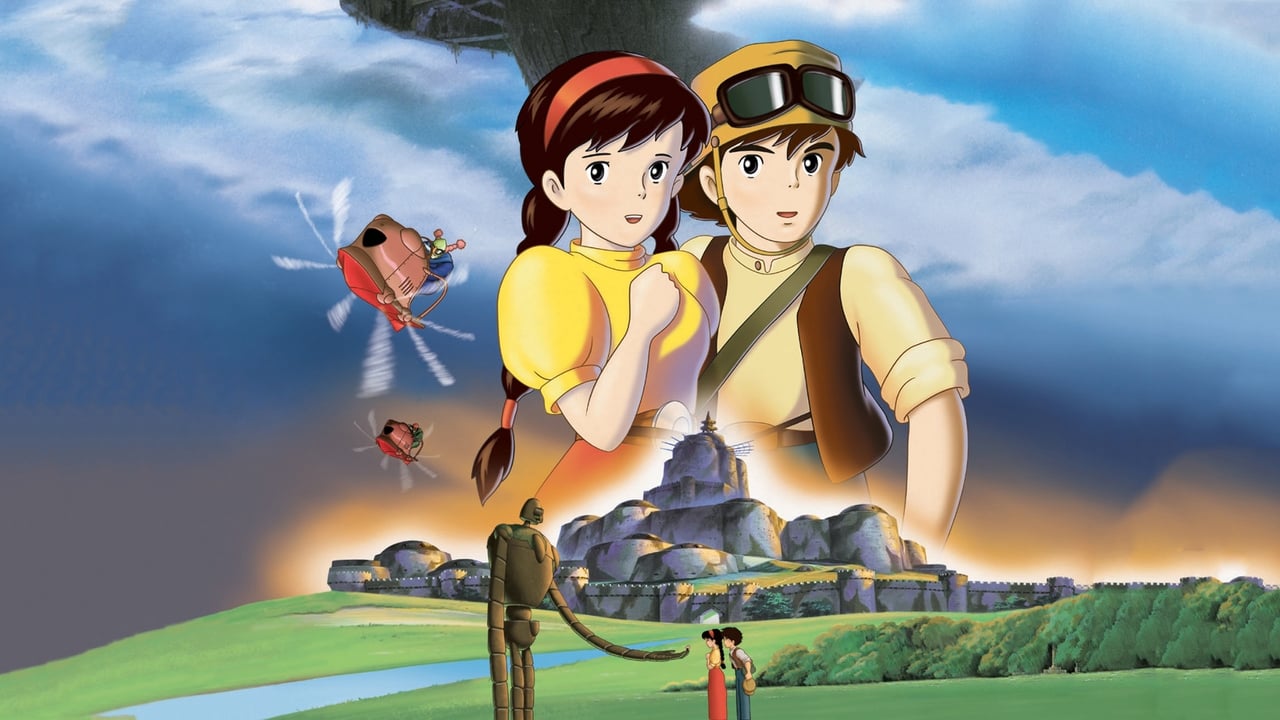
Production-wise, the film was influenced by Miyazaki's trip to Wales during the 1984 miners' strike. He was moved by the miners' struggle and the strength of their communities, which is why Pazu’s town feels so lived-in and resilient. This isn't a sanitized fantasy world; it’s a world where people have calloused hands and soot on their faces.
Watching Castle in the Sky today feels like looking at a lost art form. The hand-painted backgrounds and the fluid, character-driven animation haven't aged a day. It’s a film that demands your attention and rewards it with a sense of genuine wonder—the kind that makes you want to go outside and stare at the clouds for an hour just to see if something is hiding behind them.
This film is a high-water mark for the adventure genre, blending heart-stopping action with a soul-searching look at our relationship with technology. It manages to be both a sprawling epic and a small, intimate story about two kids finding their place in the world. Whether you’re watching it for the steampunk dogfights or the hauntingly beautiful ruins of a lost civilization, it’s a journey that stays with you long after the credits roll. If you’ve never seen it, find the biggest screen you can and get ready to fly ---
Keep Exploring...
-
Nausicaä of the Valley of the Wind
1984
-
My Neighbor Totoro
1988
-
Kiki's Delivery Service
1989
-
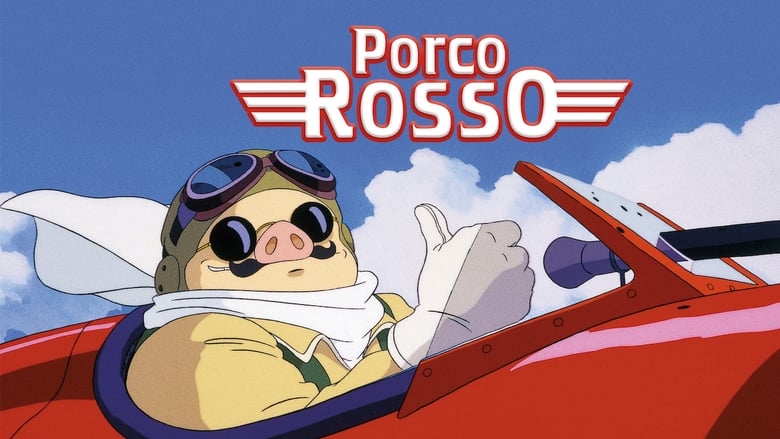
Porco Rosso
1992
-
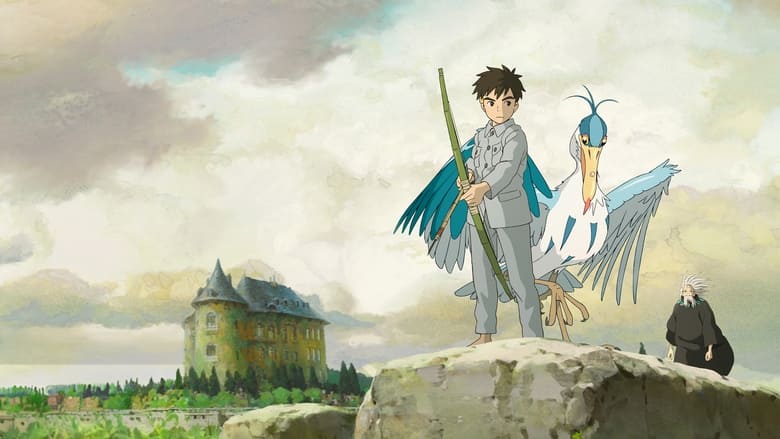
The Boy and the Heron
2023
-
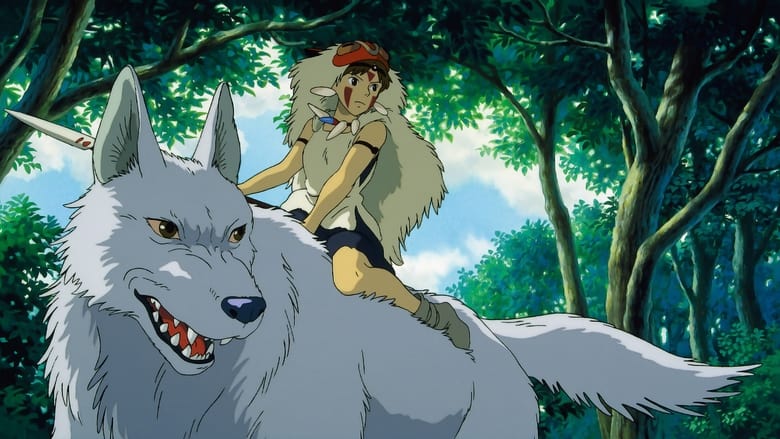
Princess Mononoke
1997
-
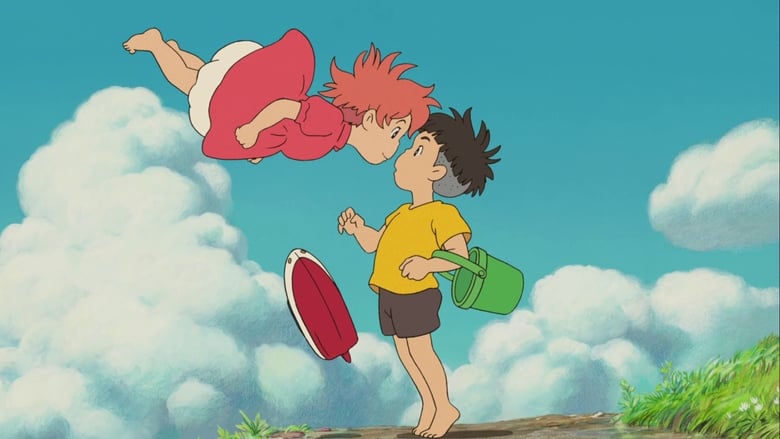
Ponyo
2008
-
The Castle of Cagliostro
1979
-
The Boy and the Beast
2015
-
Raya and the Last Dragon
2021
-

Flow
2024
-
The Secret of NIMH
1982
-

Spirited Away
2001
-

Howl's Moving Castle
2004
-

Bedknobs and Broomsticks
1971
-
Justice League: The Flashpoint Paradox
2013
-
My Hero Academia: Two Heroes
2018
-
My Hero Academia: Heroes Rising
2019
-

The Magnificent Seven
1960
-

Sinbad: Legend of the Seven Seas
2003