Ferris Bueller's Day Off
"One day can change everything, if you let it."
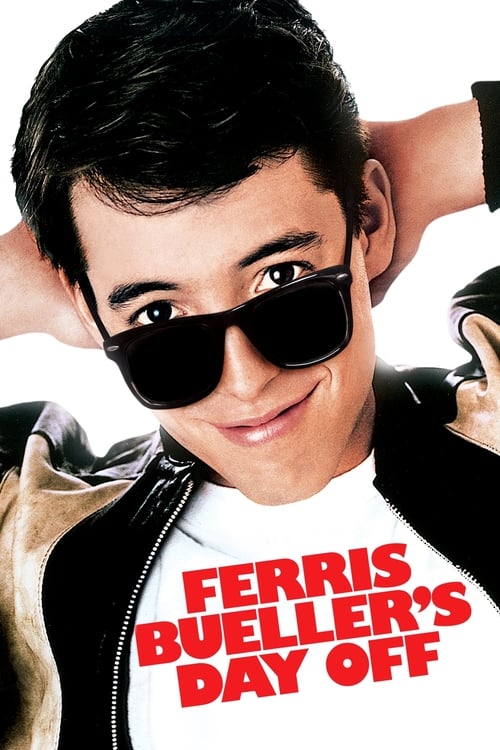
The first time I saw Matthew Broderick look directly into the camera and tell me that "Life moves pretty fast," I was sitting on a shag carpet, staring at a 20-inch CRT television. My older brother had rented the tape from a local shop where the "New Releases" section was just a plywood shelf, and the Paramount Home Video box—with Ferris leaning back in that iconic sweater vest—looked like a portal to a world where parents were oblivious and consequences were optional.
I watched this film again last night while my neighbor was power-washing his driveway at 11 PM, and the rhythmic drone weirdly synced up with Yello’s "Oh Yeah." It made me realize that even forty years later, Ferris Bueller’s Day Off isn't just a teen comedy; it’s a radical philosophical text disguised as a skip-day romp.
The Gospel According to Ferris
John Hughes was the undisputed poet laureate of the American teenager, but with Ferris, he pivoted away from the earnest heartbreak of The Breakfast Club (1985) and toward something more akin to Zen Buddhism. Ferris isn't just a slacker; he’s a high-school shaman. He understands a truth that most of the adults in the film have forgotten: the system is a construct, and the only thing that matters is the present moment.
There’s a sophisticated, almost cerebral subversion in how the film handles its protagonist. Many critics at the time—and even some now—view Ferris as a manipulative narcissist. I’d argue that Ferris Bueller is technically a sociopath, and that’s why we love him. He doesn't operate on the same moral plane as the rest of us. He exists to liberate his friends from the crushing weight of suburban expectation. Whether he’s hacking into the school’s computer system to change his absences or convincing Mia Sara’s Sloane that a fake grandmother has died, he’s doing it to prove that the rules are made of paper.
The film’s comedic engine is built on this friction between Ferris’s effortless grace and the frantic, sweaty desperation of Jeffrey Jones as Ed Rooney. Jones (who later appeared in Beetlejuice) is a master of the slow-burn reaction shot. His pursuit of Ferris is essentially a Coyote vs. Road Runner cartoon played out in the affluent suburbs of Chicago.
Cameron Frye and the Museum of Anxiety

While Ferris provides the flash, Alan Ruck provides the soul. If you haven't seen this since you were a kid, go back and watch Alan Ruck's performance as Cameron Frye. It is, quite frankly, a masterclass in portraying internalised dread. While Ferris is the id, Cameron is the ego, constantly crushed by the "thou shalts" of his cold, distant father.
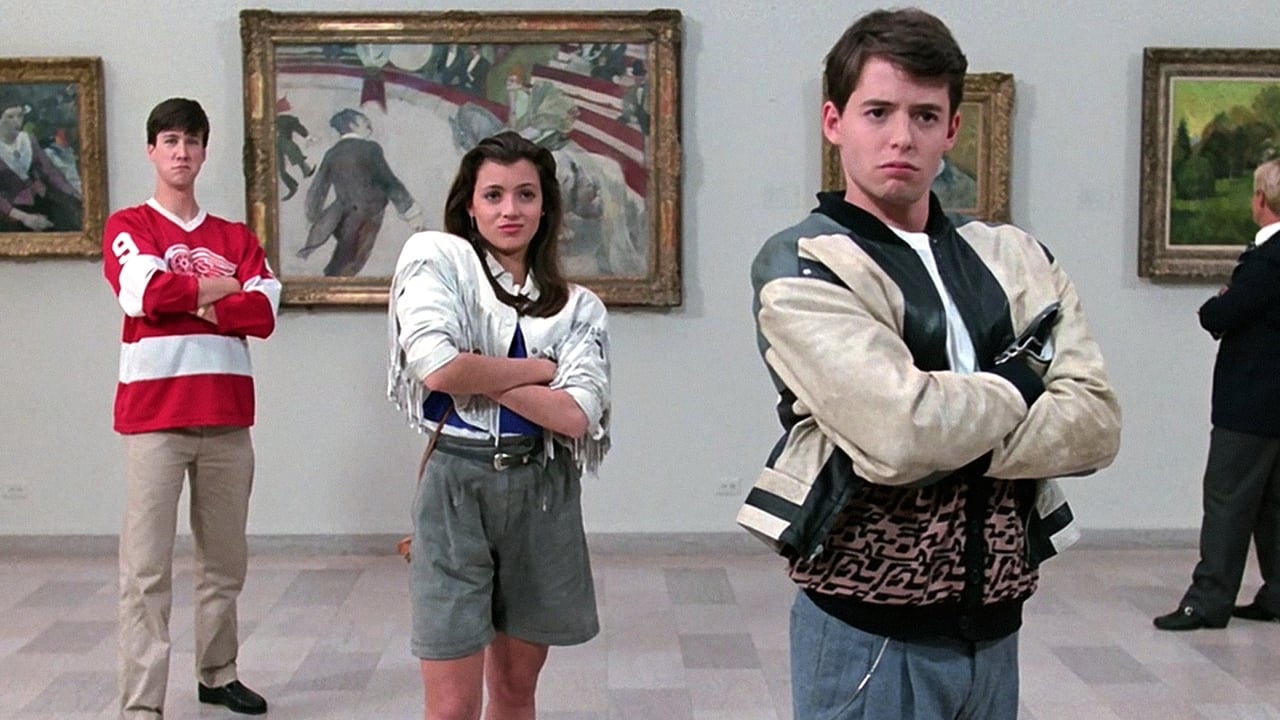
The sequence at the Art Institute of Chicago is the most intellectual moment in any 80s comedy. As the trio wanders through the gallery to a dreamlike cover of "Please, Please, Please, Let Me Get What I Want," we get that famous shot of Cameron staring into Georges Seurat's A Sunday Afternoon on the Island of La Grande Jatte. The camera zooms in until the painting dissolves into meaningless dots of color. It’s a terrifyingly beautiful metaphor for Cameron’s own identity—the closer he looks at himself, the less he sees.
Turns out, that scene was born from John Hughes’s own love for the museum; he used to go there as a "sanctuary" when he was a kid. You can feel that reverence in the cinematography by Tak Fujimoto, who would later go on to lens The Silence of the Lambs. He shoots Chicago like a sparkling, emerald city of Oz, a playground where three kids can command a parade or dine at a five-star restaurant as the "Sausage King of Chicago."
The Kit-Car Mirage and Chicago Magic
One of the great joys of the VHS era was the ability to freeze-frame, and as kids, we spent hours trying to see if the Ferrari 250 GT California Spyder was real. Hot take: the Ferrari is the only character in the movie that actually dies. In reality, the production couldn't afford to wreck three real Ferraris (which were already worth a fortune in '86), so they used kit cars built on Mustang frames. Apparently, the engines were so unreliable that the crew spent half the shoot just trying to get them to start. That famous jump scene? It took multiple takes and nearly destroyed the fiberglass body.
Then there’s the supporting cast that fills the margins with gold. Jennifer Grey, right before her Dirty Dancing (1987) fame, is perfect as the resentful sister Jeanie. Her encounter in the police station with a drug-addled Charlie Sheen remains a highlight. Sheen reportedly stayed awake for 48 hours to achieve that authentic, hollow-eyed "wasted" look, and the chemistry between them is hilariously uncomfortable. And let’s not forget Ben Stein. He wasn't even an actor; he was a speechwriter for Richard Nixon. Hughes told him to just improvise a lecture on economics, and the resulting "Bueller... Bueller..." became the defining soundbite of the decade.
The movie works because it acknowledges that the "day off" has to end. The sun eventually sets over the Chicago skyline, the Ferrari lies crumpled in the ravine, and Cameron has to face his father. But the film leaves us with the sense that the world has been permanently dented by their joy. It’s a celebration of leisure in a culture that demands productivity, making it the ultimate 80s rebellion.
Watching it today, the film feels like a time capsule of a lost world—one without cell phones, where you could genuinely disappear for eight hours and find yourself in the middle of a Von Steuben Day Parade. It reminds me that while we can't all be Ferris, we all have a little bit of Cameron in us, waiting for someone to kick us out of our shell and into the sunshine. It’s a movie that doesn't just entertain; it grants you permission to stop running for a second and just look around.
Keep Exploring...
-

The Breakfast Club
1985
-
Sixteen Candles
1984
-
Planes, Trains and Automobiles
1987
-
Uncle Buck
1989
-
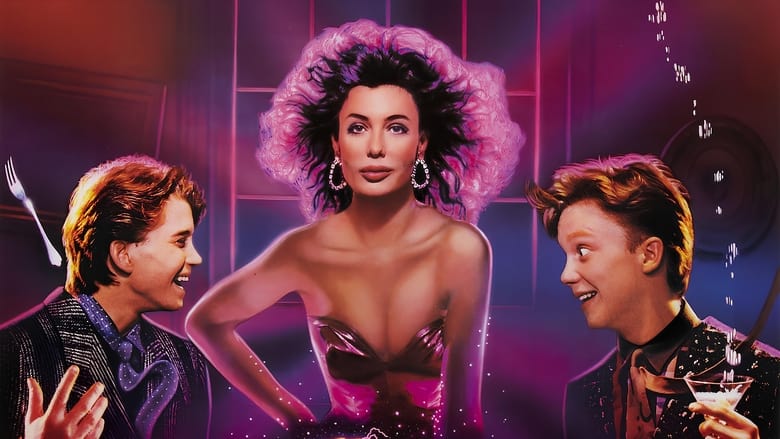
Weird Science
1985
-
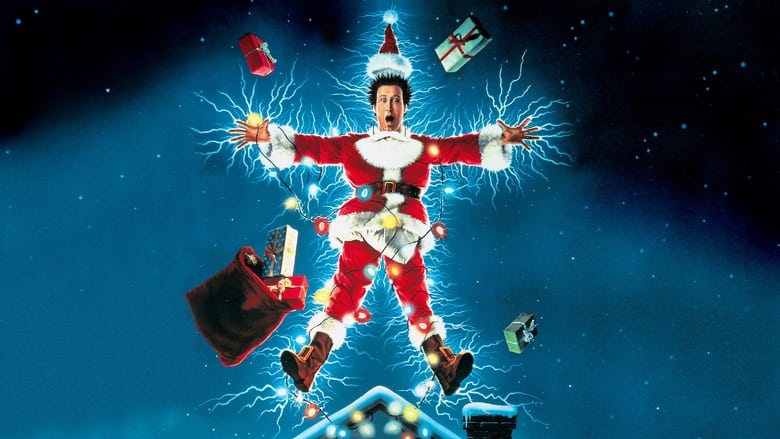
National Lampoon's Christmas Vacation
1989
-
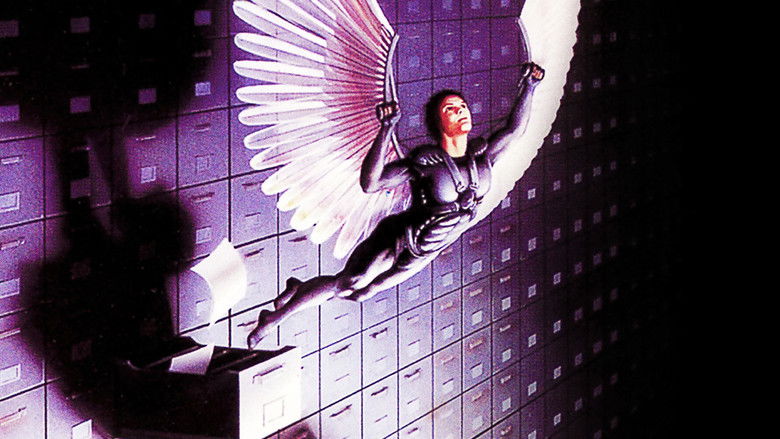
Brazil
1985
-
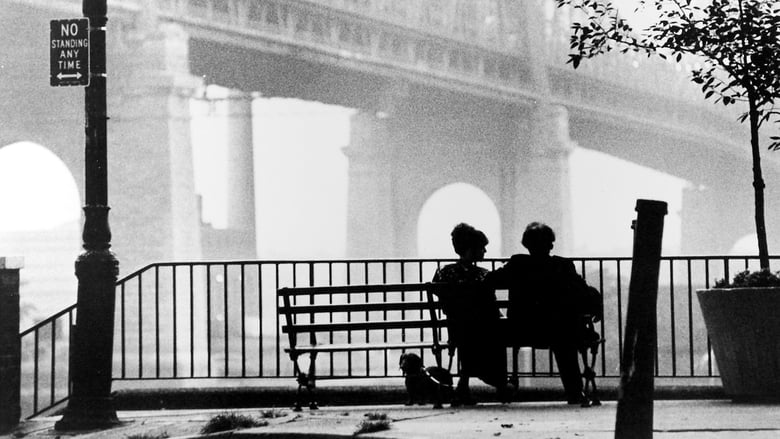
Manhattan
1979
-
Beetlejuice
1988
-
Breakfast at Tiffany's
1961
-
Ladyhawke
1985
-
An American Werewolf in London
1981
-
The King of Comedy
1982
-
National Lampoon's Vacation
1983
-
Trading Places
1983
-
The Goonies
1985
-
Big Trouble in Little China
1986
-
Raising Arizona
1987
-
Spaceballs
1987
-

The Lost Boys
1987