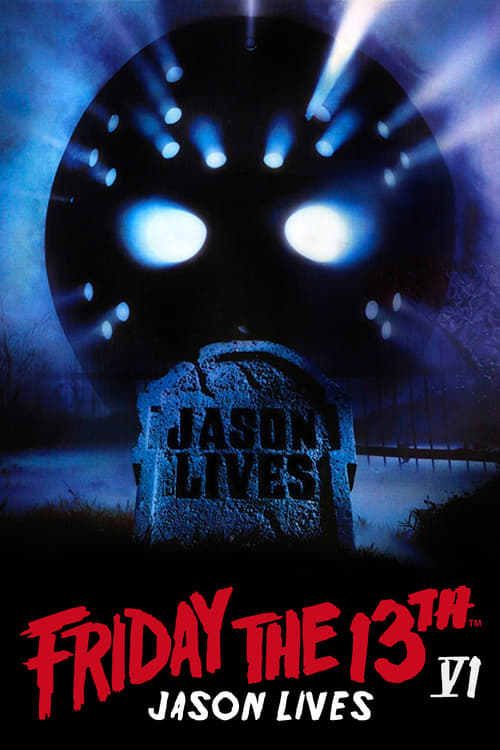
Friday the 13th Part VI: Jason Lives
"The moment the slasher got a sense of humor."
I was halfway through peeling a remarkably stubborn navel orange when the lightning bolt hit the iron fence post, and a spray of citrus juice hit my eye at the exact second Jason Voorhees’ heart started beating again. It was a sensory-overload moment that perfectly summarized the experience of watching Friday the 13th Part VI: Jason Lives. After five installments of increasingly mean-spirited, formulaic stalking, this is the entry where the franchise finally decided to stop taking its own body count so seriously and started having a blast with the absurdity of its own premise.
The Resurrection of the Supernatural Slasher
By 1986, the slasher genre was gasping for air. The "Golden Age" (1978-1984) had peaked, and the audience was tired of the "Copycat Killer" twist from the previous year’s A New Beginning. Enter writer-director Tom McLoughlin, a man who realized that if you’re going to make a sixth movie about a hockey-masked murderer, you might as well lean into the Gothic lunacy of it all.
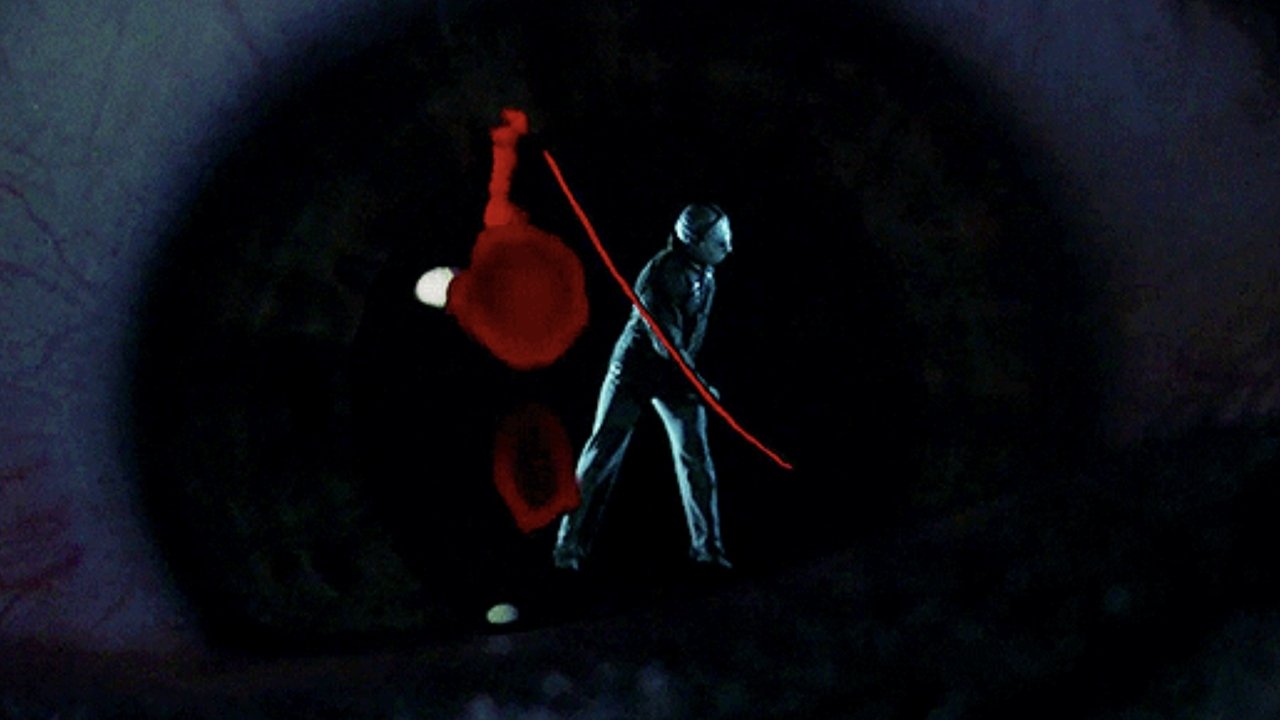
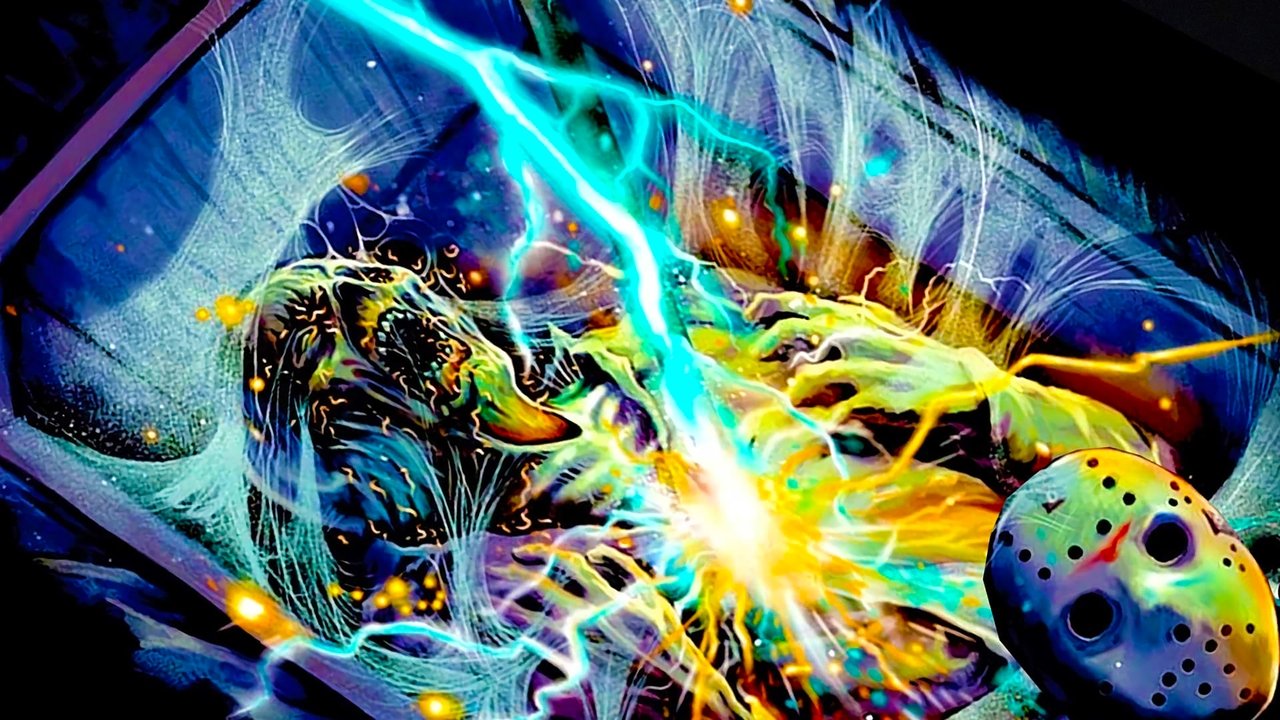
The film kicks off with Tommy Jarvis—now played by Thom Mathews with a delightful "I’ve seen too much" intensity—trying to cremate Jason’s remains to end his nightmares. Instead, a freak lightning strike (pure Frankenstein homage) brings the big guy back. This isn't the human Jason from parts 2 through 4; this is Zombie Jason. He’s stronger, faster, and essentially a homicidal Looney Tune in a hockey mask. The James Bond parody during the opening credits, where Jason turns and slashes at the screen inside a circle, tells you exactly what kind of ride you’re on. It’s cheeky, it’s self-aware, and it’s arguably the most important pivot in horror history before Scream arrived a decade later.
A Masterclass in Practical Pacing
What I’ve always appreciated about Jason Lives is how much it prioritizes fun over dread. The cinematography by Jon Kranhouse ditches the flat, bright look of the earlier sequels for a misty, atmospheric blue that feels like a classic Hammer Horror film transplanted to the American woods. The woods feel like they’re filled with dry ice and secrets, creating a visual texture that was a staple of my local video store’s "New Releases" shelf back in the day.
The kills here are legendary for their practical ingenuity. There’s a triple-decapitation with a single machete swing that is so audacious you can’t help but cheer. We also get a young Tony Goldwyn (decades before Scandal) meeting a messy end in a sequence that shows off the peak of 1980s makeup work. Without CGI to lean on, the effects team had to rely on clever editing and foam latex. When Jason folds a corporate paintballer in half like a piece of cardstock, you feel the weight of it because a real person had to build that rig. It’s tactile, messy, and infinitely more satisfying than a digital blood splatter.
The VHS Gold Standard
For a generation of horror fans, the Jason Lives VHS box was a permanent fixture of the weekend ritual. That specific cover art—the mask resting against a tombstone under a moonlit sky—promised a certain type of 80s "rebellious" entertainment. It was the tape you’d slide into the VCR at a sleepover because it felt like a heavy metal album come to life. Speaking of which, the soundtrack features Alice Cooper’s "He's Back (The Man Behind the Mask)," which might be the most "1986" thing ever recorded. It’s a synth-heavy anthem that turns a mass murderer into a rock star, perfectly reflecting the era’s shift from horror-as-trauma to horror-as-merchandise.
The film also introduces actual children to Camp Crystal Lake (rebranded as Forest Green) for the first time. It adds a layer of genuine tension—is the movie really going to let Jason kill a kid? Jennifer Cooke, as the rebellious sheriff’s daughter Megan, brings a much-needed spark of personality to the "Final Girl" trope, playing off Thom Mathews' frantic energy with a sarcastic wit that keeps the movie from drifting into melodrama.
Stuff You Didn't Notice
The "No Kids" Rule: Tom McLoughlin actually filmed a scene where Jason looms over a cabin full of sleeping children, but he never intended to hurt them. He wanted to play with the audience's anxiety. The Graveyard Tribute: If you look closely at the headstones in the opening scene, many of the names belong to horror critics or crew members. It’s one of the many meta-nods scattered throughout the runtime. * Alice Cooper's Cameo: While Alice provided three songs for the film, he doesn't actually appear on screen, though his presence is felt in every frame of the film's campy, theatrical energy.
Friday the 13th Part VI: Jason Lives is the rare sequel that improves upon its predecessors by embracing the "fun" of the franchise. It understands that Jason is an icon, not just a threat. While it might lack the raw, mean-spirited grit of the 1980 original, it replaces it with a Gothic atmosphere and a self-aware wink that makes it the most rewatchable entry in the entire series. If you’re looking for the definitive 80s slasher experience—complete with practical gore, synth-rock, and a killer who refuses to stay buried—this is your Friday night sorted. Just watch out for the orange juice.

Keep Exploring...
-
Friday the 13th Part 2
1981
-
Friday the 13th Part III
1982
-
Friday the 13th: The Final Chapter
1984
-
Friday the 13th
1980
-

Cujo
1983
-
The Dead Zone
1983
-
Manhunter
1986
-
The Hitcher
1986
-
A Nightmare on Elm Street 4: The Dream Master
1988
-

The 'Burbs
1989
-
Freddy vs. Jason
2003
-
Dead Ringers
1988
-
Frenzy
1972
-
Dressed to Kill
1980
-
Halloween II
1981
-
Children of the Corn
1984
-
A Nightmare on Elm Street 3: Dream Warriors
1987
-
Hellbound: Hellraiser II
1988
-
Phenomena
1985
-
Hellraiser
1987