Hannah and Her Sisters
"Family is a comedy you can't rewrite."

I remember watching this film for the first time on a humid Tuesday night while my apartment’s radiator was clanking like a possessed percussionist. There is something about the intellectual, brownstone-heavy atmosphere of Woody Allen’s mid-80s masterpiece that makes you want to wrap yourself in a cashmere scarf, even if you’re sitting in your underwear eating cold lo mein. Hannah and Her Sisters isn't just a movie; it’s a living, breathing neighborhood.

While most 1986 audiences were lining up for the high-octane adrenaline of Top Gun, Allen was busy perfecting the "Adult Dramedy." It’s a film that feels like eavesdropping on a conversation you weren't supposed to hear—one where the participants are much smarter, much more neurotic, and significantly more unfaithful than you are. Structure-wise, it’s brilliant, bookended by two Thanksgivings that serve as a yardstick for how much these characters have managed to mess up their lives in twelve months.
The Art of the Elegant Mess
At the center of the storm is Mia Farrow as Hannah. She is the "perfect" sister—the one who holds the family together, provides the financial cushion, and remains blissfully (or perhaps willfully) unaware that her husband is losing his mind with lust for her sister. Farrow plays Hannah with a quiet, maternal strength that makes her the sun everyone else orbits, but it’s the planets that are truly wobbling.
Michael Caine, in one of his most deserved Oscar-winning turns, plays Elliot, Hannah's husband. He is a financial advisor who spends the first act of the film stalking Hannah’s sister, Lee (Barbara Hershey), through Soho bookstores. Watching Michael Caine try to play "cool" while hiding behind a shelf of poetry is a cringeworthy masterclass in the pathetic nature of the mid-life crisis. He manages to make Elliot sympathetic even when he’s being a total snake, mostly because Allen’s script gives us access to his panicked, bumbling internal monologue.
Then you have Dianne Wiest as Holly. If Farrow is the anchor, Wiest is the kite caught in a hurricane. She’s an actress, a caterer, a writer, and a former drug addict, vibrating with a desperate, insecure energy that is both exhausting and heartbreaking. Her chemistry with Woody Allen (playing Mickey, a hypochondriac TV producer) provides the film’s lighter, though no less existential, B-plot.
A Love Letter to the Analog City
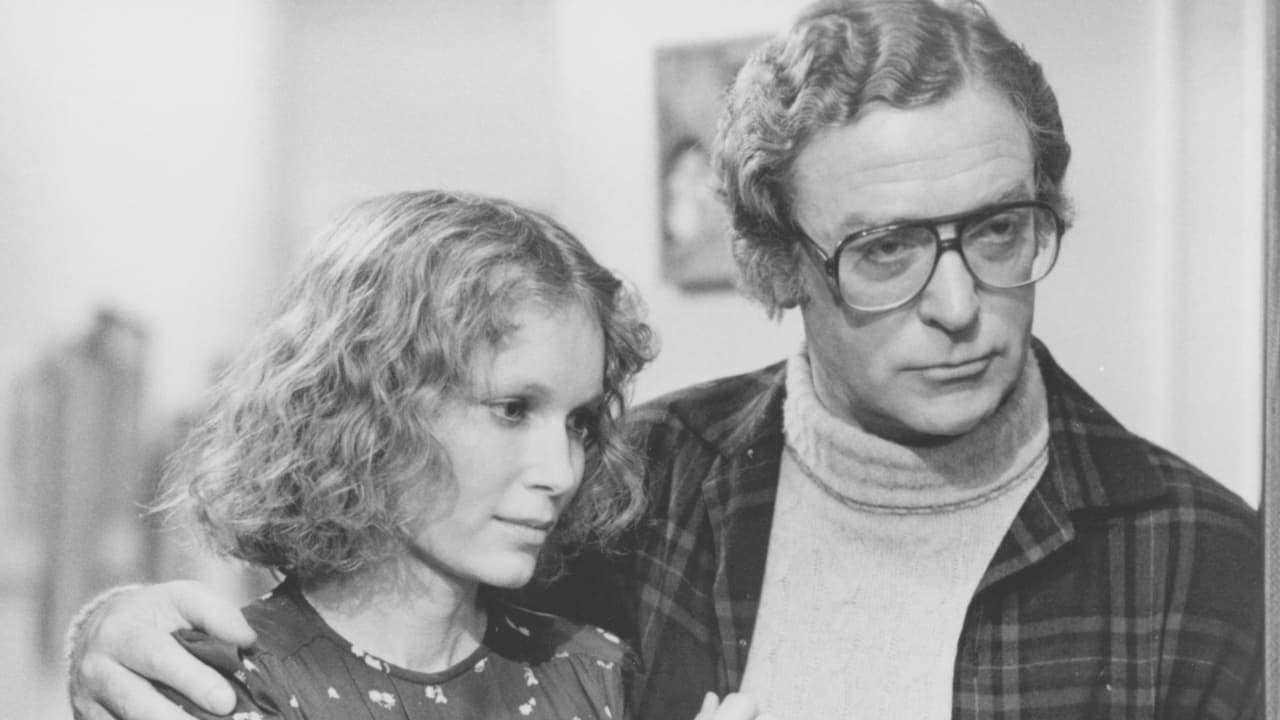
Visually, the film is a triumph for cinematographer Carlo Di Palma. Stepping in for Gordon Willis, Di Palma gave the film a warmer, more fluid look. There’s a specific scene where the three sisters sit in a restaurant, and the camera simply circles them as they talk. It’s a technical feat that feels entirely natural; you feel the history between them, the resentments, and the shared DNA.
It’s also worth noting that the film was largely shot in Mia Farrow’s actual apartment at the Langham. This adds a layer of lived-in authenticity that you just can't manufacture on a soundstage. When you see the dust on the bookshelves or the way the light hits the hallways, you’re looking at a real home. It makes the betrayals happening within those walls feel much more invasive.
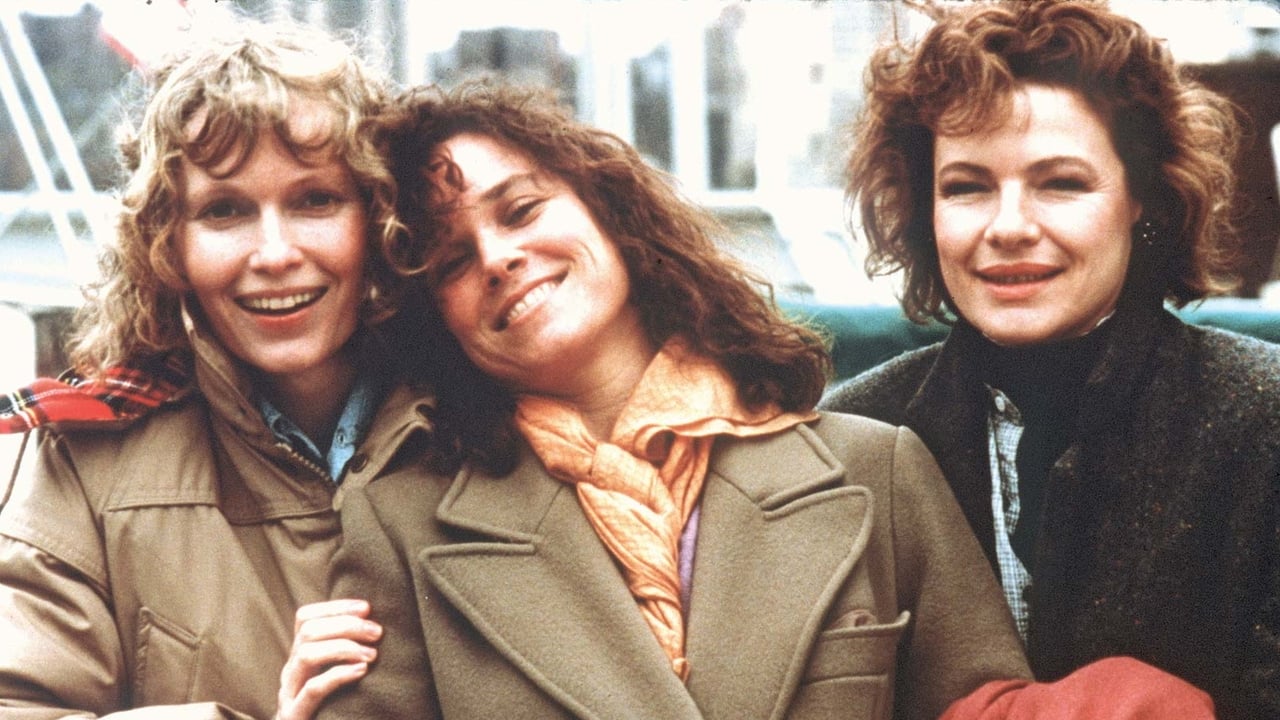
For those of us who grew up in the VHS era, the Orion Pictures logo—that blue, starry "O"—always promised something of a certain pedigree. I remember the rental box art vividly; it was a simple, classy layout of the three sisters' faces. In a sea of neon-colored slasher covers and "High Concept" action schlock, Hannah and Her Sisters stood out as the "grown-up" choice. It was the kind of tape you’d see on the shelf and think, "I'll watch that when I'm ready to understand life."
Stuff You Didn't Notice
One of the most fascinating bits of trivia involves the ending. The film concludes on a note of surprising, almost uncharacteristic optimism for Allen. Turns out, the upbeat ending was a bit of a pivot; originally, the script was much darker regarding the fate of the various marriages.
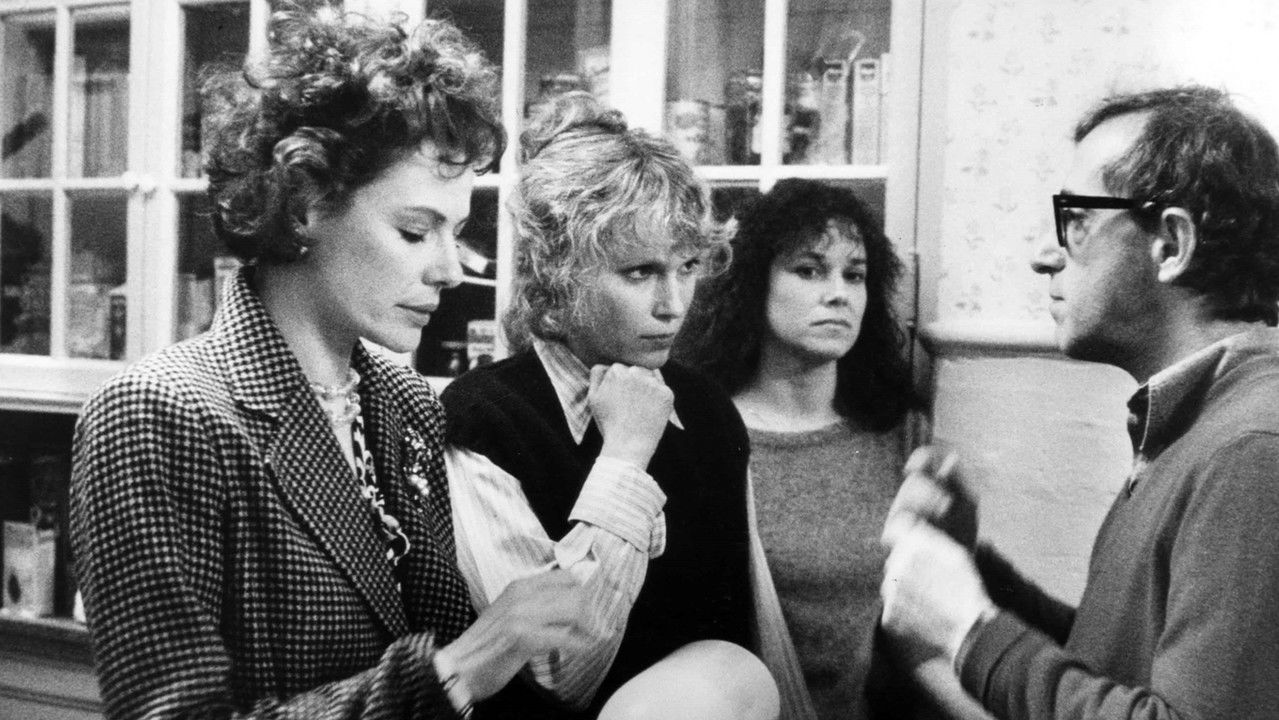
Also, look closely at the cast list beyond the leads. You’ll spot a very young Daniel Stern and even Max von Sydow (the legendary star of The Seventh Seal) playing a brooding, misanthropic artist who hates rock and roll. Seeing the man who once played chess with Death complaining about the "stupidity" of modern television is a meta-delight that never gets old.
Sadly, this was also the final film for Lloyd Nolan, who plays the sisters' father. He passed away shortly after filming, making the scenes where he sings at the piano with Maureen O'Sullivan (Farrow’s real-life mother) feel like a poignant farewell to a different era of Hollywood.
Hannah and Her Sisters is a rare bird: a film that is intellectually rigorous but emotionally accessible. It deals with the "big" questions—the meaning of life, the inevitability of death, the impossibility of monogamy—while still being legitimately funny. The scene where Woody Allen’s character discovers the Marx Brothers' Duck Soup and realizes that life might be worth living simply because art exists is one of the most beautiful sequences in cinema. It reminds me why I love movies in the first place. This is 107 minutes of pure, sophisticated joy that rewards every repeat viewing.
Keep Exploring...
-
Crimes and Misdemeanors
1989
-
The Purple Rose of Cairo
1985
-
Zelig
1983
-
Manhattan
1979
-
Annie Hall
1977
-
Deconstructing Harry
1997
-
Everything You Always Wanted to Know About Sex *But Were Afraid to Ask
1972
-
Love and Death
1975
-

Risky Business
1983
-
Cocoon
1985
-

An American Tail
1986
-

Scrooged
1988
-

All Dogs Go to Heaven
1989
-
Say Anything...
1989
-
Uncle Buck
1989
-
Escape to Victory
1981
-
The Lost Boys
1987
-
When Harry Met Sally...
1989
-
Manhattan Murder Mystery
1993
-
Whatever Works
2009