Little Shop of Horrors
"A soul-singing shrub with a taste for Type O."
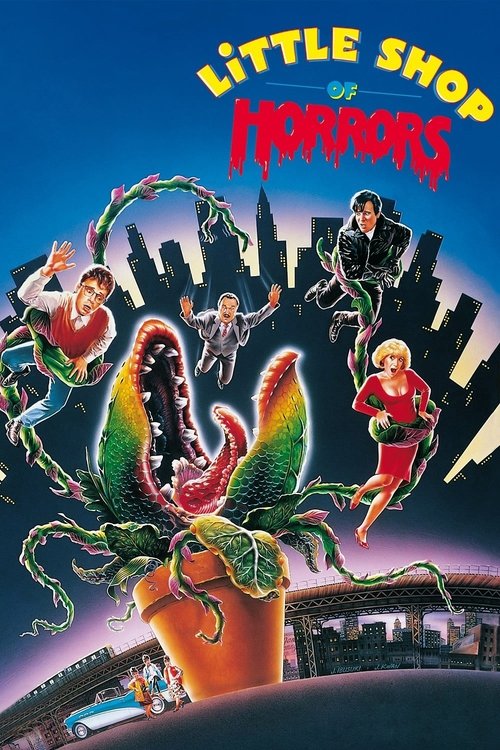
The first time I watched Frank Oz’s Little Shop of Horrors, I was seven years old, sitting on a shag carpet, and eating a bowl of lukewarm SpaghettiOs. I remember being intensely worried that if I spilled any of the red sauce, my mother’s favorite spider plant would suddenly sprout lips and start demanding a sacrifice. That is the specific, weird magic of this movie: it takes the mundane—a nerdy florist, a dental appointment, a potted plant—and twists it into a neon-soaked, Motown-infused nightmare that is impossible to look away from.
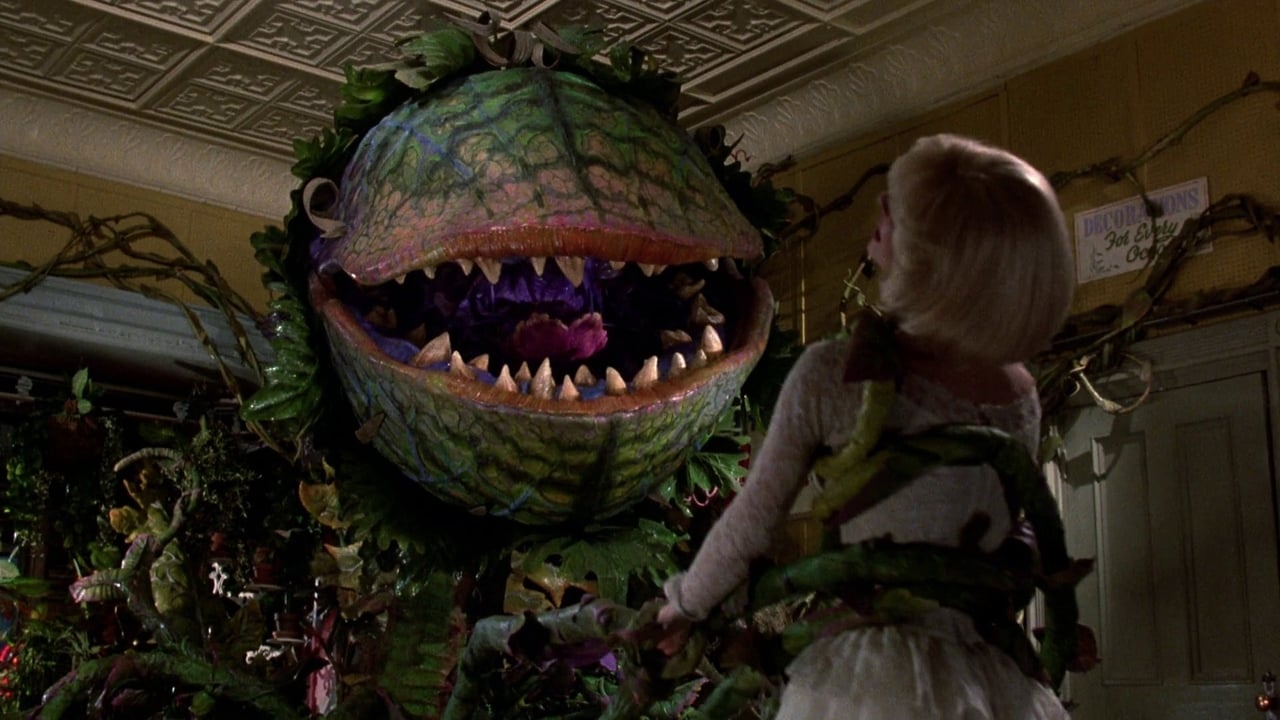
Coming off the massive success of the Off-Broadway musical, expectations were weirdly high for a film about a botanical serial killer. But Frank Oz, a man who spent his career proving that foam and felt could have more soul than most human actors, was the only person who could have pulled this off. He didn’t just film a stage play; he built a living, breathing version of Skid Row that feels like a cross between a 1950s B-movie and a fever dream.
The Most Expensive Puppet in History
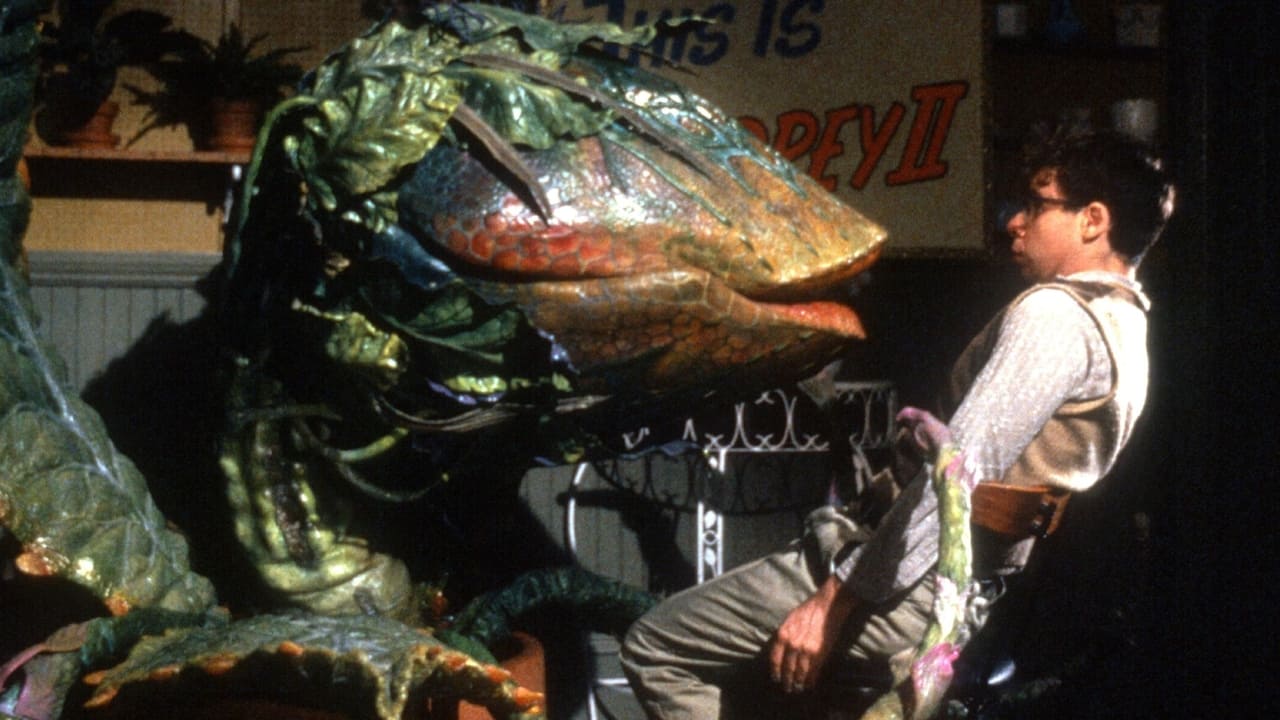
We have to talk about Audrey II. In an era where we’re constantly squinting through the digital haze of CGI, looking back at the practical effects in Little Shop feels like a religious experience. This isn't just a prop; it’s a performance. Designed by Lyle Conway, the plant eventually grew into a 12-foot-tall, one-ton behemoth that required up to 60 puppeteers to operate during its "Mean Green Mother from Outer Space" finale.
The technical wizardry here is mind-boggling. Because the plant’s lip-syncing had to be frame-perfect to Levi Stubbs’ booming, velvet-and-gravel vocals, they actually had to film the scenes at a slower speed. Rick Moranis had to act and sing in slow motion while the puppeteers worked at normal speed, only for the footage to be sped up in post-production to make the plant's movements look fluid and fast. If you watch Moranis closely, his physical comedy is even more impressive when you realize he’s basically doing a half-speed ballet with a giant rubber vegetable. Rick Moranis remains the undisputed king of the lovable loser, a man who could make you root for a character who literally feeds his boss to a Venus flytrap.
A Masterclass in Character Overload
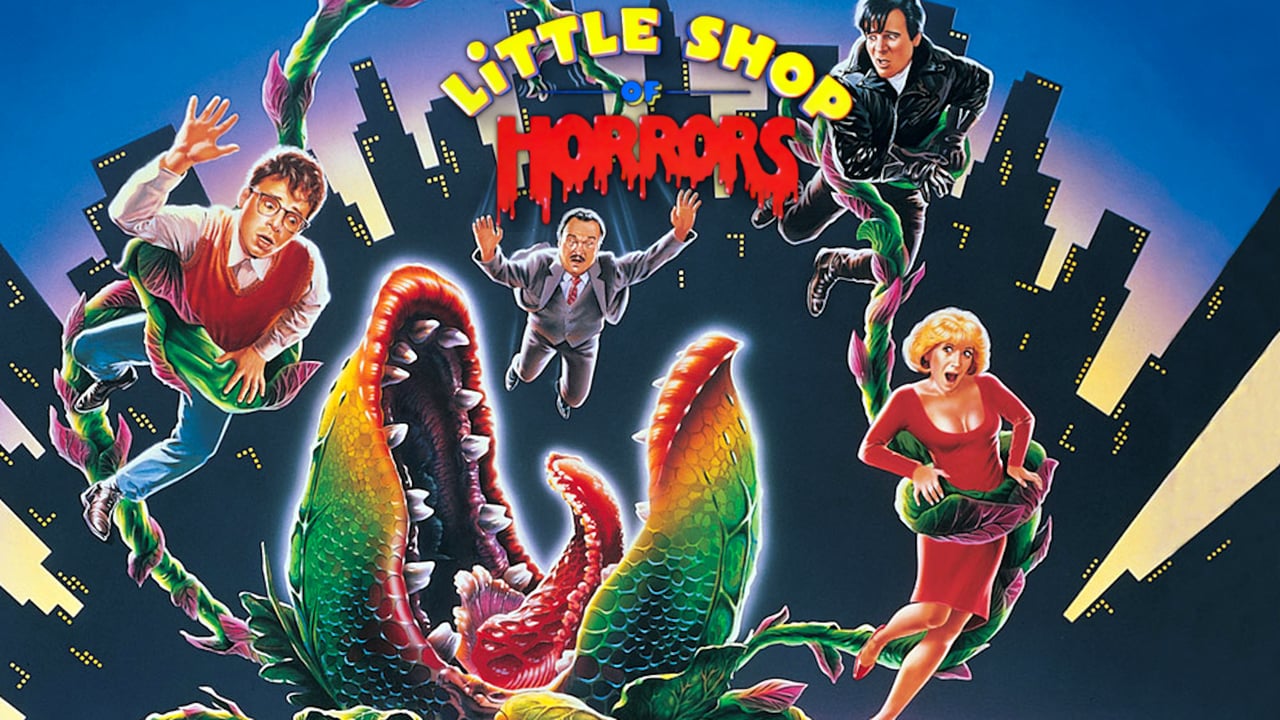
While the plant is the spectacle, the humans provide the heartbeat. Ellen Greene, reprising her role from the stage, gives a performance as Audrey that is so vulnerable it actually hurts a little. Her rendition of "Somewhere That’s Green" is the emotional anchor of the film—a kitschy, tragic dream of suburban normalcy that feels genuinely moving despite the plastic-covered furniture and the "Pine-Sol scented air."
Then, of course, there is Steve Martin. As the "gas-passing" dentist Orin Scrivello, D.D.S., Martin is operating at peak physical comedy. He’s a leather-clad, nitrous-oxide-addicted bully who represents the absolute worst of the 1950s "cool guy" archetype. His "Dentist!" number is a highlight of 80s cinema, blending genuine menace with high-octane absurdity. Steve Martin’s dentist is basically a Looney Tunes character who accidentally wandered into a slasher flick, and his eventual demise via a malfunctioning laughing gas mask is a stroke of darkly comedic genius.
The cameos are equally legendary. Watching a young Bill Murray play a masochistic dental patient who finds Steve Martin’s torture "pure heaven" is a collision of comedic titans that we simply don’t see anymore. It’s a scene that serves no purpose to the plot other than to be hilarious, and in 1986, that was reason enough to keep it in.
The VHS Legacy and the Ending That Wasn't
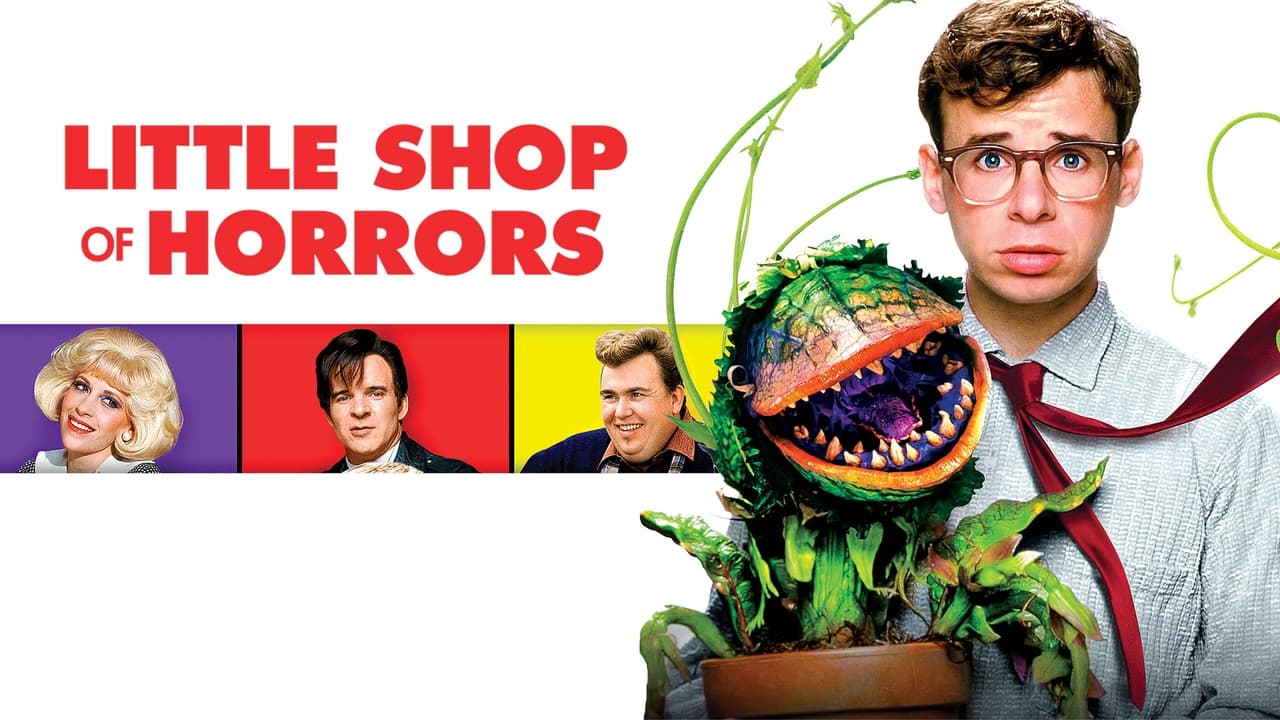
For those of us who grew up in the video store era, the Little Shop box art was iconic. It sat there on the "Musical" or "Comedy" shelf, looking far more menacing than its neighbors. But the version we all rented on VHS was actually a compromise. The original ending—a multimillion-dollar sequence where Audrey II and its offspring literally take over the world and eat the audience—was scrapped after test screenings. 1980s audiences weren't ready to see Rick Moranis and Ellen Greene die and the villains win.
For decades, the "theatrical happy ending" was all we had. It wasn't until the 2012 Blu-ray restoration that most fans finally saw the intended apocalyptic finale. Personally, while I appreciate the dark ambition of the original ending, there’s something about the theatrical cut that fits the 80s vibe better. It’s a "Reagan-era" polish on a 60s story—a hopeful ending for a movie that, beneath all the blood and puppets, is really just a story about two lonely people trying to escape the gutter.
Little Shop of Horrors stands as a testament to the "Practical Effects Golden Age." It’s a film where you can feel the sweat of the puppeteers and the texture of the sets. It’s loud, it’s colorful, and it has a soundtrack by Alan Menken and Howard Ashman that contains zero skips. It’s the kind of movie that makes you miss the days when a director's biggest challenge wasn't a rendering farm, but figuring out how to make a ton of rubber look like it was singing its heart out.
This is a rare bird: a film that appeals to the horror geek, the theater nerd, and the casual viewer looking for a laugh. It manages to be both cynical and sweet, horrifying and hilarious. Whether you’re watching it for the technical brilliance of the puppetry or the sheer joy of the musical numbers, it remains a towering achievement of 80s creativity. Just maybe avoid the SpaghettiOs while you watch—it gets a little messy.

Keep Exploring...
-
Creepshow
1982
-
Dirty Rotten Scoundrels
1988
-
Stripes
1981
-
Gremlins
1984
-
The Lost Boys
1987
-

Fright Night
1985
-

The Witches of Eastwick
1987
-
Honey, I Shrunk the Kids
1989
-

The 'Burbs
1989
-

Re-Animator
1985
-
Bad Taste
1987
-
Evil Dead II
1987
-
48 Hrs.
1982
-

Risky Business
1983
-
Romancing the Stone
1984
-
Ladyhawke
1985
-
The Purple Rose of Cairo
1985
-

An American Tail
1986
-

Short Circuit
1986
-
Innerspace
1987