Nine 1/2 Weeks
"High-gloss obsession in the city that never sleeps."

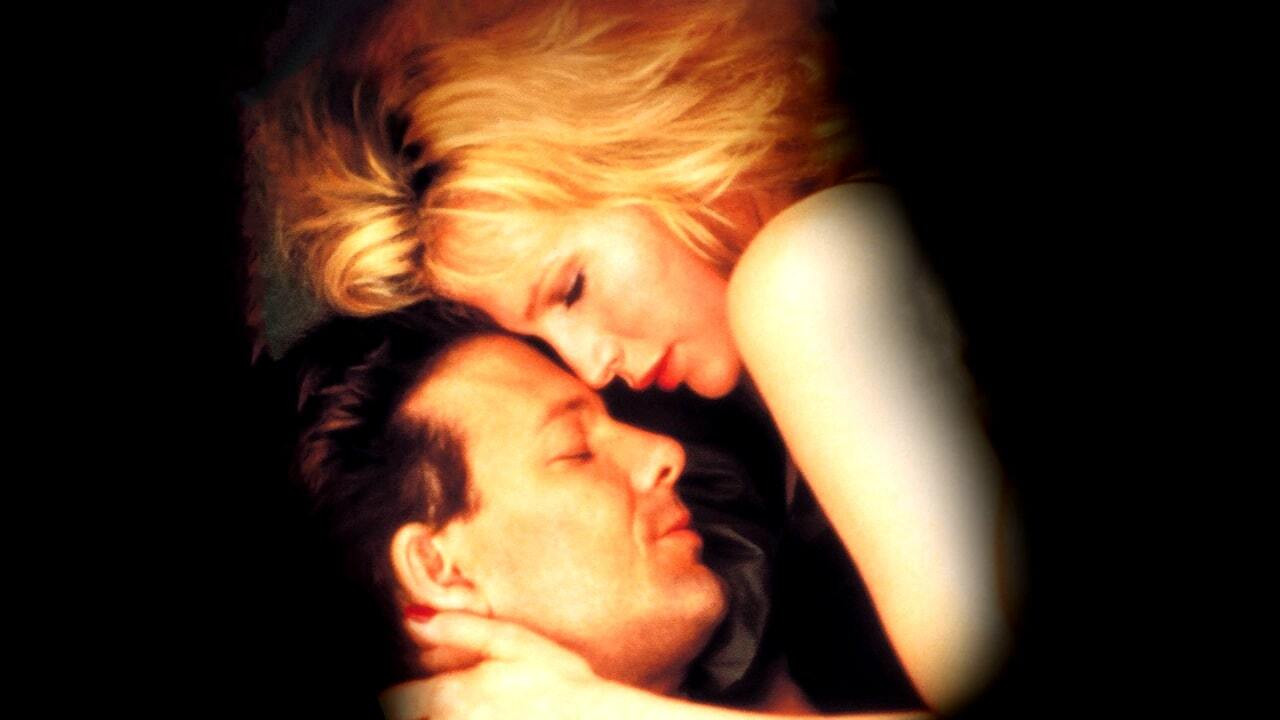
Walking into a video store in the late 80s felt like navigating a curated labyrinth of forbidden fruit. There was always that one section—usually tucked toward the back, near the "Special Interest" tapes—where the box art shifted from exploding helicopters to something more atmospheric. I remember the first time I saw the cover for Nine 1/2 Weeks. It wasn't loud. It was a stark, minimalist black-and-white shot of a woman’s face, a blindfold, and a font so sharp it could cut glass. It promised a level of adult sophistication that my teenage brain wasn't ready for, and yet, the tape was always checked out. It’s one of those films that effectively failed at the box office, grossing less than half its budget in the States, only to become a certified legend on the rental shelf. It was the ultimate "don't let your parents see you watching this" movie.
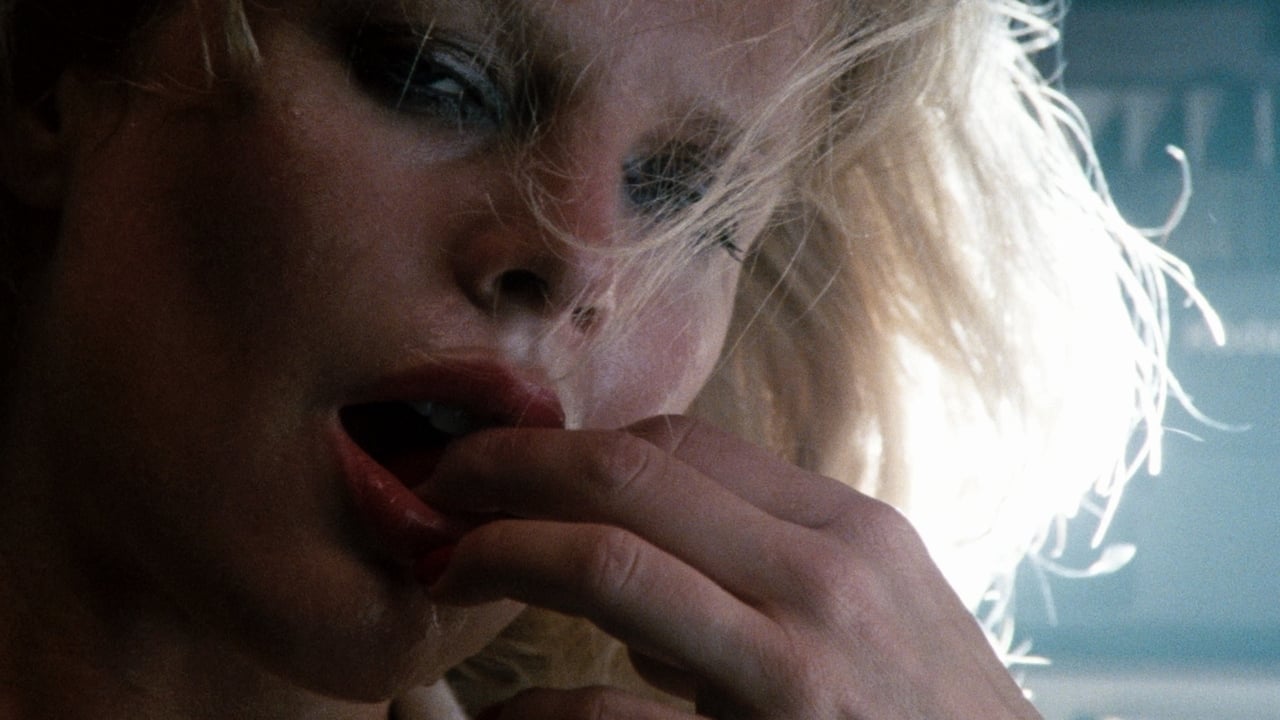
The Aesthetic of the Excess
Directed by Adrian Lyne, fresh off the neon-soaked success of Flashdance, this movie isn’t so much a story as it is a mood. If you want to understand the high-gloss, cold-to-the-touch aesthetic of 1986 Manhattan, this is your primary document. Lyne brought his background in television commercials to the big screen, treating every frame like a spread in Vogue. There are more Venetian blinds and backlit plumes of cigarette smoke here than in a dozen film noirs.
The plot is deceptively simple: Elizabeth (Kim Basinger), a smart but somewhat repressed art gallery assistant, meets John (Mickey Rourke), a Wall Street arbitrageur who looks like he spends $500 a week on hair product. What follows isn't a traditional romance; it's a series of psychological and erotic "games" that last exactly the amount of time the title suggests. I watched this on a rainy Tuesday while eating a bowl of lukewarm SpaghettiOs, and the contrast between my soggy pasta and the film’s hyper-stylized kitchen-floor-food-fight was almost too much to bear.
Rourke, Basinger, and the Art of the Whisper
At this point in his career, Mickey Rourke was arguably the most magnetic actor on the planet. This was before the boxing, before the facial reconstructions, and before the eccentric comeback roles. Here, he operates entirely in whispers and knowing smirks. He plays John as a man who has replaced his soul with a sleek, chrome exterior. Opposite him, Kim Basinger gives a performance that feels genuinely raw, likely because Lyne allegedly used some pretty questionable "method" directing tactics to keep her isolated and on edge during the shoot.
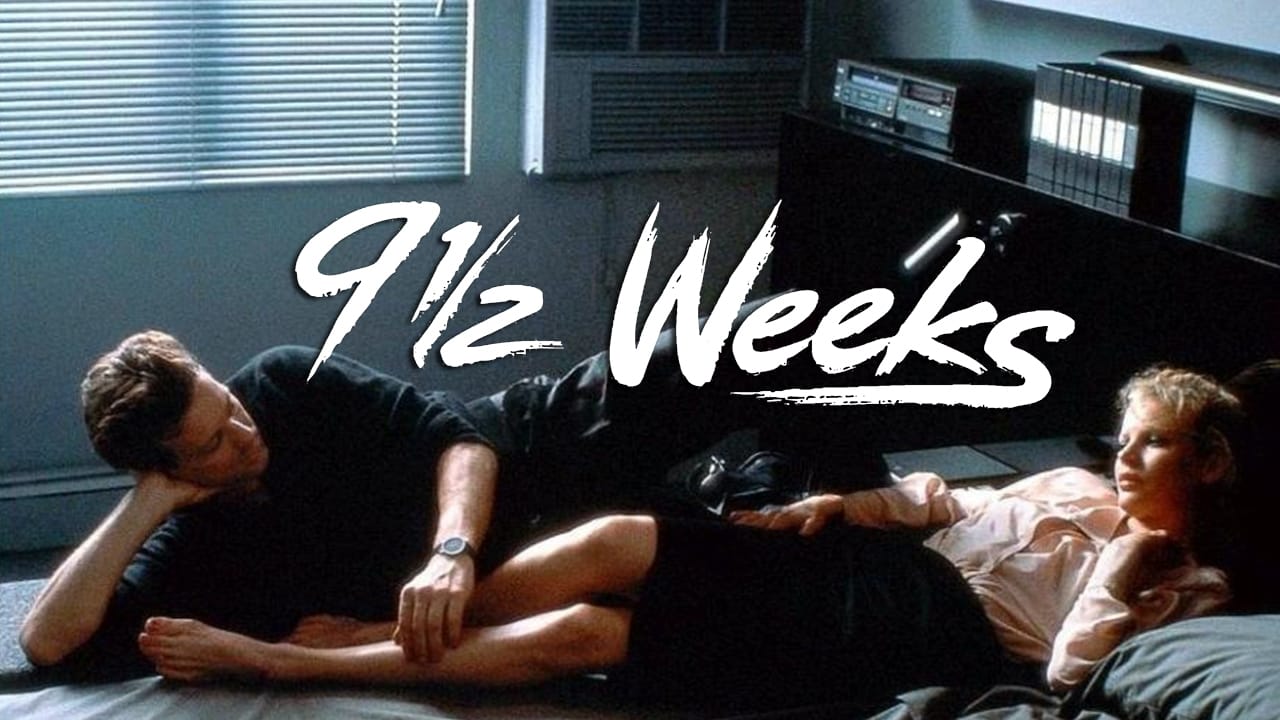
The chemistry between them is undeniable, but it’s also deeply uncomfortable. It’s basically a high-budget music video for a song that never ends, and that’s both its greatest strength and its most glaring flaw. As they move from the infamous "refrigerator scene" to increasingly dark power plays, you realize the film isn’t interested in why these people are the way they are. It only cares about how they look under a blue-filtered light. It’s a drama about the surface of things, which makes it the most "1980s" movie ever made.
The VHS Savior and the Lost Narrative
It’s fascinating to look back at why this film vanished from theaters only to become a cultural touchstone. In 1986, American audiences weren't quite sure what to do with a mainstream movie that leaned so heavily into the "impersonal" nature of an affair. It felt cold. But on VHS, that coldness became a virtue. You could watch it in the privacy of your living room, rewinding the Joe Cocker-soundtracked "You Can Leave Your Hat On" sequence until the tape started to flicker with tracking errors.
Interestingly, the version most of us saw on home video was slightly different from the theatrical cut. The production was notoriously troubled, with Zalman King (who would later become the king of late-night cable erotica) and Patricia Louisianna Knop constantly reworking a script that originally aimed for something much darker—closer to the depressing, nihilistic tone of the source novel by Elizabeth McNeill. The movie we got is a compromise: a glossy, Reagan-era fantasy that flirts with the edge of something dangerous without ever truly jumping over.
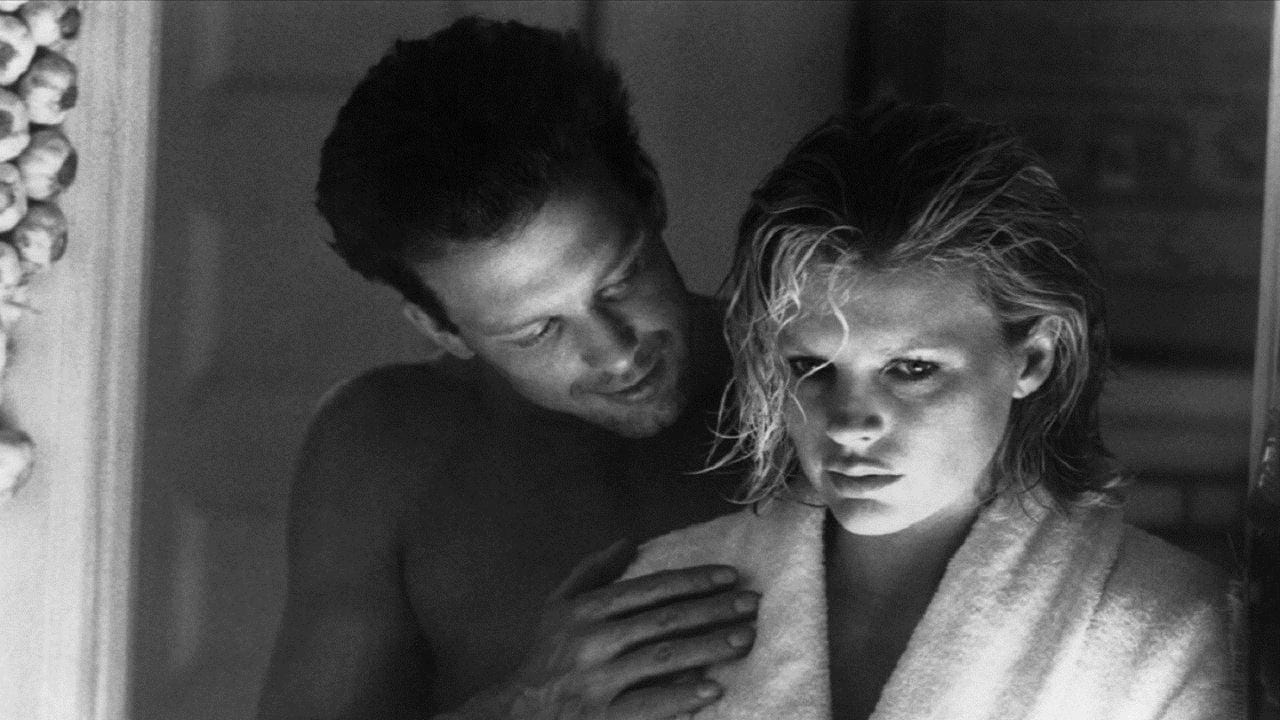
The film also features some great "before they were famous" spotting. Keep an eye out for Christine Baranski as a fellow gallery worker. It’s a reminder that even in a movie this focused on its two leads, there was a wealth of New York acting talent filling in the gaps. The score by Jack Nitzsche is also a standout, capturing that specific synthesized melancholy that defined the mid-80s.
Nine 1/2 Weeks is a fascinating relic. It’s a movie that values texture over text and atmosphere over character development. While some of the "sex games" feel a bit dated or even silly by today’s standards, the film’s visual language remains incredibly influential. It’s a time capsule of a decade that was obsessed with looking good, even when things were falling apart beneath the surface. If you’re looking for a deep dive into the human psyche, look elsewhere; but if you want to be transported to a world of grey suits, rain-slicked streets, and questionable refrigerator choices, this is a trip worth taking.
Keep Exploring...
-

Flashdance
1983
-

Fatal Attraction
1987
-

Risky Business
1983
-
Starman
1984
-
Pretty in Pink
1986
-

Unfaithful
2002
-
An Officer and a Gentleman
1982
-

Footloose
1984
-

The Karate Kid Part II
1986
-
Cocktail
1988
-
Working Girl
1988
-
Say Anything...
1989
-

Indecent Proposal
1993
-

The Party
1980
-
Escape to Victory
1981
-
Red Dawn
1984
-
Romancing the Stone
1984
-
Splash
1984
-
Cocoon
1985
-

Enemy Mine
1985