Platoon
"Two sergeants, one soul, and no way out."
I watched Platoon again on a humid Tuesday night while my ceiling fan was making a rhythmic, metallic clicking noise. Usually, that sound drives me up the wall, but in the context of Oliver Stone’s 1986 jungle fever dream, it sounded like a distant Huey rotor or a jammed M16. It was the perfect, low-fi accompaniment to a movie that refuses to let you stay comfortable in your chair.

Before Platoon, Vietnam movies were often surreal odysseys like Apocalypse Now (1979) or somber home-front elegies like The Deer Hunter (1978). But Stone, a combat veteran himself, didn't want to give us poetry; he wanted to give us the dirt, the bugs, and the terrifying realization that the guy in the foxhole next to you might be more dangerous than the enemy in the treeline.
The Two Faces of the Apocalypse
The heart of the film is a literal tug-of-war for the soul of Chris Taylor, played by a young Charlie Sheen. At the time, Sheen had this incredible, wide-eyed vulnerability that makes his transition from a "Newry" (new recruit) to a hollowed-out soldier feel genuine. But let’s be honest: the movie belongs to the sergeants.
On one side, you have Willem Dafoe as Sergeant Elias—the "cool" leader who smokes weed through a shotgun barrel and clings to a shred of humanity. On the other, there’s Tom Berenger as Sergeant Barnes, a man who looks like he was stitched together from old boots and pure spite. Tom Berenger’s scar makeup is so aggressive it deserves its own screen credit, and he plays the role with a terrifying, cold-blooded pragmatism.
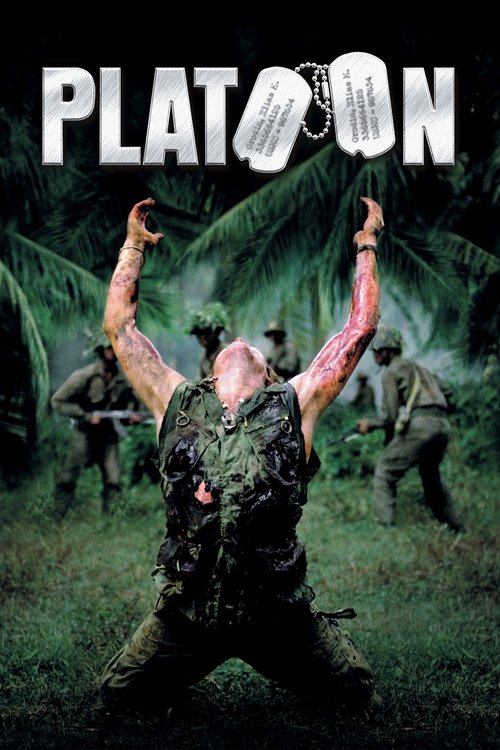
The conflict between them isn't just about leadership styles; it’s a theological debate happening in a swamp. Watching them now, I’m struck by how much Willem Dafoe’s Elias feels like a Christ figure—culminating in that iconic, arms-wide-open death scene that graced every VHS box and movie poster for a decade. It’s a bit on the nose, sure, but in the heat of the moment, with Georges Delerue’s haunting arrangement of "Adagio for Strings" swelling in the background, it hits like a sledgehammer.
Dirt, Sweat, and Practical Chaos
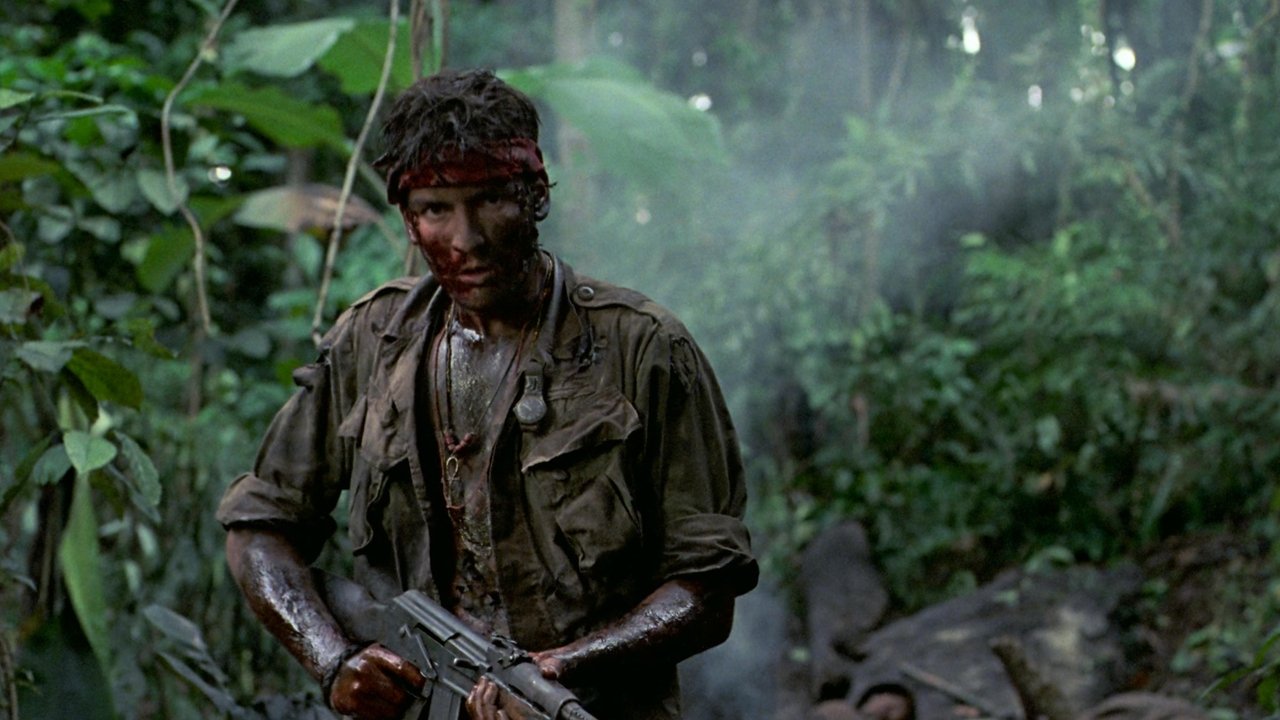
One thing that separates Platoon from the sanitized, CGI-heavy war films of the modern era is the sheer physical misery on screen. Stone famously put his actors through a grueling two-week boot camp in the Philippines, led by the legendary military advisor Dale Dye. They weren't staying in trailers; they were digging holes and eating rations. You can see it in their faces—the exhaustion isn't acting.
The action choreography, handled by Robert Richardson’s frantic, close-in cinematography, doesn't care about "cool" shots. During the final night assault, the screen is a mess of trip-flares, screaming tracers, and absolute confusion. It’s chaotic, but intentionally so. You never quite know where the perimeter is, which is exactly how a 19-year-old kid in the jungle would have felt. I personally think Charlie Sheen’s narration sounds like he’s reading a grocery list while high on existential dread, but even that flat delivery adds to the feeling of a kid who has checked out mentally just to survive.
The practical effects here are peak 80s. When a squib goes off, it’s not a digital puff of dust; it’s a violent explosion of red that looks wet and heavy. There’s a weight to the equipment and a grit to the sets that makes the "New Hollywood" influence feel alive, even as the film embraced the scale of an 80s blockbuster.
The $6 Million Juggernaut
Speaking of blockbusters, Platoon is one of the ultimate "little engine that could" stories of the decade. Produced by Hemdale for a measly $6 million, it went on to rake in over $138 million. That’s a return on investment that would make a modern studio executive weep. It wasn't just a hit; it was a cultural reckoning. It won four Oscars, including Best Picture, and proved that audiences were finally ready to look at Vietnam without the filter of 1960s propaganda or 1970s abstraction.

Growing up, this was a "dad movie" staple. If you looked at a wood-paneled TV stand in 1989, there was a 90% chance a well-worn Hemdale VHS of Platoon was wedged between Top Gun and a taped-off-TV copy of Ghostbusters. The cover art—Elias falling to his knees—became shorthand for "serious cinema." It was the kind of tape that stayed in the VCR so long the tracking would get wonky during the village sequence, adding an extra layer of distortion to an already harrowing scene.
The film also served as a massive launching pad for a staggering amount of talent. Look closely and you’ll see a young Forest Whitaker, a terrifyingly unhinged Kevin Dillon as Bunny, and even a blink-and-you’ll-miss-him Johnny Depp (who reportedly was so nauseous during filming that he barely remembered being there).
Platoon isn't a "fun" watch, but it is an essential one. It captures that specific 1980s transition where the gritty, auteur-driven spirit of the 70s met the high-stakes production value of the blockbuster era. It’s a film that understands that in war, the greatest enemy isn't always the person in the other uniform—it's the person you become when the lights go out.
Oliver Stone may have spent the rest of his career chasing this same lightning in a bottle, but he never quite caught it again with this much purity. It remains a masterpiece of practical filmmaking and a brutal reminder that some scars, much like Sergeant Barnes’, never really fade. If you haven't seen it in a while, find the biggest screen possible, turn off the lights, and let the jungle swallow you whole. Just make sure your ceiling fan isn't clicking too loud.


Keep Exploring...
-
Born on the Fourth of July
1989
-

Wall Street
1987
-
Good Morning, Vietnam
1987
-
JFK
1991
-
First Blood
1982
-
Scarface
1983
-
The Longest Day
1962
-

The Towering Inferno
1974
-
Bloodsport
1988
-
Doctor Zhivago
1965
-
Sophie's Choice
1982
-
Empire of the Sun
1987
-
Full Metal Jacket
1987
-
Casualties of War
1989
-
Glory
1989
-

Legends of the Fall
1994
-
Lone Survivor
2013
-
The Karate Kid
1984
-

Top Gun
1986
-
Das Boot
1981