Police Academy 3: Back in Training
"New recruits. Old habits. Pure chaos."

By 1986, the Police Academy franchise had evolved into a reliable cinematic utility, a bit like a toaster that only burns smiley faces into your bread. You knew exactly what you were getting before you even pushed the tape into the VCR. It was the comfort food of the Reagan era—low stakes, high energy, and built entirely on the premise that watching a pompous authority figure fall into a body of water is the pinnacle of human achievement. While the second film took the action to the streets, Police Academy 3: Back in Training wisely returns to the hallowed, chaotic halls of the academy, and it remains my personal "happy place" entry of the entire seven-film marathon.
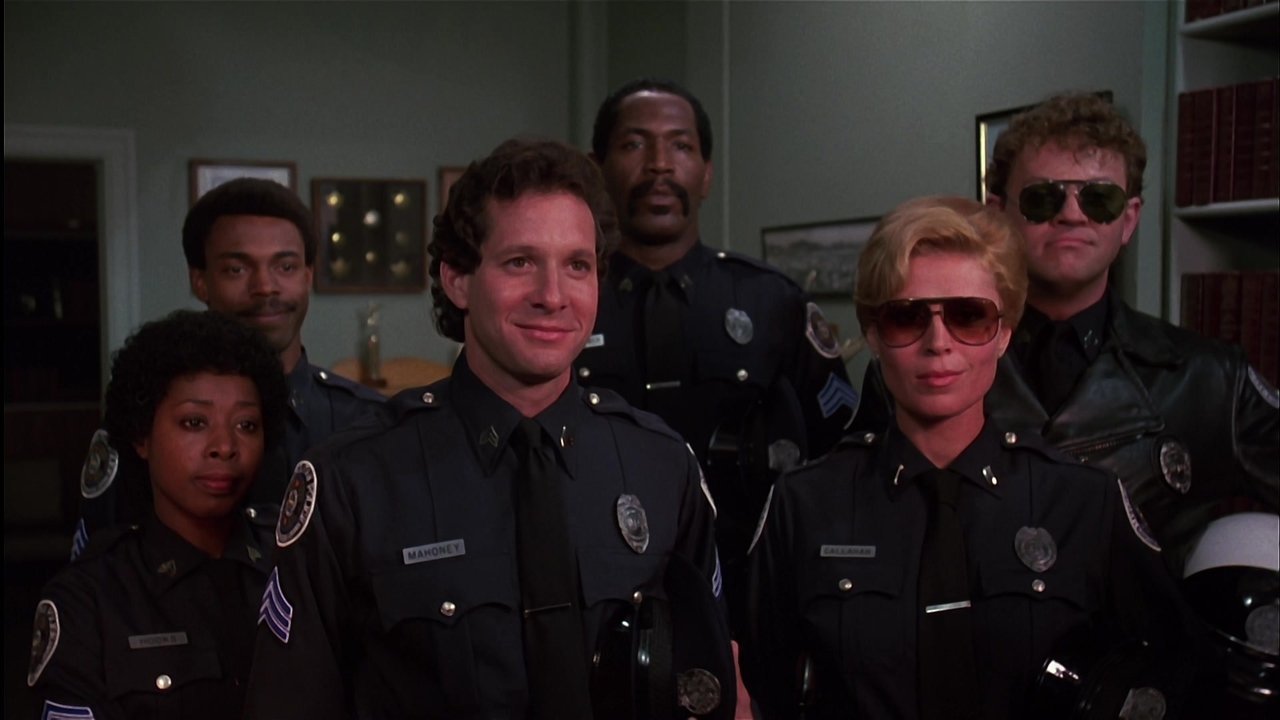
I watched this most recent viewing while wearing a pair of mismatched socks—one with a hole in the big toe—and honestly, that felt like the most appropriate attire for a movie where a grown man makes machine-gun noises with his mouth to foil a robbery.
The Sitcom Aesthetic Done Large
There is a specific texture to mid-80s comedies that feels lost today. Everything is brightly lit, the score by Robert Folk is permanently set to "Whimsical March," and the world feels small enough to be manageable but big enough for a jet-ski chase. Director Jerry Paris, a veteran of legendary sitcoms like The Dick Van Dyke Show and Happy Days, treats the film with the efficiency of a 22-minute television episode stretched to feature length. There’s no fat here, just a relentless conveyor belt of gags.
The plot is a mere skeleton: the state can only afford one police academy, so Commandant Lassard’s lovable misfits must compete against Mauser’s "elite" (read: jerk) recruits. It’s a classic "save the camp" trope, but it works because the ensemble chemistry is so locked in. By this point, Steve Guttenberg as Mahoney wasn't even the main attraction anymore; he was the charismatic glue holding together a traveling circus of human cartoons. Watching Michael Winslow do a dubbed Bruce Lee impression or David Graf’s Tackleberry treat a simple traffic stop like a tactical invasion never fails to get a chuckle out of me. It’s basically a live-action Looney Tunes cartoon with more blue uniforms.
The Zed and Sweetchuck Show

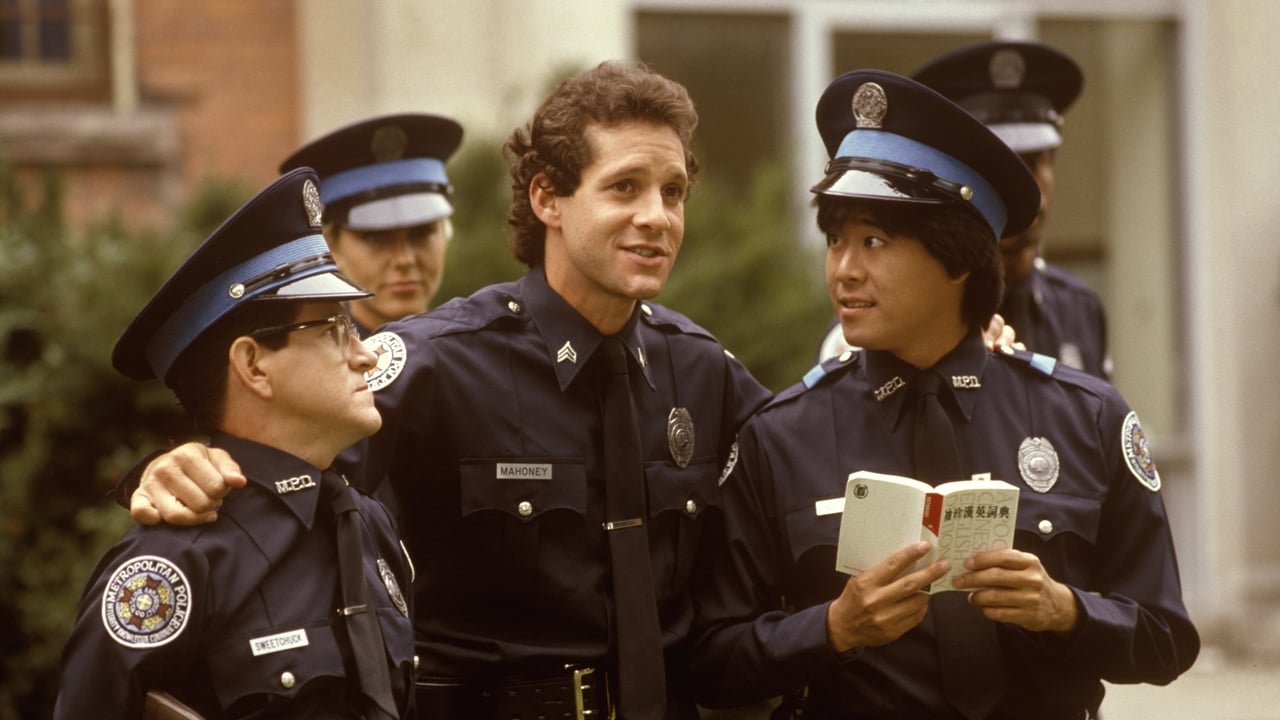
If you’re looking for the exact moment this movie justifies its existence, look no further than the pairing of Bobcat Goldthwait and Tim Kazurinsky. Taking Zed—the terrifying, screaming gang leader from the second film—and making him a recruit was a stroke of genius. Pairing him with the diminutive, neurotic Sweetchuck, the man whose business he destroyed in the previous movie, is the stuff of buddy-comedy legend.
Bobcat Goldthwait is a force of nature here. His vocal performance sounds like a blender full of gravel and anxiety, and Zed is the only character who feels like he belongs in an actual asylum rather than a police precinct. The scene where they are forced to share a bunk is physical comedy gold, relying on the sheer contrast of their silhouettes and energy levels. It’s the kind of character-driven humor that made these movies staples of the video store era. You didn't just rent Police Academy 3; you rented "the one where the crazy guy joins the force."
A $100 Million Slapstick Payday
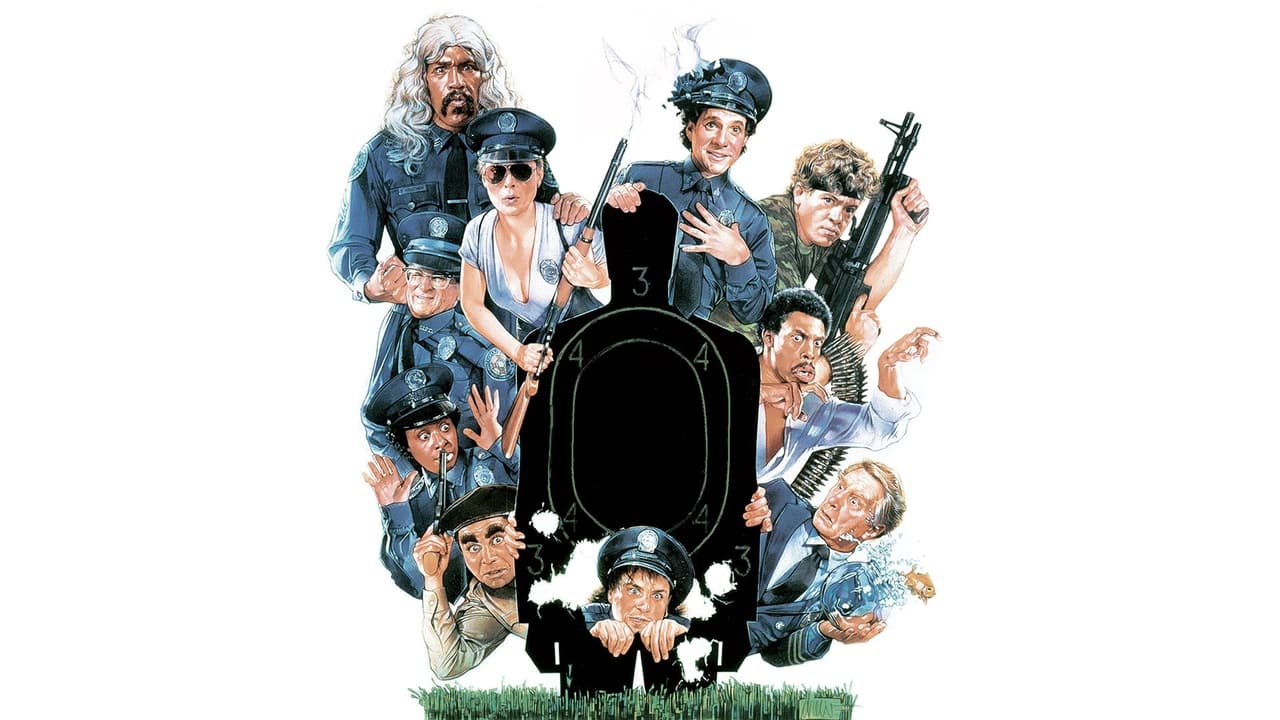
It is easy to dismiss these sequels as cheap cash-ins, but the financial reality is staggering. Produced on a modest $12 million budget, Back in Training raked in over $107 million worldwide. In 1986, that was a colossal win. It beat out several "serious" films because it understood the democracy of the living room. This was a "VHS All-Star." I remember the Warner Home Video clamshell cases with the iconic artwork—usually featuring the whole gang in a pile-up—promising a level of destruction the movie's budget couldn't quite afford, yet you didn't care.

The film's climax, involving a multi-vehicle chase and a frantic rescue at a regatta, shows off the era’s practical effects beautifully. There isn't a pixel of CGI in sight. When a jet ski flies through a car or someone gets launched into a cake, it’s a real stunt performer earning their paycheck. There’s a weight and a "clunkiness" to the action that makes the slapstick feel more grounded than the digital ragdoll physics we see in modern comedies. Plus, seeing Art Metrano as the perpetually frustrated Mauser get his eyebrows accidentally taped off is a reminder that sometimes, the simplest jokes are the most enduring.
Ultimately, Police Academy 3: Back in Training is exactly what it wants to be. It’s a harmless, breezy 84 minutes that demands nothing of you except a willingness to laugh at a guy who can’t stop hitting things with his baton. It captured a specific lightning-in-a-bottle moment where the "New Hollywood" edge of the 70s had smoothed over into the pure, unadulterated commercialism of the 80s, resulting in a movie that feels like a warm hug from a very goofy uncle. It’s not high art, but as far as "back to school" movies go, I’d take this academy over Harvard any day of the week.
Keep Exploring...
-
Police Academy 2: Their First Assignment
1985
-
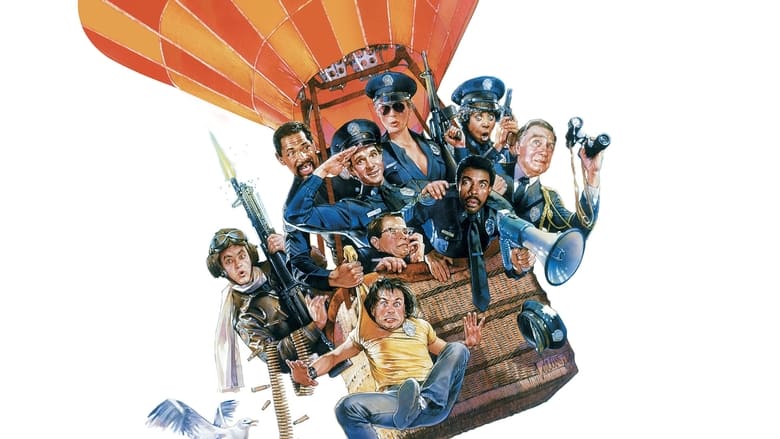
Police Academy 4: Citizens on Patrol
1987
-
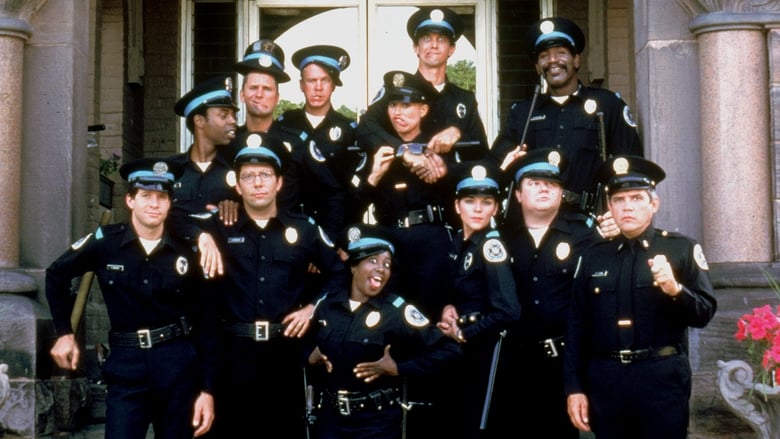
Police Academy
1984
-
Beverly Hills Cop II
1987
-
48 Hrs.
1982
-
K-9
1989
-
See No Evil, Hear No Evil
1989
-
Turner & Hooch
1989
-
Weekend at Bernie's
1989
-
Cocoon
1985
-
Tango & Cash
1989
-
Sudden Impact
1983
-
3 Men and a Baby
1987
-
Cocktail
1988
-

Oliver & Company
1988
-
Twins
1988
-
Working Girl
1988
-

Ghostbusters II
1989
-
Honey, I Shrunk the Kids
1989
-
Look Who's Talking
1989