The Color of Money
"The stakes are high. The hustle is back."
In 1986, Tom Cruise was the king of the world, sporting aviators in Top Gun and flashing that million-dollar grin that could melt steel. But while the rest of the world was looking at the skies, Martin Scorsese decided to drag us back into the smoke-filled, beer-stained pool halls of the American underbelly. The Color of Money is a fascinating beast—a "legacy sequel" released decades before that term became a marketing buzzword, picking up the chalk-dusted thread of 1961’s The Hustler. I recently revisited this one on a rainy Tuesday afternoon while my cat, Luna, kept trying to pounce on the pool balls darting across the screen, and I was struck by how much it feels like a passing of the torch that keeps catching fire.

The Master and the Maniac
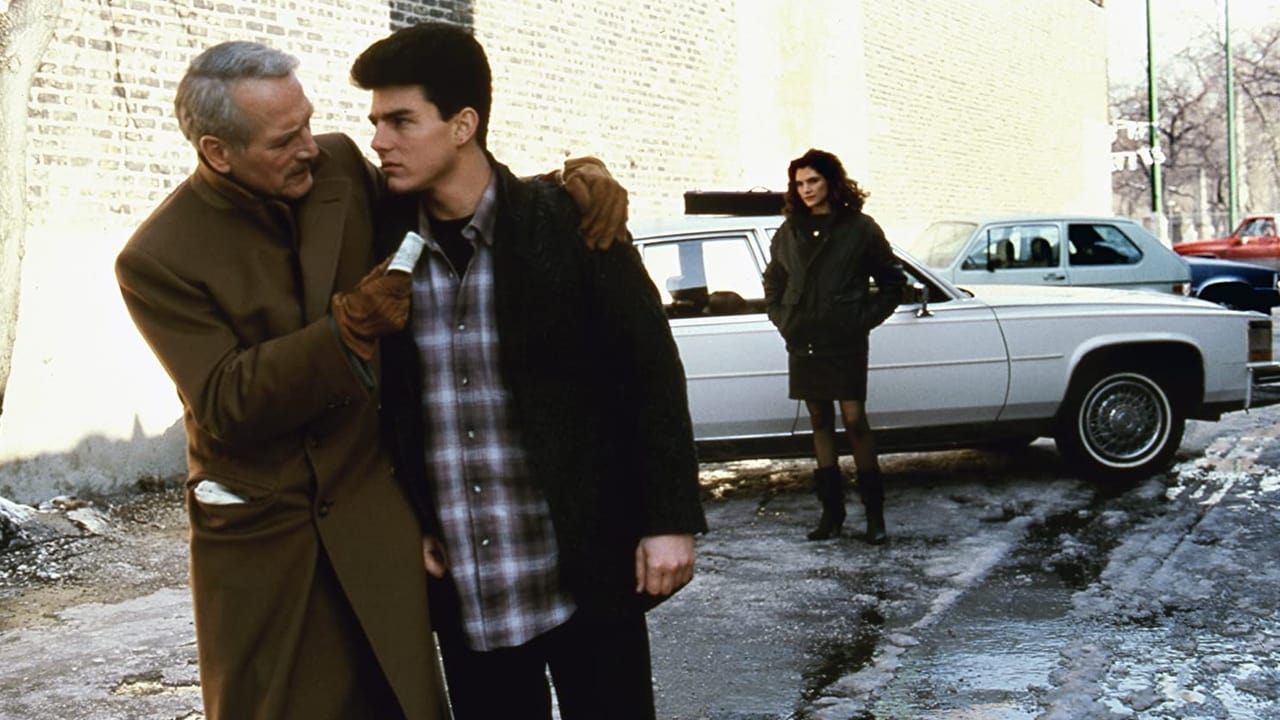
The film catches up with "Fast Eddie" Felson (Paul Newman), who has long traded his cue for a Cadillac and a lucrative gig as a liquor salesman. He’s got the girl (Helen Shaver), the clothes, and a comfortable layer of cynicism. That is, until he sees Vincent Lauria (Tom Cruise) absolutely annihilating a local player. Vincent isn't just good; he’s a "flaky" savant who treats a pool cue like a martial arts weapon. Eddie sees his younger self in Vincent, but more importantly, he sees a way to make a buck.
The chemistry here is electric, but it’s a prickly kind of energy. Paul Newman—who finally bagged his Best Actor Oscar for this role—is a goddamn masterclass in stillness. Newman could win an Oscar by just staring at a glass of J&B, and here he uses every wrinkle and weary sigh to show a man who is trying to convince himself he’s over the game. Then you have Tom Cruise, who is essentially a golden retriever on cocaine. His Vincent is all "bitchin'" catchphrases and over-the-top celebrations. The tension between Eddie’s "scam 'em slow" philosophy and Vincent’s "show 'em how great I am" ego is the engine that drives the movie.
But don't overlook Mary Elizabeth Mastrantonio as Carmen, Vincent’s girlfriend and unofficial manager. She’s the smartest person in every room they enter. While the boys are measuring their egos, she’s calculating the vig and making sure they don’t get their heads kicked in. She brings a necessary grit to the trio that keeps the movie from feeling like a simple buddy-road-trip flick.
Scorsese’s Kinetic Cue Ball

If you’re coming to this expecting the gritty, black-and-white existential dread of The Hustler, you might be surprised by how much The Color of Money pops. This was Martin Scorsese proving he could play the "studio game" for Touchstone Pictures (Disney’s adult-leaning label) while still injecting his signature kinetic style.
The way the camera moves in this film is nothing short of predatory. Working with cinematographer Michael Ballhaus, Scorsese turns a pool table into a battlefield. The camera doesn't just watch the balls; it hunts them. We get low-angle whip pans, extreme close-ups of chalk hitting leather, and that iconic "Werewolves of London" sequence where Tom Cruise does a literal dance with his cue. It’s edited with the rhythmic snap of a finger by Thelma Schoonmaker, making every "clack" of the balls sound like a gunshot.
There’s a specific 1980s texture here that I absolutely adore. It’s the neon signs reflecting in puddles of spilled beer, the oversized suits, and Robbie Robertson’s bluesy, synth-heavy score. It’s a movie that smells like stale cigarettes and cheap cologne. Scorsese turns a sports movie into a neo-noir about the soul’s price tag, and it’s a testament to his skill that he makes a game as stationary as pool feel as fast as a car chase.
A Staple of the VHS Renaissance

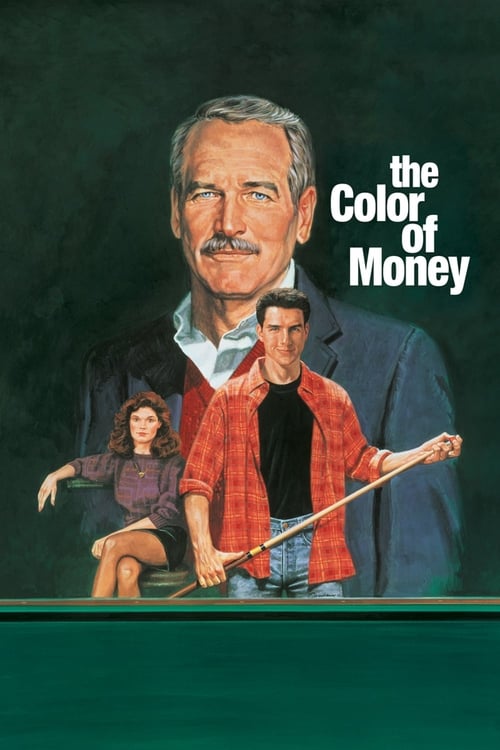
For those of us who spent our weekends wandering the aisles of local video stores, the box art for The Color of Money was inescapable. It featured the blue-eyed legend and the rising superstar, promising a clash of the titans. It was one of those "prestige" rentals—the kind of tape you’d pick up when you wanted something smarter than a slasher but faster than a period drama. It gained a massive second life on home video because it’s so damn rewatchable; you can skip to any pool hall scene and be instantly sucked into the psychology of the hustle.
One of the coolest bits of trivia is that Tom Cruise actually became quite the shark during production. He practiced for weeks on a table in his apartment, and with the exception of one specific "jump shot" (which Scorsese admitted took too long to learn for the schedule), Cruise performed all his own trick shots. You can also spot a very young John Turturro as Julian, a rival player who gets a classic Scorsese-style introduction. It’s these layers of talent—from the veteran Bill Cobbs as the wise Orvis to the screenplay by Richard Price—that elevate the film above its "sequel" status.
The film’s legacy isn’t just the Oscar win or the box office success; it’s how it redefined the "comeback" story. It doesn't give you the easy, triumphant ending you expect from a sports movie. Instead, it leaves you with Eddie Felson standing at a table, looking at his opponent, and uttering three of the coolest words in cinema history: "I'm back."
The Color of Money is a rare sequel that manages to honor its predecessor while carving out a completely different identity. It’s a sleek, cynical, and ultimately stylish exploration of what happens when your talent outruns your wisdom. Whether you’re here for the legendary Paul Newman, the high-octane Tom Cruise, or just the thrill of a well-executed scam, it delivers the goods. It’s a reminder that even when the game changes, the hustle remains the same. It’s a winner that knows exactly how to play the table.
Keep Exploring...
-

The Hustler
1961
-
The Last Temptation of Christ
1988
-
The King of Comedy
1982
-
After Hours
1985
-
Mean Streets
1973
-
The Outsiders
1983
-

Do the Right Thing
1989
-
Cool Hand Luke
1967
-
Escape to Victory
1981
-
Sophie's Choice
1982
-

Risky Business
1983
-

The Right Stuff
1983
-
Red Dawn
1984
-
Starman
1984
-
Cocoon
1985
-

Enemy Mine
1985
-
Pale Rider
1985
-

An American Tail
1986
-
Hannah and Her Sisters
1986
-
Heartbreak Ridge
1986