The Mission
"The sword, the cross, and the sound of a falling world."
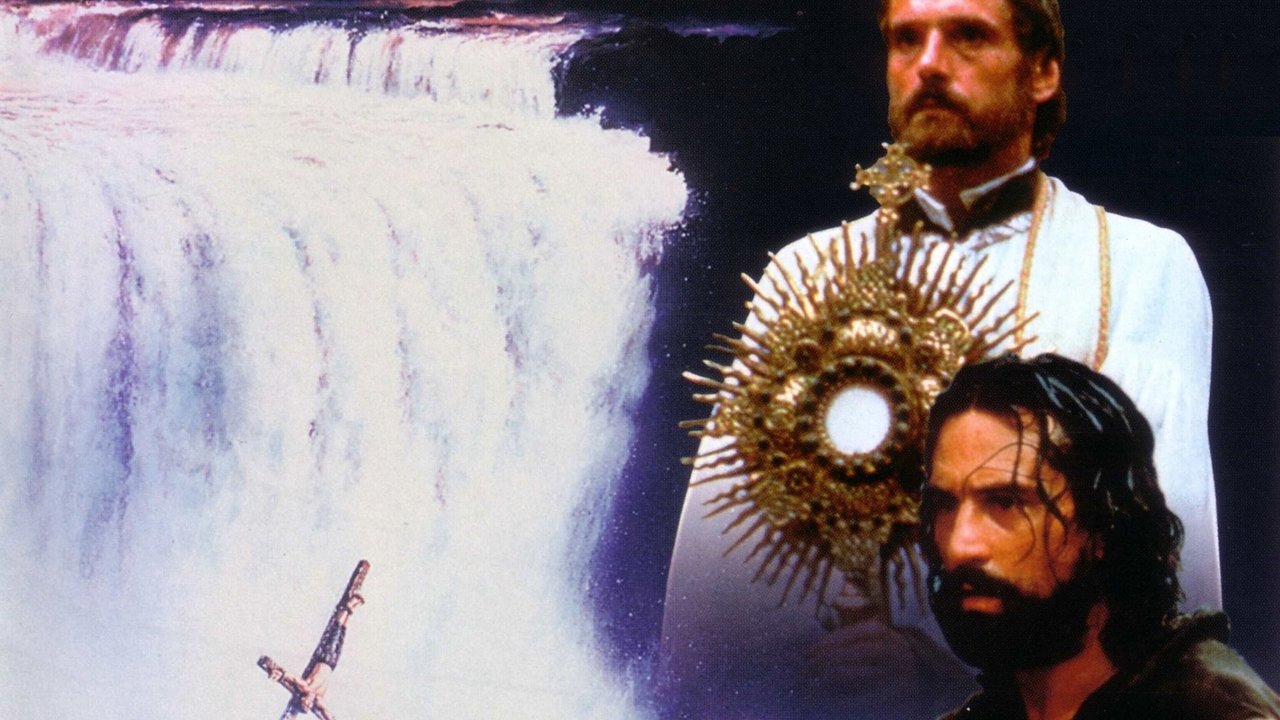
The sight of a man lashed to a wooden cross, tumbling silently over the edge of a 200-foot waterfall, is the kind of image that stays with you long after the credits roll. It’s a terrifying, beautiful, and utterly practical stunt that sets the stage for a film that feels like it was hauled out of the mud and jungle by hand. I watched this most recently on a Tuesday night while trying to ignore the sound of my neighbor’s leaf blower, and even that couldn't break the spell of the Iguazu Falls.

The Stunt of the Century
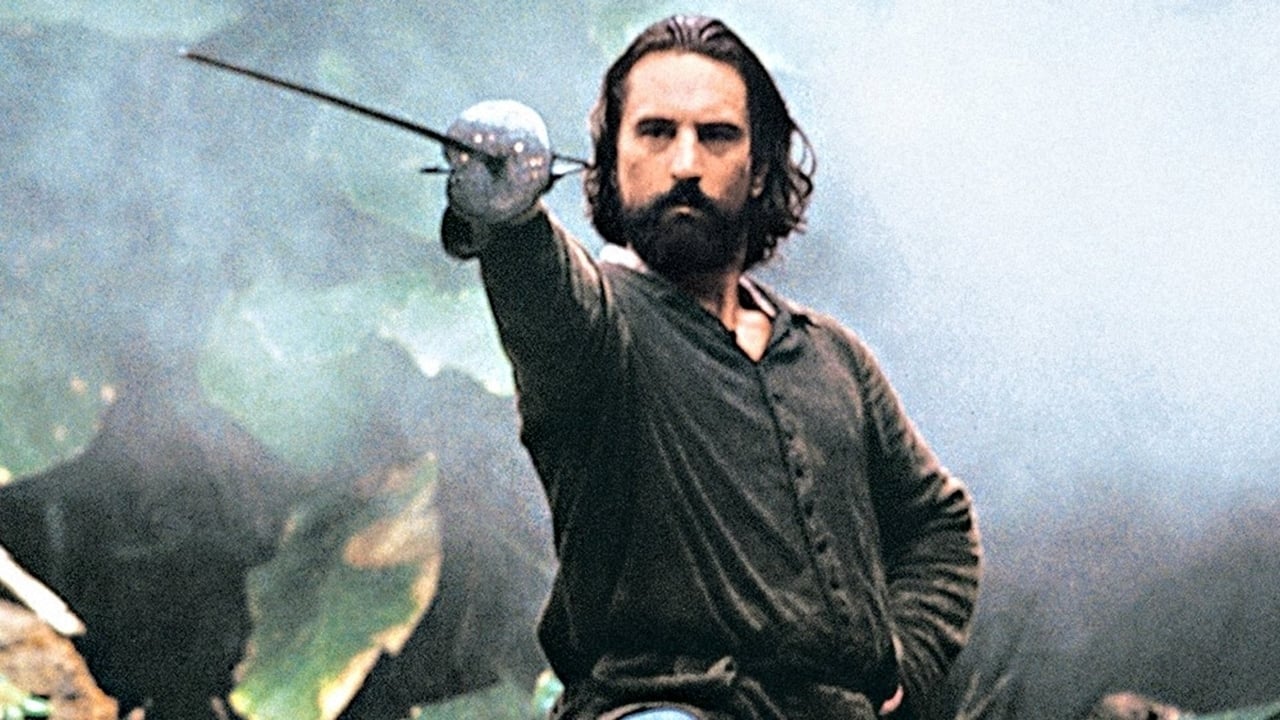
In 1986, if you wanted to show a man climbing a vertical cliff face in the middle of a torrential rainforest, you didn't call a VFX house; you sent Jeremy Irons up a rock. Director Roland Joffé (fresh off The Killing Fields) and cinematographer Chris Menges didn't just film a story; they survived a location. The sheer physicality of the production is what makes the action sequences feel so immediate. There’s a scene where Robert De Niro—playing the reformed slave-trader Rodrigo Mendoza—drags a heavy net of armor and swords up a mountain as penance. You can see the actual strain on his face. This isn't "acting" exhaustion; it's the look of a man who realized he should have stayed in New York and done another mob movie.
The final act of the film shifts from a quiet spiritual drama into a desperate, chaotic jungle war. When the Portuguese army finally arrives to dismantle the mission by force, the action is staged with a frantic, confusing clarity. It’s not the stylized, choreographed gun-fu of modern cinema. It’s messy, loud, and heartbreaking. Seeing the Guarani people use traditional bows against 18th-century muskets in the middle of a burning village is a gut-punch that no green screen could ever replicate. The final battle is essentially a high-stakes wrestling match with God, and spoiler alert: the guys with the cannons usually win.
A Tale of Two Penances
The core of the movie is the friction between Jeremy Irons as Father Gabriel and Robert De Niro as Mendoza. Irons is the soul of the film—tall, gaunt, and wielding an oboe like it’s the only shield he needs. On the other hand, De Niro is a ball of repressed violence. His transition from a man who kills his own brother (Aidan Quinn) in a jealous rage to a Jesuit priest is one of the more grounded "redemption arcs" of the 80s.
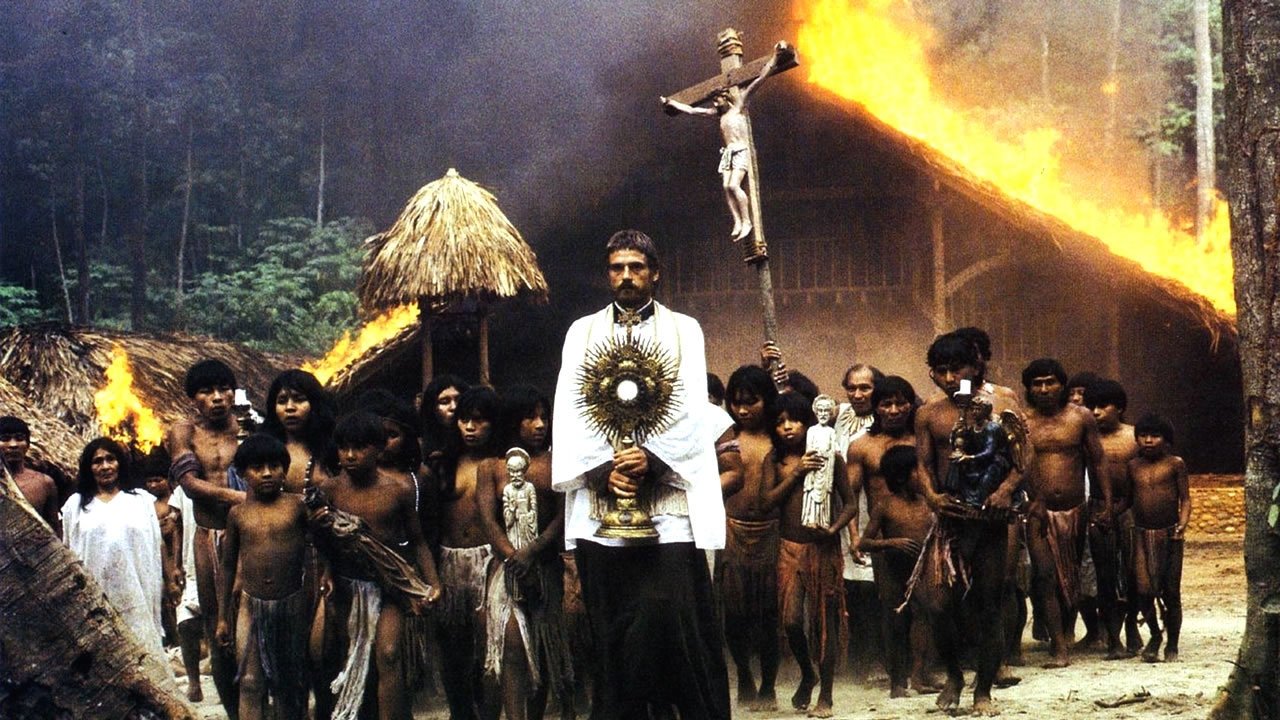
You also get a fantastic early look at a young Liam Neeson as Father John Fielding. Even back then, Neeson had that towering, quiet intensity that eventually made him a late-career action icon. Watching him work alongside a veteran like Ray McAnally, who plays the conflicted Cardinal Altamirano, is a reminder of how much "New Hollywood" energy was still pulsing through these mid-80s epics. These actors weren't just reciting lines; they were battling the elements. De Niro’s ponytail in this movie is doing more emotional heavy lifting than some of the actual dialogue, symbolizing his transition from a rugged mercenary to a man trying (and failing) to leave his violent nature behind.
The Goldcrest Legacy and the VHS Prestige
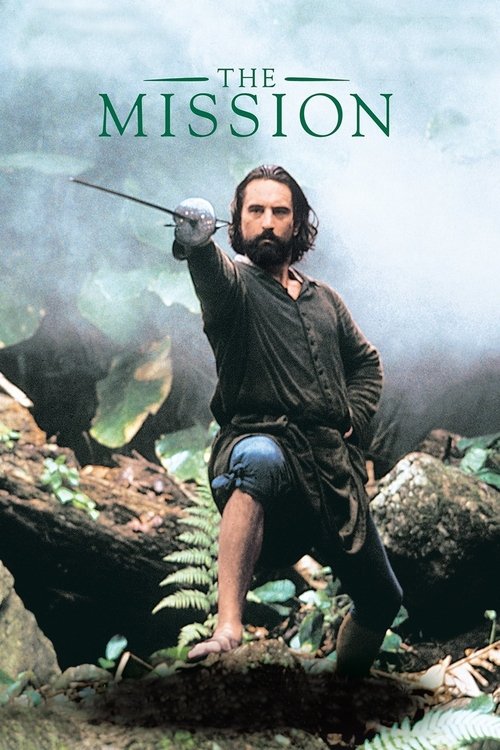
For those of us who grew up haunting the "Drama" aisles of local rental shops, The Mission was a staple of the Goldcrest Films catalog. Goldcrest was that brief, shining light of British independent cinema that gave us Chariots of Fire and Gandhi before eventually collapsing under the weight of its own ambition. The VHS box art—usually featuring De Niro in his Jesuit robes holding a sword—promised a "prestige" experience. It was the kind of movie your parents rented when they wanted to feel sophisticated, but you ended up watching because the cover looked like an adventure movie.
We have to talk about Ennio Morricone. If you haven't heard "Gabriel's Oboe," you haven't lived. The score didn't just sell the movie; it became a cultural phenomenon of its own. It’s said that Morricone actually cried when the film didn't win the Oscar for Best Score (it lost to Round Midnight, a jazz film that many felt didn't deserve it over Ennio's career-best work). The music is the bridge between the two worlds—the European baroque of the Church and the rhythmic, earthy sounds of the South American wilderness. It’s the glue that holds the entire experience together.
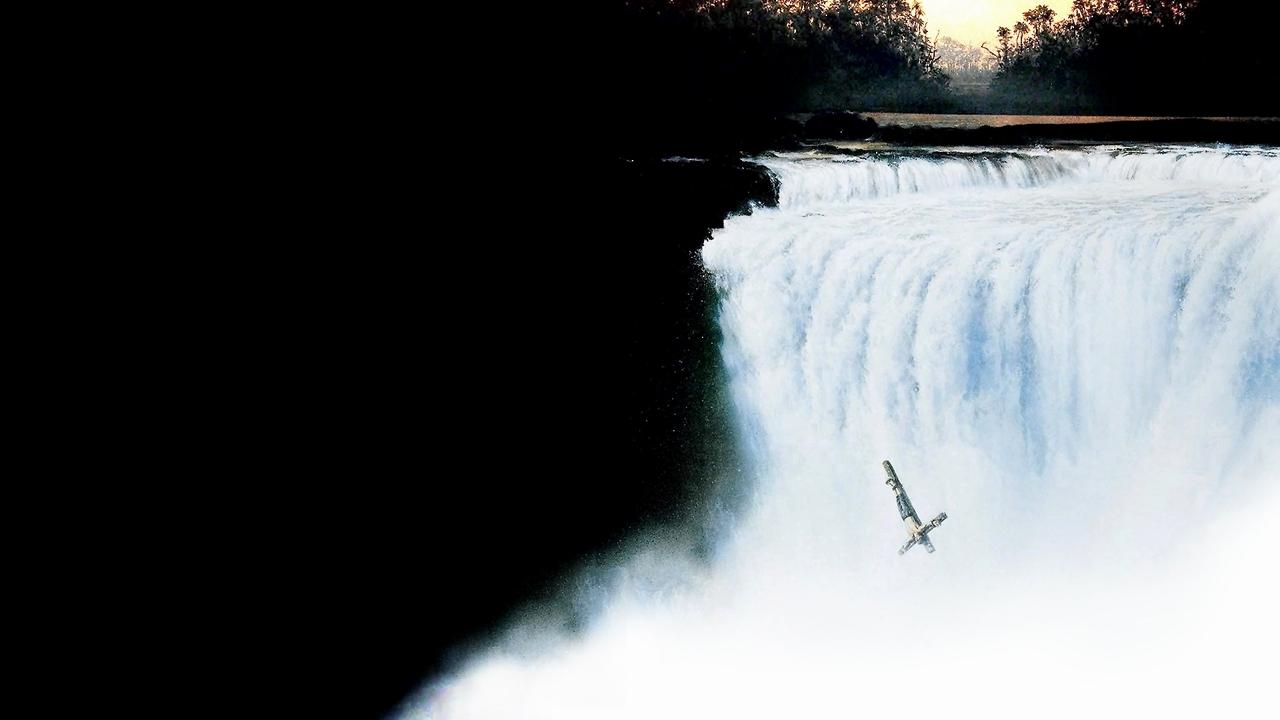
The Mission is a rare beast: a big-budget, historical epic that actually has something to say about the collision of faith and politics without being preachy. It’s a film defined by its contradictions—peace vs. violence, prayer vs. the sword—and it doesn't give you any easy answers. While the pacing might feel a bit deliberate for modern audiences raised on three-minute TikTok loops, the payoff is a sensory experience that feels monumental. It’s a film that demands a large screen and a loud sound system, but even on a grainy old CRT television, the power of those waterfalls and Morricone's haunting oboe cuts right through the static.
If you missed this one during its original run or only know it as "that movie they showed in 10th-grade history class," do yourself a favor and give it a real look. It’s a testament to a time when directors were crazy enough to drag an entire crew into the heart of the jungle just to catch the way the light hits the mist of a falling river.
Keep Exploring...
-

The Right Stuff
1983
-
Ran
1985
-
The Karate Kid
1984
-
The Count of Monte Cristo
2002
-
The Three Musketeers: D'Artagnan
2023
-
Chariots of Fire
1981
-
The Messenger: The Story of Joan of Arc
1999
-
Kingdom of Heaven
2005
-
Romancing the Stone
1984
-
Star Trek III: The Search for Spock
1984
-

An American Tail
1986
-
Over the Top
1987
-
The Last Emperor
1987
-

The Big Blue
1988
-
Young Guns
1988
-
Casualties of War
1989
-
Glory
1989
-
Lock Up
1989
-
Spartacus
1960
-
Planet of the Apes
1968