The Money Pit
"The foundation is fine. It’s everything else that’s moving."
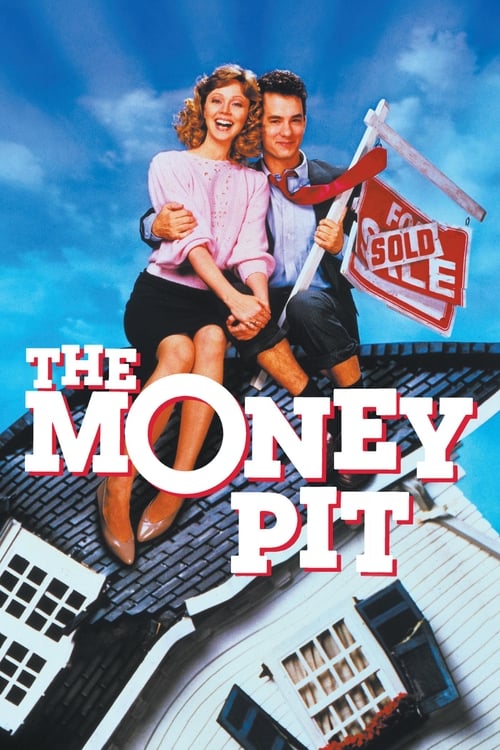
I once watched this movie on a laptop propped up on a stack of unopened moving boxes in a studio apartment that smelled faintly of damp wool and regret. There is no better way to experience The Money Pit. As I sat there, wondering if the dripping sound from my kitchenette was a "quick fix" or a structural omen, I realized that Tom Hanks wasn't just acting in 1986—he was prophesying.
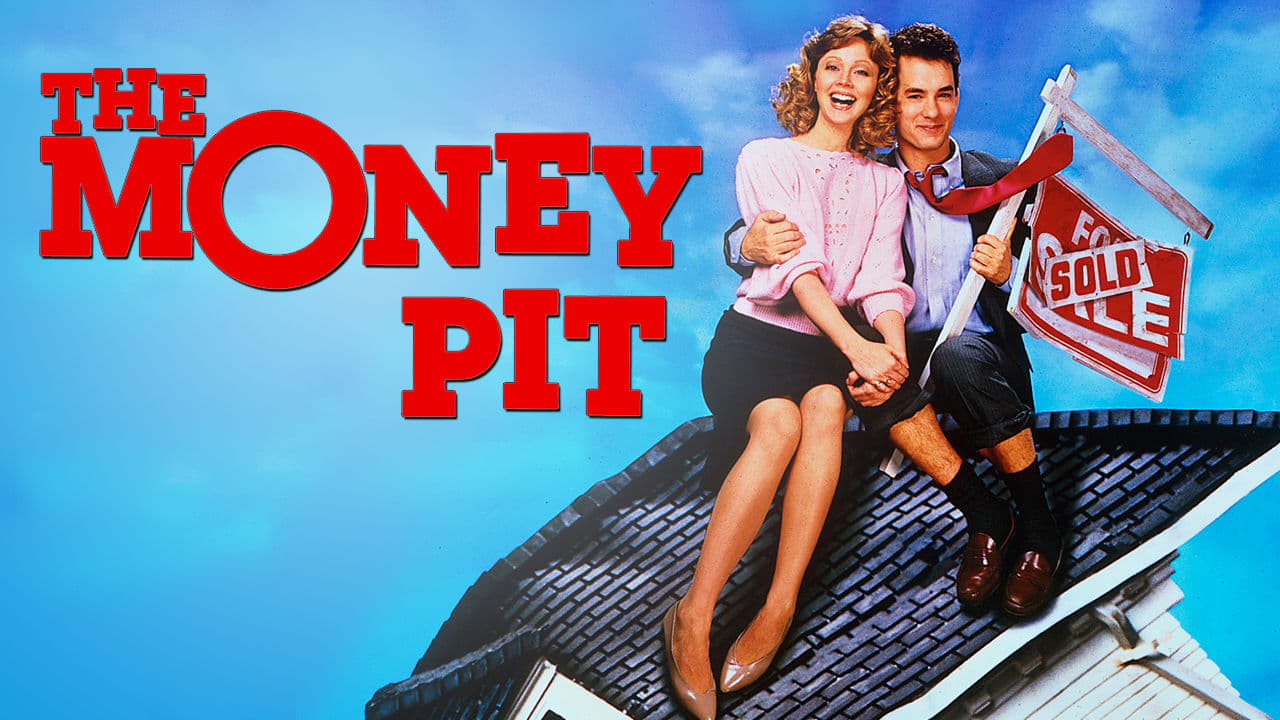
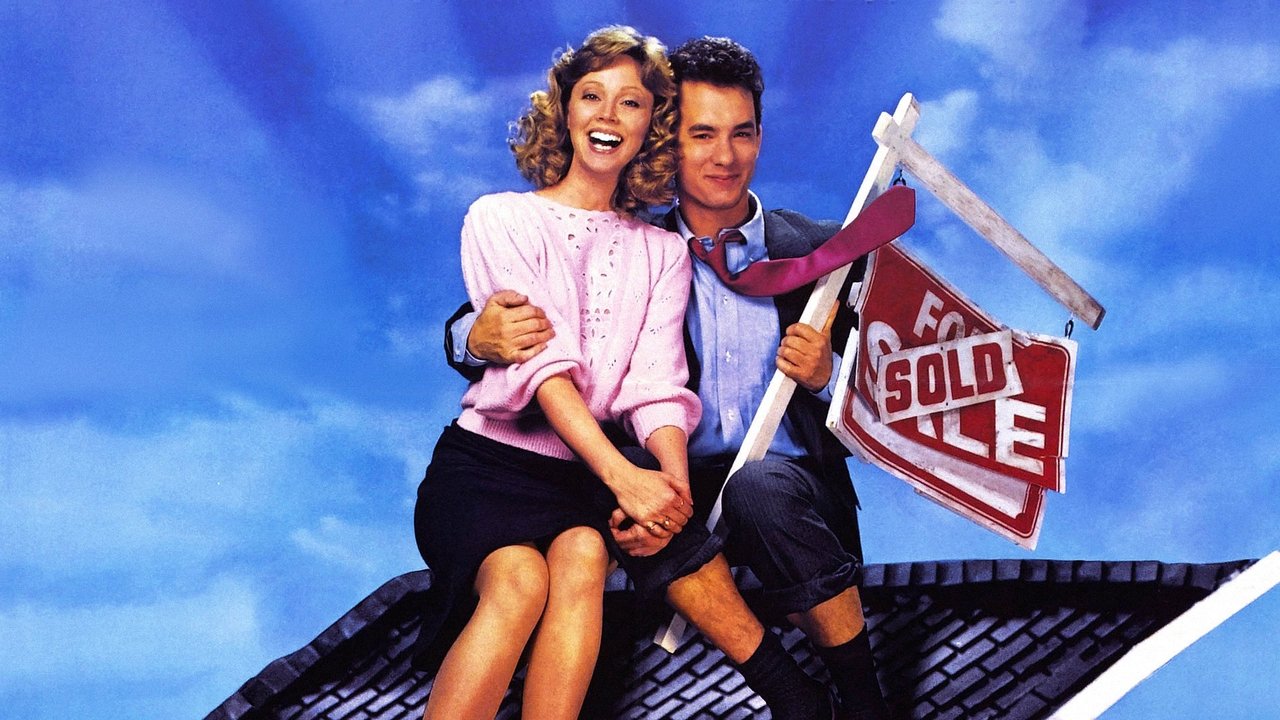
Before he became the dignified, Oscar-winning "America’s Dad," Tom Hanks was a kinetic, elastic-faced engine of chaos. In The Money Pit, he and Shelley Long play Walter and Anna, a couple who get swindled into buying a crumbling Long Island mansion by a con artist who looks like a sweet old grandmother but has the soul of a predatory lender. What follows is ninety minutes of a house actively trying to murder its inhabitants. It is a masterpiece of architectural malice and physical comedy that feels like a Looney Tunes short directed with the high-gloss aesthetic of an Amblin production.
Gravity as a Punchline
Director Richard Benjamin (who also gave us the underrated My Favorite Year) understands that the funniest thing in the world is a man losing his mind in slow motion. The comedy here isn't just in the dialogue; it's in the timing of a floorboard giving way or a staircase turning into a slide at the exact moment Walter tries to assert dominance over his environment.
There is a specific scene involving a bathtub falling through the floor that remains, in my professional opinion, one of the greatest bits of physical comedy ever captured on celluloid. When the tub crashes through the ceiling, Walter doesn't scream. He doesn't curse. He leans over the hole and lets out a high-pitched, hysterical cackle that sounds like a tea kettle reaching its breaking point. Tom Hanks’ high-pitched laughter in this film is the best Foley effect of the 1980s. It’s the sound of a man realizing that his "dream home" is actually a bottomless pit for his sanity and his bank account.
The practical effects here are a lost art. In an era before CGI, if you wanted a house to fall apart, you had to build a house that could actually fall apart. The production design by Boris Leven is a character in itself—the way the front door falls off its hinges with the grace of a guillotine, or how the chimney collapses with the rhythmic timing of a drum solo. You can feel the dust and the splintering wood. It’s tactile, it’s dangerous, and it’s glorious.
The Godunov Factor

While the film is a two-hander between Hanks and Long, the secret weapon is Alexander Godunov as Max, Anna’s flamboyant, self-absorbed ex-husband. Godunov, the Bolshoi Ballet star who would later play the iconic blonde terrorist Karl in Die Hard (1988), is a comedic revelation here. He plays a world-class conductor who treats every conversation like a performance, and his chemistry with Hanks—built on a foundation of mutual insecurity and ego—is pure gold.
Shelley Long also deserves far more credit than she usually gets. Post-Cheers, she was often pigeonholed into "fussy" roles, but here she matches Hanks beat for beat. When she gets stuck in the floor or has to navigate a kitchen that is literally exploding, her deadpan frustration provides the necessary anchor for the movie’s more absurd flights of fancy. Shelley Long’s career deserved a much longer runway than the industry gave her.
A Relic of the VHS Gold Mine
I remember seeing the box for The Money Pit at the local "Mom and Pop" video store—the cover art featured Walter and Anna looking through a hole in a wall, their faces a mixture of terror and exhaustion. It was a staple of the 1980s "high-concept" comedy boom. This was an era where a single, relatable anxiety (like home ownership or a bad vacation) was enough to fuel a million-dollar screenplay.
The film was somewhat overshadowed upon release by bigger blockbusters, but it found a second life on worn-out VHS tapes. There’s something about the "grainy" texture of 80s film stock that fits this story perfectly. It feels like a home movie of a disaster. It also captures that specific Reagan-era anxiety: the desperate push for upward mobility and the terrifying realization that the "American Dream" might just be a pile of rotting drywall held together by a predatory mortgage.

The screenplay by David Giler (who, fascinatingly, was a producer and writer on the Alien franchise) treats the house like a Xenomorph. It’s a relentless, unthinking predator. The pacing is breathless—by the time Joe Mantegna and his crew of "contractors" show up to turn the house into a permanent construction site, the movie has transitioned from a rom-com into a full-blown survival horror film with better jokes.
Ultimately, The Money Pit works because it’s a universal nightmare disguised as a slapstick comedy. Whether you’re a first-time homebuyer or just someone trying to get a landlord to fix a leaky faucet, you’ll find a kinship in Walter Fielding’s descent into madness. It’s a reminder that sometimes, the only thing you can do when the world collapses around you is lean over the hole and laugh until you can't breathe.
It’s not a deep philosophical inquiry into the human condition, but it is a masterclass in how to make a collapsing staircase funny. If you haven't revisited this one since the days of tracking knobs and rewinding tapes, give it a look. Just make sure your plumbing insurance is up to date before you press play.

Keep Exploring...
-

Splash
1984
-

Fast Times at Ridgemont High
1982
-

Risky Business
1983
-

Romancing the Stone
1984
-

National Lampoon's European Vacation
1985
-

The Jewel of the Nile
1985
-
The Purple Rose of Cairo
1985
-

Weird Science
1985
-

Overboard
1987
-
Say Anything...
1989
-

The 'Burbs
1989
-
Turner & Hooch
1989
-
Working Girl
1988
-

My Fair Lady
1964
-
Sophie's Choice
1982
-

Tootsie
1982
-

Sixteen Candles
1984
-
Cocoon
1985
-

Moonstruck
1987
-

The Lost Boys
1987