Angel Heart
"The devil has a bill, and he’s come to collect."
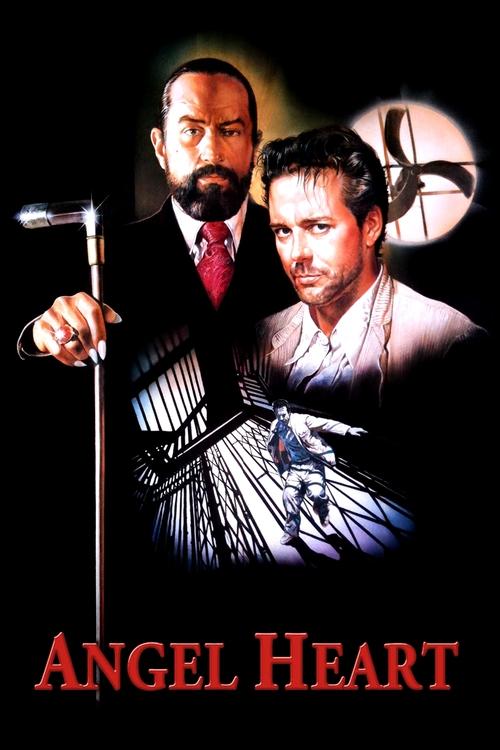
The overhead fans in Angel Heart don’t just circulate air; they chop through the atmosphere like a slow-motion guillotine. I watched this again last Tuesday while eating a bowl of cold, leftover gumbo that was probably a day past its prime, and the spicy, slightly sour taste weirdly heightened the experience. This is a film of textures—sweat, peeling wallpaper, yellowing teeth, and blood that looks thick enough to clog a drain. It’s a movie you don't just watch; you feel it like a humid, feverish weight on your chest.
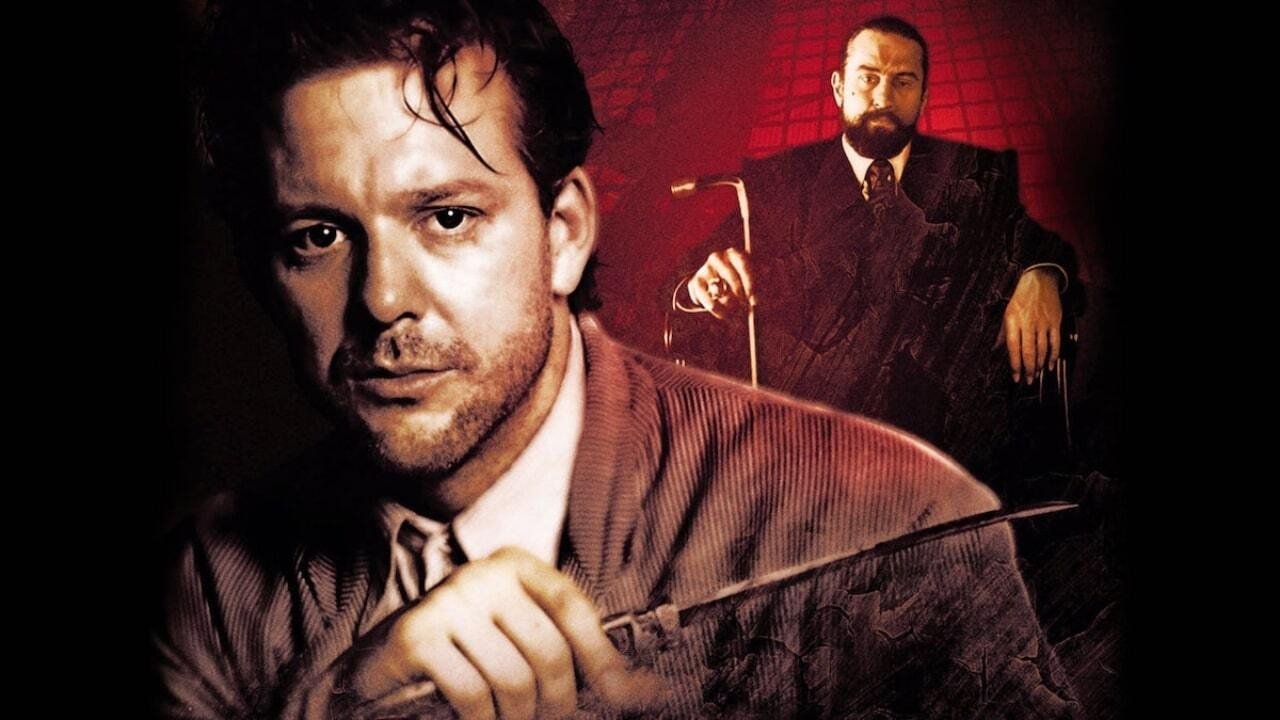
Released in 1987, Alan Parker’s descent into the occult arrived at a fascinating crossroads in cinema. It’s a hardboiled neo-noir that starts in the snowy, monochrome alleys of Brooklyn and ends in the soul-crushing humidity of New Orleans. It’s a detective story that slowly, agonizingly molts its skin to reveal a terrifying supernatural horror beneath. If you’re looking for the exact moment the 1980s realized that "gritty" could also be "hallucinatory," this is it.
The Most Menacing Snack in History
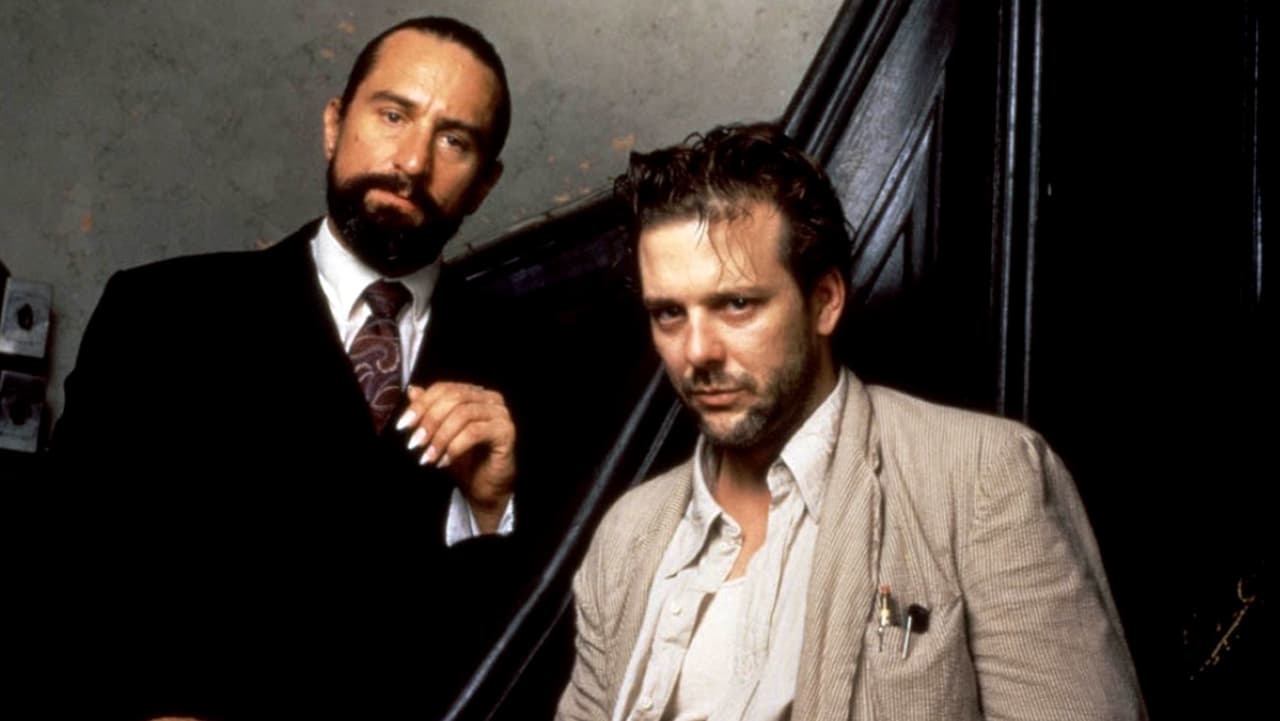
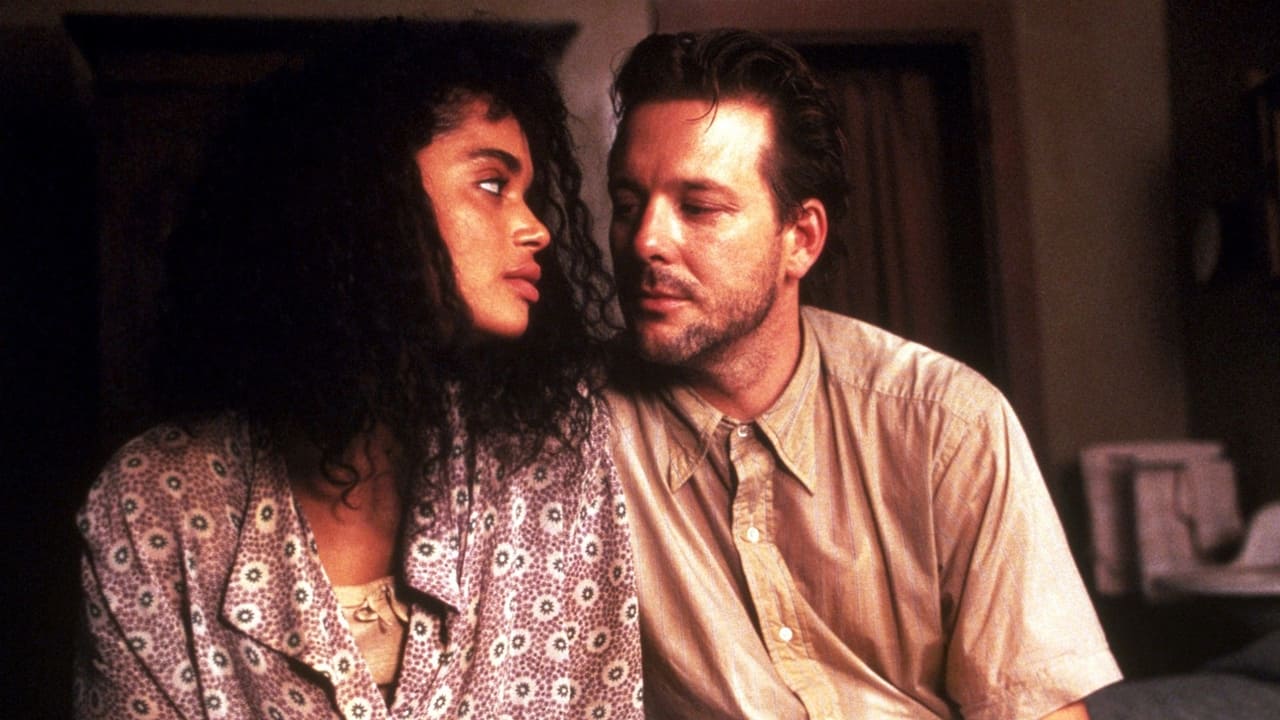
At the center of the storm is Mickey Rourke as Harry Angel. In 1987, Rourke was at his absolute peak—a beautiful, shambling mess of a man who looked like he’d slept in his suit and washed his face with gin. He plays Harry with a nervous, gum-chewing energy that makes you realize early on that this man is out of his depth. He’s hired by a mysterious, bearded aristocrat named Louis Cyphre—a name that, if you say it out loud quickly, gives the game away, but the film treats it with such gravity you don't even care.
Robert De Niro plays Cyphre, and it’s one of the most restrained yet chilling performances of his career. He doesn't do much. He sits. He talks in a measured, melodic voice. He sports a ponytail and fingernails that are just a fraction of an inch too long. But then there’s the egg. There is a scene where De Niro peels a hard-boiled egg, salts it, and eats it while staring into Rourke’s soul. It is the most menacing snack break in cinematic history. The way he cracks the shell feels like he's cracking Harry’s ribs. It’s a testament to the era’s commitment to character-driven tension before digital spectacle took over.
The VHS Scandal and the Forbidden Tape
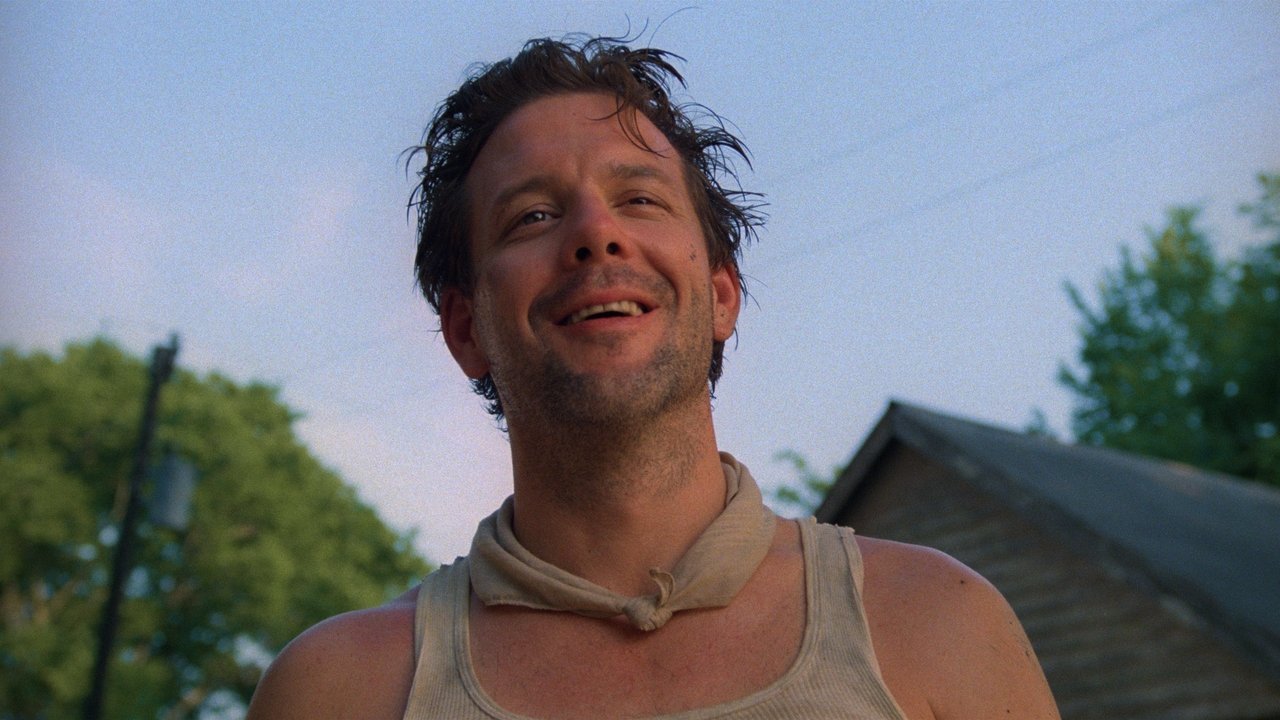
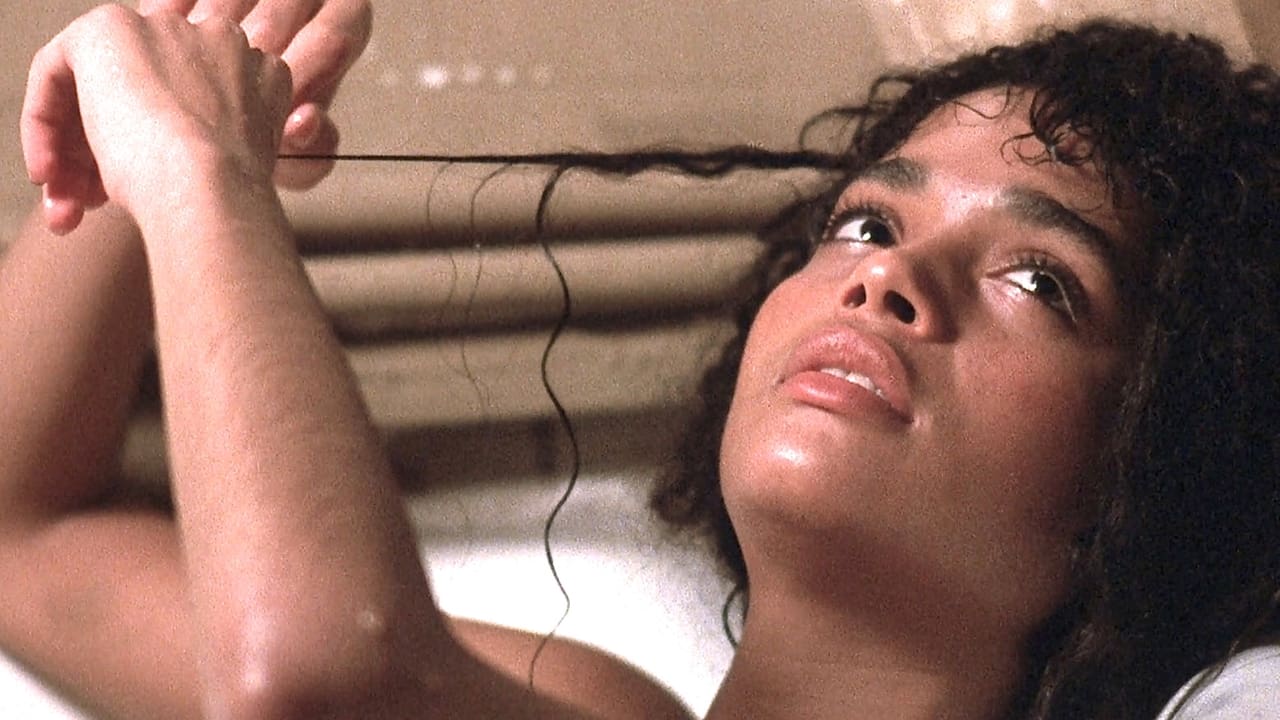
If you were a regular at a video rental shop in the late 80s or early 90s, Angel Heart carried a specific, illicit aura. This was primarily due to the casting of Lisa Bonet as Epiphany Proudfoot. At the time, Bonet was the darling of family television on The Cosby Show, and her role here—which involved ritualistic voodoo dances and a notoriously graphic, blood-soaked sex scene—caused a genuine cultural earthquake.
The MPAA slapped the film with an X-rating initially, and Parker had to trim roughly ten seconds of footage to secure the R. Naturally, this only fueled the film’s legend on the home video market. Renting the tape felt like you were getting away with something. The box art, featuring Rourke’s battered face against a backdrop of occult symbols, promised a journey into the forbidden. Even today, the practical effects of that ritual scene hold up with a visceral (sorry, I mean "raw") intensity that CGI can't replicate. The blood doesn't look like pixels; it looks like a sacrifice.
A Masterclass in Atmospheric Decay
Alan Parker was a director who obsessed over the "look" of a film, and Angel Heart is his grimy masterpiece. Working with cinematographer Michael Seresin, he creates a world where the light always seems to be struggling to punch through smoke or dust. The transition from the cold blues of New York to the sepia-toned, rot-infested landscapes of Louisiana is jarring in the best way.
The horror in Angel Heart isn't about jump scares. It’s about a slow-growing realization. It uses recurring motifs—the elevators that only go down, the constant sound of thumping heartbeats, the industrial fans—to build a sense of inescapable fate. Trevor Jones provides a saxophone-heavy score that sounds like a lonely street corner at 3:00 AM, occasionally interrupted by discordant, shrieking notes that signal Harry’s fracturing psyche.
There is a tactile quality to the practical effects here that reminds me why I miss this era of filmmaking. When a character is murdered, it feels heavy and permanent. The makeup work, particularly in the film’s final act, avoids the rubbery look of many 80s creature features, opting instead for a grounded, surgical horror that feels much more intimate and, frankly, much more upsetting. Mickey Rourke basically tried to outrun his own shadow and tripped over a corpse, and his physical transformation throughout the movie is a sight to behold.
Angel Heart is a rare beast: a mystery that actually rewards your attention and a horror film that lingers in the back of your mind like a bad dream you can’t quite shake. It captures that 1970s auteur ambition and wraps it in a polished, 1980s package of high-concept dread. It’s a story about identity, the price of fame, and the terrifying idea that you can’t ever truly run away from who you are. If you haven't seen it, find the darkest room in your house, turn off your phone, and let the New Orleans humidity take over. Just maybe skip the gumbo.
Keep Exploring...
-
Mississippi Burning
1988
-

The Thing
1982
-
Deep Red
1975
-
Videodrome
1983
-

Day of the Dead
1985
-
The Dead Zone
1983
-
Clue
1985
-

Fright Night
1985
-
Dressed to Kill
1980
-
Manhunter
1986
-
Dead Ringers
1988
-

Jacob's Ladder
1990
-

Three Days of the Condor
1975
-
All the President's Men
1976
-
Blow Out
1981
-
Pink Floyd: The Wall
1982
-
Marnie
1964
-

Murder by Death
1976
-
Poltergeist
1982
-
Blue Velvet
1986