Full Metal Jacket
"The duality of man in the shadow of a helmet."
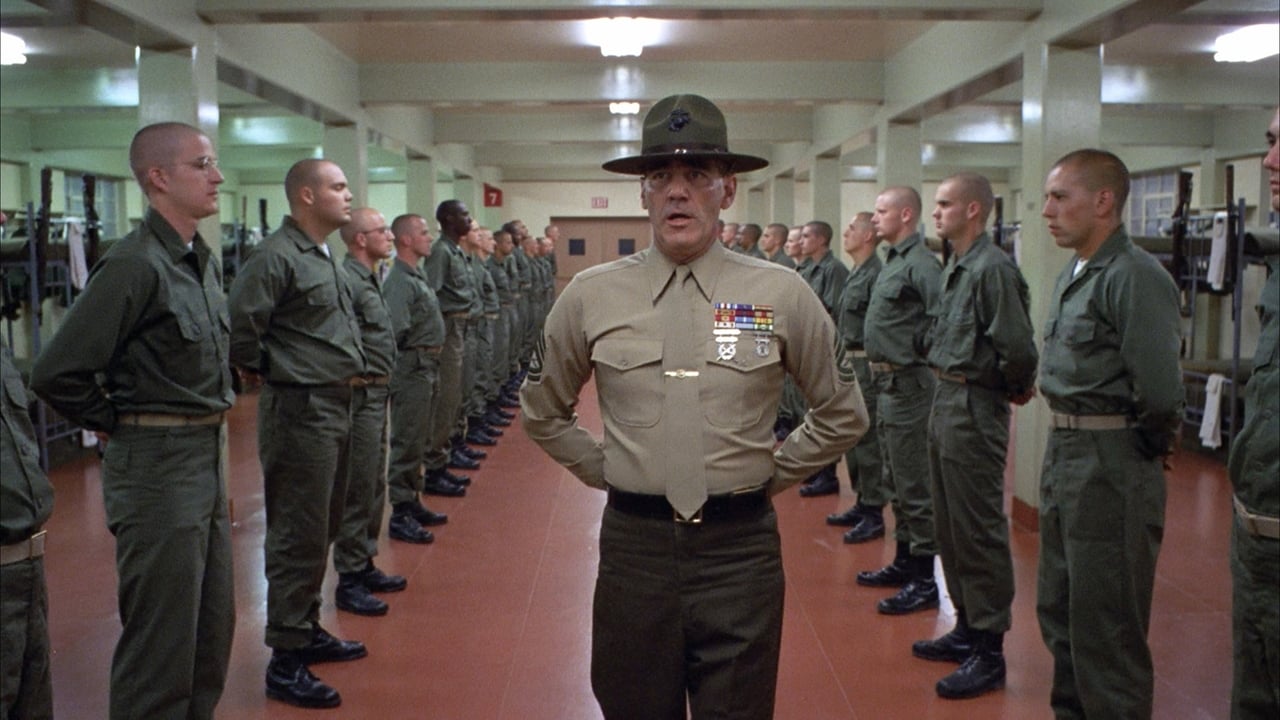
The first thing you hear in Full Metal Jacket isn't a gunshot or a scream; it’s the rhythmic hum of electric clippers. As the hair of young, nervous recruits falls to the floor in clumps, Stanley Kubrick effectively shears away their individuality before the opening credits even finish. By the time the camera settles on the face of R. Lee Ermey, you realize you aren’t just watching a war movie. You’re watching a factory process where the raw material is human empathy and the finished product is a killing machine.
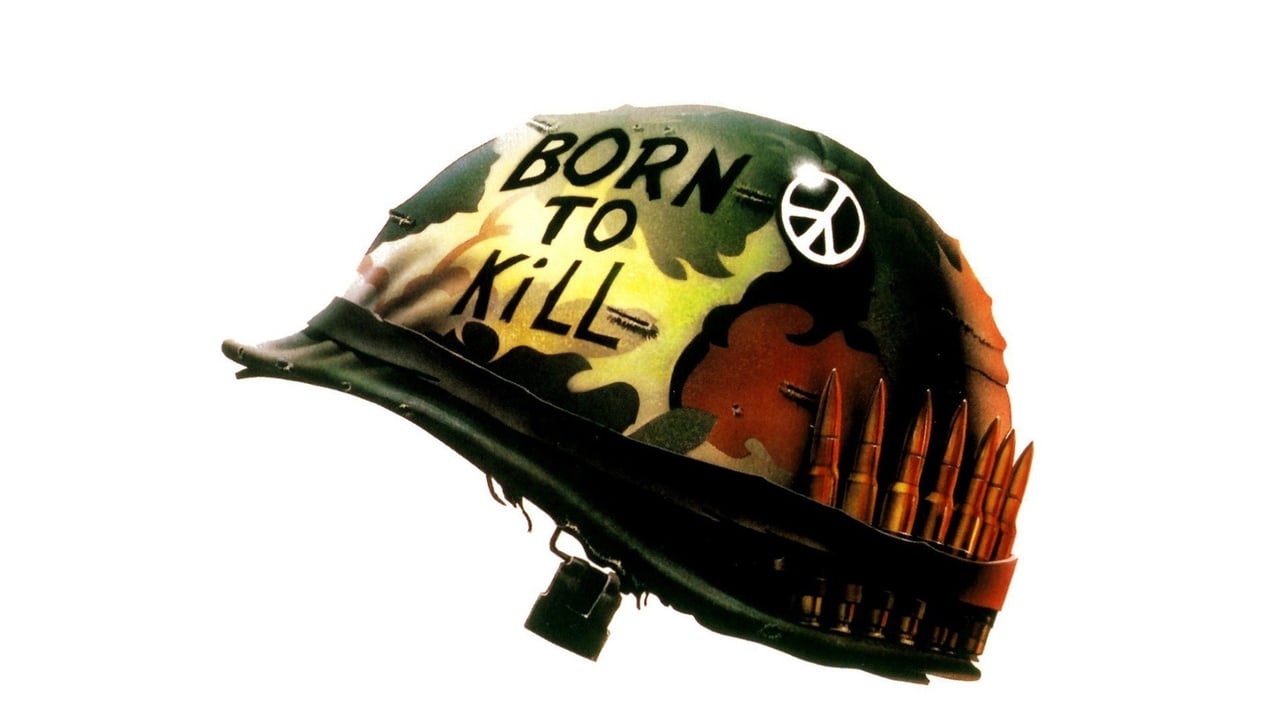
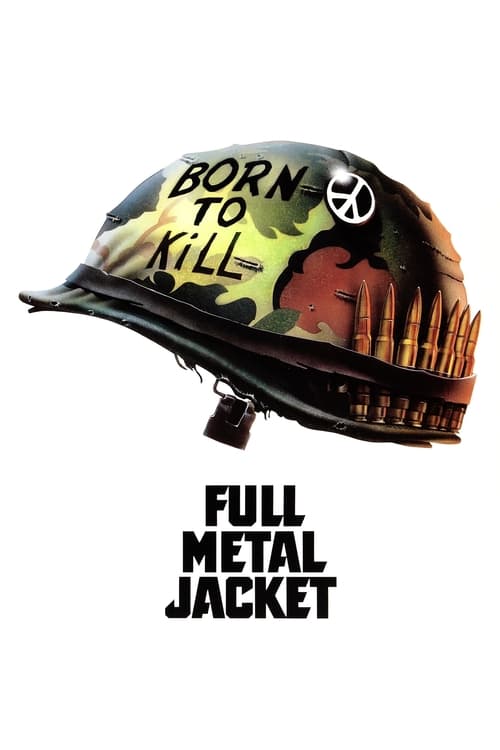
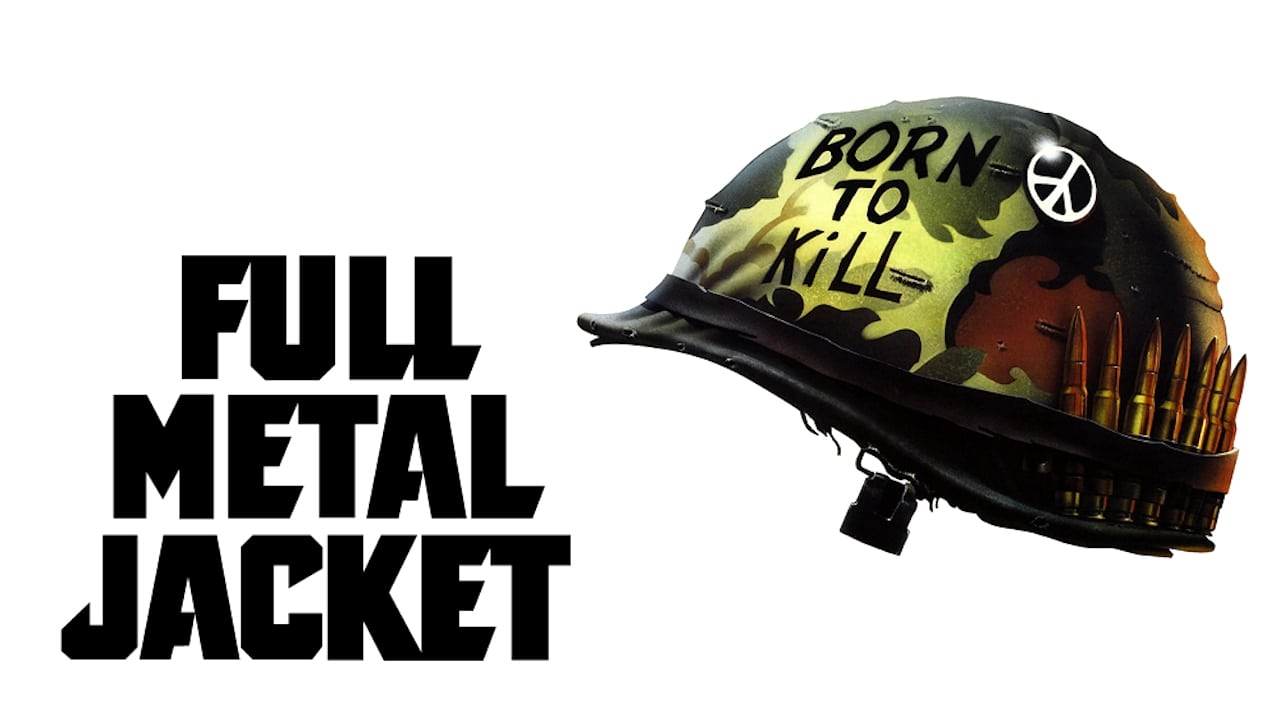
I first watched this film on a grainy VHS tape I’d borrowed from a cousin, and I remember being so intimidated by the cover art—that stark white helmet with "Born to Kill" scrawled next to a peace button—that I let it sit on my VCR for three days before summoned the courage to press play. I ended up watching it while eating a bowl of lukewarm SpaghettiOs, a mundane detail that felt weirdly irreverent given the sheer intensity of what was happening on my flickering CRT screen.
The School of Hard Knocks
The first hour of Full Metal Jacket is widely considered the most effective depiction of military indoctrination ever put to film. This is almost entirely due to R. Lee Ermey as Gny. Sgt. Hartman. It’s a legendary piece of casting: Ermey was a real-life drill instructor hired as a technical advisor, but he taped an audition of himself hurling insults while being pelted with oranges to prove he was the only man for the job. Kubrick, a notorious perfectionist who usually dictated every syllable, actually allowed Ermey to improvise much of his dialogue.
The result is a performance that feels less like acting and more like a force of nature. But the true heart—and the eventual tragedy—of the boot camp segment lies with Vincent D'Onofrio as Pvt. Pyle. To play the slow-witted, victimized recruit, D'Onofrio famously gained 70 pounds, surpassing Robert De Niro’s record for Raging Bull. His transformation from a bumbling kid to a wide-eyed, "thousand-yard-stare" psychopath is harrowing. When he finally snaps, it isn’t a jump scare; it’s a slow, inevitable curdling of the soul.
The Duality of the Grunt
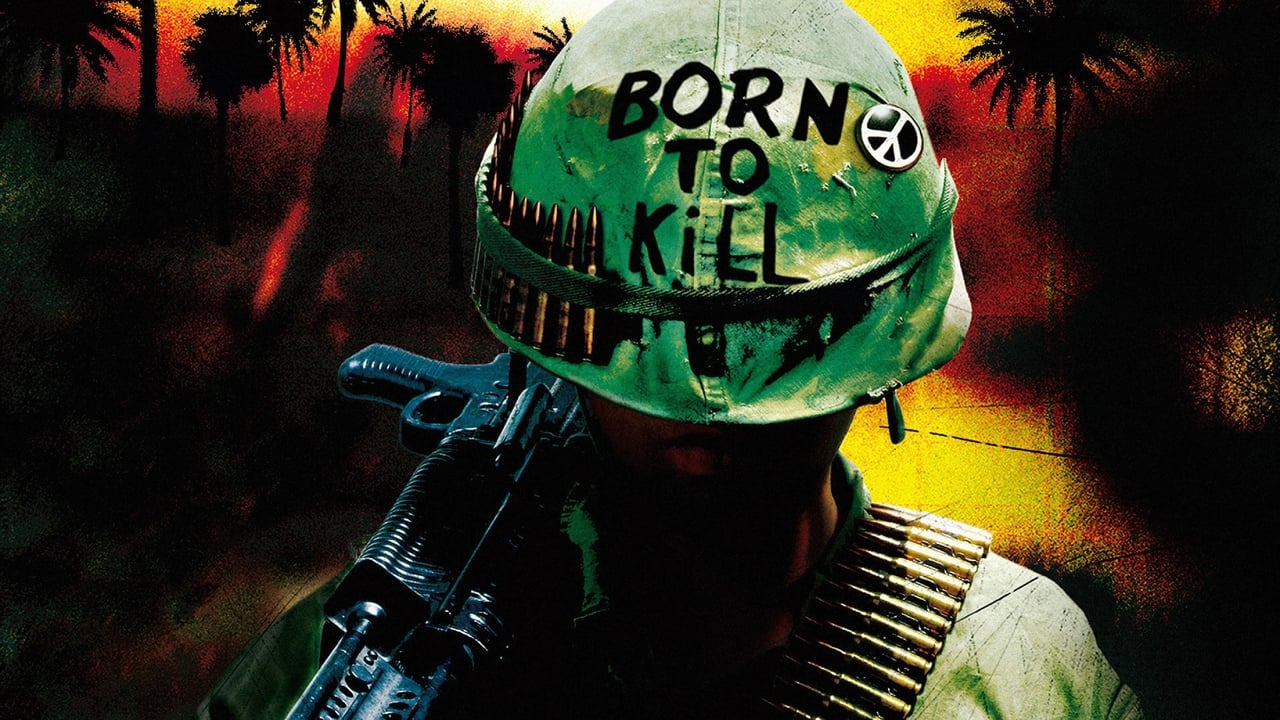
Once the film leaves Parris Island and lands in Vietnam, the tone shifts dramatically. We follow Joker, played with a perfect mix of cynicism and detachment by Matthew Modine, as he navigates the surreal landscape of the Tet Offensive. Joker is a war correspondent, a role that allows Kubrick to observe the conflict through a clinical, almost journalistic lens.
Many critics at the time, and plenty of fans since, have argued that the movie loses its way once the drill sergeant is out of the picture. I couldn’t disagree more. The second half of this movie is actually better than the first because it forces you to look at the wreckage the factory created. We see the "graduates" of Hartman’s school—like Adam Baldwin’s terrifyingly nihilistic Animal Mother—trying to apply their training to a world that makes no sense. The urban combat in the city of Hue feels claustrophobic and jagged, a far cry from the lush jungles seen in Platoon or Apocalypse Now.
A Different Kind of Jungle
Speaking of the setting, one of the most fascinating bits of trivia is that Kubrick didn’t go anywhere near Southeast Asia to film this. The entire movie was shot in England. The ruins of Hue were actually an abandoned gasworks in East London slated for demolition. Kubrick’s team imported thousands of plastic tropical plants and hundreds of palm trees to sell the illusion, but the gray, oppressive sky of the United Kingdom actually serves the film’s grim atmosphere perfectly. It feels alien, cold, and utterly indifferent to the lives being lost within the rubble.
Technically, the film was a prestige powerhouse, though it faced stiff competition. It was nominated for an Oscar for Best Adapted Screenplay (written by Kubrick and Michael Herr, who wrote the seminal Vietnam book Dispatches), but R. Lee Ermey was famously snubbed for a Supporting Actor nomination—a move that still irritates film historians today.
Cinematographer Douglas Milsome used a distinctive "shutter angle" technique during the final sniper sequence that created a crisp, jittery motion. It’s a look that Steven Spielberg would later famously "borrow" and amplify for the opening of Saving Private Ryan. On the home video circuit, Full Metal Jacket became a staple precisely because of this technical prowess. It was the kind of movie that pushed the limits of your home audio setup, with every "crack" of a sniper rifle echoing through the living room.
Kubrick doesn’t offer the easy emotional release of a typical war drama. There is no swelling score to tell you how to feel, and there are no clear heroes to root for. Instead, we’re left with the image of soldiers marching through a burning wasteland, singing the Mickey Mouse Club march. It’s a bitter, ironic, and deeply uncomfortable ending that stays with you long after the credits roll. It’s a film about the loss of the self, and it remains as sharp and dangerous as a serrated blade.
The "Vietnam Movie" was a crowded genre in the late 80s, but Full Metal Jacket stands apart because it isn't really about the politics of the war. It’s about the psychology of the soldier. It asks what happens when you take a person, strip away their name, their hair, and their mercy, and then give them a rifle. The answer isn't pretty, but under Kubrick's direction, it is impossible to look away.
Keep Exploring...
-
Barry Lyndon
1975
-
Spartacus
1960
-
Paths of Glory
1957
-

Apocalypse Now
1979
-
Dr. Strangelove or: How I Learned to Stop Worrying and Love the Bomb
1964
-
The Deer Hunter
1978
-

Grave of the Fireflies
1988
-
Sophie's Choice
1982
-

Platoon
1986
-
Empire of the Sun
1987
-
Good Morning, Vietnam
1987
-
Glory
1989
-
The Shining
1980
-
A Clockwork Orange
1971
-
Blade Runner
1982
-
Scarface
1983
-

Once Upon a Time in America
1984
-
Stand by Me
1986
-
The Longest Day
1962
-
Patton
1970