Hellraiser
"Be careful what you wish for. It might just come with hooks."
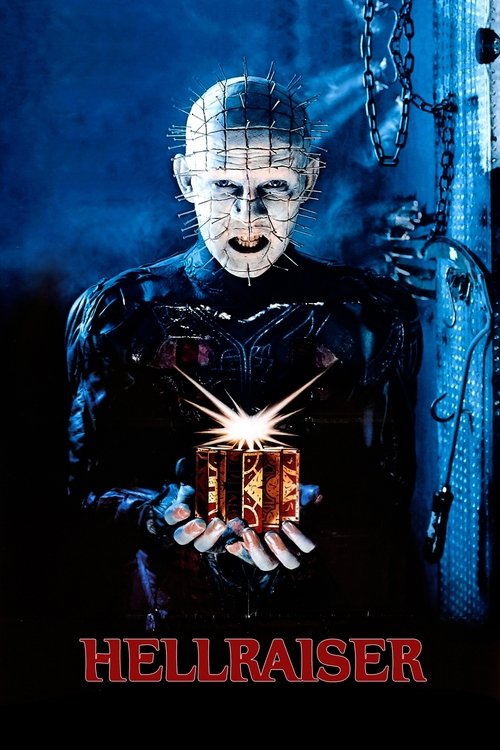
Most first-time directors start with a short film about a lonely guy in a coffee shop. Clive Barker, apparently decided that his directorial debut should involve a guy being torn apart by interdimensional meat hooks in a dusty attic. When Hellraiser hit theaters in 1987, it felt like someone had smuggled a piece of forbidden, leather-clad literature into the multiplex. It didn’t look like the slashers of the era; it didn't behave like them either. It was smarter, sleazier, and infinitely more imaginative.
I recently rewatched this on a rainy Tuesday while struggling to open a particularly stubborn jar of pickles, and the irony of my struggle compared to the Cenobites' "pleasures" wasn't lost on me. It remains one of the few horror films that manages to be both profoundly disgusting and oddly sophisticated.
The House That Blood Built
What’s truly wild about Hellraiser is its pedigree as an independent underdog. Clive Barker had seen his previous stories mangled by other directors (looking at you, Rawhead Rex), so he decided to take the $1 million budget and do it himself. That is a pittance even for 1987, yet the film looks like a million bucks—specifically because every cent went into the practical effects and the oppressive, grime-streaked atmosphere.
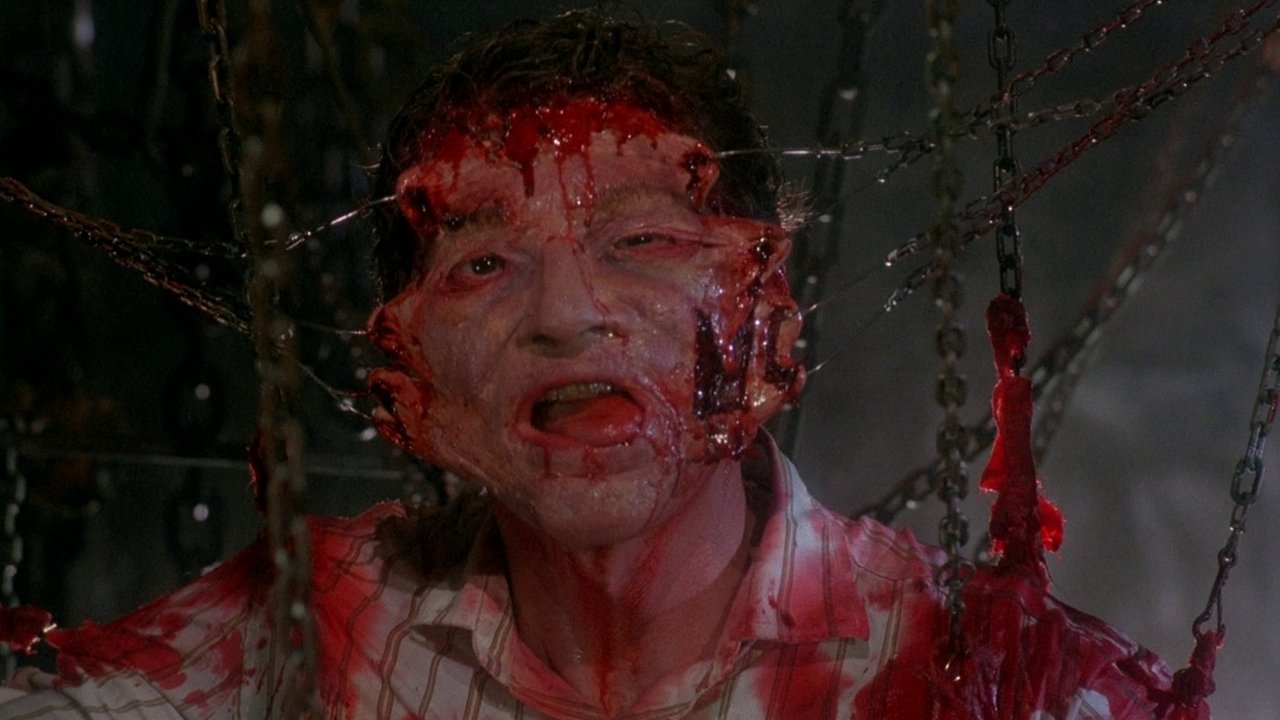
Most of the movie takes place inside a single house in London, which gave the production a claustrophobic, stage-play feel. Because they couldn't afford massive sets, they focused on the details: the peeling wallpaper, the buzzing flies, and the wet, pulsating mass of what used to be Frank. Oliver Smith plays "Skinless Frank," and the makeup work by Bob Keen’s team is legendary. The scene where Frank regenerates from a puddle on the floor is a masterclass in low-budget ingenuity. They used reverse photography, buckets of slime, and animatronics that still look more "real" than the cleanest CGI of the modern era. It’s a sequence that makes you want to wash your hands even if you haven't touched anything.
The Monster in the Mirror
While the marketing (and the eventual VHS box art) sold this as a "monster movie" featuring the guy with the pins in his face, the actual film is a twisted domestic noir. The real villain isn't the Cenobites; it’s Julia. Clare Higgins delivers a performance that is frankly too good for a "slasher" flick. She’s cold, desperate, and terrifyingly pragmatic as she lures men back to the attic to be murdered so her skinless lover can feast on their blood.
Andrew Robinson, famous for playing the "Scorpio" killer in Clint Eastwood’s Dirty Harry (1971), pulls double duty here. He starts as the milquetoast Larry but eventually has to pivot into something much darker. His performance provides the film’s emotional anchor—or at least the hook that drags that anchor into the abyss. Meanwhile, Ashley Laurence as Kirsty gives us a "Final Girl" who isn't just running; she’s negotiating. She treats the supernatural threat like a business deal, which is a refreshingly intelligent take for the genre.
A New Kind of Nightmare
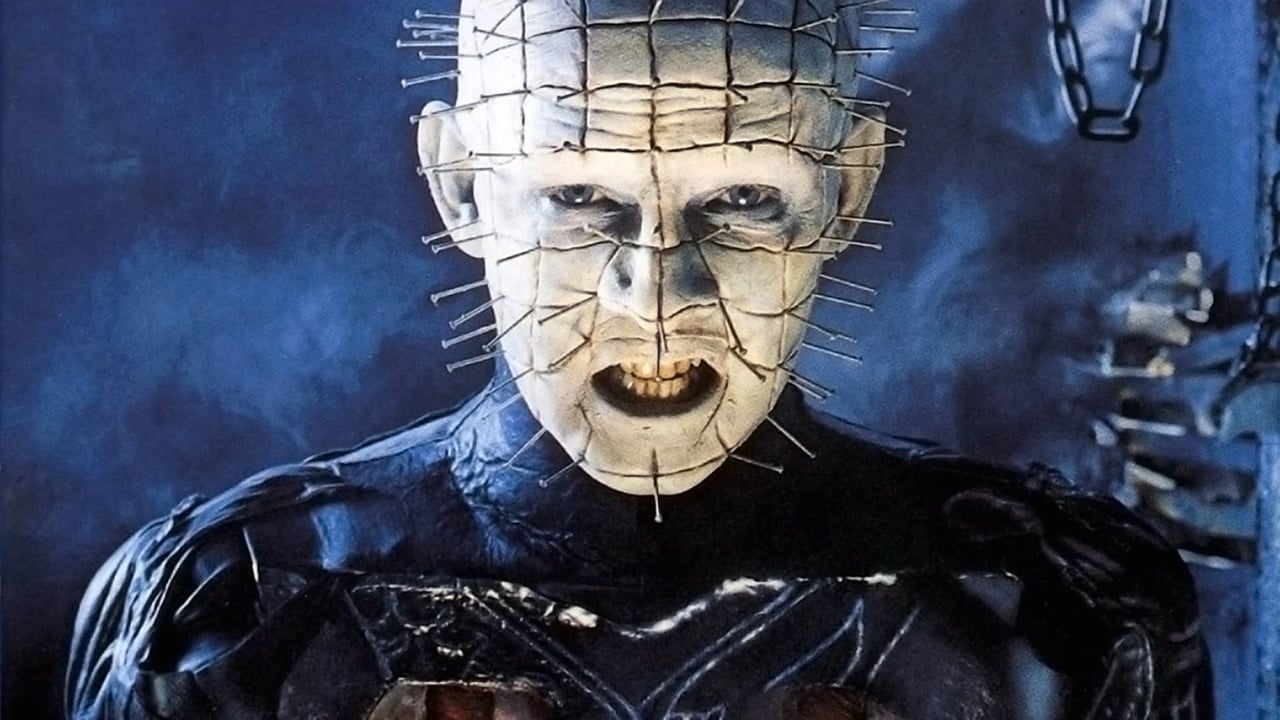
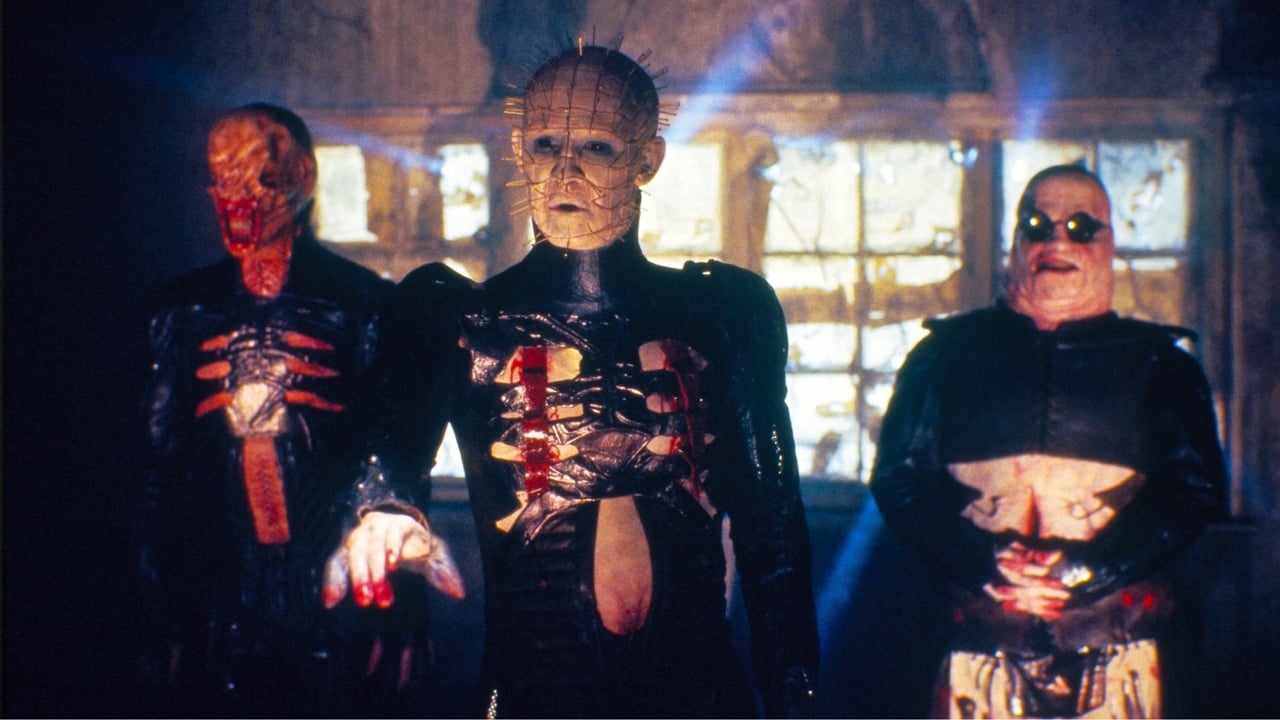
We have to talk about the Cenobites. In the late 80s, horror icons were mostly wisecracking zombies or silent hulks in hockey masks. Then came Doug Bradley as the "Lead Cenobite" (later dubbed Pinhead by fans). He’s on screen for maybe ten minutes total, yet he dominates the movie. He doesn't run, he doesn't shout, and he doesn't jump out of closets. He speaks with the chilling authority of a high-ranking bureaucrat from Hell. Pinhead is essentially the supernatural HR department for a company that specializes in eternal agony.
The design of the Cenobites was heavily influenced by Barker’s visits to S&M clubs in New York and London, giving the film a transgressive, adult edge that set it apart from the Friday the 13th sequels cluttering the video store shelves. This wasn't "fun" horror; it was "heavy" horror. Even the score by Christopher Young reflects this. Instead of a synth-heavy 80s beat, he went with a grand, orchestral, almost operatic sound that makes the tragedy of the Cotton family feel like a Shakespearean epic written in blood.
Hellraiser is a miracle of independent filmmaking. It took a tiny budget, a first-time director, and a bizarre obsession with leather and puzzles, and turned them into a cornerstone of the genre. It’s a film that respects the audience's intelligence while simultaneously trying to make them lose their lunch. If you’ve only ever seen the later, lesser sequels where Pinhead becomes a generic slasher, do yourself a favor and go back to the source. It’s a dark, wet, and wonderful reminder that the most terrifying things aren't always hiding in the dark—sometimes they’re hiding in the house you just bought, waiting for you to solve the right puzzle.
Just remember: if someone hands you a gold-trimmed box and tells you it'll give you "unforgettable experiences," stick to your Sudoku. It’s much better for your skin.
Final Thoughts
This isn't just a movie about monsters; it’s a movie about the dangers of extreme boredom and the terrifying lengths people will go to for "more." Barker managed to capture a specific kind of urban rot and spiritual hunger that still feels relevant today. Whether you're here for the legendary practical effects or the twisted love triangle, Hellraiser remains a sharp, jagged piece of cinema that refuses to be forgotten. It’s the kind of film that stays with you long after the credits roll, like a splinter you can’t quite reach.

Keep Exploring...
-
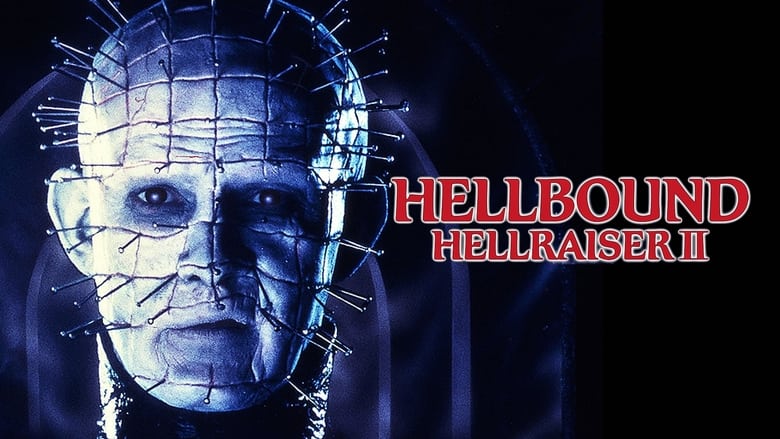
Hellbound: Hellraiser II
1988
-
Phenomena
1985
-
A Nightmare on Elm Street 3: Dream Warriors
1987
-
Peeping Tom
1960
-

Repulsion
1965
-
The Birds
1963
-
Night of the Living Dead
1968
-
Don't Look Now
1973
-
Carrie
1976
-

The Hills Have Eyes
1977
-

Halloween
1978
-

Halloween II
1981
-
Friday the 13th: The Final Chapter
1984
-
Friday the 13th Part VI: Jason Lives
1986
-

Frenzy
1972
-

Cujo
1983
-
The Dead Zone
1983
-
Manhunter
1986
-
The Hitcher
1986
-
The Lost Boys
1987