Masters of the Universe
"Godhood is a long way from the toy aisle."
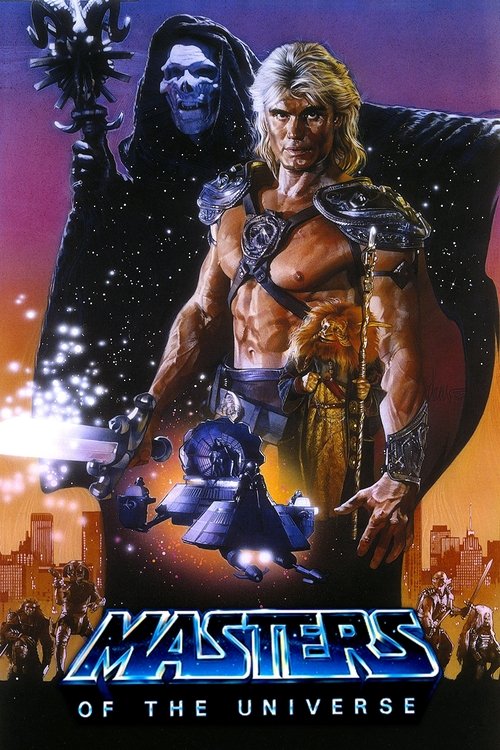
The first time I heard the trilling, synthesized "bloop-bleep" of Gwildor’s Cosmic Key, I wasn’t in a theater; I was sitting three inches away from a wood-paneled floor model TV, clutching a plastic Power Sword. For a generation of kids raised on the neon-bright He-Man and the Masters of the Universe cartoon, the 1987 live-action film was a baffling, gritty, and strangely hypnotic pivot. It didn’t look like the toy commercials. It looked like a fever dream where Star Wars crashed headlong into a New Jersey electronics store.

Cannon’s Cosmic Gamble
Produced by the legendary Cannon Group—the studio run by Menahem Golan and Yoram Globus that basically fueled the 80s with sweat and low-budget audacity—Masters of the Universe is a fascinating relic of the VHS era. The box art alone was a masterstroke of marketing, promising a space opera of Wagnerian proportions. In reality, the production was famously strapped for cash. While the story begins on the gorgeously gloomy planet of Eternia, the plot quickly teleports our heroes to Earth to save on set costs.
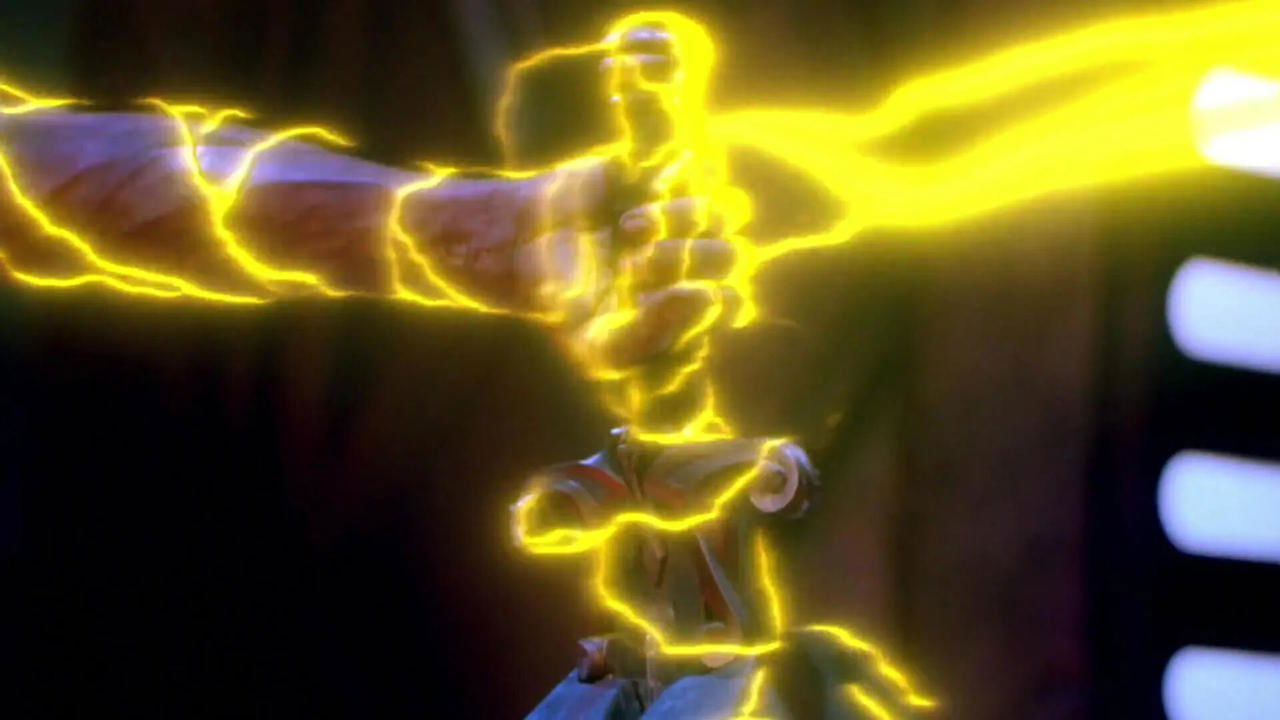
There is a specific texture to this era of filmmaking that I miss. Before CGI turned every explosion into a clean digital asset, we had the "Practical Effects Golden Age." When Dolph Lundgren (fresh off his terrifying turn as Ivan Drago in Rocky IV) swings that sword, you can feel the weight. The sparks are real, the dust is real, and the pyrotechnics have that smoky, dangerous 80s tang. Lundgren might not have had the range of a Royal Shakespeare Company veteran, but his physicality is undeniable. He’s a living action figure, and in an era where the hero had to look like he could actually lift a car, he was the perfect choice.
Skeletor’s Shakespearean Ambition
If Dolph Lundgren provides the muscle, Frank Langella provides the soul—or lack thereof. It is a well-documented bit of trivia that Langella (who played Dracula in 1979) took the role because his young son was a fan, but he didn't just "show up" for the paycheck. His Skeletor is a revelation. Cloaked in heavy black robes with a skull mask that actually allows for facial expression, Langella chews the scenery with such elegant menace that he belongs in a much "better" movie.
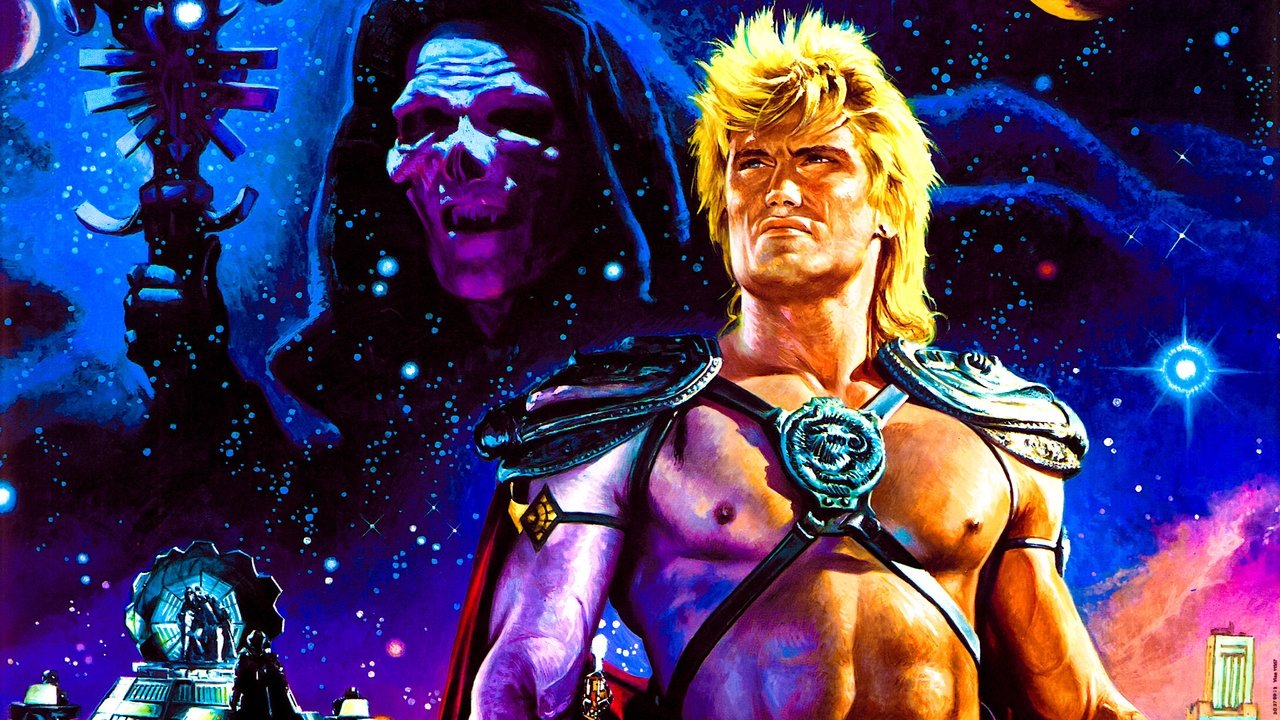
I watched this recently on a Tuesday night while eating a bowl of slightly burnt popcorn, and I realized that Langella is the secret sauce that keeps this film from collapsing under its own camp. He brings a cold, existential dread to the role of a toy-line villain. Opposite him, Meg Foster (who also appeared in John Carpenter's They Live) is equally haunting as Evil-Lyn. Her naturally piercing, pale blue eyes are so otherworldly that the production didn't even need to give her special contact lenses. Between her and Langella, the villains are genuinely more interesting than the teen protagonists played by a young Courteney Cox and Robert Duncan McNeill.
Laser Blasts and Looted Music Stores
The action choreography in Masters of the Universe is a product of its time—wide shots, clear geography, and a lot of stuntmen falling off things. Director Gary Goddard (who would later design some of the best theme park attractions in the world) understands the "toy-etic" nature of the property. The battle in the suburban music store is a highlight, blending 80s Americana with high-fantasy weaponry. There's something inherently delightful about seeing Jon Cypher (as Man-At-Arms) and Chelsea Field (as Teela) holding off a legion of black-clad "Stormtrooper-lite" soldiers in the middle of a shop filled with synthesizers.
Speaking of synthesizers, the score by Bill Conti (Rocky) is surprisingly epic. It’s got that brassy, heroic swell that makes you want to stand up and shout "I have the power!" even when the screen is clearly showing a Whittier, California parking lot. The sound design is punchy, with every laser blast sounding like it was ripped straight from a 1977 arcade cabinet.

One of the most charming elements is the practical work on characters like Gwildor, played by the legendary Billy Barty. While Gwildor was an obvious "budget" replacement for the floating Orko (who would have been a nightmare to film practically in 1987), the animatronic and makeup work on the character is top-tier. I’ve always felt that the best 80s movies are the ones where the makeup artists were clearly trying to outdo each other with every prosthetic wrinkle.
The film's ending was famously hampered by Cannon's financial collapse—the sets were literally being struck while they were still filming the final showdown between He-Man and a gold-plated Skeletor. You can see the seams, sure, but that’s part of the charm. It’s a movie that aimed for the stars on a bottle-rocket budget. It didn’t quite get to Eternia, but it landed in a very special place in our collective cult-movie hearts. If you’re looking for a dose of pure, unironic 80s spectacle, this is the one to rent—or, if you’re like me, to dig out of a dusty cardboard box in the garage.

Keep Exploring...
-
Star Trek III: The Search for Spock
1984
-
Star Trek V: The Final Frontier
1989
-
Final Fantasy: The Spirits Within
2001
-
Race to Witch Mountain
2009
-
Superman III
1983
-
Conan the Destroyer
1984
-
Moonraker
1979
-
Flash Gordon
1980
-
Mad Max
1979
-
Time Bandits
1981
-
Tron
1982
-
Dune
1984
-
Legend
1985
-
Rambo: First Blood Part II
1985
-
The Running Man
1987
-
Cirque du Freak: The Vampire's Assistant
2009
-

Kin
2018
-
Batman vs. Robin
2015
-
Never Say Never Again
1983
-
Octopussy
1983