Moonstruck
"A love story for the loud and hungry."
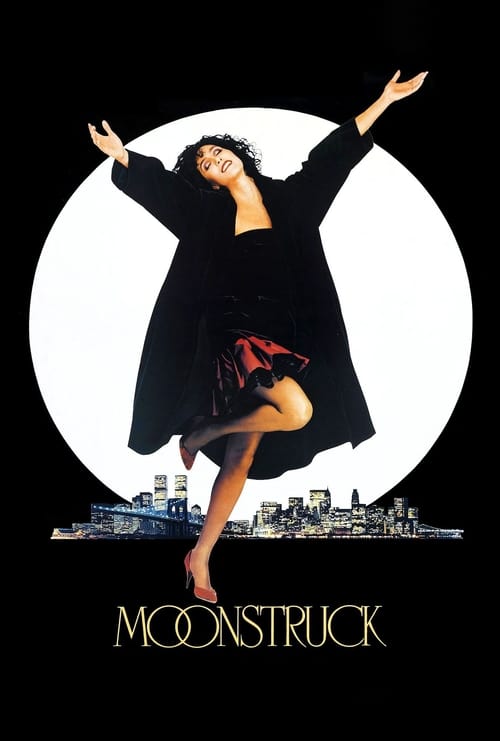
There is a specific kind of magic that happens when a movie manages to feel like a tall tale told over a third bottle of Chianti. Most romantic comedies of the late 80s were busy being glossy, corporate, or trying to replicate the high-concept sheen of Top Gun. Then along came Moonstruck, a film that looks at a middle-aged widow, an eccentric baker with a prosthetic hand, and a family of Italians who treat breakfast like a blood sport, and decides that this is the height of cinematic glamour.
It’s a movie that shouldn't work. On paper, it’s a stage play with too much shouting. In practice, it’s a masterpiece of tone that understands something most dramas forget: being deeply sincere is the only way to be truly funny. I watched this again recently while nursing a lukewarm cup of peppermint tea that tasted faintly of the cardboard box it came in, and even that couldn't dampen the warmth radiating from the screen.
The Opera of the Everyday
The script by John Patrick Shanley is less a screenplay and more a libretto. Everyone in the Castorini household speaks in proclamations. When Cher, playing Loretta Castorini, decides to get married again, she doesn't just pick a guy; she picks a "safe" man, Johnny Cammareri (Danny Aiello), because she’s convinced her first husband was killed by a lack of "bad luck" management.
Then enters Nicolas Cage as Ronny, Johnny’s estranged brother. This was 1987, and Cage was basically a sentient lightning bolt before he became a meme. He doesn't just walk into a room; he invades it with the energy of a man who has spent three years screaming at a loaf of bread. His performance is wild, operatic, and weirdly physical. He blazes through the film with a heavy Brooklyn accent and a tortured soul, providing the perfect foil to Cher’s grounded, weary pragmatism.
The chemistry between them is nonsensical but undeniable. When Ronny tells Loretta, "I love you," and she responds by slapping him across the face and shouting, "Snap out of it!" it’s not just a famous movie quote. It’s a thesis statement on how these characters survive their own intensity. They don't have "meet-cutes"; they have emotional collisions.
A Family Under the Influence

While the central romance is the engine, the Castorini family is the soul. Olympia Dukakis as Rose and Vincent Gardenia as Cosmo give us one of the most honest portrayals of a long-term marriage ever put to celluloid. They are dealing with infidelity, the fear of death, and the crushing weight of silence, yet they do it across a kitchen table while frying peppers.
Dukakis, in particular, is a revelation. She captures that specific brand of maternal wisdom that is both sharp enough to cut glass and soft enough to hold a family together. There’s a scene where she asks a stranger why men chase women, and the answer—that they’re afraid of death—is the kind of heavy, philosophical weight you don't expect from a movie marketed as a lighthearted comedy.
Behind the camera, Norman Jewison shows incredible restraint. He lets the camera linger on the actors, giving them the space to breathe and talk. He treats the Brooklyn Heights neighborhood like a fantasy kingdom, bathed in the glow of a moon that is "too big" because, in this world, everything is a little too much.
The $122 Million "Little" Movie
It’s easy to forget now, but Moonstruck was a massive commercial juggernaut. On a modest $15 million budget, it pulled in over $122 million, becoming the fifth-highest-grossing film of 1987. It beat out action spectacles and high-budget sequels because it tapped into a universal desire for "Old World" storytelling in a "New Hollywood" landscape.

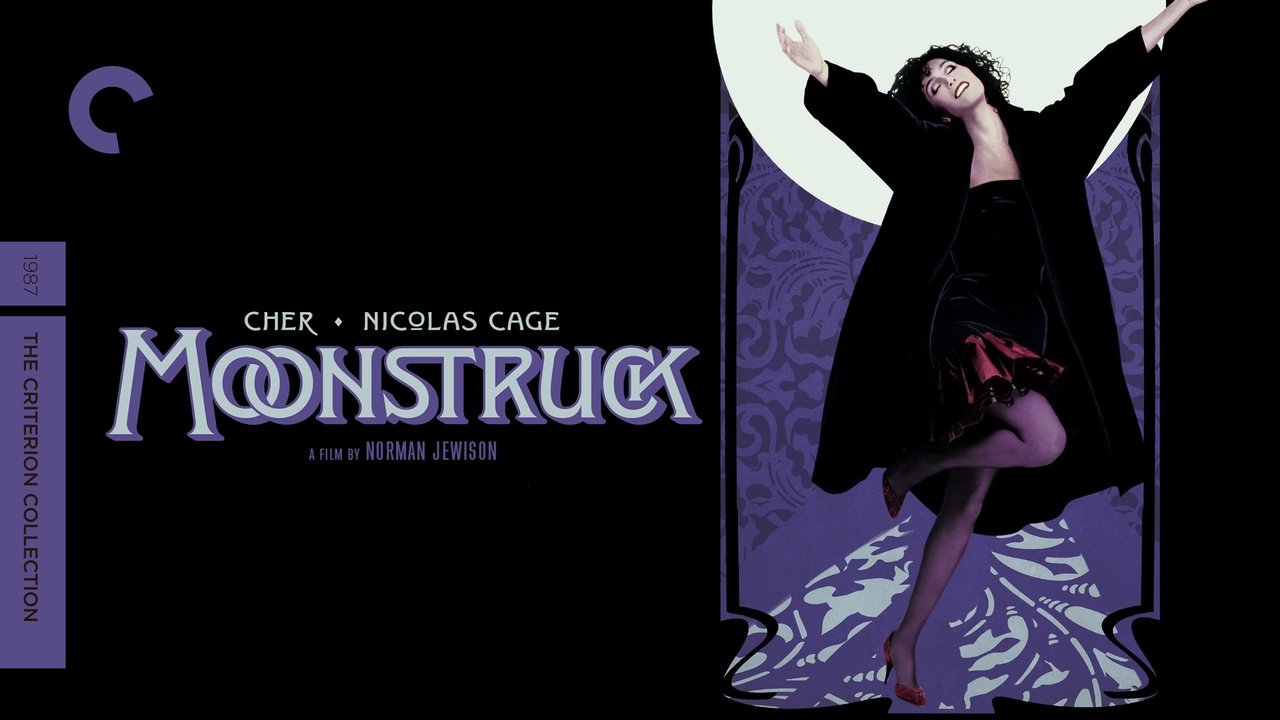
This was the era when the VHS revolution was peaking. I remember those MGM/UA Home Video clamshell cases with the iconic image of Cher and Cage in front of that giant moon—they were permanent fixtures on the "Staff Picks" wall of every mom-and-pop rental store. People didn't just rent Moonstruck; they owned it. They watched it until the tracking on the tape started to wobble during the opera scene. It’s a movie that rewards repeat viewings because the dialogue is so rhythmic that you eventually want to sing along with it.
The production itself was a bit of a gamble. Cher wasn't the first choice for Loretta, and there were concerns that Cage was "too weird" for a leading man. But that friction is exactly what makes the film vibrate. Even the score by Dick Hyman, which leans heavily on "That’s Amore," should feel cliché, yet somehow it feels like the only honest choice. It’s a film that embraces its own clichés so hard that they become truths.
Moonstruck is a rare perfect alignment of writing, acting, and atmosphere. It’s a drama that isn't afraid to be silly and a comedy that isn't afraid to be heartbroken. It captures a version of New York that probably never existed anywhere but in our hearts—a place where the moon is always full, the bread is always fresh, and family dinner is a battlefield worth dying on. If you haven't seen it in a while, do yourself a favor: grab some wine, put on some Puccini, and let yourself get a little bit crazy. You won't regret it.


Keep Exploring...
-
Working Girl
1988
-
Say Anything...
1989
-

The Graduate
1967
-

Risky Business
1983
-
The Lost Boys
1987
-
Cocktail
1988
-
Look Who's Talking
1989
-
When Harry Met Sally...
1989
-
An Officer and a Gentleman
1982
-

Tootsie
1982
-
Out of Africa
1985
-
Witness
1985
-
The Karate Kid Part II
1986
-
Dirty Dancing
1987
-

Fatal Attraction
1987
-
Good Morning, Vietnam
1987
-

Big
1988
-
Coming to America
1988
-
The War of the Roses
1989
-
Manhattan
1979