Over the Top
"He’s turning his cap... and his life around."
There was a brief, glistening window in 1987 where the American public was expected to believe that professional arm wrestling was a sport of gladiatorial consequence, capable of mending broken families and securing the American Dream. This was the era of the high-concept gamble, a time when the Cannon Group—led by the perpetually ambitious Menahem Golan and Yoram Globus—decided to pivot from ninja movies and Death Wish sequels to compete with the big-boy studios. They threw $25 million at a movie about a truck driver who enters a tournament in Las Vegas to win back his estranged son. Nearly half of that budget went straight into Sylvester Stallone’s pocket, and honestly, watching him try to act his way through a script that treats a wrist-lock like a Shakespearean tragedy is worth every penny of that inflated salary.
I watched this most recent viewing while nursing a bag of dangerously salty pretzel sticks that made my tongue feel like it had been sanded down, which strangely felt like the most appropriate physical accompaniment to the grit and grime of a Lincoln Hawk road trip.
The $12 Million Hat Flip
At its core, Over the Top is a "Stallone Movie" in the most clinical sense. Coming off the back-to-back highs of Rocky IV (1985) and Cobra (1986), Stallone was less a man and more a walking brand of blue-collar stoicism. Here, he plays Lincoln Hawk (a name that sounds like it was generated by a "1980s Action Hero" computer program), a struggling trucker who spends his downtime working out his forearms with a custom-built pulley system in his cab.
The plot is thinner than the coffee at a roadside diner: Hawk’s estranged wife (Susan Blakely) is dying and wants him to reconnect with their son, Michael (David Mendenhall), a military academy cadet who looks like he’s never seen a cheeseburger in his life. The boy's grandfather, played with magnificent, scenery-chewing villainy by Robert Loggia (Scarface, Big), wants to keep the boy in the lap of luxury. Loggia is the secret weapon here; he treats the role of a wealthy, overprotective grandfather as if he’s playing a Bond villain, shouting every third line like he’s trying to wake up a neighbor three houses down.
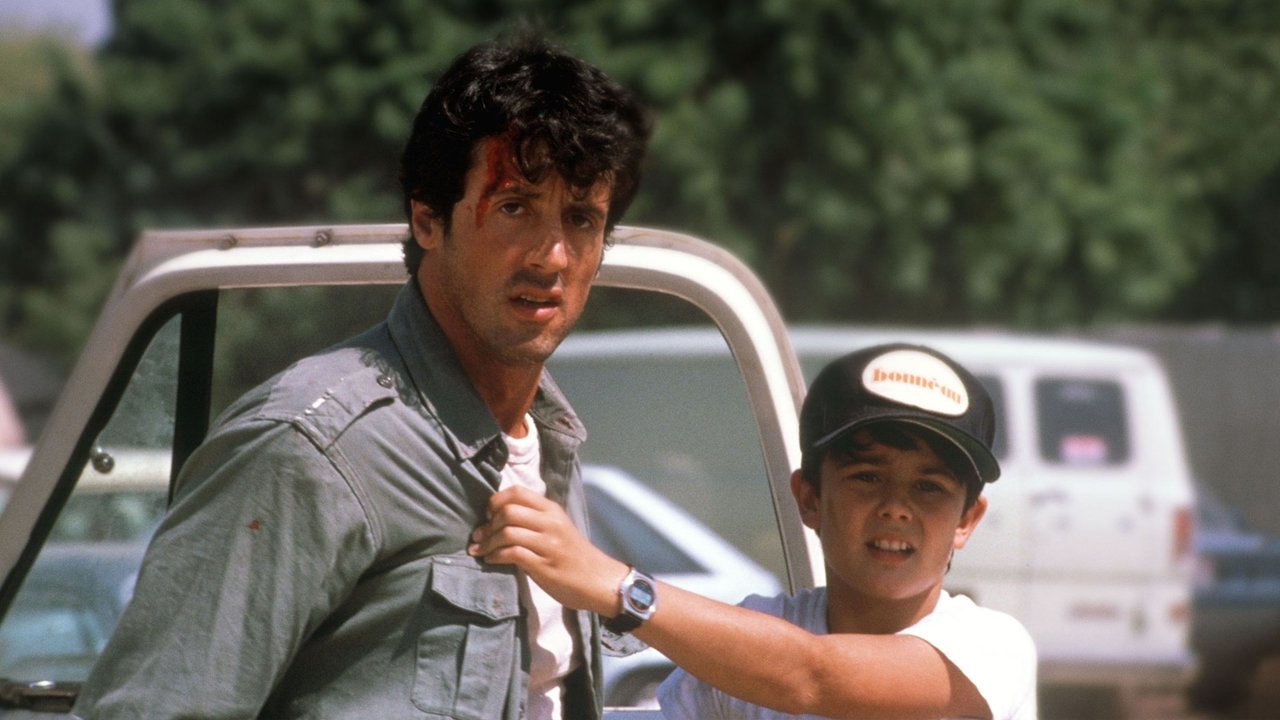
The chemistry between Stallone and the kid is where the film earns its "Drama" tag, however loosely. It follows the standard Rocky template: the initial rejection, the bonding through physical labor, and the eventual mutual respect. But instead of boxing, we get Hawk teaching his son how to drive a semi-truck and the philosophy of the "turn." When Hawk turns his baseball cap backward, it’s not just a wardrobe choice—it’s a physical transformation. He tells his son, "It’s like a switch goes off... I become like a machine." It’s a moment of pure, unadulterated 80s cheese that I found myself rewinding twice just to savor the sincerity on Stallone’s face.
Cannon Films and the Vegas Mirage
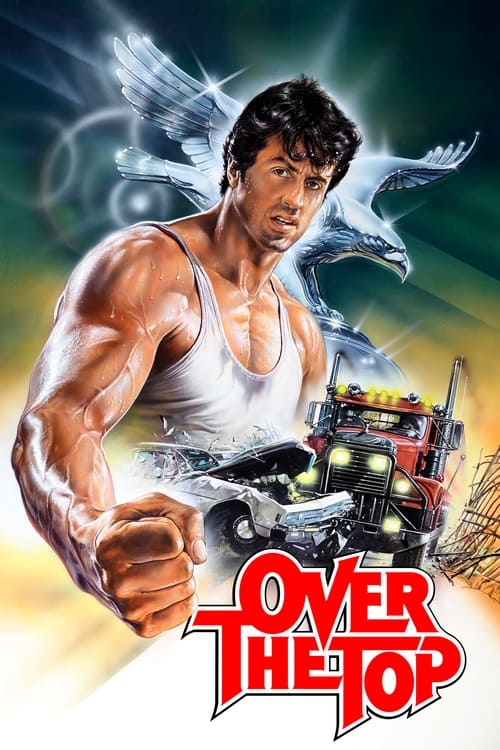
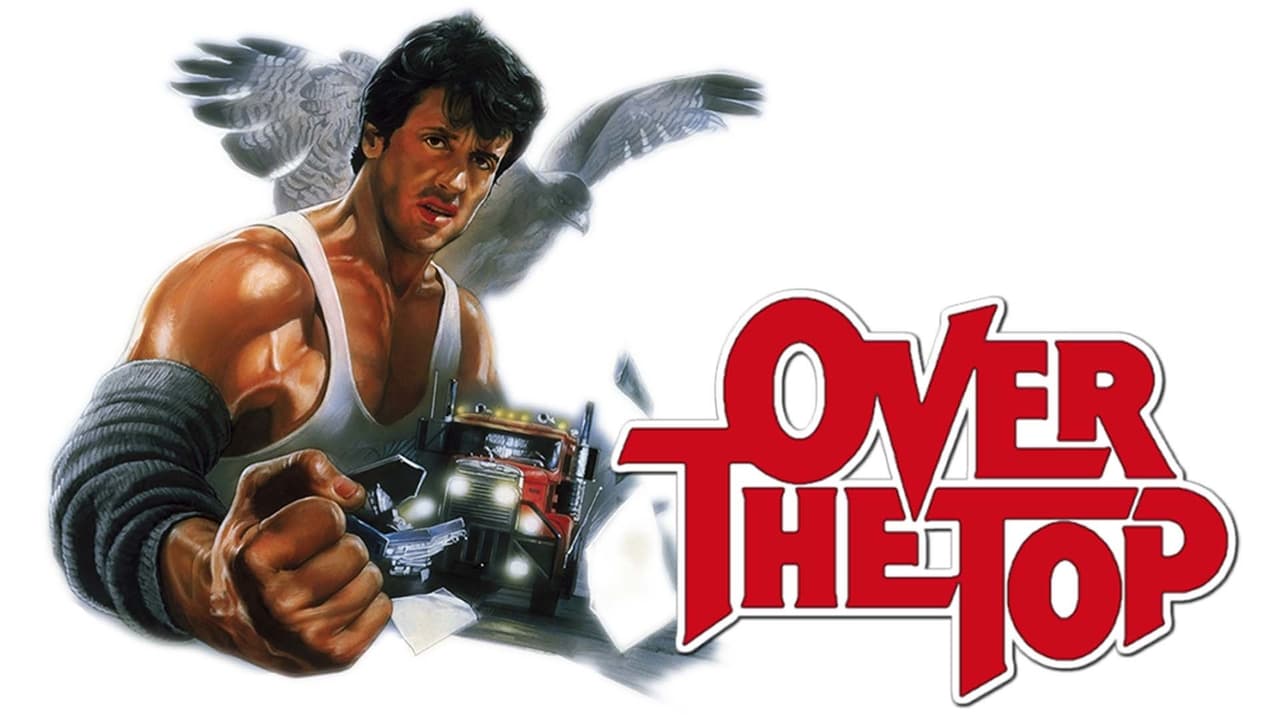
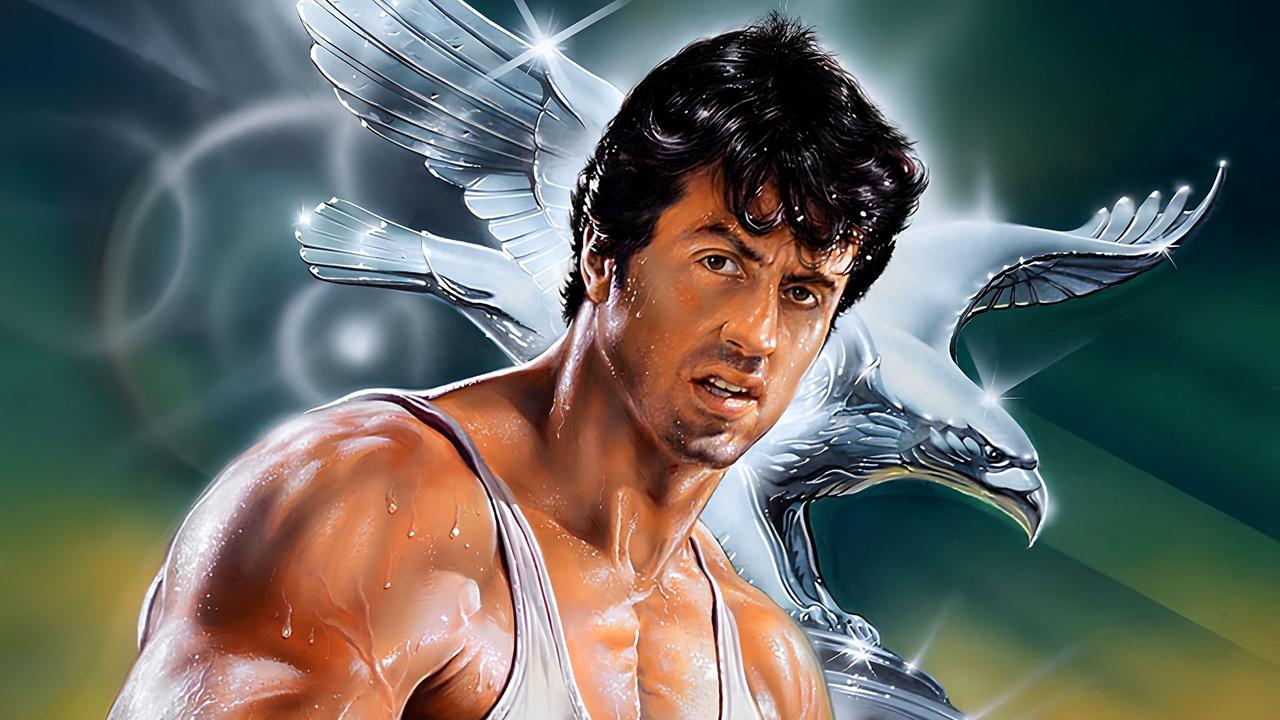
You can’t talk about Over the Top without talking about the home video revolution. For a generation of kids, this wasn't a theatrical experience; it was a silver-boxed Cannon Video cassette that stared at you from the "Action" shelf of every mom-and-pop rental store. The cover art, featuring a sweating Stallone with veins like garden hoses, promised a level of violence the movie doesn't actually deliver. It’s a remarkably sweet film in many ways, albeit wrapped in the aesthetic of a truck stop.
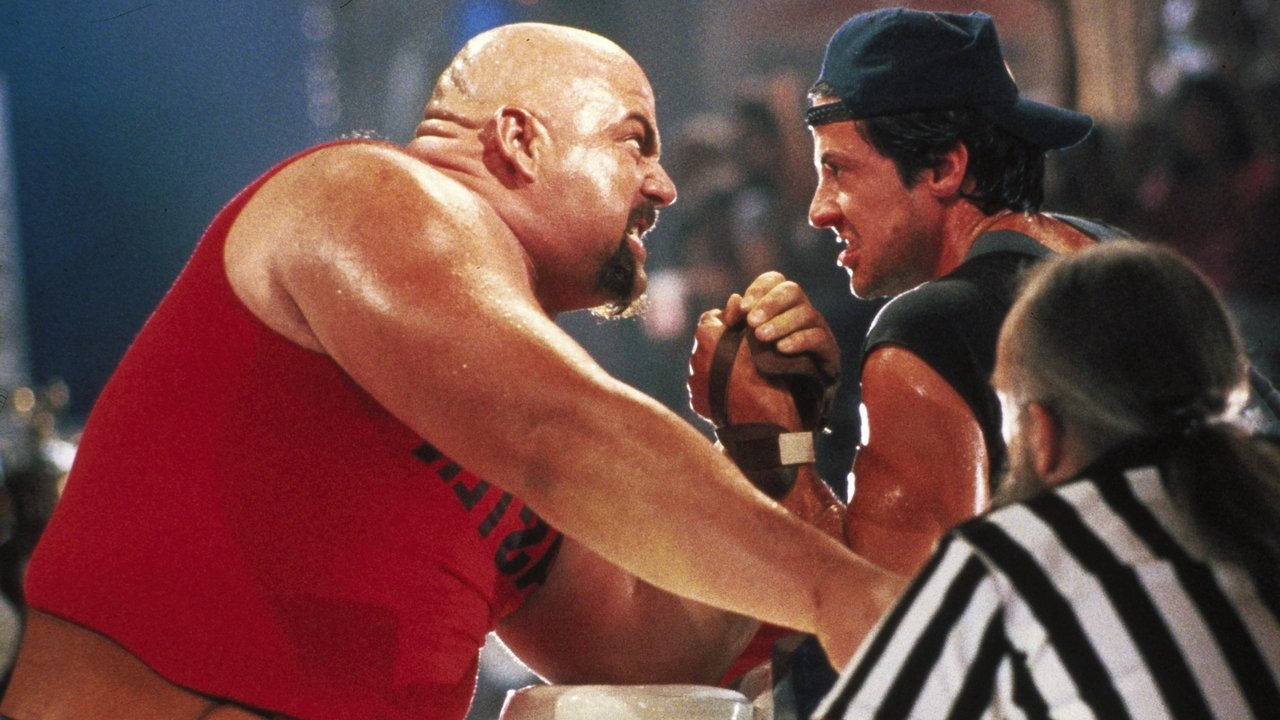
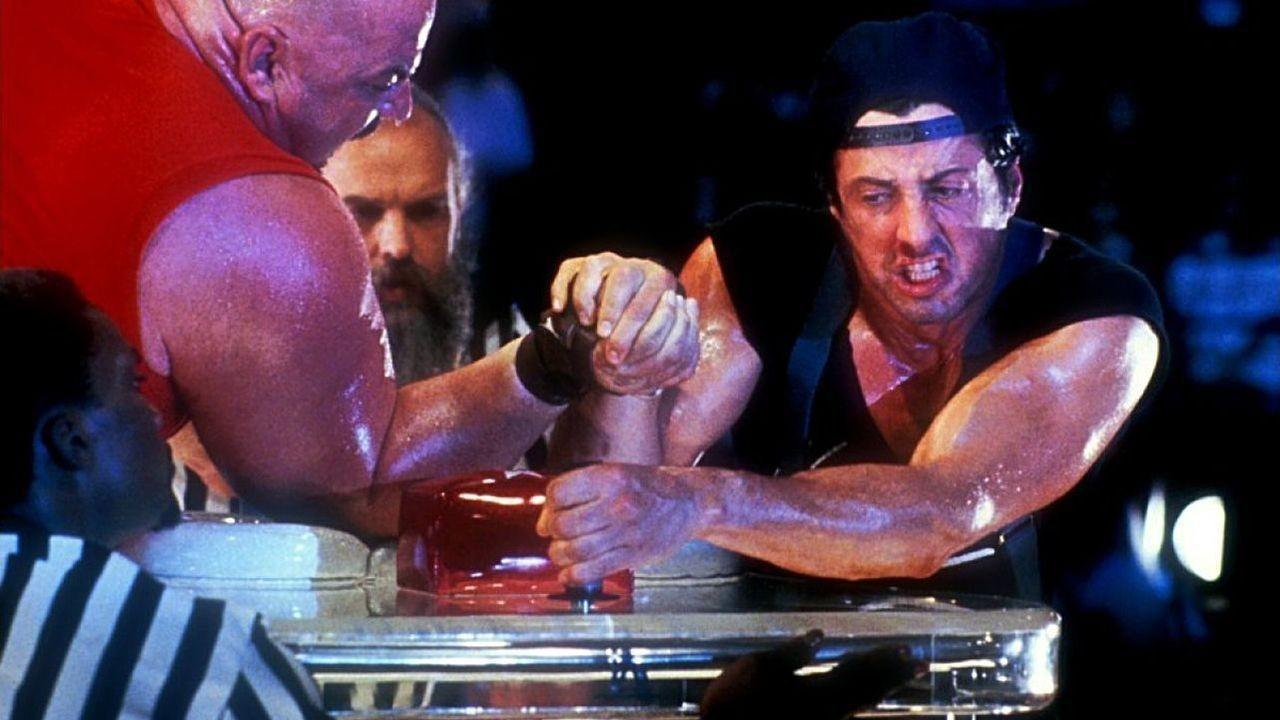
Director Menahem Golan, who also co-wrote the script with Stirling Silliphant (In the Heat of the Night), brings a strange, European fascination with Americana to the screen. Everything is oversized—the trucks, the muscles, the Las Vegas lights. The final act, set at the Hilton in Vegas, feels like a documentary filmed in a fever dream. They used real arm wrestlers for the tournament, including the legendary Rick Zumwalt as the primary antagonist, Bob "Bull" Hurley. Zumwalt is a mountain of a man who spent his scenes drinking motor oil (probably) and screaming at the camera. The production actually held a real tournament concurrently with the filming, offering a $250,000 truck as a prize, which adds a layer of authentic, sweaty desperation to the background shots.
The action choreography isn't about flying kicks or car chases; it’s about the tension of a quivering bicep. Golan uses extreme close-ups of faces, hands, and bulging veins to create a sense of scale. It’s silly, yes, but the practical execution is undeniably impressive. You feel the weight of those tables. When Chris McCarty or Rick Zumwalt slams a hand down, the sound design (full of bone-crunching Foley work) makes sure you hear it in your own joints.
A Machine Made of Sweat and Synth
The film is glued together by a Giorgio Moroder score that is so "1987" it should come with its own neon headband. The soundtrack features the likes of Sammy Hagar and Kenny Loggins, providing the kind of high-octane power ballads that make you want to go out and buy a weight bench you’ll never use. It’s the ultimate "training montage" movie, even when it’s not in a montage.
While the film was a notorious box office disappointment—failing to recoup its massive budget—it found a second, more permanent life on VHS. It’s the kind of movie that benefits from the "democracy of home viewing," as it’s much easier to enjoy the absurdity of a man winning custody of his child through a wrist-wrestling match in the comfort of your living room. Stallone’s performance is actually quite grounded; he plays Hawk with a soft-spoken fatigue that balances out the cartoonish world around him. He spends half the movie looking like he’s trying to remember if he left the stove on, which oddly works for a character carrying the weight of a decade’s worth of guilt.
Over the Top is a fascinating relic of an era when a movie star’s charisma was expected to carry even the most ridiculous premises across the finish line. It’s a film that takes itself entirely too seriously, which is exactly why it remains so charming three decades later. It’s a loud, sweaty, synthesizer-driven ode to fatherhood and forearms that reminds me why the 80s were a peak time for "high-concept" filmmaking. It’s not a masterpiece, but it’s a machine—and when the cap turns around, it’s impossible not to root for the guy in the truck.
Keep Exploring...
-
Lock Up
1989
-
Cobra
1986
-
Red Dawn
1984
-
The Karate Kid Part III
1989
-

The Towering Inferno
1974
-
Tango & Cash
1989
-
Rocky III
1982
-
Rambo: First Blood Part II
1985
-
Rocky IV
1985
-

The Mission
1986
-
Rambo III
1988
-
Rocky II
1979
-
Escape to Victory
1981
-

Magnum Force
1973
-
The Karate Kid Part II
1986
-
Black Rain
1989
-
The Poseidon Adventure
1972
-

The Enforcer
1976
-
Bloodsport
1988
-

Kickboxer
1989