Raising Arizona
"A cradle-robbing masterpiece of manic energy."
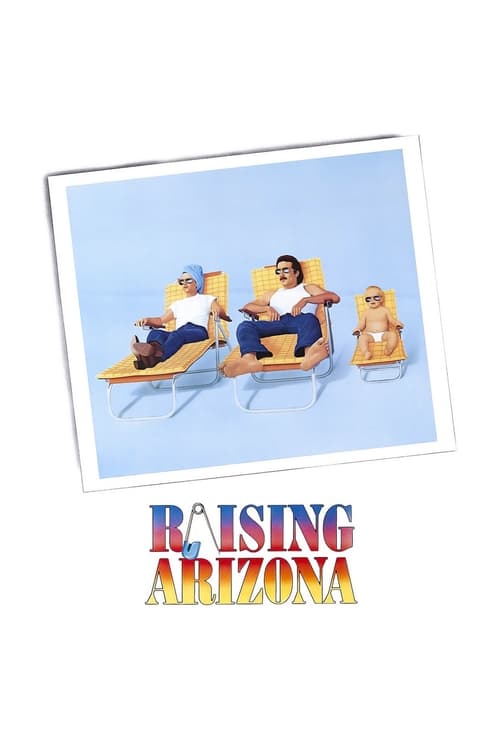
The first eleven minutes of Raising Arizona move with the frantic, rhythmic precision of a ticking clock—or perhaps a ticking biological one. Before the opening credits even crawl onto the screen, we’ve witnessed three arrests, a whirlwind romance in a police precinct, a wedding, a tragic infertility diagnosis, and the hatching of a criminal plot. It is one of the most confident, kinetic openings in cinema history, setting a pace that most comedies would collapse under within twenty minutes. Yet, the Coen Brothers were just getting started.

I first revisited this on a humid Tuesday night while trying to fix a leaky kitchen faucet, and I found that Nicolas Cage’s frantic energy is the only thing that makes household plumbing feel manageable. There is something deeply comforting about watching a man whose life is a total disaster, even if that man is wearing a Hawaiian shirt and sporting hair that looks like it’s trying to escape his skull.
The Physics of a Live-Action Cartoon
The 1980s were filled with high-concept comedies, but Raising Arizona occupies a space entirely its own. It’s a live-action Looney Tunes short filmed with the aesthetic gravity of a Peckinpah western. Much of this is thanks to Barry Sonnenfeld (who later directed Men in Black), whose cinematography here is legendary. The camera doesn't just observe the action; it hunts it. We get these incredible "shaky-cam" shots—literally a camera mounted to a 2x4 board and run through gardens and over fences—that give the film a relentless, breathless quality.
The centerpiece of the film is the "diaper run," a chase sequence involving a pack of neighborhood dogs, a grocery store clerk with a .38, and Nicolas Cage (playing H.I. "Hi" McDunnough) running for his life with a pack of Huggies under his arm. It’s a mechanical marvel of comedic timing. Every beat, from the squeal of the tires to the shatter of the glass, is choreographed like a ballet. Joel Coen and Ethan Coen understood something many directors miss: comedy is often funnier when it’s filmed with the intensity of a horror movie.
A Southern Gothic Nursery Tale
While the film is famous for its slapstick, there is a genuine darkness beneath the sun-bleached Arizona desert. Hi and Ed (Holly Hunter) are desperate people. Their decision to kidnap one of the "Arizona Quints"—the five sons of unpainted-furniture tycoon Nathan Arizona (Trey Wilson)—is born of a heartbreaking reality. They just want a piece of the American Dream, but they’re too "recidivist" to get there legally.
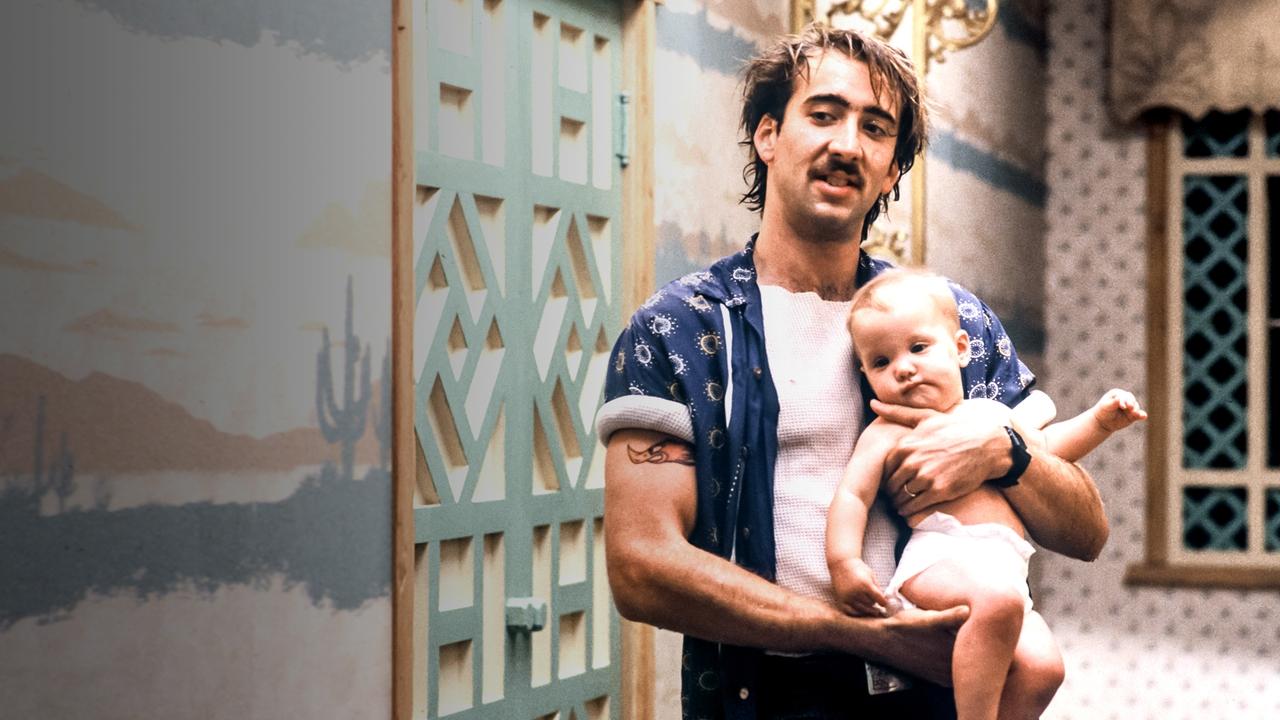
Holly Hunter is the film’s secret weapon. While Cage is doing his eccentric, soulful-con-man thing, Hunter plays Ed with a fierce, terrifying maternal conviction. When she weeps over her "barren inside," it’s actually quite moving, which makes it all the more absurd when she’s suddenly barking orders at escaped convicts in her living room.
Speaking of convicts, John Goodman and William Forsythe as Gale and Evelle Snoats are a revelation. Their "birth" from the mud outside the prison walls is one of the most striking images of the 80s. Goodman, in particular, has a way of screaming that is both hilarious and genuinely unsettling. He brings a physical weight to the film that balances out Cage’s wiry, jittery presence.
From Video Store Oddity to Cult Royalty
If you walked into a Blockbuster in 1989, you couldn't miss this tape. The box art featured Cage and Hunter looking like a manic version of American Gothic, and for a lot of us, that's how the cult grew. It was the kind of movie you’d rent because the cover looked weird, and then you’d find yourself quoting it for the next three decades.
The film didn't explode at the box office initially, but it became a home video staple because of its high rewatchability. There are so many layers of verbal wit buried in the Coens’ script—a strange, elevated "hillbilly Shakespearean" dialect—that you catch something new every time. Whether it’s Hi’s philosophical ruminations or the way Sam McMurray’s character, Glen, talks about "polygamy," the dialogue is a feast.

Then there’s the "Lone Biker of the Apocalypse," Leonard Smalls (Randall "Tex" Cobb). He represents the "Dark/Intense" heart of the movie. He isn't just a bounty hunter; he’s a nightmare made flesh, a manifestation of Hi’s fear that he can’t outrun his past. The showdown with Smalls is surprisingly brutal for a comedy, featuring practical stunts and explosions that feel visceral and dangerous in a way CGI never could.
Stuff You Didn't Notice
The Hair Journey: Nicolas Cage’s hair was a constant battle on set. The Coens wanted it to get progressively more wild as his life became more chaotic. They even used a "wig technician" to ensure the height was just right for the more manic scenes. The Baby Whisperer: Dealing with quintuplets is a nightmare for a film crew. One of the babies was actually fired on set because he learned how to walk, which didn't fit the "infant" requirement of the plot. The Unscripted Scream: During the scene where Gale and Evelle scream while driving away, John Goodman’s voice actually cracked, and the Coens loved it so much they kept that specific take because it sounded more desperate. Sonnenfeld’s Speed: To get the low-to-the-ground shots during the dog chase, they couldn't use a traditional dolly. They built a "pogo-cam," which was basically a handheld rig that allowed the camera operator to run at full speed through the dirt. * The Nathan Arizona Name: Nathan Arizona’s real name in the script was Nathan Huffheins, but he changed it because "who's gonna buy unpainted furniture from a guy named Huffheins?"
Raising Arizona is the rare film that manages to be both incredibly cynical and deeply sweet. It mocks the absurdity of the "outlaw" lifestyle while celebrating the very human desire for a family and a "fly-fishing" future. It’s a masterclass in visual storytelling that remains as vibrant today as it was on a fuzzy VHS tape thirty-five years ago. If you haven't seen it, you're missing out on the best performance ever given by a man with a wood-chipper tattoo.
The Coen Brothers would go on to win Oscars and craft grim masterpieces like No Country for Old Men, but there’s a special kind of magic in this early, messy, loud-mouthed comedy. It feels like a movie made by people who were genuinely excited about what a camera could do. It’s fast, it’s weird, and it has more heart than any movie about a kidnapped baby has any right to have. Wrap it up, put a bow on it, and give it a permanent spot on your shelf.

Keep Exploring...
-
The Big Lebowski
1998
-
Blood Simple
1985
-
O Brother, Where Art Thou?
2000
-
Barton Fink
1991
-

Miller's Crossing
1990
-
Beverly Hills Cop
1984
-
Clue
1985
-
Dirty Rotten Scoundrels
1988
-

The Naked Gun: From the Files of Police Squad!
1988
-
Crimes and Misdemeanors
1989
-
The Man Who Wasn't There
2001
-
Hail, Caesar!
2016
-

Adaptation.
2002
-
A Fish Called Wanda
1988
-
Heathers
1989
-
Blue Velvet
1986
-
The Untouchables
1987
-

Wall Street
1987
-
Fargo
1996
-
No Country for Old Men
2007