The Last Emperor
"A golden cage is still a cage."
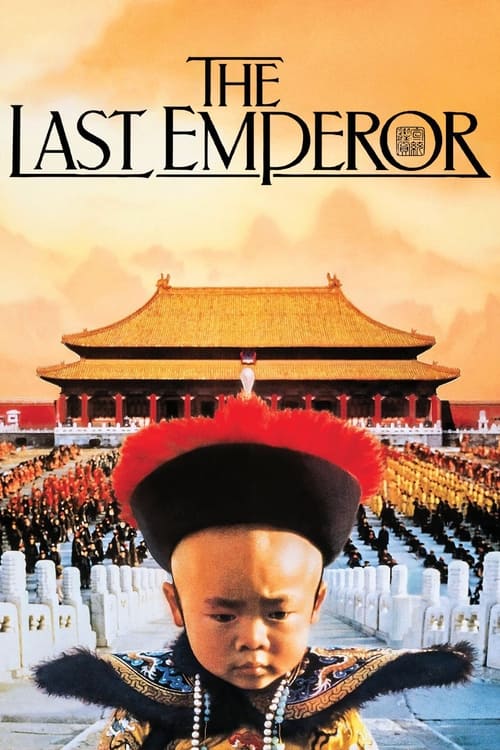
I remember staring at the double-tape VHS box of The Last Emperor at my local rental shop for months before actually picking it up. It sat on the "Prestige" shelf, its gold-embossed spine practically glowering at the nearby copies of RoboCop and Predator. To a kid in the late 80s, it looked like homework. When I finally gave in—mostly because the overhead fan in my living room was making a clicking sound that made watching anything fast-paced impossible—I realized it wasn't a history lesson. It was a ghost story where the ghost is still alive.
The Gilded Solitude
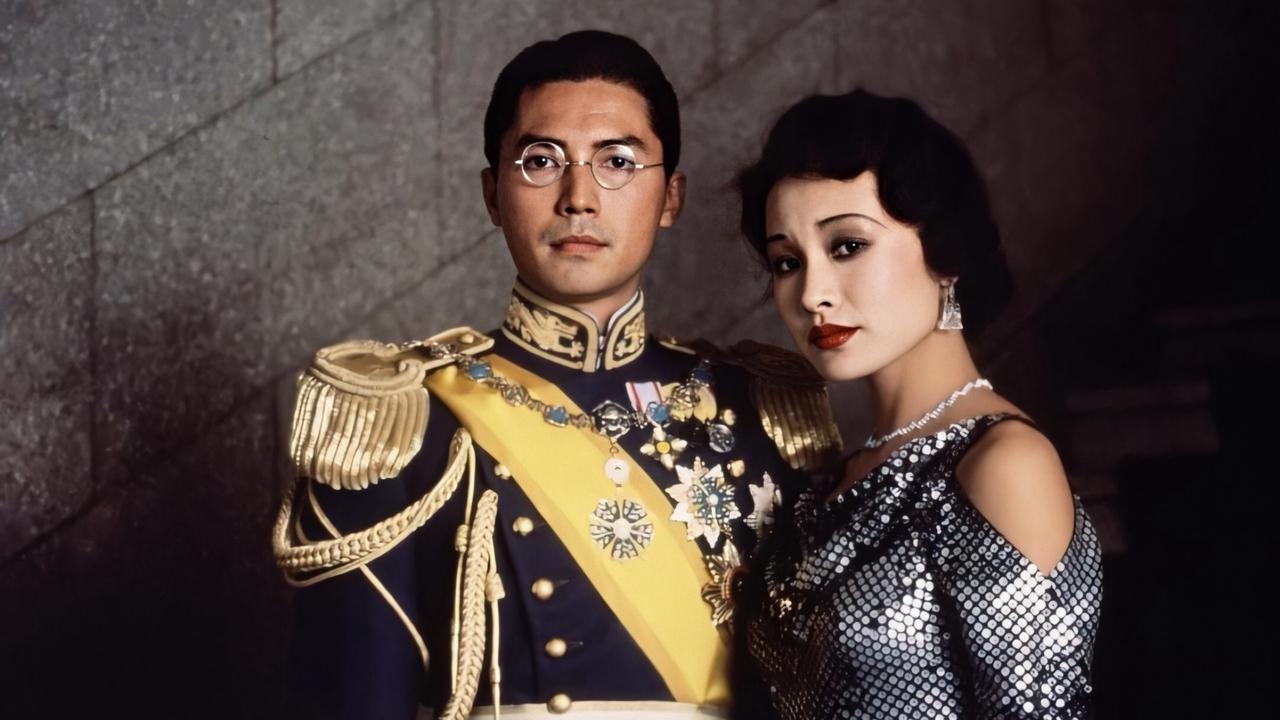
Bernardo Bertolucci’s 1987 masterpiece is, at its heart, a psychological study of the world's most pampered prisoner. We follow Pu Yi (John Lone) from his coronation as a three-year-old deity to his final days as a quiet gardener in the People’s Republic. The brilliance of the script, co-written by Bertolucci and Mark Peploe, is how it treats the Forbidden City not as a palace, but as a vacuum.
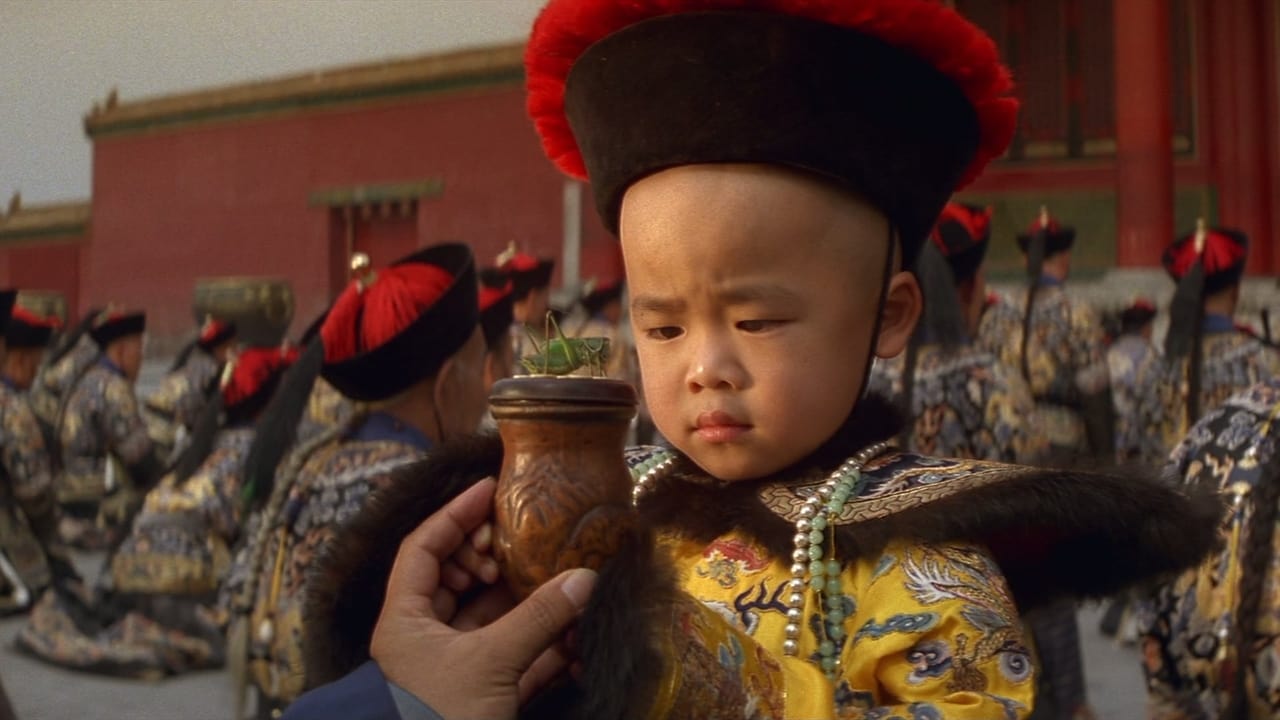
For the first hour, we see the world through the eyes of a child who literally owns the horizon but isn't allowed to walk past the front gate. There’s a specific, haunting loneliness here that feels strangely relatable to the VHS era—that sense of being a spectator in your own life, watching the world happen through a screen or, in Pu Yi’s case, through the heavy curtains of a palanquin. John Lone delivers a performance that I think is criminally overlooked today; he captures a man who is simultaneously arrogant and completely helpless. He has the posture of a god and the survival skills of a houseplant.
The Texture of a Vanishing World
One of the things that strikes me every time I revisit this film is the sheer scale of the practical production. We live in an era of CGI crowds, but there is a specific, heavy energy to seeing 19,000 actual human beings standing in the courtyard of the Forbidden City. Bertolucci was the first Westerner allowed to film there, and you can feel the weight of the actual stones.
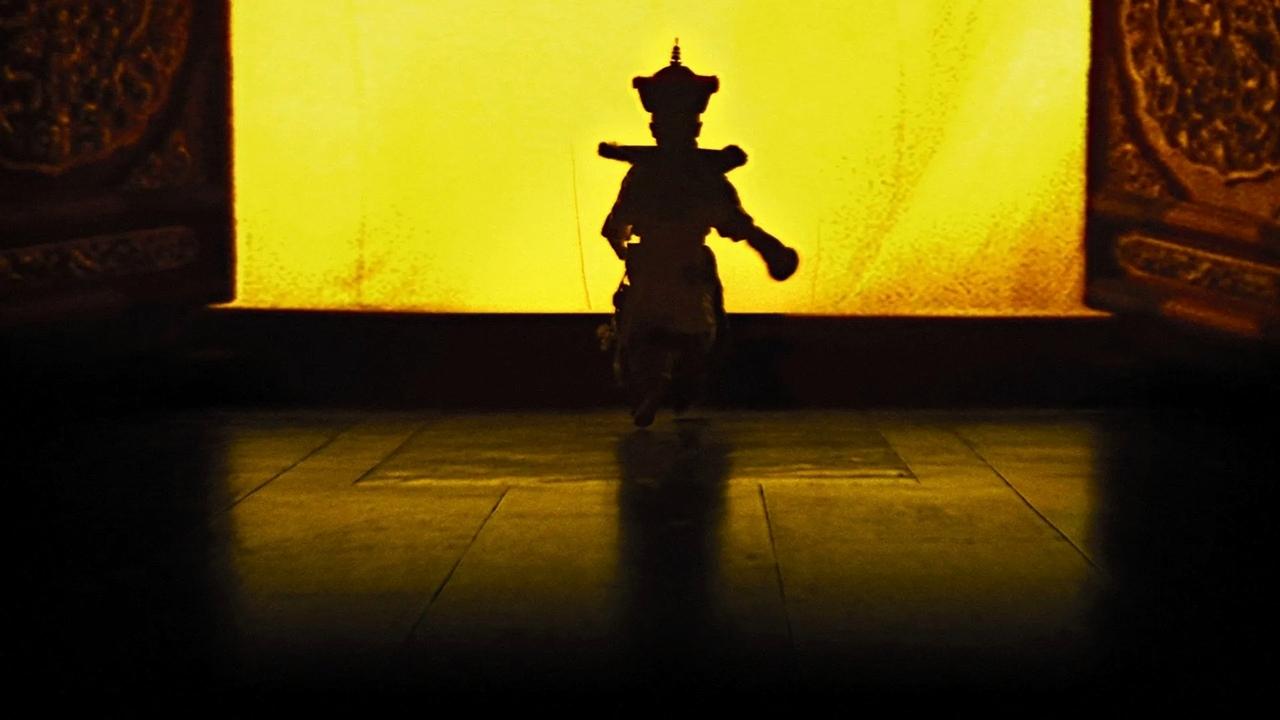
The production design is so lush it’s almost suffocating. The colors—coded by cinematographer Vittorio Storaro—transition from the warm, vibrant yellows and reds of Pu Yi’s childhood to the cold, sterile greys of his later life in a Communist re-education camp. It’s the most beautiful prison movie ever made. Even the "villains," like the Japanese occupiers who eventually use Pu Yi as a puppet, are framed with a decadent, sickly beauty. Joan Chen, as the Empress Wan Jung, manages to steal every scene she’s in, tracing a tragic arc from a sophisticated royal to a broken opium addict. Watching her eat flower petals in a moment of quiet madness is a sequence that burned itself into my brain the first time I saw it on a fuzzy CRT television.
A Culture Clash in Three Chords
The score is another area where the film’s "New Hollywood meets Global Art Cinema" DNA really shines. You’ve got David Byrne (of Talking Heads fame), Ryuichi Sakamoto (who also plays the antagonist Amakasu), and Cong Su collaborating on a soundtrack that feels both ancient and experimental. In the 80s, this was a massive "event" score. I remember my dad actually buying the CD just to hear David Byrne’s contribution, and it’s that blend of Western synth-pop sensibilities with traditional Chinese instrumentation that perfectly mirrors Pu Yi’s own fractured identity.
He’s a man caught between worlds. He wants to be a modern reformer; he wants to play tennis and wear spectacles (advised by his tutor, played with a lovely, dry wit by Peter O'Toole); but he’s tethered to a medieval ritual that doesn't care about his feelings. Pu Yi is the original influencer, famous for existing while having zero actual power.
The VHS Legacy and the Final Act
Because The Last Emperor swept the Oscars (winning all nine categories it was nominated for), it became a staple of the home video revolution. It was the "safe" choice for a sophisticated movie night, but I suspect many people who rented it were surprised by how cynical and challenging it actually is. It doesn't offer a triumphant ending. It offers a man standing in a line to buy a ticket to enter his own former home.

The film asks a heavy philosophical question: Who are you when the world stops pretending you’re special? Watching Pu Yi transition from a boy who is literally worshipped by half a billion people to a man who has to learn how to tie his own shoes is more heartbreaking than any 80s slasher kill. It’s a drama about the slow, agonizing death of an ego.
Stuff You Didn't Notice
The production was so massive that the Chinese army was actually brought in to play the Qing dynasty soldiers. Apparently, the soldiers were so disciplined that Bertolucci struggled to get them to look "relaxed" during the casual scenes. Also, because the crew was filming in the actual Forbidden City, they had strictly limited hours and couldn't bring in heavy equipment that might damage the floors. This forced Storaro to use a lot of natural light, which is why the film has that ethereal, time-capsule glow. It wasn't just a creative choice; it was a necessity of filming in a museum.
The Last Emperor is a monumental achievement that manages to feel intimate despite its staggering scale. It’s a film that rewards your full attention, moving at a deliberate pace that allows the tragedy of Pu Yi's life to settle into your bones. It’s one of the few "epics" from the 80s that feels more relevant now than it did then, speaking to our obsession with fame, our fear of obsolescence, and the thin line between a palace and a cell. If you’ve only ever seen it in bits and pieces, find the longest version you can, turn off your phone, and let the colors wash over you.
Keep Exploring...
-
Ran
1985
-
Last Tango in Paris
1972
-
Harakiri
1962
-
Andrei Rublev
1966
-
Gandhi
1982
-
Amadeus
1984
-
The Color Purple
1985
-

The Right Stuff
1983
-

The Mission
1986
-
Casualties of War
1989
-
Glory
1989
-
Pink Floyd: The Wall
1982
-

Do the Right Thing
1989
-
The Elephant Man
1980
-
Patton
1970
-
A Bridge Too Far
1977
-

Chariots of Fire
1981
-
Malcolm X
1992
-
Judgment at Nuremberg
1961
-
Mirror
1975