Akira
"Godhood is a heavy burden for a brat."
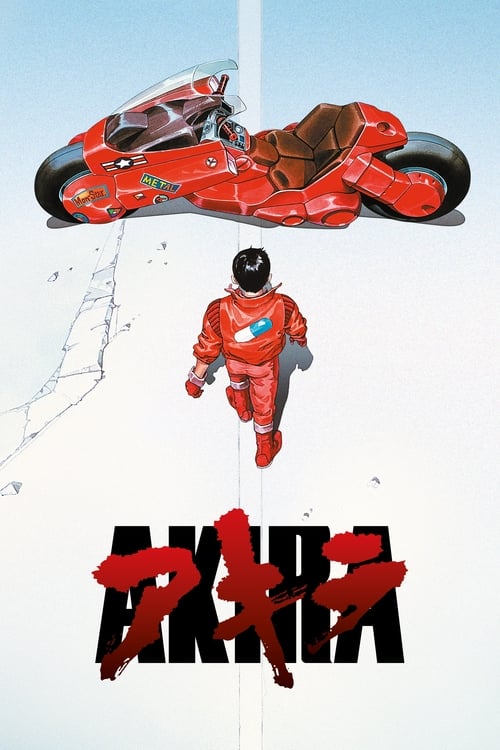
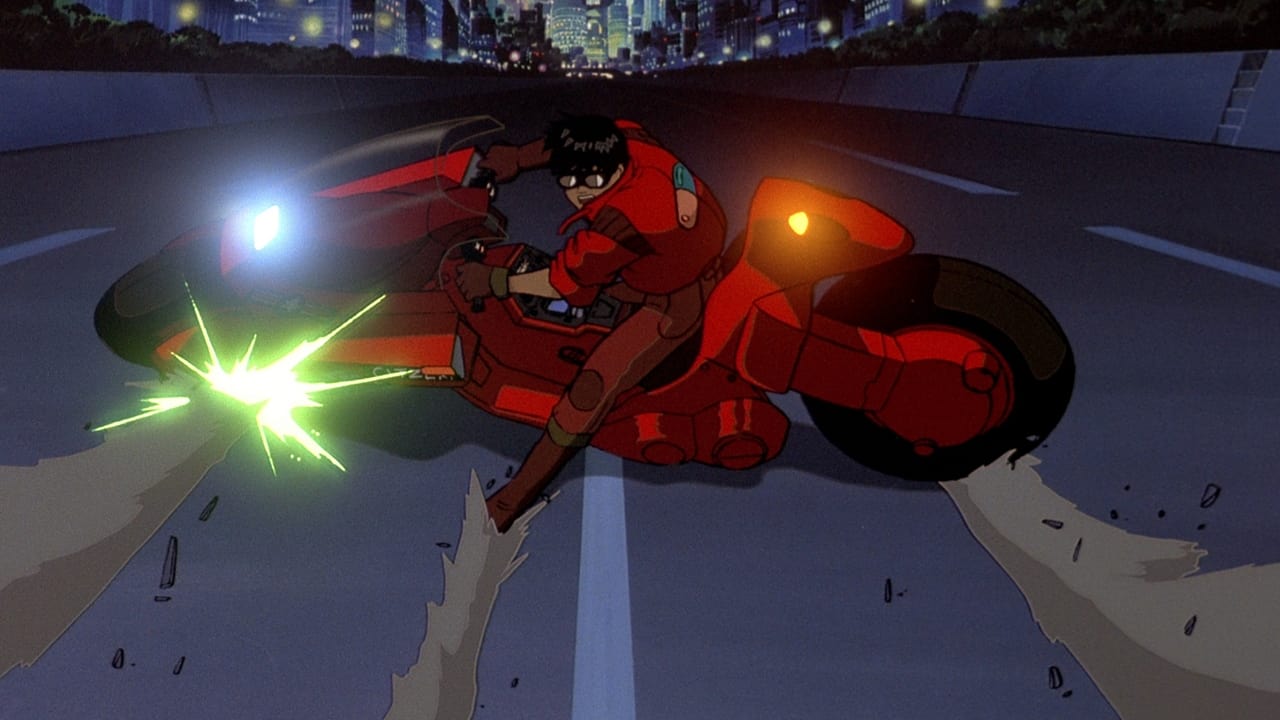
The first time I saw the light trails from Kaneda’s bike, I wasn’t in a cinema. I was in a basement apartment that smelled faintly of damp carpet, watching a third-generation VHS bootleg on a 14-inch CRT television. Even through the tracking fuzz and the muffled audio of the original Japanese track, the image of that red motorcycle sliding sideways across a neon-drenched highway felt like a transmission from a superior civilization. I remember specifically that I was trying to eat a bowl of lukewarm cereal at the time, but the spoon stayed halfway to my mouth for the entire opening sequence. My milk went sour, and I didn't even care.
Directed by Katsuhiro Otomo, Akira didn't just break the mold for Japanese animation; it crushed it into a fine powder and used it to build a sprawling, terrifying, and breathtakingly beautiful vision of the future. Set in 2019 (a date that feels much closer now than it did in '88), the story follows Mitsuo Iwata as Kaneda, the leader of a delinquent biker gang, and Nozomu Sasaki as Tetsuo, his insecure best friend who stumbles into a government experiment and gains god-like psychic powers. It is a film about the growing pains of a post-atomic nation, the corruption of the elderly, and the sheer, unadulterated rage of the youth.
The Peak of the Hand-Drawn Nightmare
What separates Akira from almost everything else in the "Action" genre is the staggering scale of its production. In an era where most TV anime was being "animated on threes" (one drawing for every three frames), Otomo and his team insisted on "animating on ones"—24 individual drawings for every single second of film. It gives the movement a fluid, heavy reality that CGI still struggles to replicate. When a building collapses in Neo-Tokyo, you don't just see a generic explosion; you see every individual brick, the dust clouds blooming with a terrifying anatomical accuracy, and the glass shattering like ice.
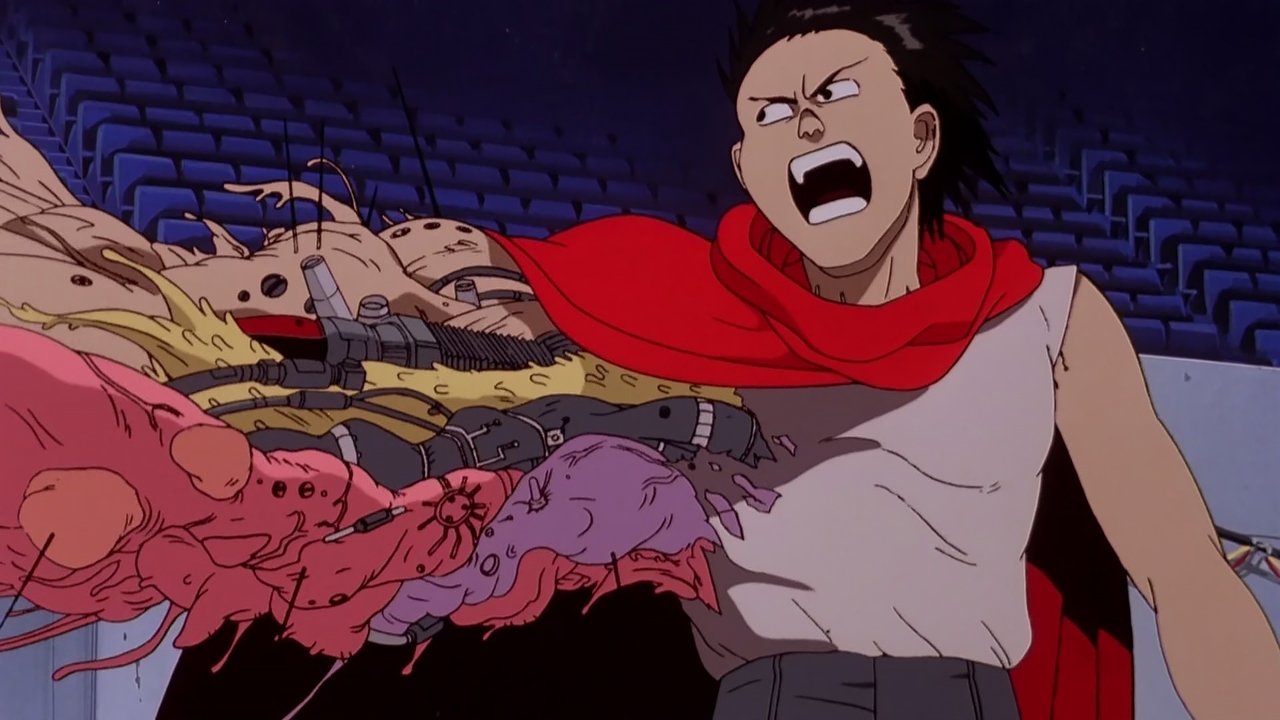
The action choreography is legendary. The opening bike chase isn't just about speed; it’s about the weight of the machines. You feel the torque when Kaneda shifts gears. The "Akira Slide"—that iconic moment where Kaneda skids his bike to a halt—has been referenced in everything from Batman: The Animated Series to Nope. It’s the gold standard for cool. Yet, the action isn't just "cool." It’s often horrifying. The English dub from the 80s makes Kaneda sound like he’s trying out for a localized version of Grease, but nothing can dampen the dread of the "psychic battle" sequences. When Tetsuo begins to lose control of his physical form in the Olympic Stadium, the film transitions from a sci-fi thriller into a fleshy, body-horror nightmare that would make David Cronenberg blush.
The Sound of Post-Modern Evolution
You cannot talk about Akira without mentioning the score by Shoji Yamashiro and his collective, Geinoh Yamashirogumi. It’s a haunting mix of traditional Japanese chant (Gamelan), heavy percussion, and synthesizers. Usually, in the 80s, you’d expect a synth-pop soundtrack or an orchestral swell, but this score feels ancient and futuristic at the same time. Interestingly, the music was actually recorded before the animation was finished. The animators then had to sync the rhythm of the characters' movements and the lip-syncing to the pre-recorded tracks. This was unheard of in Japanese production at the time, but it’s why the film feels so operatic.
Behind the scenes, the production was a series of "firsts" and "onlys." To capture the neon glow of Neo-Tokyo, the team had to create 327 different colors, 50 of which were engineered specifically for this movie because the existing palettes weren't vibrant enough. They used over 160,000 animation cels. To put that in perspective, your average animated feature of the time used about half that. The budget was roughly $5.5 million—an astronomical sum for 1988 anime—but every cent is visible on screen. It was a massive gamble that initially flopped in the Japanese box office, only to be rescued by the international home video market.
A Cult Born in the Rental Aisle
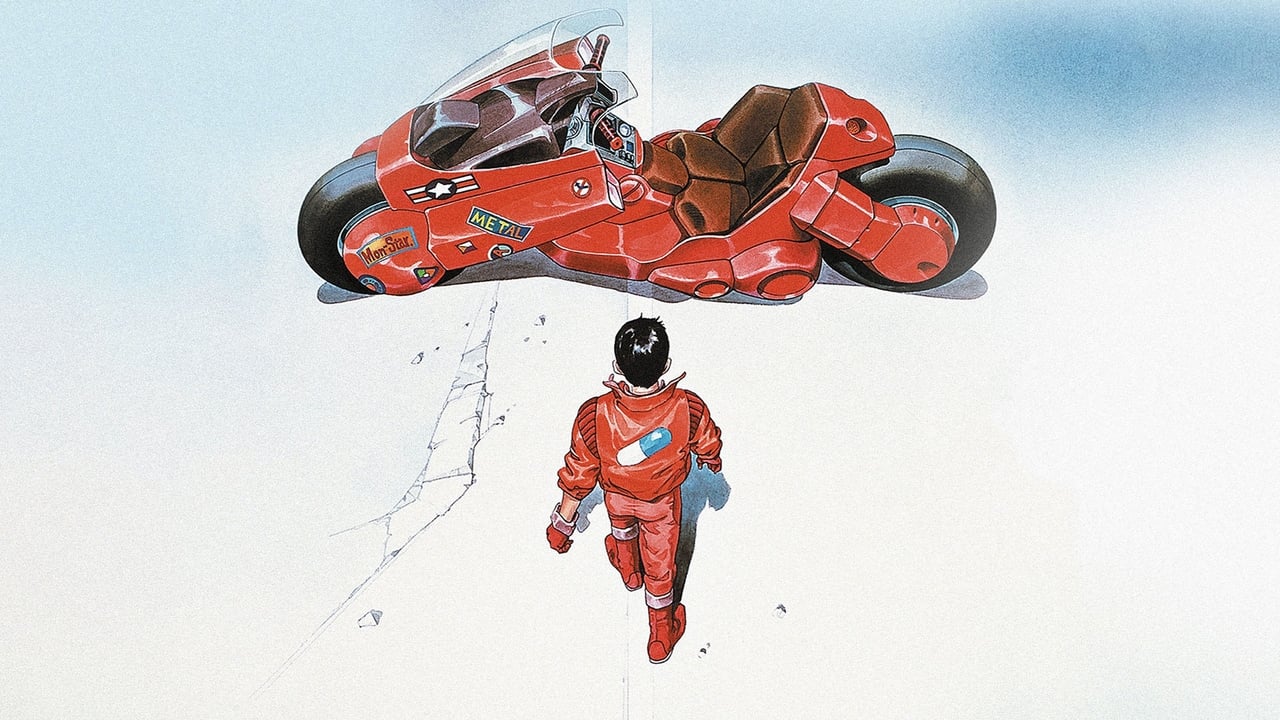
In the West, Akira became the ultimate "have you seen this?" tape in the back of the video store. The box art usually featured Kaneda walking toward his bike, a stark image that promised something much more mature than the Saturday morning cartoons we were used to. It was the gateway drug that introduced an entire generation to the idea that animation could be used for complex, philosophical storytelling.
It tackles the trauma of Hiroshima and Nagasaki without ever mentioning them by name, transmuting that national scar into the image of a growing, glowing sphere of pure destruction. Tetsuo isn't just a villain; he's a surrogate for every kid who felt small and suddenly found the power to push back against a world that ignored them. The film asks: if we had the power of a god, would we use it to build, or would we just break everything that ever made us feel weak?
Akira remains the high-water mark of cel animation, a film that feels like it was forged in a furnace rather than drawn on paper. It’s loud, confusing, messy, and brilliant. While the narrative gets a bit tangled in its own metaphysical shoelaces toward the end—mostly because Katsuhiro Otomo was still writing the manga when the movie was finished and had to invent a new conclusion—the sheer sensory overload is enough to carry you through. It is a monumental achievement that demands to be seen on the largest screen possible, even if my heart will always belong to that fuzzy, flickering VHS tape.

Keep Exploring...
-
Planet of the Apes
1968
-
Castle in the Sky
1986
-
Dragon Ball Super: Super Hero
2022
-
The Terminator
1984
-

Predator
1987
-
RoboCop
1987
-
Brazil
1985
-

Dragon Ball Z: Fusion Reborn
1995
-

Ghost in the Shell
1995
-

Dragon Ball Super: Broly
2018
-
Kiki's Delivery Service
1989
-

Evangelion: 1.0 You Are (Not) Alone
2007
-
Evangelion: 2.0 You Can (Not) Advance
2009
-
Evangelion: 3.0+1.0 Thrice Upon a Time
2021
-

Escape from New York
1981
-

Star Trek II: The Wrath of Khan
1982
-

Fantastic Planet
1973
-

Cowboy Bebop: The Movie
2001
-
Ran
1985
-

Dragon Ball Z: Broly - The Legendary Super Saiyan
1993