Crocodile Dundee II
"Out of the city and back into the bush."
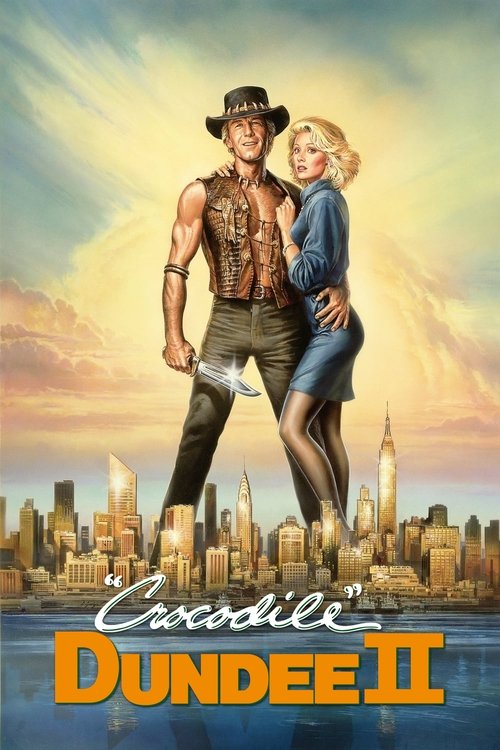
The image of Paul Hogan standing on the edge of a high-rise, casually tossing a stick of dynamite into the East River to catch his dinner, is the quintessential "sequel mentality" of the 1980s. Everything has to be louder, the stakes have to be global, and the budget needs to be big enough to afford a few more explosions. While the original Crocodile Dundee was a charming, low-key "fish out of water" romantic comedy that accidentally conquered the world, Crocodile Dundee II is a different beast entirely. It’s an action-adventure film that feels like the filmmakers realized they had the biggest star on the planet and decided to see if he could out-Rambo Rambo.

I recently rewatched this on a rainy Tuesday while eating a bowl of lukewarm microwave ramen, and I realized that my leather-bound copy of the first film’s VHS was always worn thin, while this sequel’s tape remained suspiciously crisp. There’s a reason for that, but it’s not because the movie is bad—it’s just a weirdly bifurcated experience.
From the Concrete Jungle to the Real One
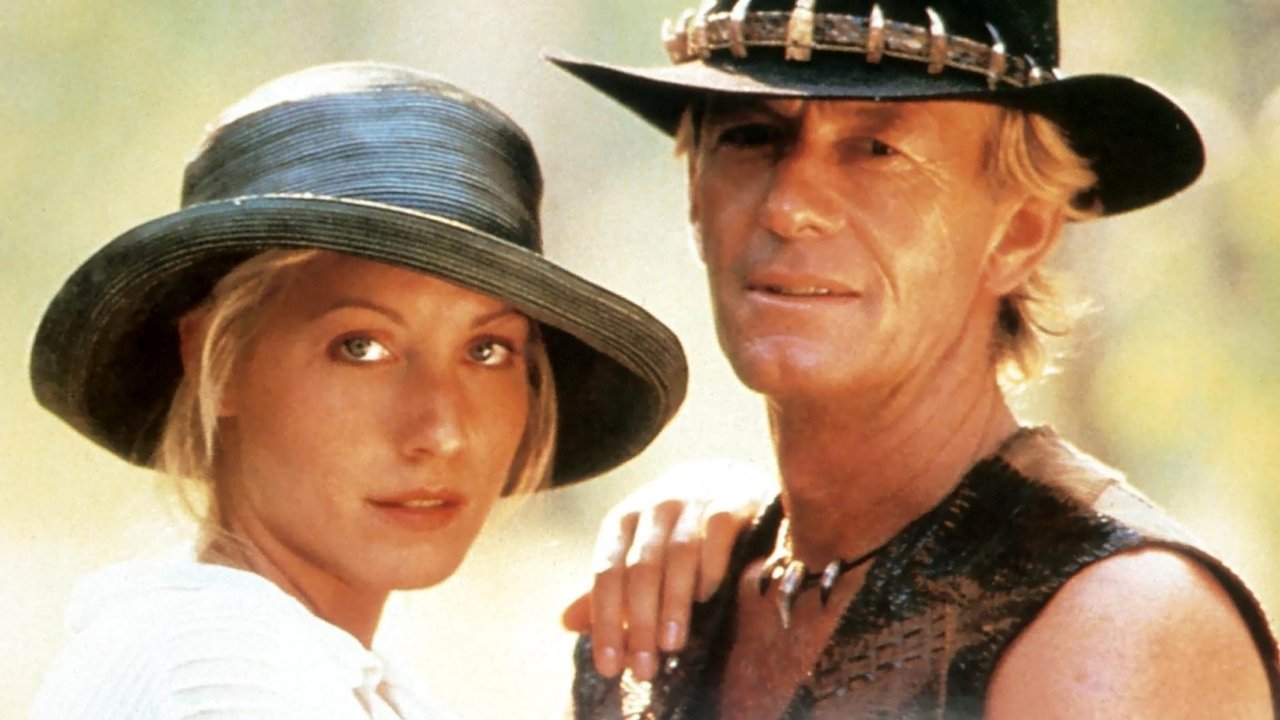
The first forty minutes of the film are a cozy continuation of Mick and Sue’s New York domesticity. Linda Kozlowski as Sue Charlton still has that effortless chemistry with Hogan, and seeing Mick navigate the urban landscape with the same survivalist logic he uses in the Northern Territory remains the franchise's strongest suit. Whether he’s using a "boring" walkie-talkie or befriending a local street gang led by Charles S. Dutton (who played Leroy Brown with a level of charisma that almost steals the movie), the New York segment is pure comfort food.
But then, the plot kicks in. This was 1988, so naturally, we need Colombian drug lords. Hechter Ubarry plays Luis Rico, a villain who seems to have walked off the set of a particularly grim episode of Miami Vice. When Sue is kidnapped because her ex-husband sent her photos of a cartel murder, the movie takes a sharp turn into "protection mode." Mick decides the only way to beat the cartel is to take them to his home turf.
The villains in this movie are about as threatening as a wet cardboard box once they actually land in Australia. Seriously, they stand no chance. Once the action shifts to the Outback, the movie becomes a series of elaborate pranks where Mick systematically humiliates the cartel. It’s less of a life-or-death struggle and more of a "Mick Dundee’s Greatest Hits" compilation.
The VHS Gold Mine and Production Hits
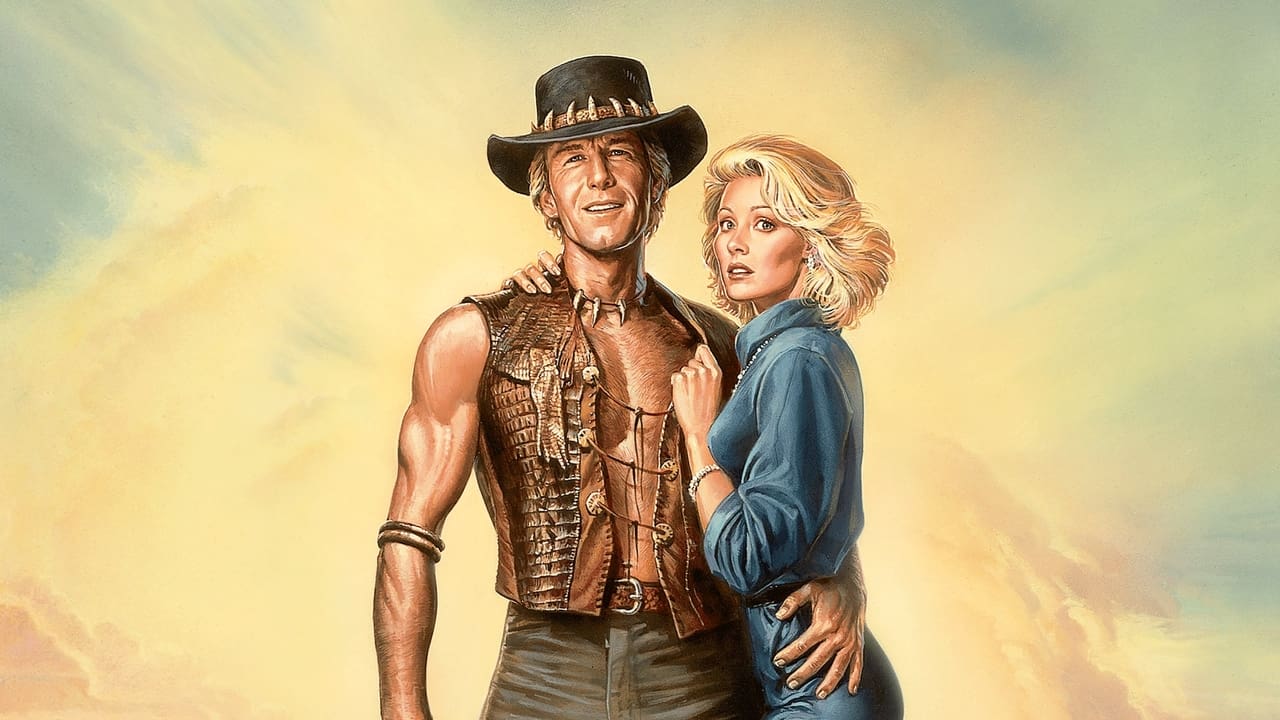
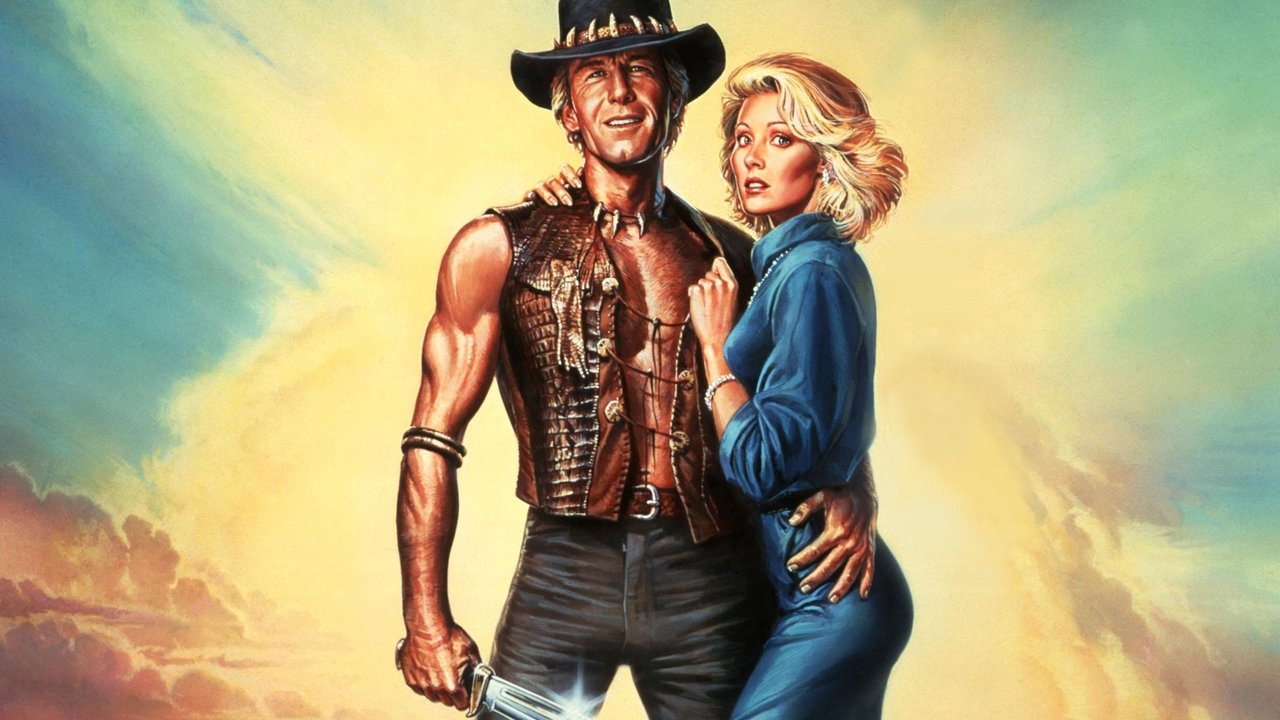
You cannot talk about this movie without talking about the sheer, unadulterated weight of its success. In 1988, the Paramount Home Video release of this film was a massive event. It arrived at a time when the video store was the center of the cultural universe, and the box art—Mick holding that massive Bowie knife against a backdrop of both the NYC skyline and the Outback—was burned into the retinas of every kid walking the aisles of a Blockbuster.
Despite critics being lukewarm, the film was a financial juggernaut. It had a budget of around $14 million—nearly double the first film—but it raked in nearly $240 million worldwide. To put that in perspective, it was the second highest-grossing film of the year, sitting right behind Rain Man. It even beat out Die Hard and Who Framed Roger Rabbit in raw ticket sales.
Director John Cornell, who had spent years as Hogan’s creative partner and producer, stepped into the director’s chair here. He brought along the legendary cinematographer Russell Boyd, who would later win an Oscar for Master and Commander: The Far Side of the World. You can see Boyd’s touch in the second half; the Australian landscape is shot with a reverence that makes New York look like a cramped basement. The colors are saturated, the horizons are endless, and for a few minutes, you forget you're watching a movie about a guy outrunning a cartel.
Outback Pranks and Practical Magic
What keeps Crocodile Dundee II from being a generic action sequel is the supporting cast in the bush. John Meillon returns as Walter Reilly, and his bumbling charm provides a necessary grounding for Mick’s superhuman tracking skills. We also get Ernie Dingo as Charlie, who brings a much-needed layer of modern Aboriginal identity to a film that could have easily slid into caricature.
The "stunt" work here is all practical, a hallmark of the era. When Mick is scaling cliffs or setting traps, it’s all real bodies in real locations. There’s a sequence involving a "suicidal" jumper early in the film that showcases Hogan’s physical comedy—it’s a bit dated in its sensitivity, but the practical execution of the ledge work is still impressive.
One bit of trivia I always found fascinating: the screenplay was co-written by Paul Hogan and his son, Brett Hogan. You can feel that father-son energy in the writing; the movie feels protective of the Mick Dundee "myth." He never loses his cool, he never takes a bullet, and he never stops being the smartest guy in the room. Mick Dundee is essentially a superhero whose only power is being Australian.
The film does drag in the middle, lacking the tight pacing of the original’s romance. It’s almost two separate movies stitched together by a shared cast. However, as a piece of 80s blockbuster history, it’s a fascinating look at how Hollywood (and Australia) tried to turn a lightning-in-a-bottle character into a sustainable action franchise.
Crocodile Dundee II isn’t the cultural earthquake its predecessor was, but it’s a perfectly serviceable adventure that thrives on the charisma of Paul Hogan. It’s the kind of movie that feels best watched on a Saturday afternoon when you don't want to think too hard about drug cartels or logic. It’s a warm, breezy, occasionally slow-moving hug from the 1980s that reminds us that sometimes, all you need to win a war is a big knife and a very confused group of tourists.

Keep Exploring...
-
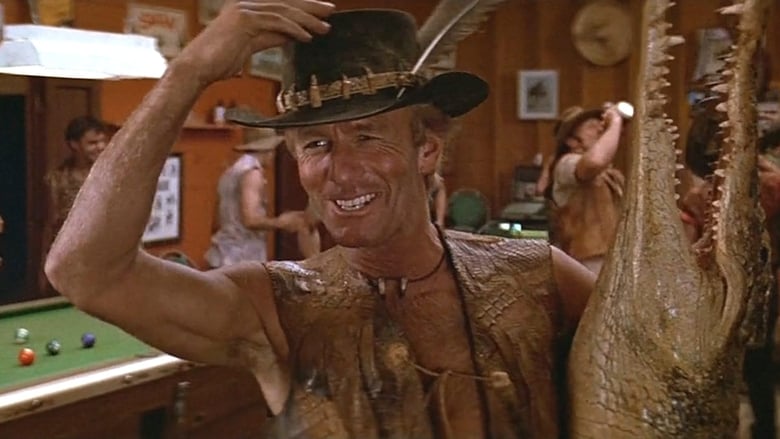
Crocodile Dundee
1986
-
Honey, I Shrunk the Kids
1989
-
Romancing the Stone
1984
-
National Lampoon's European Vacation
1985
-
The Jewel of the Nile
1985
-

An American Tail
1986
-

The Golden Child
1986
-

Bill & Ted's Excellent Adventure
1989
-
Back to the Future Part II
1989
-
Beverly Hills Cop II
1987
-
Cocktail
1988
-
Oliver & Company
1988
-
Time Bandits
1981
-
Bird on a Wire
1990
-
Teenage Mutant Ninja Turtles
1990
-
The Three Musketeers
1993
-
The Aristocats
1970
-
Superman III
1983
-

Back to the Future
1985
-
Ladyhawke
1985