Dead Ringers
"Separation is the most dangerous surgery."
I once tried to explain the plot of Dead Ringers to my mother while eating a lukewarm grilled cheese sandwich, and about halfway through describing the "gynecological instruments for operating on mutant women," she looked at me with a level of concern usually reserved for people joining doomsday cults. That’s the thing about David Cronenberg—he makes movies that feel like they should be illegal to discuss in polite company.
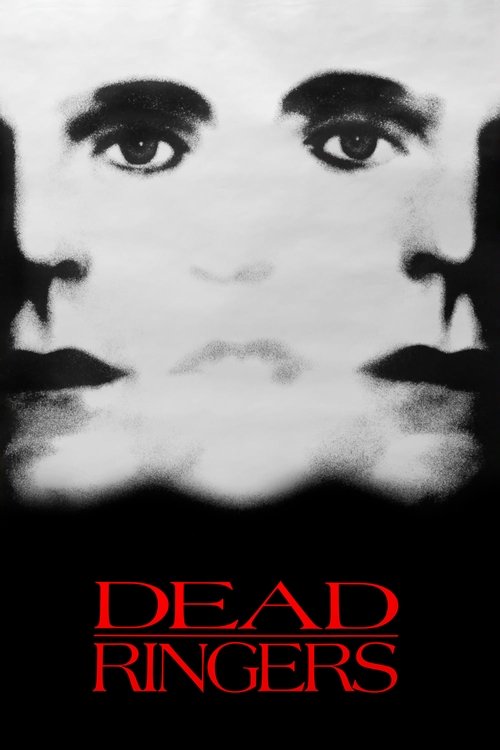
When you pulled this off the shelf at the video store in the late 80s, the box art usually featured Jeremy Irons twice, clad in those striking, blood-red surgical robes. It looked like a slasher flick, but what you actually took home was something far more invasive. It wasn't a movie about a killer in the woods; it was a movie about the terrifying fragility of the self and the biological tether that can pull two people into a mutual grave.
The Precision of a Scalpel
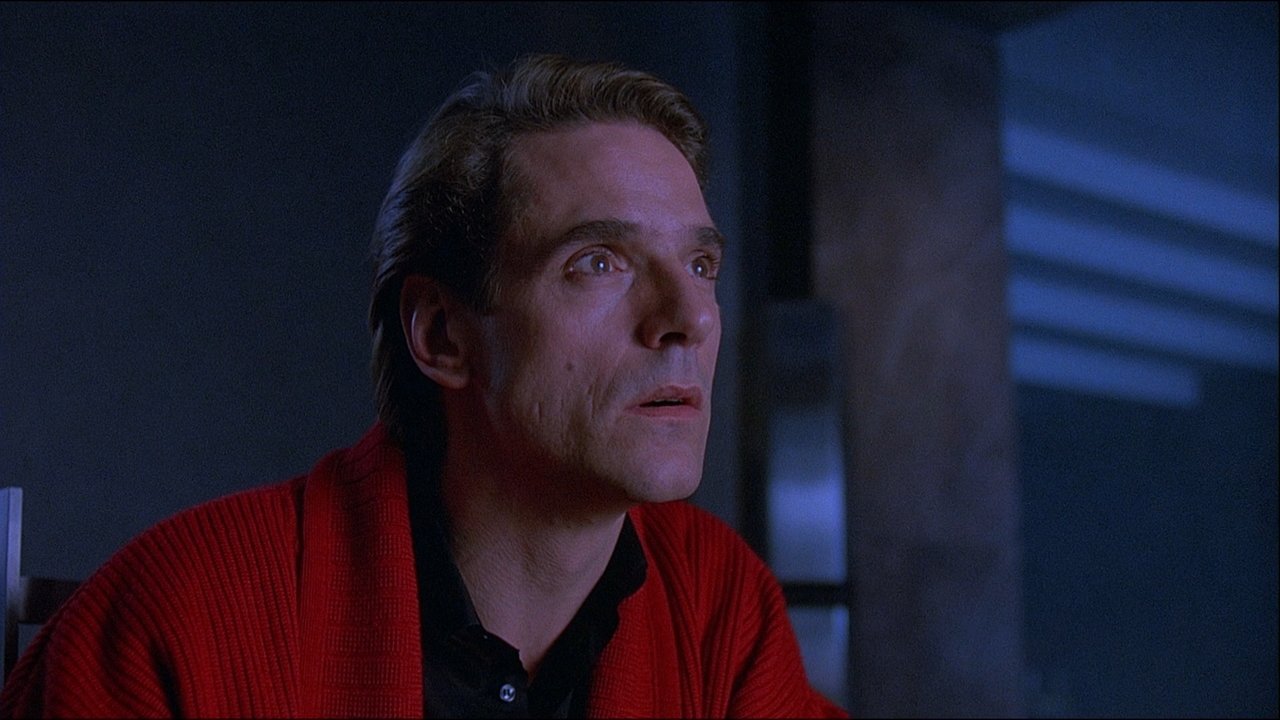
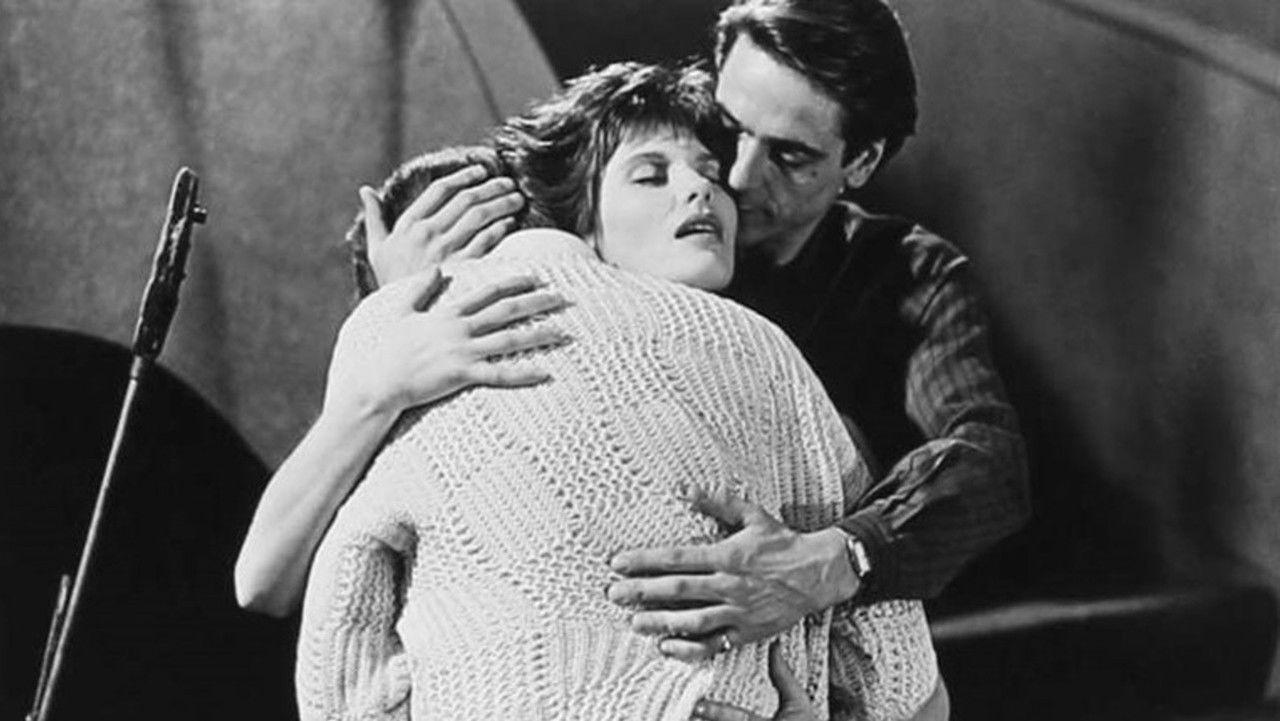
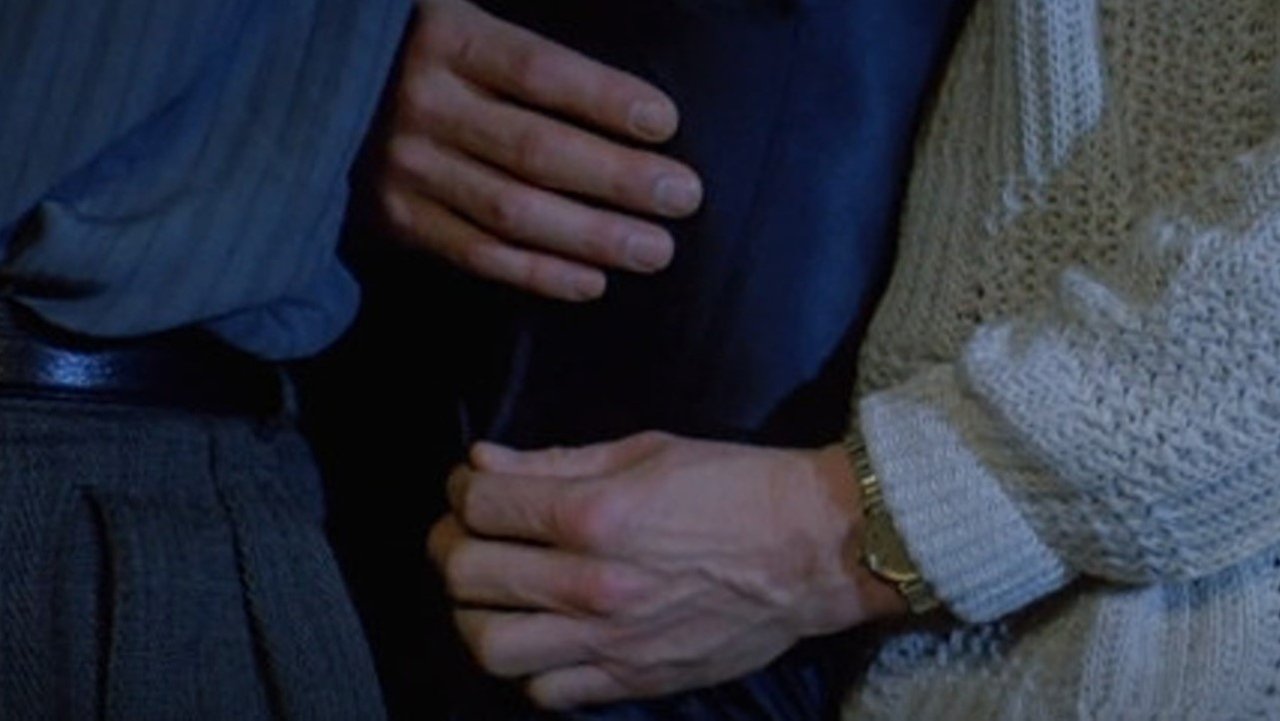
At the heart of this clinical nightmare is Jeremy Irons, giving what I firmly believe is one of the most underrated dual performances in the history of the medium. He plays Elliot and Beverly Mantle, identical twin gynecologists who share a practice, an apartment, and—eventually—their lovers. Elliot is the alpha, the charming predator who seduces patients and then hands them off to the shy, sensitive Beverly once he’s bored. It’s a parasitic cycle that works perfectly until they meet Claire Niveau (Geneviève Bujold), an actress with a rare anatomical quirk that fascinates the doctors and eventually breaks Beverly’s fragile psyche.
What makes Jeremy Irons so effective here isn't just a change in hairstyle or glasses. It’s the posture. I found myself watching the way Beverly leans forward, as if he’s trying to apologize for occupying space, versus Elliot’s expansive, arrogant stillness. There are moments where they are both on screen together—achieved through a then-groundbreaking motion-control camera system—and you completely forget you’re looking at a special effect. You just see two brothers slowly dissolving into one another. It’s honestly more impressive than most CGI-heavy blockbusters coming out today, simply because the trickery is invisible and serves the character rather than the spectacle.
A World of Sterile Crimson
David Cronenberg (fresh off the success of The Fly) moved away from the literal, exploding-head body horror of his early career and into something much colder. Working with cinematographer Peter Suschitzky (who had recently shot The Empire Strikes Back), Cronenberg creates a world that feels like a high-end morgue. The apartments are cavernous and grey; the clinic is all steel and glass. Into this monochrome world, he injects that "surgical red."
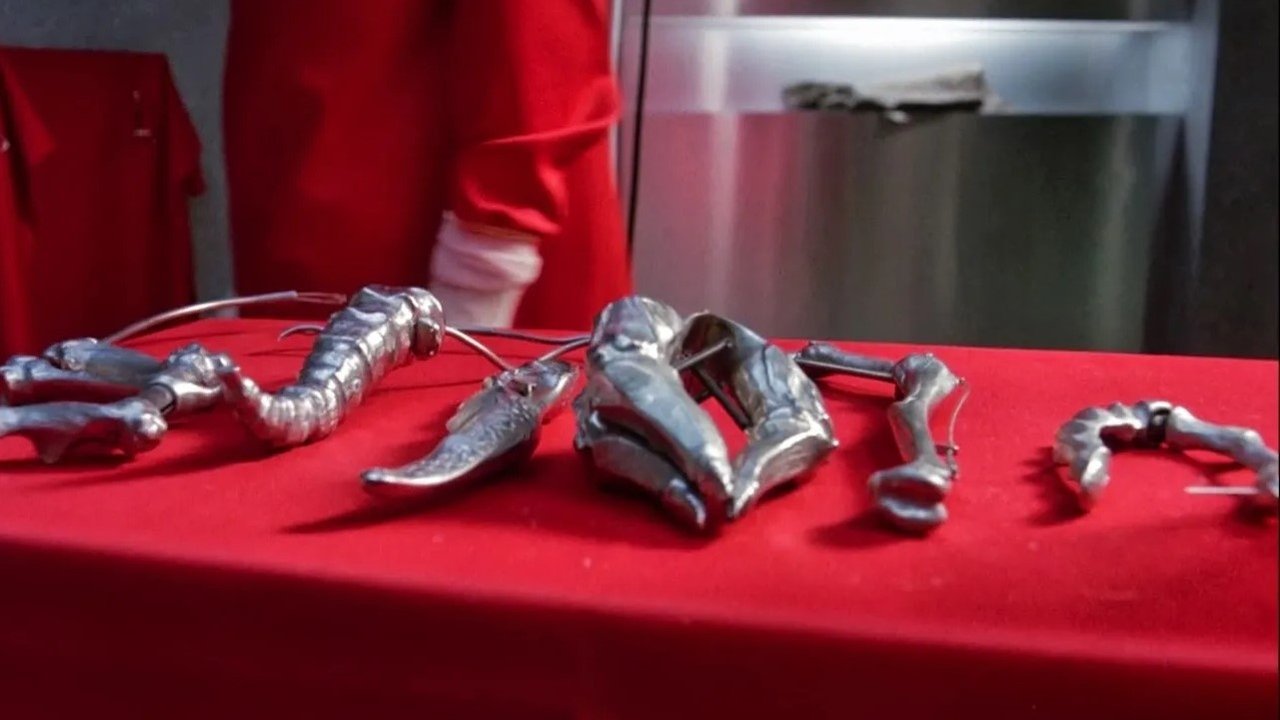
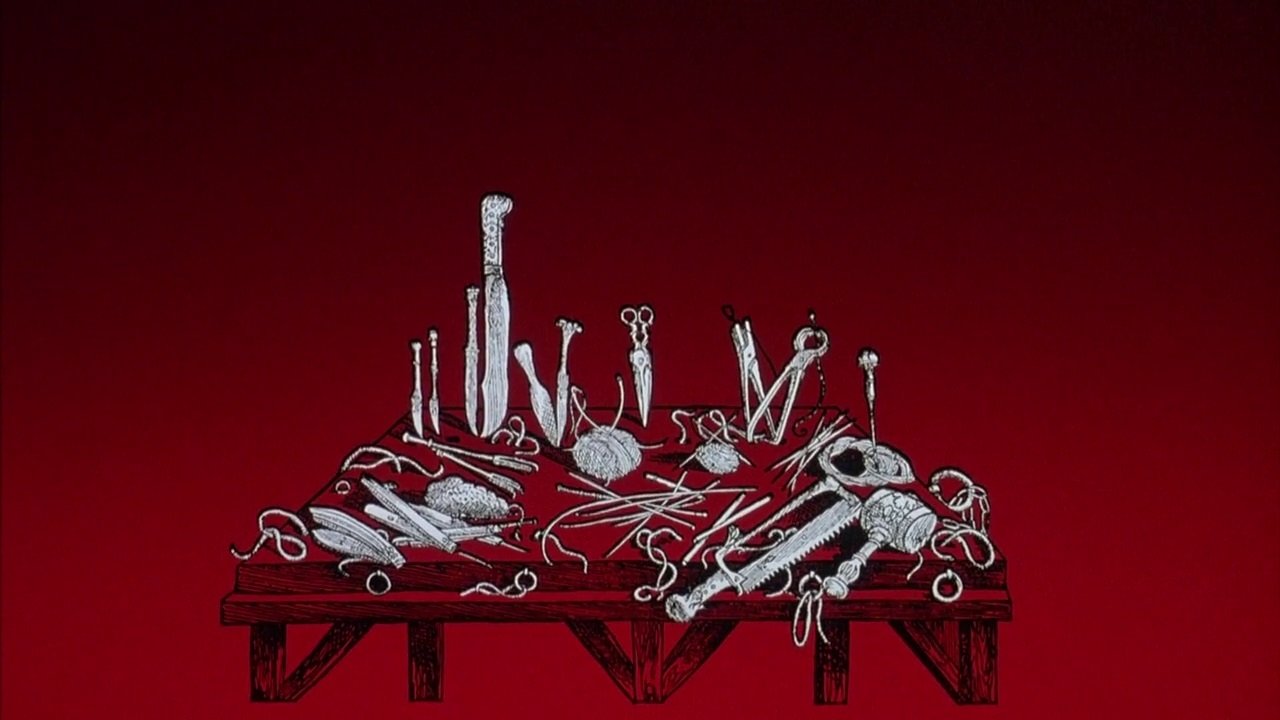
Those robes aren't just a fashion choice. In the 1980s, surgical scrubs were almost always blue or green, but Cronenberg insisted on red because it felt more like a religious ritual. The Mantle twins aren't just doctors; they are high priests of the womb, and their descent into drug-addled madness feels like a perverted ceremony. When Beverly commissions a local artist (Stephen Lack) to forge a set of "mutant" surgical tools—twisted, gold-plated claws that look like medieval torture devices—the film shifts from a psychological drama into a full-blown descent into Hell. The sound design during these sequences, coupled with Howard Shore’s somber, mournful score, makes your skin crawl in a way that jump-scares never could.
The Ghost of the Video Store
For a lot of us, Dead Ringers was a "discovery" film. It wasn't a massive box office hit—it was a bit too cerebral and "icky" for the Top Gun crowd—but it lived a long, healthy life on VHS. The film’s quiet, intense atmosphere was almost enhanced by the low-fidelity hum of a magnetic tape. I watched my copy in a basement room that was probably ten degrees too cold, and I’m convinced the environment made the film’s ending hit twice as hard.
The production was a bit of a gamble. Téléfilm Canada put up a significant chunk of the $13 million budget, which was a lot for a film about twin gynecologists losing their minds. It’s based on the real-life case of Stewart and Cyril Marcus, twins who were found dead in a trash-filled Manhattan apartment in 1975. Cronenberg takes that seed of truth and grows a garden of nightmares from it. The film is relentless in its darkness, refusing to give the audience a "hero" or a happy ending. Instead, it asks: if you share everything with another person, at what point do you cease to exist?
Dead Ringers is a masterpiece of tone and precision. It’s a film that stays with you, not because of the gore—which is actually quite minimal compared to Cronenberg’s other work—but because of the profound sense of loneliness it depicts. It’s a story about the horror of being known too well. If you’re looking for a "fun" movie night, this isn't it. But if you want a film that treats horror with the seriousness of a funeral and the coldness of a stainless-steel tray, this is the one to rent. Just maybe skip the grilled cheese while you watch it.
Keep Exploring...
-
The Dead Zone
1983
-

Videodrome
1983
-
The Fly
1986
-
Manhunter
1986
-

Scanners
1981
-

Frenzy
1972
-
Deep Red
1975
-
Crimes of the Future
2022
-

Cujo
1983
-
The Hitcher
1986
-

The 'Burbs
1989
-
Naked Lunch
1991
-
Crash
1996
-
Clue
1985
-

Fright Night
1985
-
Angel Heart
1987
-
Mississippi Burning
1988
-
Jaws
1975
-
Friday the 13th: The Final Chapter
1984
-
Friday the 13th Part VI: Jason Lives
1986