Rain Man
"A three-million-dollar road trip toward actual human feeling."
I watched Rain Man for the first time while eating a bowl of lukewarm SpaghettiOs, and the sound of the metal spoon hitting the bottom of the tin felt like a percussion track Hans Zimmer might have forgotten to include in his pan-flute-heavy score. It’s a movie that exists in a very specific 1988 bubble—a time when Tom Cruise was transitioning from the high-octane grin of Top Gun to something more jagged, and Dustin Hoffman was looking for a role that would redefine the "prestige" performance for a whole generation.
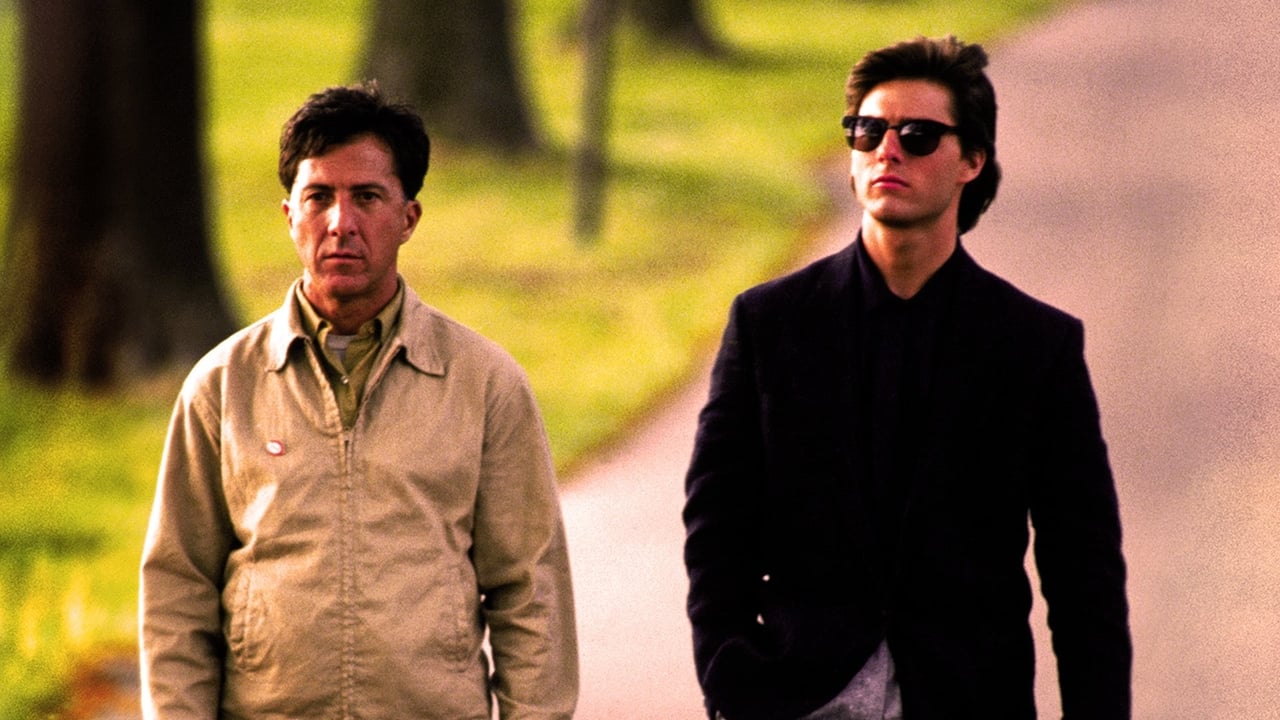
At its core, the film is a cerebral puzzle disguised as a road movie. We follow Charlie Babbitt (Tom Cruise), a man who is essentially a sentient Italian suit powered entirely by espresso and spite. When his estranged father dies, Charlie expects a windfall. Instead, he gets a collection of prize-winning roses and a 1949 Buick Roadmaster. The $3 million fortune is tucked away in a trust for a brother he never knew existed: Raymond (Dustin Hoffman), an autistic savant living in a Cincinnati institution. Motivated by greed, Charlie "kidnaps" Raymond, intending to use him as leverage to get his half of the money.
The Transactional vs. The Ritualistic
What fascinates me about Barry Levinson’s direction (he also gave us the wonderful Good Morning, Vietnam) is how he contrasts these two men. Charlie’s life is entirely transactional. Everything is a deal, a hustle, or a debt. Raymond, conversely, lives in a world of fixed rituals—the 4:00 PM "People’s Court" viewing, the precise placement of fish sticks, the refusal to fly "unsafe" airlines.
Watching the film today, it serves as a philosophical inquiry into what it means to actually "connect." Charlie spends the first half of the movie screaming into a void, trying to force Raymond into his fast-paced, 80s-excess lifestyle. But the film’s intelligence lies in the realization that Raymond isn't the one who needs to change; he literally cannot change his neurological wiring. The burden of evolution falls entirely on Charlie. It’s a drama that asks if empathy is possible when there is no traditional emotional feedback loop. Raymond doesn't offer a "hug it out" moment, and the movie is better for it.
A Box Office Juggernaut in a Cardboard Box
It is easy to forget how massive this film was. In an era where blockbusters were usually synonymous with sequels or high-concept action, Rain Man was a phenomenon. With a budget of $25 million, it went on to gross a staggering $354 million worldwide. It wasn't just a hit; it was the highest-grossing film of 1988, beating out Who Framed Roger Rabbit and Die Hard.
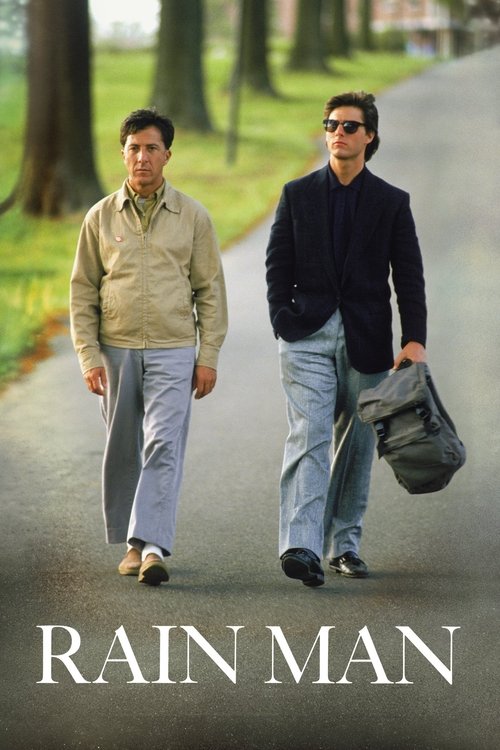
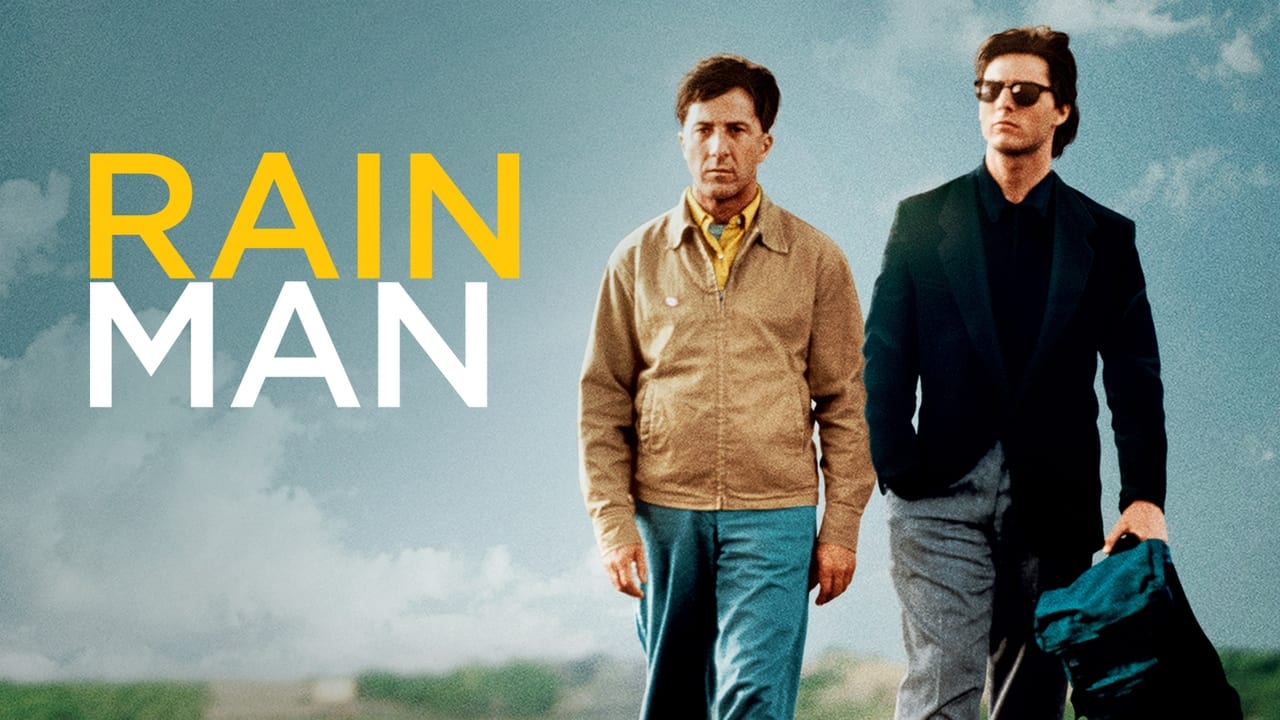
When it finally hit the VHS rental market, the United Artists box—featuring the two brothers walking in their suits—became a permanent fixture on the "Drama" shelves of every local Video Hut. I remember seeing those tapes with the gold Academy Award stickers plastered on the plastic. It was the "safe" movie you rented when your parents were tired of your Transformers tapes, yet it managed to sneak a very difficult, unsentimental story into the hearts of suburban America. Apparently, Steven Spielberg was originally slated to direct but dropped out to honor a commitment to his friend George Lucas to film Indiana Jones and the Last Crusade. While I love Indy, I’m glad we got Levinson’s more grounded, character-focused vision here.
The Art of the Performance
Dustin Hoffman spent months with real-life savant Kim Peek to prepare, and while some modern viewers might find the portrayal of autism a bit stylized, his commitment is undeniable. He avoids the trap of looking for the camera. He remains locked in Raymond’s internal geography.
However, the real heavy lifting, in my opinion, is done by Tom Cruise. Playing a character this unlikable is a risk, and Cruise leans into Charlie’s frantic, desperate energy. His chemistry with Valeria Golino, who plays his long-suffering girlfriend Susanna, highlights just how isolated he is. Susanna acts as the audience's surrogate, showing the warmth that Charlie is initially incapable of feeling.
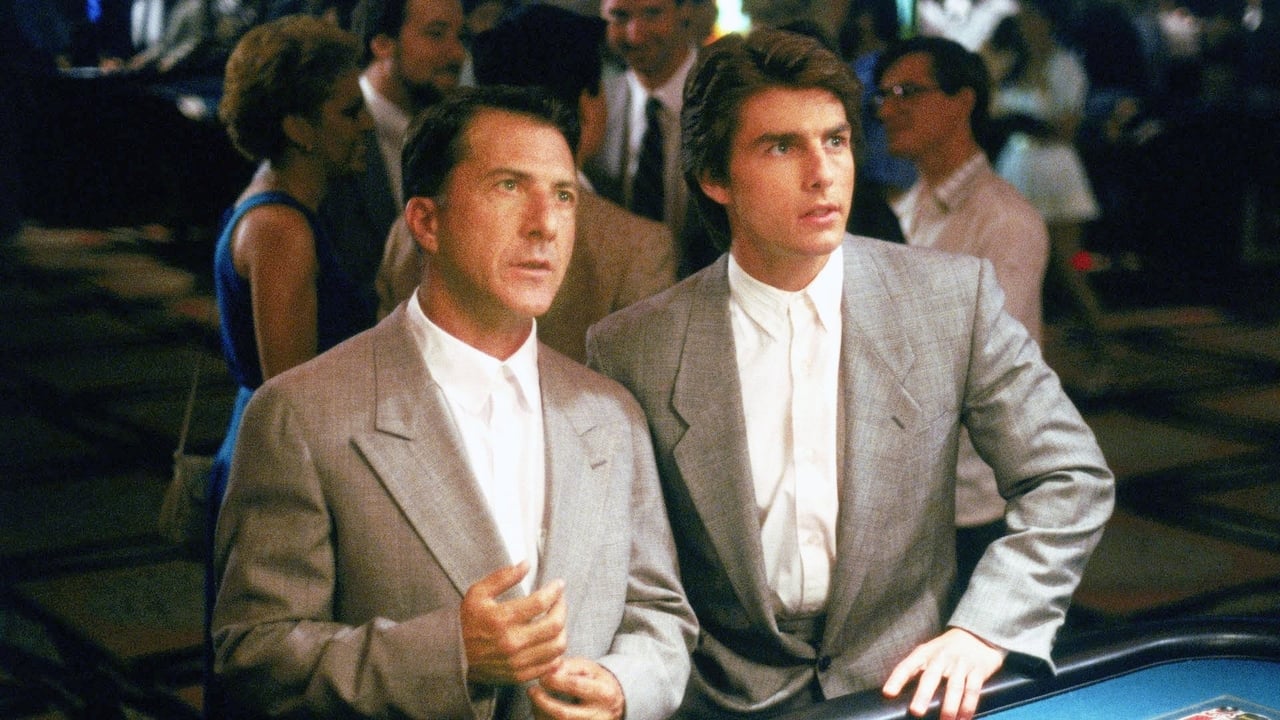
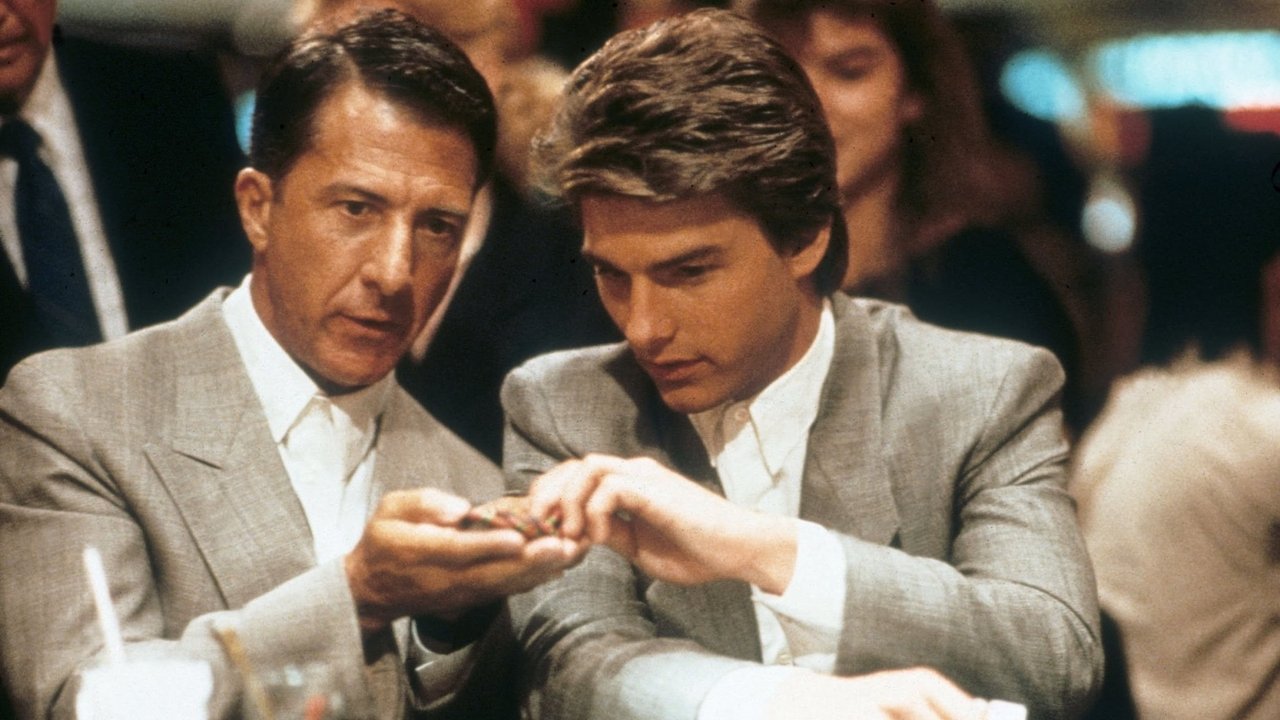
There’s a specific scene in a Las Vegas casino—which, let's be honest, practically invented the 'card counting' cinematic trope—where the visual storytelling really peaks. The neon lights, the sensory overload for Raymond, and the cynical joy on Charlie's face tell you everything you need to know about their lopsided dynamic. It’s a moment of spectacle that serves the story, proving that the film's $354 million gross wasn't just a fluke of marketing.
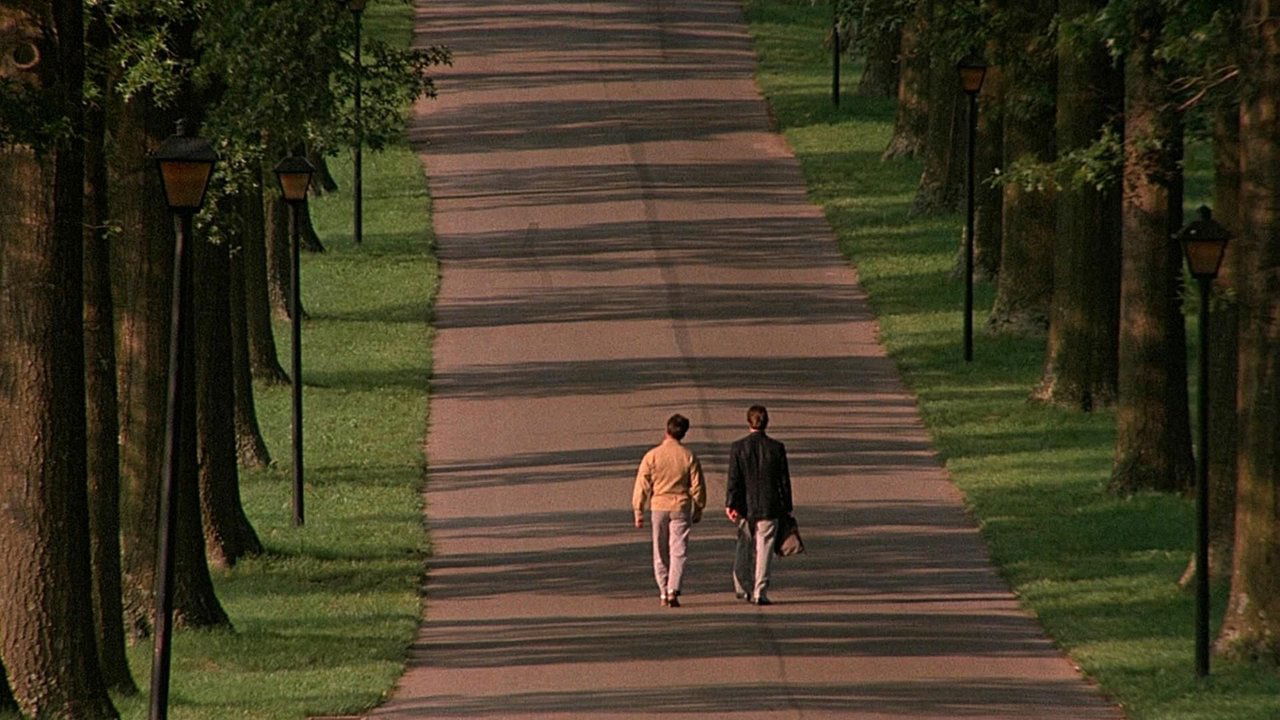
The film concludes without the easy, saccharine resolutions that often plague Hollywood dramas. There is no magical cure, and the brothers don't end up living in a ranch house together. Instead, we are left with a quiet, profound shift in perspective. Charlie Babbitt starts the film wanting three million dollars and ends it realizing he’s just grateful to be on the same train platform as his brother. It’s a thoughtful, beautifully shot piece of 80s cinema that proves the most interesting journeys don't require a map, just a bit of patience and a very specific schedule for "The People's Court."
Keep Exploring...
-
Good Morning, Vietnam
1987
-
Kramer vs. Kramer
1979
-

The Color Purple
1985
-

The Sound of Music
1965
-

The Graduate
1967
-

Rocky
1976
-
Amadeus
1984
-

Do the Right Thing
1989
-
Wag the Dog
1997
-

WarGames
1983
-
The Karate Kid
1984
-

Out of Africa
1985
-
Rocky IV
1985
-
Witness
1985
-

Platoon
1986
-

Top Gun
1986
-

Dirty Dancing
1987
-

Fatal Attraction
1987
-

Moonstruck
1987
-

Big
1988