Willow
"Big adventure comes in a small, mud-caked package."
There is a specific kind of 1980s "Lucasfilm grime" that CGI simply hasn't been able to replicate. It’s that texture of real mud, damp wool, and actors who look like they haven’t seen a shower since the Carter administration. When I sat down to revisit Ron Howard’s Willow, I was immediately struck by how tactile it all feels. I watched this most recent time while eating a bowl of slightly burnt popcorn—the kind where the unpopped kernels lurk at the bottom like little wooden teeth—and that crunch felt like the perfect sensory accompaniment to a film where every sword clank and magic spark has a physical weight.
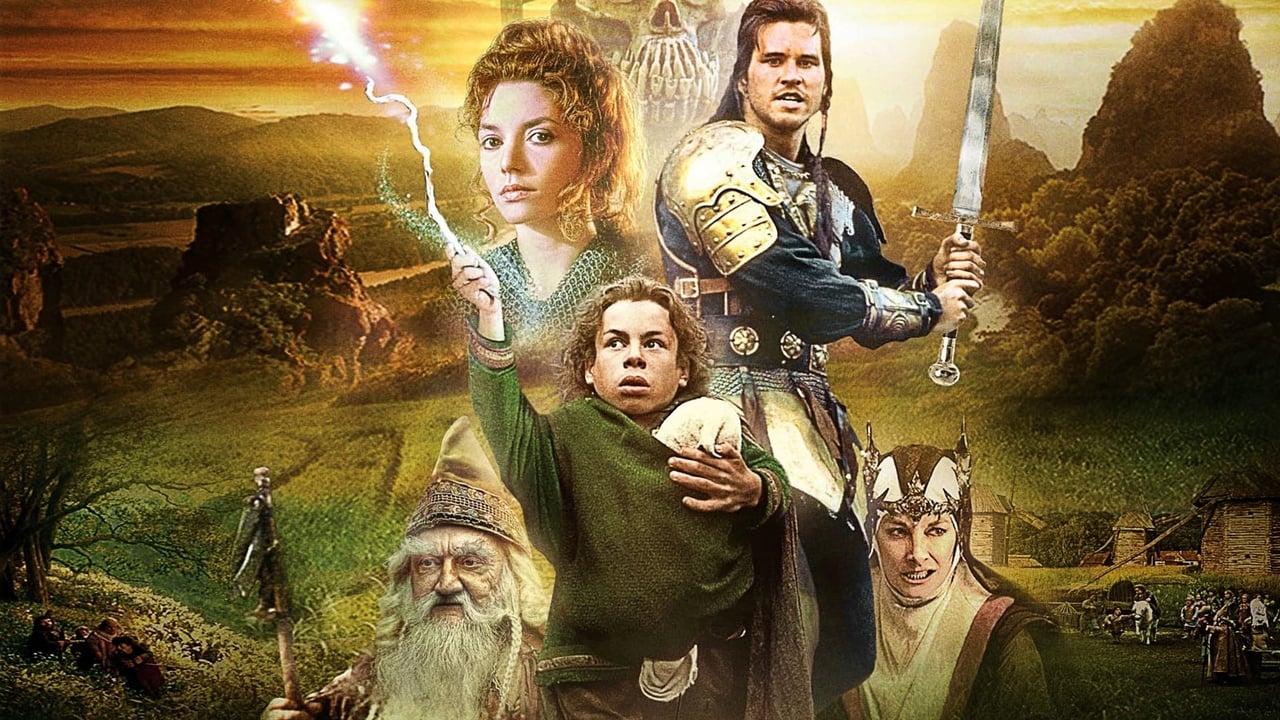
George Lucas wanted a fantasy epic, but he didn't have the rights to The Hobbit, so he essentially built his own Middle-earth with a decidedly more "American Western" swagger. At the center is Warwick Davis, giving a performance that anchors the entire spectacle. It’s easy to forget how rare it was (and still is) to see a performer with dwarfism lead a massive studio blockbuster not as a gag or a sidekick, but as a husband and father with a genuine emotional stakes. Willow Ufgood isn't a chosen one because of his bloodline; he’s a chosen one because he’s the only guy who won’t let a baby drown in a river.
The Greatest Swordsman (and Scoundrel) Who Ever Lived
While Willow is the heart, Val Kilmer’s Madmartigan is the lightning bolt that keeps the movie from becoming too precious. This was peak, pre-Batman Kilmer, radiating a chaotic "I might actually be crazy" energy that makes every scene unpredictable. Whether he’s flirting with Joanne Whalley’s Sorsha while stuffed inside a crow’s cage or accidentally sliding down a snowy mountain on a shield, Kilmer plays the role with a physical comedy that feels like Errol Flynn on a bender.
The chemistry between Val Kilmer and Joanne Whalley is palpable—probably because they actually fell in love and got married shortly after filming. It gives their antagonistic romance a spark that most modern blockbusters try to manufacture with quippy dialogue and green screens. When Sorsha finally flips her allegiance, it’s not just a plot point; it’s the result of a magnetic pull that even Queen Bavmorda’s dark magic couldn't suppress. Honestly, Sorsha’s redemption arc happens faster than a microwave burrito, but when the hair is that big and the armor is that shiny, I’m willing to look the other way.
Practical Nightmares and the Eborsisk

If you want to understand why we 80s kids are so obsessed with practical effects, look no further than the climax at Nockmaar Castle. The Eborsisk—the two-headed fire-breathing dragon—is a triumph of stop-motion and animatronics. It looks wet, it looks angry, and it looks like it occupies actual space. Named as a cheeky jab at film critics Gene Siskel and Roger Ebert, the creature is a prime example of the work done by Phil Tippett and the wizards at ILM.
Then there’s the "morphing" sequence. When the sorceress Raziel (Patricia Hayes) is being transformed from a goat to a bird to a tiger and finally back to a human, we’re seeing the literal birth of digital morphing technology. It’s a bridge between the old world of Joe Johnston-style physical models and the digital frontier that would eventually give us Terminator 2. Does it look a little dated now? Sure. But there’s a charm to the jittery transitions that perfectly matches the "messy magic" vibe Ron Howard was going for. It feels like the universe is struggling to hold itself together, which is exactly how magic should feel.
The Legend of the Gold-Bordered Tape
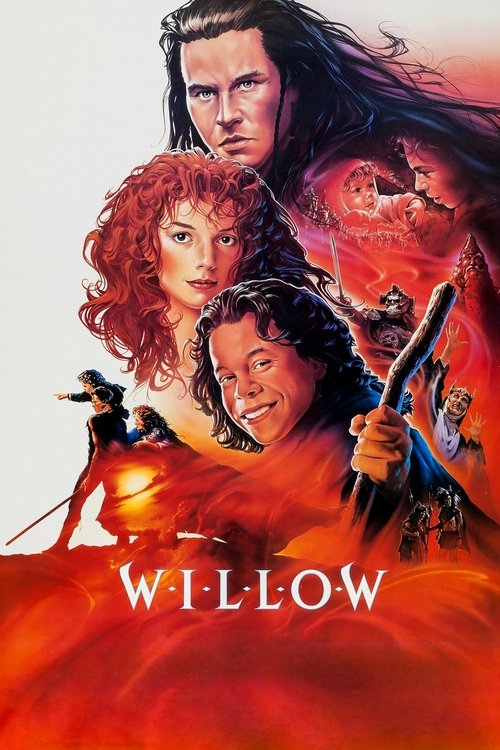
For a lot of us, Willow wasn't a theatrical experience; it was a ritual performed in front of a wood-paneled TV. The VHS cover, with its iconic gold border and the image of Warwick Davis holding the baby Elora Danan aloft, was a staple of every video store in the country. It was the "safe" rental—the one your parents would agree to because it looked like Star Wars, and you wanted because it had monsters and sword fights.
The film's cult status was cemented by those repeat viewings. We learned to love the weirdness: the terrifying, skull-masked General Kael (Gavan O'Herlihy), the bizarrely aggressive Death Dogs, and even the Brownies. I’ll be honest: the Brownies are basically the Jar Jar Binks prototypes we chose to forgive, mostly because Kevin Pollak and Rick Ducommun seem to be having so much fun being obnoxious.
James Horner’s score also deserves a shout-out. It’s sweeping, triumphant, and features a pan-flute melody that will stay lodged in your brain for three to five business days. It elevates the film from a standard "quest" movie to something that feels genuinely mythic.
Willow is a beautiful reminder of an era when fantasy movies felt like they were filmed in the woods behind your house rather than inside a computer. It’s a story about the little guy standing up to the ultimate evil, bolstered by a career-defining turn from Warwick Davis and a scene-stealing Val Kilmer. Even if the pacing drags in the middle and the tone shifts wildly from slapstick to child-sacrifice-darkness, the sheer earnestness of the production carries it through. It’s a dusty, muddy, magical relic that still has plenty of life left in it.

Keep Exploring...
-
Big Trouble in Little China
1986
-
Highlander
1986
-
Conan the Destroyer
1984
-
Conan the Barbarian
1982
-
The NeverEnding Story
1984
-
Dune
1984
-
Splash
1984
-
Commando
1985
-

Predator
1987
-
The Princess Bride
1987
-
Castle in the Sky
1986
-

Masters of the Universe
1987
-
Mad Max Beyond Thunderdome
1985
-
Labyrinth
1986
-

In the Heart of the Sea
2015
-

Solo: A Star Wars Story
2018
-
Legend
1985
-
The Black Cauldron
1985
-
Planet of the Apes
1968
-
The Man with the Golden Gun
1974