Young Guns
"The Breakfast Club with revolvers and a body count."
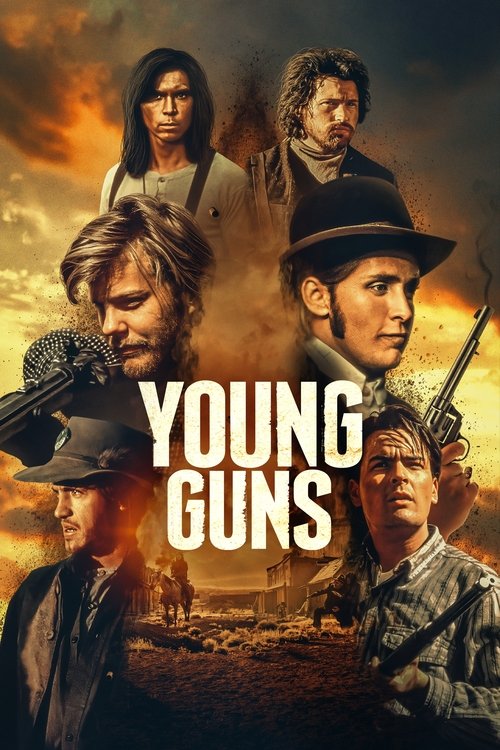
By 1988, the American Western was supposed to be dead, buried under a pile of dust and high-concept sci-fi scripts. The genre that built Hollywood had become your grandfather's cinema—slow, stoic, and increasingly out of touch with a generation raised on MTV and hairspray. Then came Young Guns, a film that looked at the legend of Billy the Kid and decided the best way to revitalize the frontier was to populate it with the hottest faces from the local mall’s poster shop.
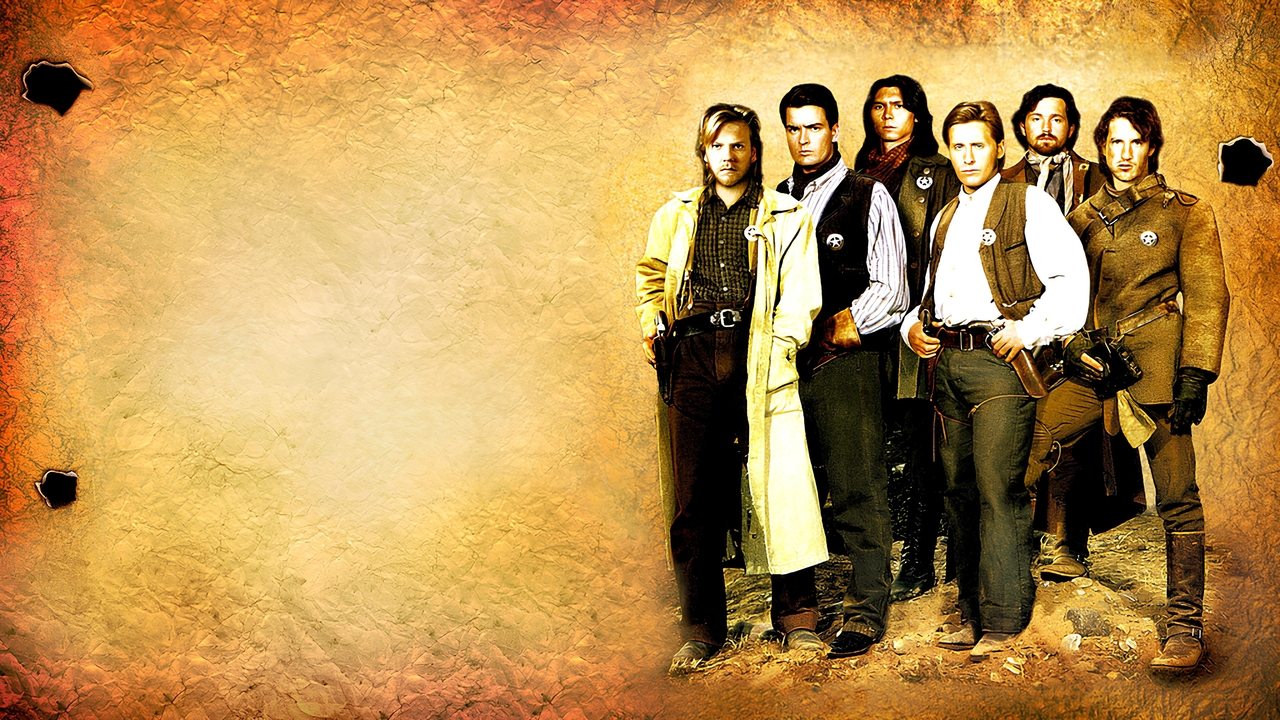
I watched this most recently while my cat was aggressively cleaning its paws on my lap, and I was struck by how much the film feels like a high-stakes high school drama where the detention hall is a dusty ranch in Lincoln County. It shouldn’t work. On paper, putting the "Brat Pack" on horses sounds like a recipe for a costume party disaster, yet there’s a frantic, adolescent energy here that actually captures the historical reality of the Regulators better than the somber Westerns of the 1950s. These were, after all, just kids with guns.
The Giggling Psychopath and His Poets
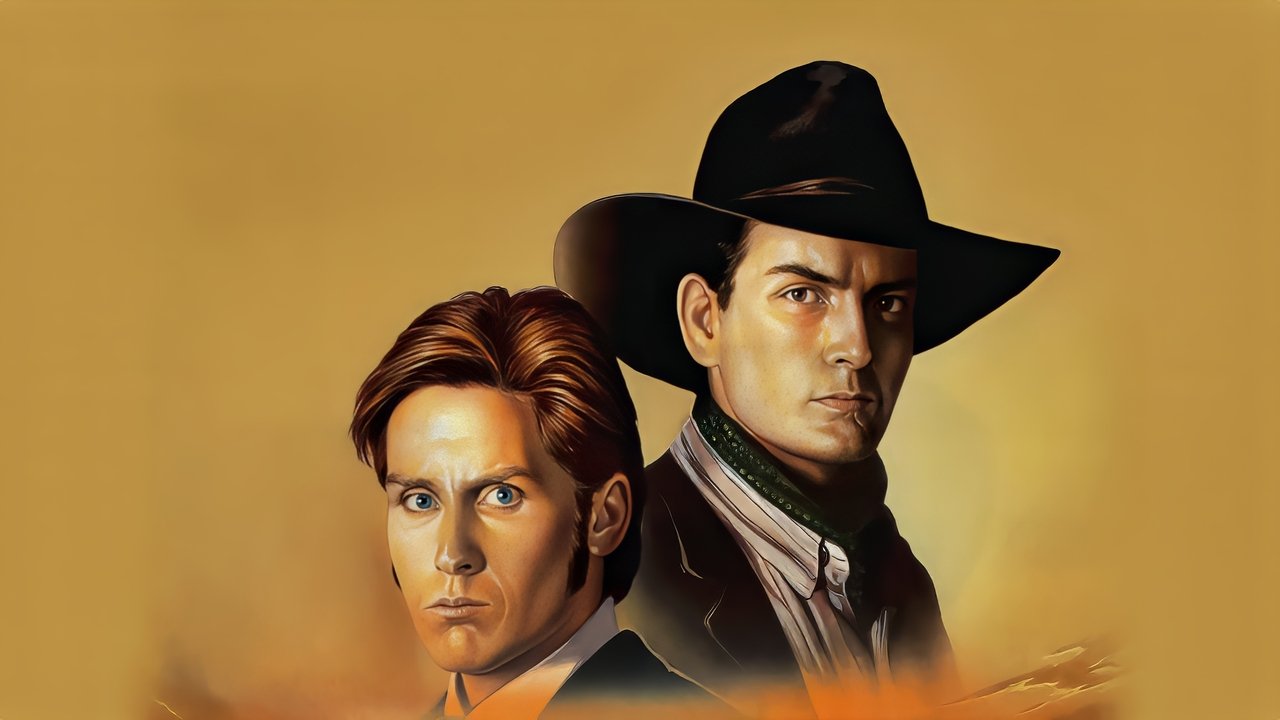
At the center of the chaos is Emilio Estevez as William H. Bonney. This isn't the romanticized, misunderstood outlaw of cinema past. Emilio Estevez’s high-pitched, manic cackle is the most terrifying sound in 80s cinema, and he plays Billy as a charismatic sociopath who is just as likely to hug you as he is to shoot you for a minor perceived slight. It’s a bold performance that anchors the film, preventing it from sliding into pure teen-idol fluff.
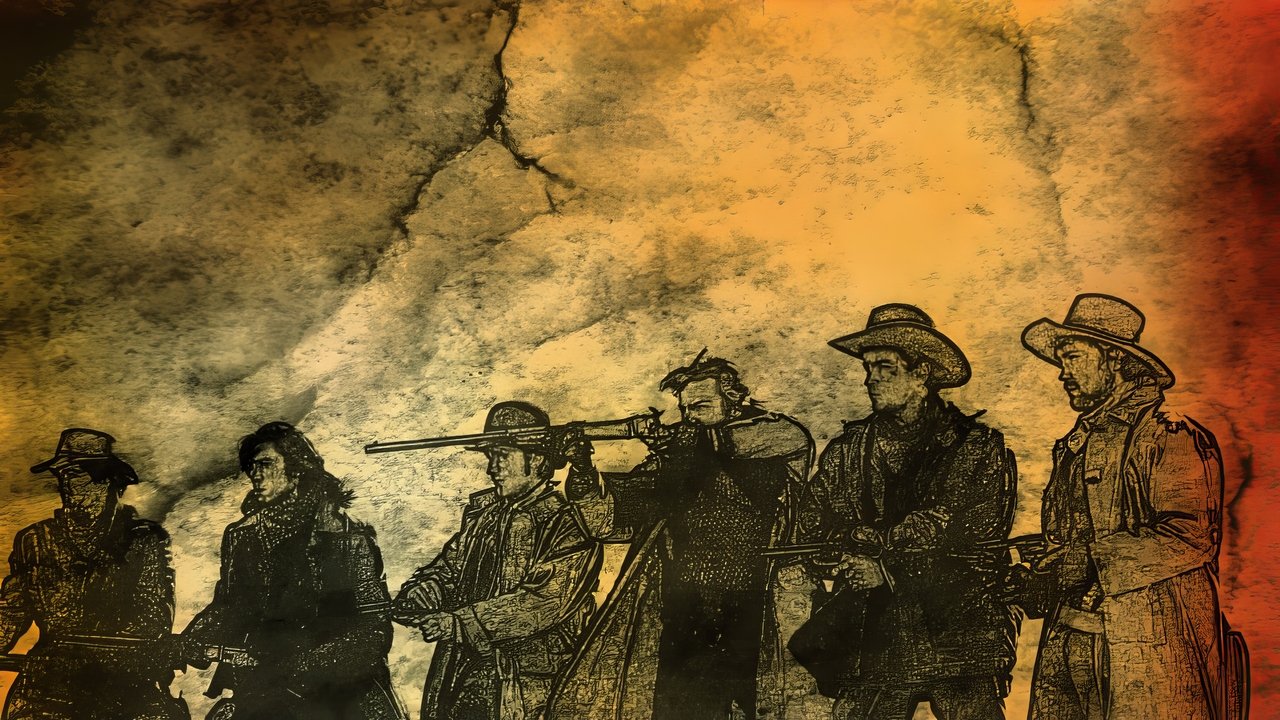
The rest of the "Six Reasons Why the West Was Wild" are a fascinating snapshot of 1988 stardom. You have Charlie Sheen as Dick Brewer, the self-appointed "adult" of the group who clearly realizes he’s babysitting a powder keg. Kiefer Sutherland brings a surprising amount of soul to Doc Scurlock, the group’s resident poet and romantic, while Lou Diamond Phillips adds a layer of mysticism and grit as Chavez y Chavez. Rounding out the crew are Dermot Mulroney as the wild-card Dirty Steve and Casey Siemaszko as the loyal Charley Bowdre.
The chemistry between these six is the film's secret weapon. You believe they’ve spent nights drinking bad whiskey and dodging bullets together. When they lose their father figure, the rancher John Tunstall (played with dignified warmth by Terence Stamp), their descent from deputized lawmen into hunted vigilantes feels earned because of that shared bond.
Dust, Squibs, and Black Powder
What really surprised me during this re-watch was the sheer physicality of the action. Director Christopher Cain and cinematographer Dean Semler (who would go on to win an Oscar for Dances with Wolves) opted for a gritty, handheld-adjacent style that makes the shootouts feel messy and dangerous. There is a distinct lack of the "clean" gunfights found in older Westerns. When a bullet hits a wall in Young Guns, it kicks up a cloud of plaster and wood chips that actually obscures the frame.
The final standoff at the McSween house is a masterclass in practical 80s stunt work. You have real horses jumping through real windows, actors performing their own stunts in the middle of massive pyrotechnic explosions, and squibs—those little explosive blood packets—going off with glorious, messy abandon. There’s a weight to the violence here; when the Regulators "mount up," the horses sound like a rolling thunderclap. The sound design of the 1873 Winchesters and Colt Peacemakers provides a rhythmic percussion to the chaos that keeps the momentum from ever flagging.
The VHS Box Art Legend
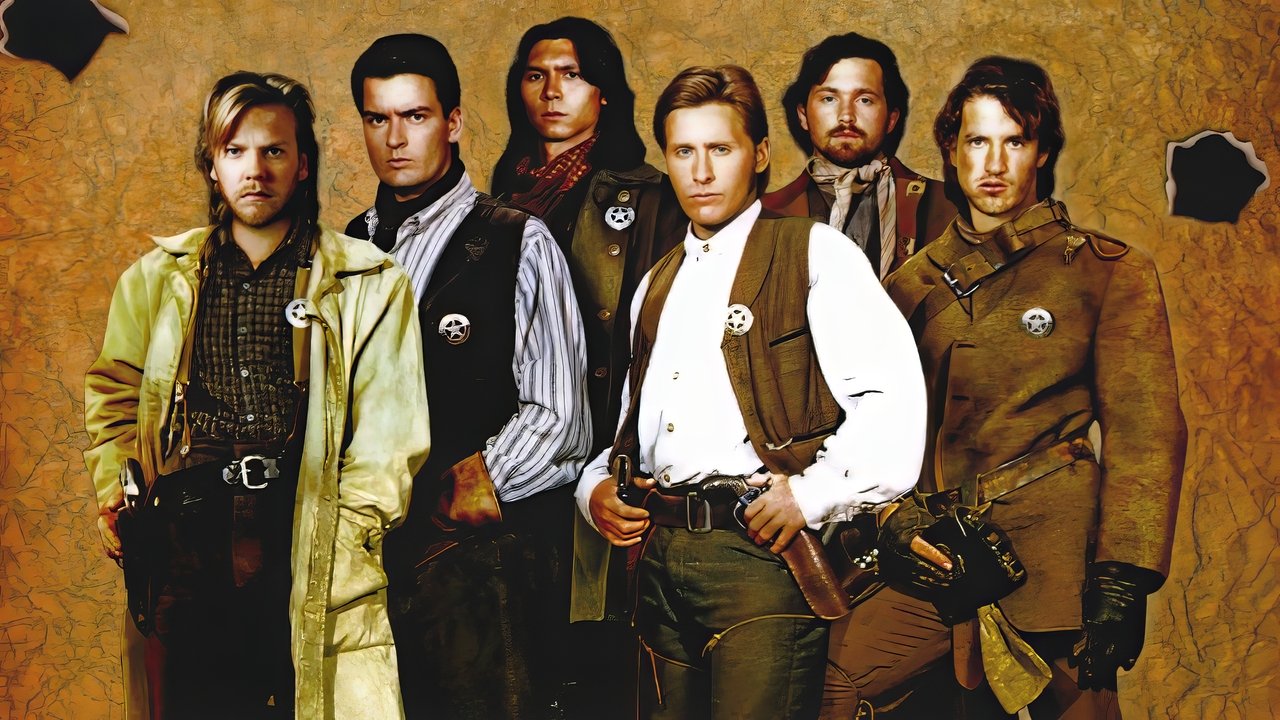
For a certain generation, Young Guns wasn't just a movie; it was a permanent fixture on the "Action" shelf of the local video store. I remember the Morgan Creek logo appearing on the screen felt like a seal of quality for a Friday night rental. The tape box art—a simple, striking shot of the six leads standing defiant in the sun—was a marketing masterstroke. It promised a bridge between the rebellion of the 80s and the mythology of the frontier.
It’s easy to dismiss this film as "dated" because of the occasional synth flare in Anthony Marinelli's score or the fact that some of the hair looks suspiciously well-conditioned for 1878 New Mexico. But look past the mullets and you’ll find a surprisingly lean, mean action-adventure. It captures the frantic, "live fast, die young" ethos that Billy the Kid actually represented. It’s a movie that values momentum over meditation, and in the world of the Western, that was a much-needed shot of adrenaline. The film essentially tricked millions of teenagers into watching a history lesson by disguised it as an action-packed slumber party.
Young Guns isn't trying to be The Searchers or Unforgiven. It’s a high-octane, star-driven spectacle that understands the primary appeal of the Western is the thrill of the chase and the roar of the gun. While the sequels and the imitators would eventually dilute the formula, this original outing remains a high-water mark for the "Brat Pack" era. It’s loud, it’s bloody, and it’s a hell of a lot of fun to watch these icons of the 80s trade their denim jackets for leather duster coats. If you’re looking for a 5-minute distraction that turns into a two-hour ride, mount up.
Keep Exploring...
-
Conan the Destroyer
1984
-
Romancing the Stone
1984
-
Star Trek III: The Search for Spock
1984
-
The Jewel of the Nile
1985
-

The Golden Child
1986
-

Masters of the Universe
1987
-
The Karate Kid Part III
1989
-

The Mission
1986
-

The Magnificent Seven
1960
-
The Dirty Dozen
1967
-
Where Eagles Dare
1968
-
Flash Gordon
1980
-
Dune
1984
-
Indiana Jones and the Temple of Doom
1984
-
Red Dawn
1984
-
The Karate Kid
1984
-
Commando
1985
-
Rambo: First Blood Part II
1985
-
Highlander
1986
-
The Karate Kid Part II
1986