All Dogs Go to Heaven
"Gambling, ghosts, and the dark side of Lassie."
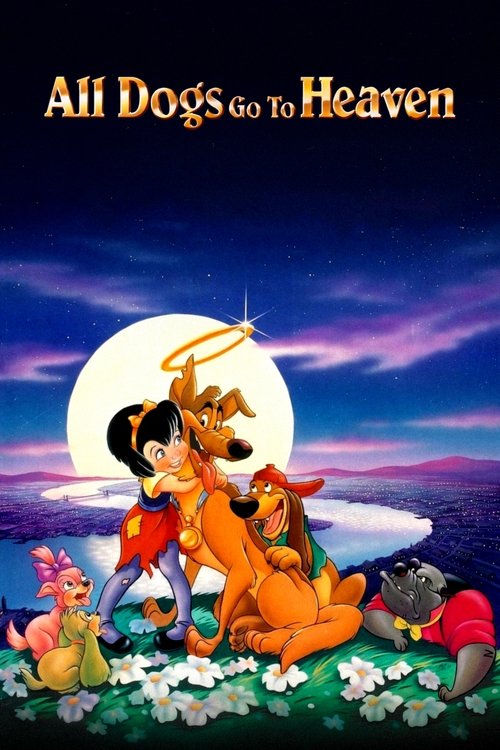
I distinctly remember watching All Dogs Go to Heaven for the first time on a humid Tuesday afternoon while nursing a lukewarm Capri Sun that tasted mostly like aluminum. My older brother had rented it from the local "Video Hut" because the cover looked like a fun romp about puppies. We were not prepared. By the twenty-minute mark, the protagonist had been offed in a hit-and-run orchestrated by a cigar-chomping bulldog, and I was questioning the moral fabric of the universe.

That was the magic of Don Bluth. While Disney was busy polishing their fairy tales into sparkling, corporate-sanctioned gems, Bluth was in his own corner of the sandbox, throwing dirt and exploring the existential dread of being a cartoon animal.
The Great 1989 Animation War
To understand why this film feels the way it does, you have to look at the scoreboard. Released on the exact same day as The Little Mermaid, Charlie B. Barkin never stood a chance at the box office. Ariel had a hit soundtrack and the backing of a revitalized mouse-house; Charlie had a gambling addiction and a "Hell" sequence that looked like a fever dream curated by Hieronymus Bosch.
However, the VHS revolution was Charlie’s true salvation. This movie was a staple of the rental era, largely because Don Bluth Entertainment leaned into the home video market to recoup their theatrical losses. It became one of those tapes you’d find at the bottom of a bin at Blockbuster, its plastic clamshell case cracked, promising something a little more "dangerous" than Cinderella. Watching it now, the hand-drawn animation has a gritty, smoky texture that feels light-years away from the sterile perfection of modern CGI. It’s messy, it’s expressive, and it smells like a New Orleans dive bar after 2:00 AM.
Burt, Dom, and the Art of the Ad-Lib
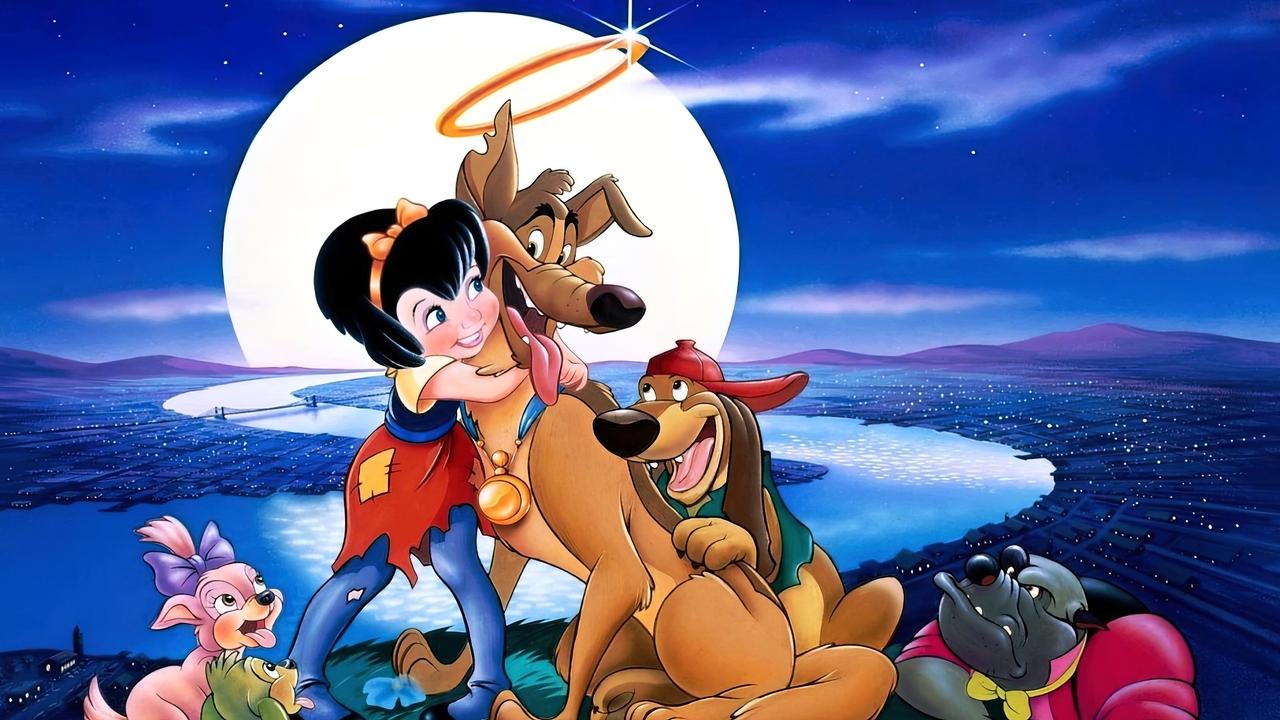
The heart of the film isn't the plot—which is essentially A Christmas Carol if Scrooge were a German Shepherd—it's the chemistry between Burt Reynolds and Dom DeLuise. Bluth famously had the two actors record their lines in the same room, a rarity for animation at the time. You can hear it in every frame. Their overlapping dialogue, the giggles, and the genuine warmth between Charlie and Itchy feel improvised and authentic.
Burt Reynolds brings a specific type of New Hollywood swagger to Charlie. He’s not a hero; he’s a conman who just happens to have four legs. He’s selfish, manipulative, and uses an orphan girl named Anne-Marie (voiced with heart-wrenching sweetness by the late Judith Barsi) to fix horse races. Charlie B. Barkin is basically a high-functioning sociopath with a heart of gold.
Then there’s the villain, Carface, voiced by Vic Tayback. He’s not a misunderstood soul; he’s a straight-up mob boss. The drama works because the stakes feel permanent. When Charlie dies (the first time), he doesn't just disappear; he goes to a neon-soaked, 1950s-style canine heaven. But when he returns to Earth by "rewinding" his life watch, he’s told he can never go back. That’s heavy stuff for a kid's movie, and the film handles that thematic weight with a surprising amount of directorial restraint.
That Nightmare Fuel Sequence

We have to talk about the Hell dream. If you grew up in the late 80s or early 90s, this sequence is likely burned into your retinas. After Charlie’s "life watch" stops, he has a nightmare about what awaits him on the other side if he doesn't change his ways. It’s a terrifying landscape of lava, demonic "hellhounds," and a skeletal dragon.
It’s an incredible piece of practical animation craft—the way the shadows dance and the palette shifts to oppressive reds and blacks—but this sequence is the reason an entire generation needed therapy. It’s a bold choice for a family film, emphasizing the "Drama" in its genre listing. It gives Charlie’s eventual redemption an actual cost. He’s not just doing the right thing because it’s nice; he’s doing it to save his literal soul.
The film balances this darkness with bizarre, campy detours, like the "Let's Make Music Together" number featuring Ken Page as King Gator. It’s a psychedelic, Busby Berkeley-style water ballet that feels like it belongs in a completely different movie, yet somehow, in the weird world of Don Bluth, it makes perfect sense. It’s that refusal to play by the rules that makes All Dogs Go to Heaven so enduring.
Ultimately, this is a film about the messiness of friendship and the terrifying reality of mortality, wrapped in a layer of colorful fur. It’s a drama that respects its audience enough to be scary, and a comedy that isn't afraid to be mean. While it might lack the narrative polish of its Disney contemporaries, it has a soul that feels entirely human. If you can find an old copy—or even better, a digital version that hasn't been scrubbed of its 1989 grain—it’s well worth the return trip to New Orleans. Just maybe skip the Capri Sun this time.
Keep Exploring...
-

An American Tail
1986
-
The Secret of NIMH
1982
-

Bedknobs and Broomsticks
1971
-

Scrooged
1988
-

DuckTales: The Movie - Treasure of the Lost Lamp
1990
-

The Muppet Christmas Carol
1992
-

The Swan Princess
1994
-
Oliver & Company
1988
-
The Land Before Time
1988
-
Time Bandits
1981
-
The Princess Bride
1987
-

Big
1988
-
The Odd Life of Timothy Green
2012
-
Kiki's Delivery Service
1989
-
The Black Cauldron
1985
-
Uncle Buck
1989
-
Asterix and Cleopatra
1968
-
The Twelve Tasks of Asterix
1976
-
The Santa Clause
1994
-
The Triplets of Belleville
2003