Black Rain
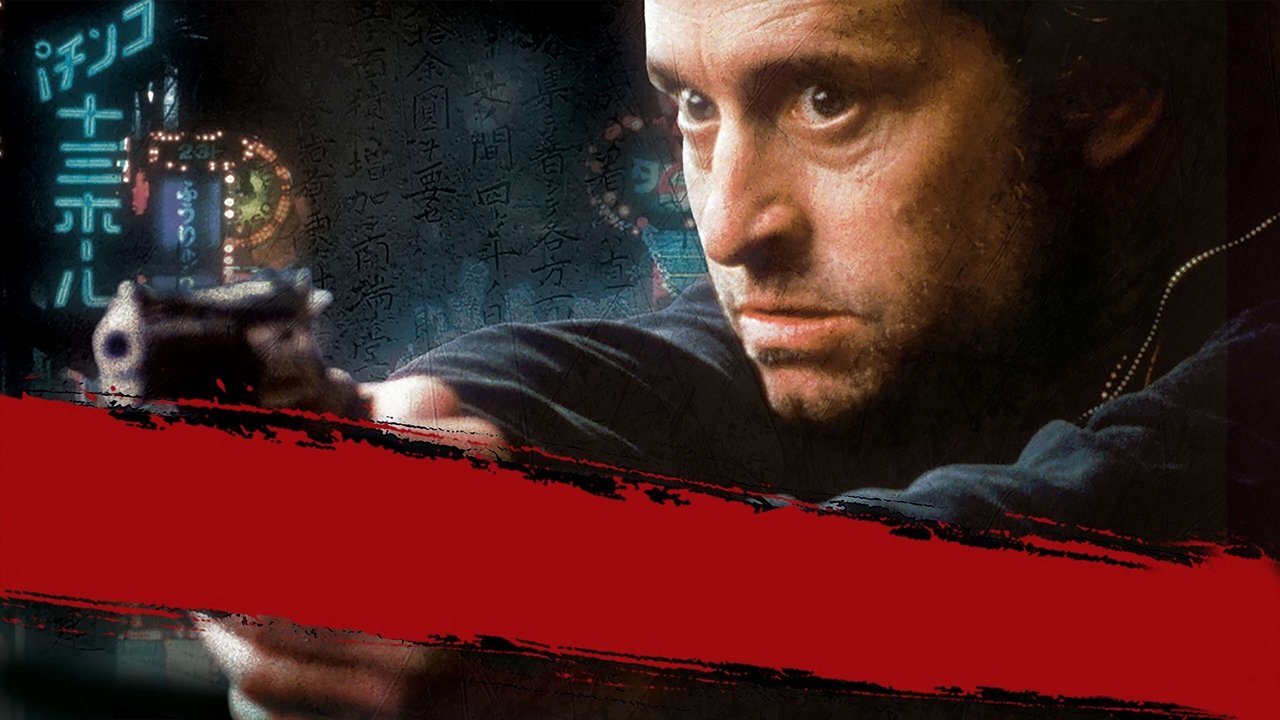
"Steel, neon, and the law of the Yakuza."
If you want to know exactly what 1989 felt like, you don't look at a calendar; you look at the opening five minutes of Black Rain. The sun rises over a jagged, industrial New York skyline, bathed in a hazy orange glow that looks like it was filtered through a pack of Marlboro Reds. Michael Douglas is racing a motorcycle against a random stranger under the elevated tracks, and Hans Zimmer’s synthesizers are screaming. It is peak Ridley Scott—an era where every frame had to be filled with steam, cigarette smoke, or neon rain, regardless of whether it made sense for the weather forecast.
I rewatched this recently on a Tuesday afternoon while my neighbor was power-washing his driveway. The persistent, mechanical drone from outside actually synced up perfectly with the film’s industrial soundscape. It’s that kind of movie; it feels heavy, metallic, and slightly damp.
The Blade Runner of the Eighties
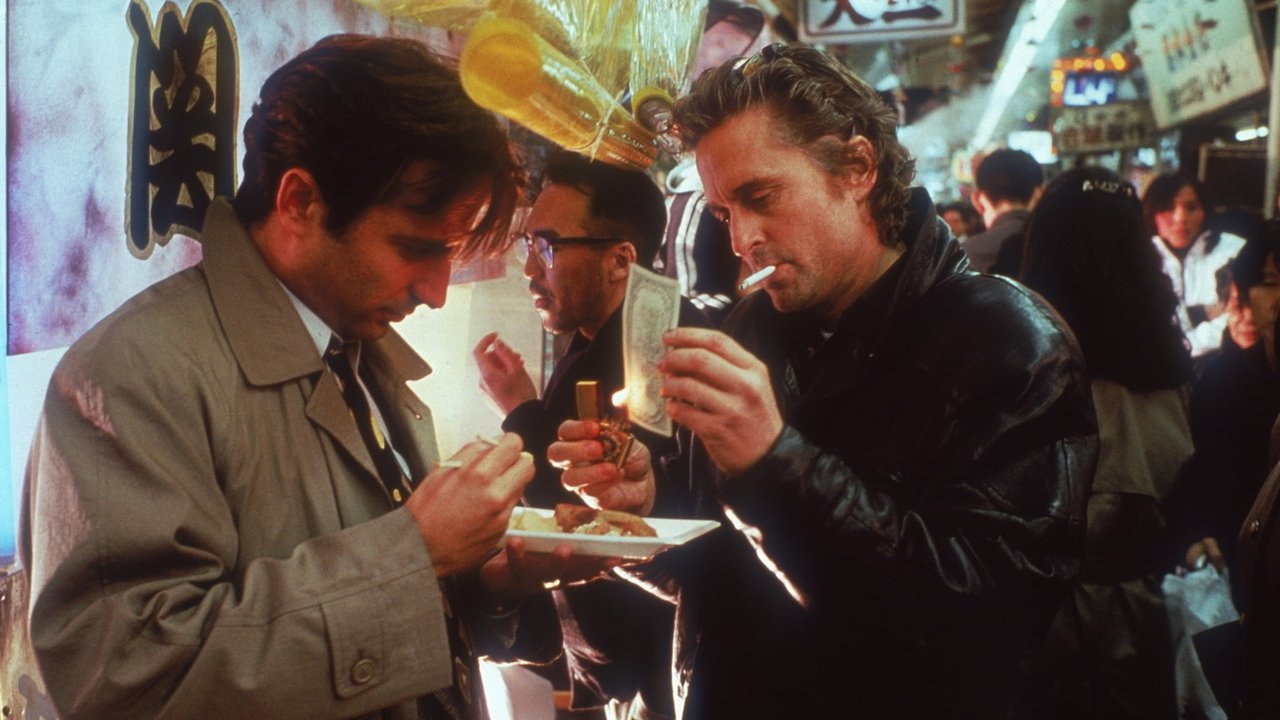
Black Rain often feels like the grounded, dirtier cousin of Blade Runner. After a few years in the "director’s jail" following the beautiful but confusing Legend, Ridley Scott returned to the gritty noir aesthetic that made him a god. This time, he traded replicants for the Yakuza. The plot is a classic "fish out of water" setup: Nick Conklin (Michael Douglas) is a "gray" cop—meaning he’s probably skimming off the top—who, along with his partner Charlie (Andy Garcia), arrests a Yakuza boss named Sato (Yūsaku Matsuda) in a crowded NYC diner.
They are tasked with escorting Sato back to Osaka, but upon arrival, they’re tricked into handing him over to disguised mobsters. Now, Conklin and Charlie are stuck in Japan, stripped of their weapons, and forced to navigate a culture they don't understand to get their man back. It’s an American cowboy story colliding head-first with the rigid, honorable, and terrifyingly efficient world of Japanese crime.
A Masterclass in Atmosphere and Anxiety
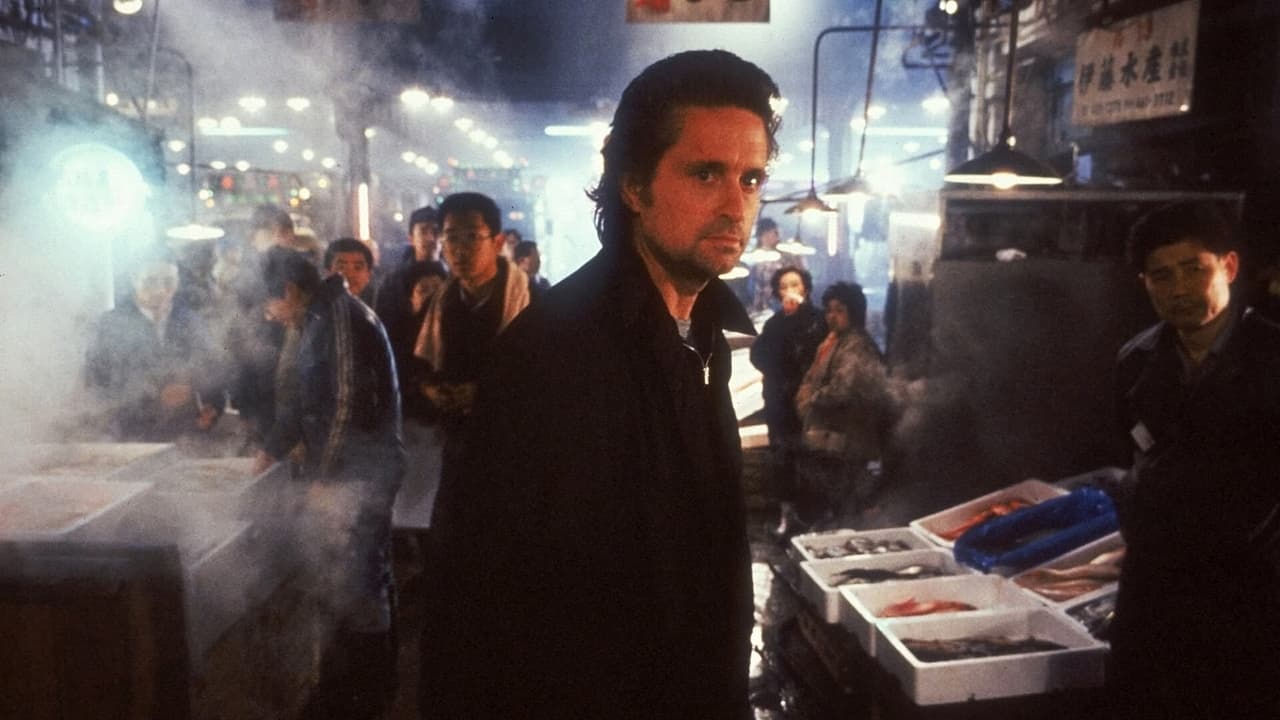
The real star of the show isn't Douglas—though Michael Douglas's perm is the most dangerous thing in this movie—it’s the city of Osaka. Scott and cinematographer Jan de Bont (who would later direct Speed) treat the city like a living, breathing alien planet. The night scenes are legendary. The red neon reflecting off the black puddles and the endless maze of steel walkways create a sense of claustrophobia that makes you feel like the characters are drowning in the light.

The action isn't the hyper-edited "shaky cam" nonsense we see today. It’s deliberate. When the motorcycles roar through the tight alleys of the steel mills, you feel the weight of the machines. There is a sequence involving a hit on a golf course that is shot with such eerie, quiet tension that it reminds you why Scott is a master of the frame. The practical stunts here are top-tier; when a bike slides or a window shatters, there’s a tactile crunch that CGI simply cannot replicate. You can practically smell the gasoline and the scorched rubber.
The Legend of Yūsaku Matsuda
Behind the scenes, the production was famously troubled. Ridley Scott, a notorious perfectionist, clashed with the local Japanese crews who weren't used to his "one more take" style. But the most moving story involves Yūsaku Matsuda, who played the villainous Sato. Matsuda was suffering from bladder cancer during filming. He knew that the physical demands of the role would likely kill him, but he reportedly told Scott he wanted to "live forever" through this performance. He is terrifyingly thin, intensely focused, and absolutely magnetic. He died shortly after the film was released, and his performance remains one of the greatest "bad guy" turns of the decade.
The film was a massive commercial success, raking in over $134 million against a $30 million budget. It tapped into a very specific 1980s American anxiety: the fear that Japan was economically "winning." You see it in the way Shigeru Kōyama, playing the stern Inspector Ohashi, lectures Conklin about American individualism versus Japanese collective duty. It’s a fascinating time capsule of "Japan-panic" cinema that dominated the era, alongside books like Rising Sun.
High-Concept, High-Stakes
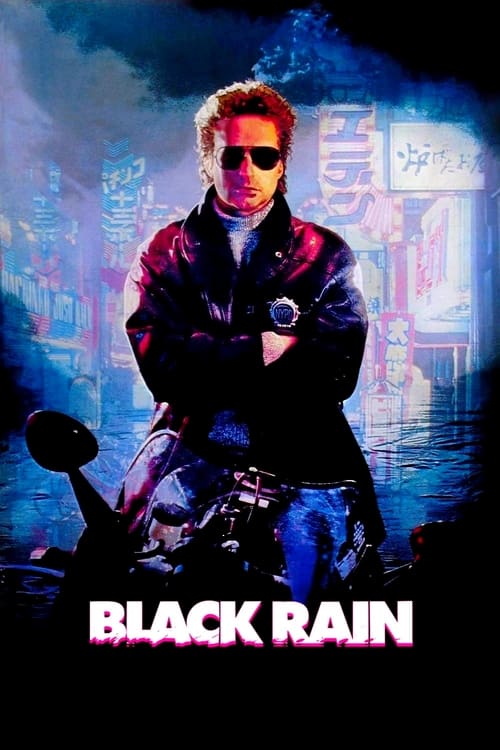
I remember seeing the VHS box for this at the local rental place constantly—it was one of those "prestige" rentals. The cover art featured Douglas in a leather jacket, looking like he was about to single-handedly start World War III, but the movie is actually much more soulful than the marketing suggested. It’s about two men from opposite worlds—Conklin and the stoic Japanese detective Masahiro (Ken Takakura)—finding a middle ground through shared grief and a mutual hatred for bureaucratic red tape.
The film also served as a massive launchpad for Hans Zimmer. This was his first real crack at a big-budget action score, and you can hear him inventing the "Zimmer Sound" in real-time. The pounding percussion and the integration of traditional Japanese instruments with electric guitars would become his signature for the next thirty years. It’s loud, it’s proud, and it’s unapologetically 1989.
Black Rain is a reminder of a time when "style over substance" wasn't a criticism—it was an art form. While the plot follows some predictable "buddy cop" beats, the sheer visual power of the film carries it across the finish line. It’s a movie that demands to be seen on the biggest screen possible, with the lights off and the sound turned up high enough to rattle the windows. It’s a gritty, neon-soaked fever dream that proves Ridley Scott can make even a steel mill look like a cathedral.
Keep Exploring...
-

Fatal Attraction
1987
-

The Towering Inferno
1974
-
Red Dawn
1984
-
Lock Up
1989
-
Bloodsport
1988
-

Kickboxer
1989
-
Tango & Cash
1989
-
The Karate Kid
1984
-
Rambo: First Blood Part II
1985
-
Witness
1985
-
The Karate Kid Part II
1986
-

Top Gun
1986
-
Lethal Weapon
1987
-
Lethal Weapon 2
1989
-
Marathon Man
1976
-
The Killer
1989
-
The War of the Roses
1989
-
Body of Lies
2008
-
Blade Runner
1982
-
A View to a Kill
1985