Crimes and Misdemeanors
"God is an imaginary playmate for the guilty."
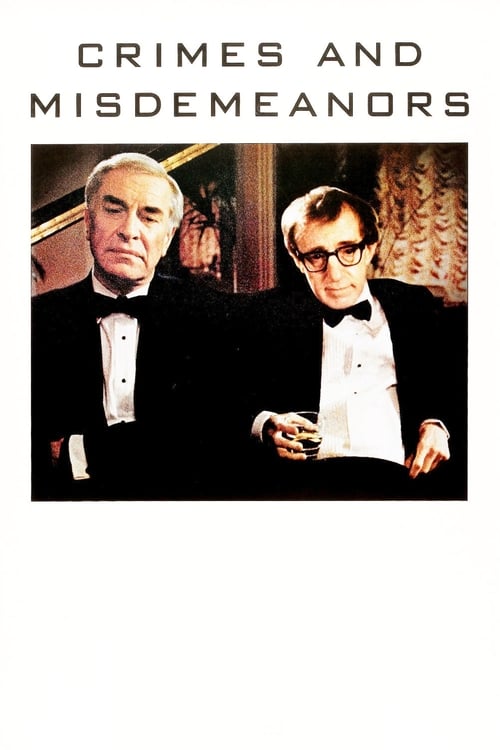
The eyes of an ophthalmologist are supposed to be his greatest asset, but in Judah Rosenthal’s world, they are a curse. He spends his days fixing the vision of the wealthy, yet he is utterly terrified of what might be looking back at him from the darkness. When I first watched this, I was struck by how 1989 felt like the end of something—the glossy, high-concept excess of the 80s was curdling into something more neurotic and spiritually exhausted. It’s a film that asks if you can literally get away with murder, and then provides an answer that is far more haunting than a jail cell.

I watched this most recently on a grainy old DVD while nursing a mild case of food poisoning from a questionable street taco, and honestly, the physical nausea paired perfectly with the moral rot on screen. This isn't just a movie; it's a cold-blooded argument disguised as a comedy.
The God Who Doesn't Blink
The "Crimes" half of the title belongs to Martin Landau, who gives a performance so controlled and brittle you can almost hear his conscience snapping. He plays Judah, a pillar of the community whose life is being dismantled by his mistress, Dolores, played with a heartbreaking, jagged desperation by Anjelica Huston. Dolores isn't a "femme fatale" from a noir flick; she’s a lonely woman who has been promised a life that doesn't exist. When Judah decides to solve his "problem" through permanent means, the movie shifts into a moral thriller that feels like it was shot in the shadow of a cathedral.
Martin Landau does something incredible here—he makes you feel the weight of a man’s soul shrinking in real-time. The cinematography by Sven Nykvist (the guy who made Ingmar Bergman's films look like religious icons) treats Judah’s penthouse and office like cages of light and shadow. There’s a specific scene where Judah returns to his childhood home and "hallucinates" a Seder dinner from his youth, arguing with his father about the "eyes of God." It should be pretentious, but instead, it’s terrifying. It suggests that the only thing worse than being watched by God is realizing nobody is watching at all.
The Art of Being Insufferable
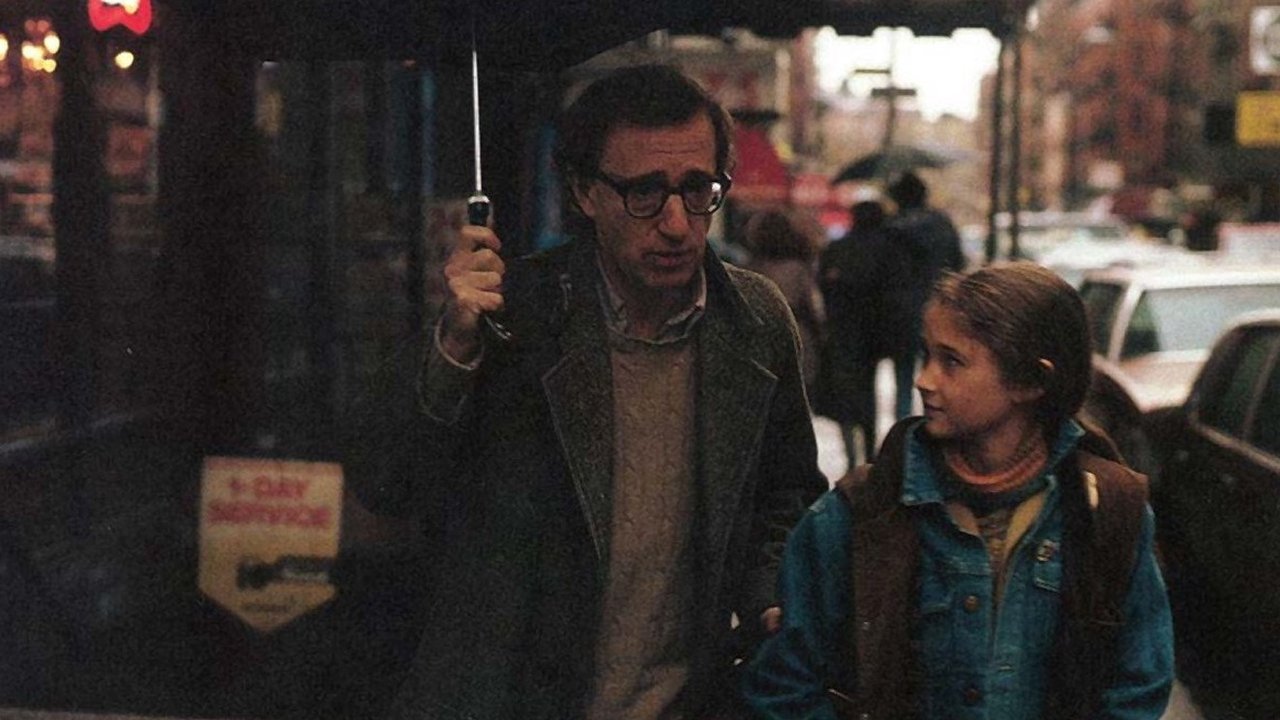
While Judah is busy dealing with hitmen and divine judgment, the "Misdemeanors" side of the film gives us Woody Allen as Cliff Stern, a documentary filmmaker who is essentially a professional failure. Cliff is hired to make a puff piece about his brother-in-law, Lester, played by Alan Alda.
Let’s talk about Lester for a second. Alan Alda delivers one of the most hilariously punchable performances in cinema history. He is the personification of "The Industry"—a man who speaks in fortune cookie wisdom and thinks he’s a genius because he has high ratings. My hot take? Alda is a more effective villain here than the actual murderers in the other half of the script. He represents the crime of being a successful hack, which, in the eyes of this movie, is almost as bad as homicide.
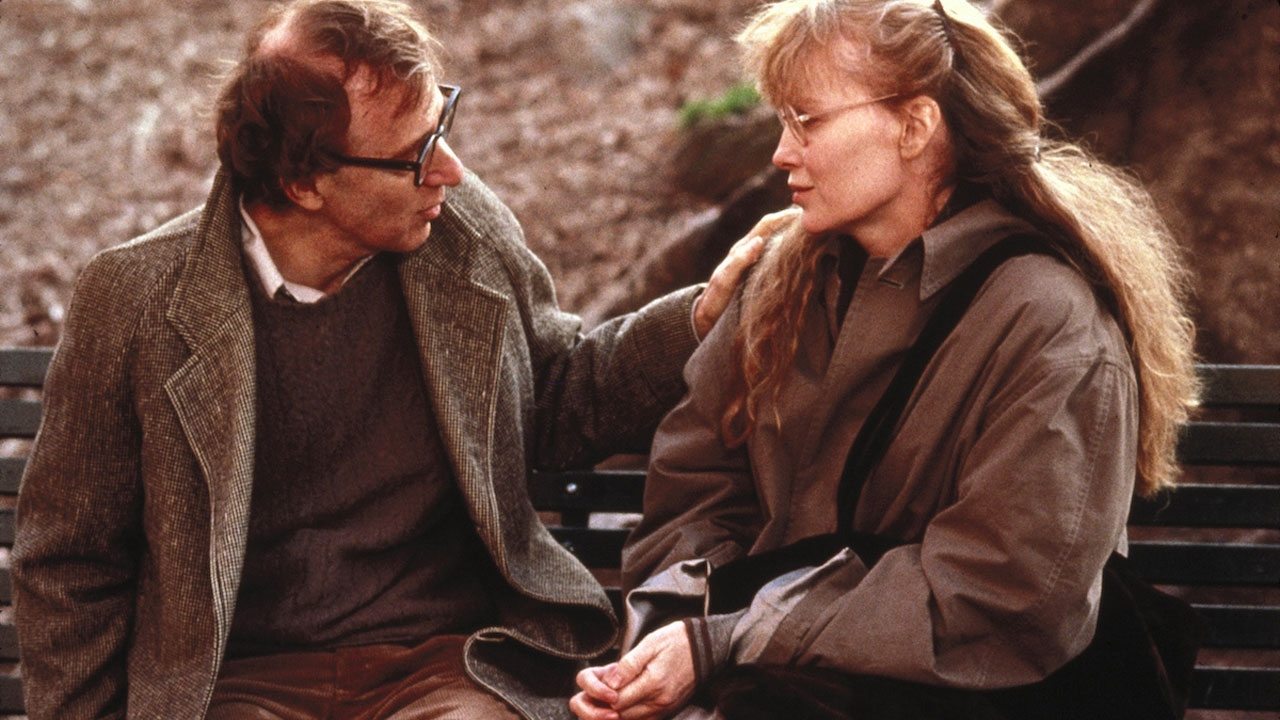
Cliff falls for a producer played by Mia Farrow, and their subplot is a classic romantic comedy that slowly gets its throat cut by reality. It’s the perfect counterweight to the Landau storyline. While one man commits a Great Sin and finds a way to live with it, the other man tries to be "good" and loses everything anyway. The film suggests that the universe doesn't have a moral scoreboard; it just has winners and losers.
A Farewell to the Eighties
Released in the final months of the 1980s, Crimes and Misdemeanors feels like a eulogy for the decade's obsession with "having it all." It was a staple of the "Adult Drama" section in 1990s video stores—the kind of tape with the white Orion Pictures border that you’d rent when you wanted to feel like a sophisticated intellectual. I remember the VHS box art specifically; it tried to sell the movie as a lighthearted ensemble comedy, which must have been a hell of a shock to anyone expecting Three Men and a Baby.
The film was made on a $19 million budget—a decent chunk of change for a talky drama back then—but it feels intimate. This was the peak of the "New Hollywood" auteurs transitioning into the blockbuster era while trying to maintain their soul. Allen was working with the best in the business, and the production value reflects a world of mahogany libraries and expensive scotch that was about to be replaced by the grunge and cynicism of the 90s.
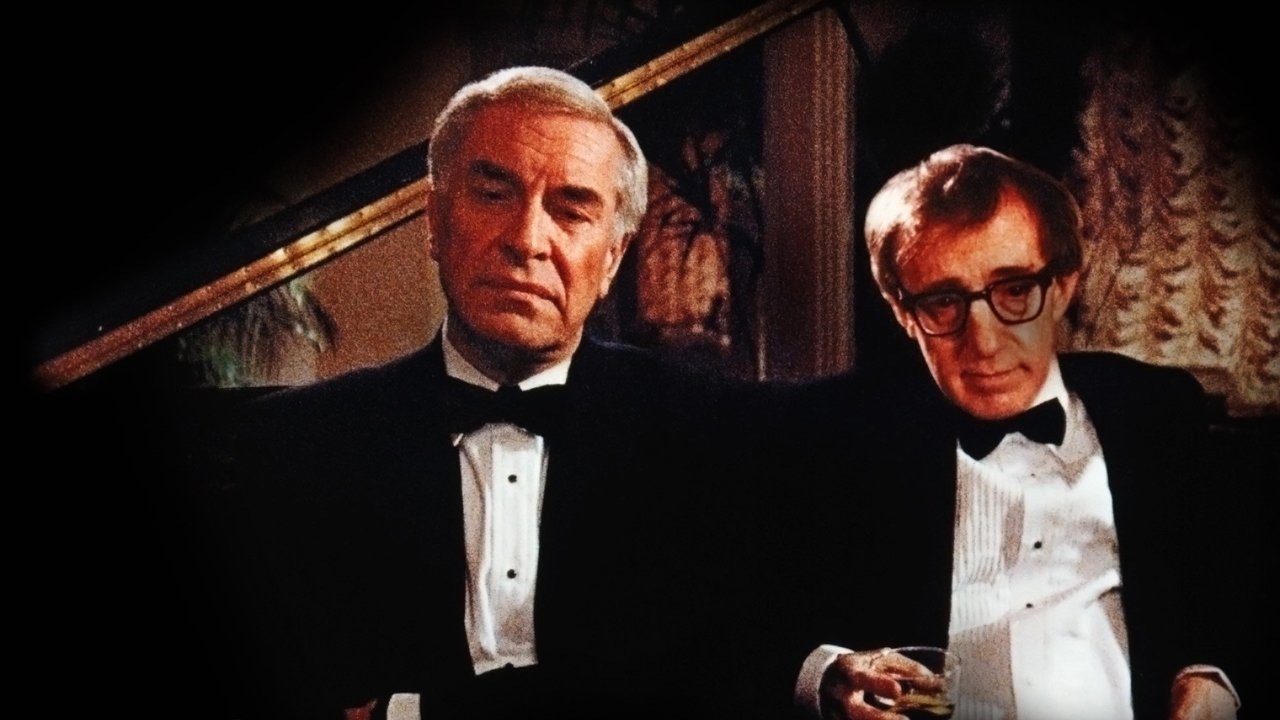
The ending of this film is what cements it as a masterpiece. Judah and Cliff meet at a wedding—the murderer and the failure—and they share a drink. Judah tells a "story" that is actually his own confession, framed as a movie plot. It’s the ultimate cynical punchline: time passes, you move on, and you realize that the world doesn't stop turning just because you did something unforgivable.
This is a film that rewards your attention with a cold chill and a few bitter laughs. It manages to balance two completely different genres without ever feeling like a gimmick. If you’ve ever wondered why people still talk about this era of filmmaking as a high-water mark for adult storytelling, this is your answer. It’s a movie that looks you right in the eye and tells you the truth, even if the truth is ugly. It stays with you long after the credits roll, making you look just a little bit closer at the shadows in your own living room.
Keep Exploring...
-
Hannah and Her Sisters
1986
-
Manhattan
1979
-
Zelig
1983
-
Annie Hall
1977
-
Deconstructing Harry
1997
-
Manhattan Murder Mystery
1993
-
The Purple Rose of Cairo
1985
-
Everything You Always Wanted to Know About Sex *But Were Afraid to Ask
1972
-
Love and Death
1975
-
Clue
1985
-
Dirty Rotten Scoundrels
1988
-
Mississippi Burning
1988
-
The Sting
1973
-
Blood Simple
1985
-
West Side Story
1961
-
Marathon Man
1976
-
The Outsiders
1983
-
The Killer
1989
-
Bonnie and Clyde
1967
-
Cool Hand Luke
1967